Helter Skelter (Reprise) Lyrics — Across the Universe
Helter Skelter (Reprise) Lyrics
I go back to the top of the slide
Where I stop and turn and I go for a ride
Till I get to the bottom and I see you again
Yeah, yeah, yeah
Do you, don't you want me to love him
I'm coming down fast but I'm miles above you
Tell me, tell me, tell me, come on tell me the answer
Well you may be a lover but you ain't no dancer
Look out
Helter skelter
Helter skelter
Helter skelter
Uhhhhh
Will you won't you want me to make you
I'm coming down fast but don't let me break you
Tell me, tell me, tell me, baby tell me the answer
You may be a lover but you ain't no dancer
Helter skelter
Helter skelter
Helter skelter
Uhhhh, ow
[Instrumental Interlude]
When I get to the bottom
I go back to the top of the slide
When I stop and turn and I go for a ride
And I get to the bottom and I see you again
Yeah, yeah, yeah
Well, do you gonna want me to make you
I'm coming down fast but don't let me break you
Well tell me, tell me, tell me the answer
You may be a lover but you ain't no dancer
Oh no,
Helter skelter
Helter skelter
Helter skelter
Uhhhh, ow
Song Overview

Review and Highlights
Quick summary
- The reprise is assigned to Sadie and is interwoven with the film's title-song sequence, not staged as its own standalone number.
- It works like a flashback of noise - the earlier club ferocity returns in a tighter burst, aimed straight at the story's fracture line.
- On the official soundtrack releases, the reprise is treated as a film cue rather than a separate track; the album carries the full "Helter Skelter" performance instead.
- As stated on Grammy.com, the soundtrack album earned a nomination in the compilation soundtrack category, which helps explain why even small cues like this get discussed by fans as part of the project.
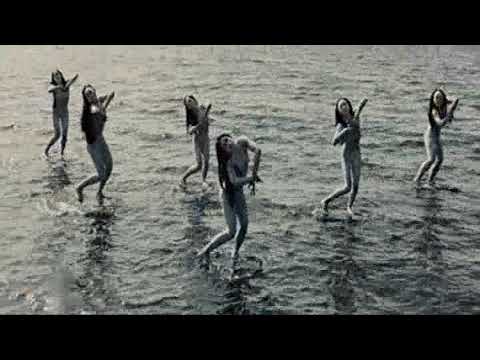
Across the Universe (2007) - film - not cleanly diegetic. The reprise is cut into Jude's "Across the Universe" sequence, with Sadie onstage and Jude elsewhere, the edit insisting that the two worlds share the same air. Why it matters: it turns a gentle mantra into a contested space, where romance and spectacle keep stepping on each other.
I have always liked how Julie Taymor refuses to let the title song be a spa treatment. This reprise is the reason. It is a jolt of earlier chaos returning at the worst possible moment. In musical-theater terms, it behaves like a reprise should: not repetition for its own sake, but a reminder with teeth. The film has already taught us what Sadie's version of "Helter Skelter" sounds like - raw, show-biz, hungry. The reprise distills that into a quick flare, the way a memory can punch through calm without asking permission.
The fun detail is structural. Jude's line keeps moving, steady and inward, while Sadie's cut-ins keep trying to steal the scene. The reprise becomes a test of attention: do you stay with the quiet thread, or do you chase the brighter light? Taymor makes the audience feel the temptation, then lets the story judge it.
Creation History
The cue originates as a Beatles composition credited to Lennon-McCartney, first released in 1968. Across the Universe reassigns it to Sadie and then trims it into this reprise for a cross-cut sequence. The film's music team built a soundtrack that favors full performances for album listening, which is why the reprise lives mainly inside the movie's edit rather than as a named track on the releases.
Song Meaning and Annotations
Plot
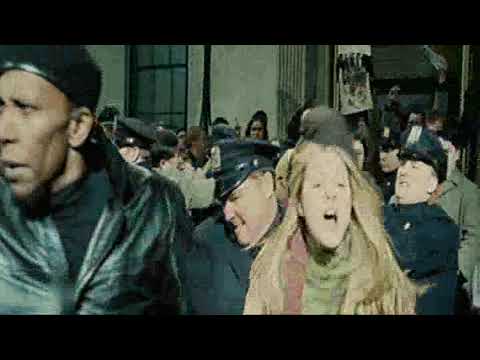
The reprise arrives during the film's title-song sequence, when Jude is trying to hold onto a private sense of love and identity while the public world keeps raising the volume. Sadie's stage persona re-enters as counterforce. The film cross-cuts them, so the reprise reads as pressure applied to Jude's calm rather than a separate showpiece.
Song Meaning
In this context, the reprise is not about the lyric as a full narrative. It is about the feeling the song carries in this world: heat, speed, and the hunger to dominate the room. The reprise functions like an intrusive thought in music form, a reminder of how quickly art can turn into spectacle and how spectacle can start calling the shots.
Annotations
"Helter skelter"
Even as a fragment, the title phrase hits like a shove. In the film it does not invite you to dance - it dares you to keep your footing.
"When I get to the bottom I go back to the top"
Placed as a reprise, the idea lands as a loop. The characters keep returning to the same fights in new costumes: love versus cause, art versus ego, intimacy versus crowd.
"Do you, don't you want me to make you"
As a cut-in, this becomes a power move. It is not seduction; it is control. The reprise sharpens the question at the heart of the sequence: who is driving, and who is being driven?
Style, rhythm, and the edit
The earlier performance is built like a club burner. The reprise keeps the same muscular attitude but arrives in a shorter blast, which makes it feel even less negotiable. The rhythm is the message: insistence without patience.
Cultural touchpoints
Beatles covers often become personality tests for performers - some chase polish, others chase danger. Taymor chooses danger for Sadie, then uses the reprise to let that danger haunt a softer song. According to The Conversation, the film treats Beatles songs as a shared language the characters use to claim feelings they cannot otherwise say. This reprise is that idea with claws.
Technical Information (Quick Facts)
- Artist: Dana Fuchs (as Sadie, film cue)
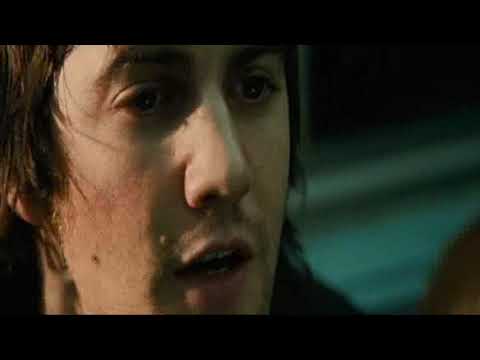
- Featured: Interwoven with Jim Sturgess as Jude during the title-song sequence
- Composer: John Lennon; Paul McCartney
- Producer: T Bone Burnett; Elliot Goldenthal; Matthias Gohl (soundtrack compilation credits)
- Release Date: October 12, 2007 (US wide theatrical release of the film)
- Genre: film musical cue; rock reprise
- Instruments: vocal; guitar-forward rock band palette (as established by the film arrangement)
- Label: Interscope (soundtrack label for related album releases)
- Mood: abrasive; urgent
- Length: brief reprise (film edit; not issued as a standalone named track on the core soundtrack listings)
- Track #: not separately listed on the standard or physical deluxe track tables
- Language: English
- Album (if any): appears as a film cue; the album releases list the full "Helter Skelter" performance
- Music style: hard-rock cut-in used as counterpoint inside cross-cut editing
- Poetic meter: speech-led rock phrasing
Frequently Asked Questions
- Who performs the reprise in the film?
- It is assigned to Sadie, performed by Dana Fuchs in the movie's sequence list.
- Is it a full standalone number?
- No. It appears as a reprise intercut with the title-song sequence, so it plays like a return jab rather than a separate scene.
- Why does the film pair it with the title song?
- To create friction: calm devotion on one side, stage heat on the other, with the edit forcing them into the same argument.
- Is the cue on the official soundtrack as its own track?
- The soundtrack track tables list the full "Helter Skelter" performance, not the reprise as a separately named track.
- What does the reprise change about the title-song mood?
- It interrupts serenity. The soft vocal line becomes contested, as if the film is asking whether peace can survive a room built for spectacle.
- Does the reprise represent Sadie, or the era, or both?
- Both. In story terms it is Sadie's stage identity pressing back into the narrative; in period terms it carries the decade's appetite for volume and speed.
- How does this relate to the Beatles original?
- The original is a full-throttle studio performance from 1968. The reprise borrows the attitude and compresses it into a quick flare for dramatic use.
- What is the best way to stage it in a theatrical tribute?
- Keep it short and surgical: a burst of light, a hard vocal entry, and then cut away, so the audience feels the interruption rather than a full reset.
- Is there a clean timestamp for the cue?
- It sits inside the title-song sequence; exact timing shifts by cut and platform, since the cue is defined by editing rather than a clear start-stop performance.
Awards and Chart Positions
The reprise itself is a film cue, but the soundtrack project around it had measurable awards and chart traction. The album was nominated for Best Compilation Soundtrack Album for Motion Pictures, Television or Other Visual Media and the release charted on Billboard's album and soundtrack lists, later earning a United States Platinum certification.
| Item | Result | Notes |
|---|---|---|
| Soundtrack - US Billboard 200 peak | 36 | Weekly peak during the 2007-2008 run. |
| Soundtrack - US Top Soundtracks peak | 12 | Billboard soundtrack chart peak. |
| Grammy nomination | Nominee | Compilation soundtrack category for the album. |
| RIAA certification | Platinum | United States certification listed for the album. |
Additional Info
The reprise has a classic stage function: it recalls an earlier identity and forces you to notice what has changed. Sadie's full performance at the film's start is pure statement. The reprise is something else - a reminder that statements have aftershocks. Even if you want to live inside Jude's hush, the movie will not let you forget the world has amps.
Outside the film, the underlying Beatles track has been a favorite for high-wire covers, the kind that turn chaos into craft. Across the Universe chooses a different route. It uses the chaos as a dramatic tool, then cuts it short so it cannot become comfort.
Key Contributors
| Entity | Type | Relationship (S-V-O) |
|---|---|---|
| Dana Fuchs | Person | Fuchs - performs - Sadie's reprise cue. |
| Jim Sturgess | Person | Sturgess - performs - the title song interwoven with the reprise. |
| Julie Taymor | Person | Taymor - directs - the cross-cut sequence that frames the reprise. |
| John Lennon | Person | Lennon - co-writes - the source composition. |
| Paul McCartney | Person | McCartney - co-writes - the source composition. |
| T Bone Burnett | Person | Burnett - produces - the soundtrack compilation. |
| Elliot Goldenthal | Person | Goldenthal - composes - the film score and shares soundtrack producer credit. |
| Matthias Gohl | Person | Gohl - produces - the soundtrack compilation. |
| Interscope Records | Organization | Interscope Records - releases - the soundtrack album editions. |
| Recording Academy | Organization | Recording Academy - lists - the soundtrack nomination. |
| Billboard | Organization | Billboard - charts - the soundtrack on Billboard 200 and Top Soundtracks. |
Sources
Sources: Wikipedia: Across the Universe (film) musical numbers list, Wikipedia: Across the Universe (soundtrack) track tables and charts, Grammy.com category listing for the soundtrack nomination, Billboard chart references as cited in soundtrack documentation, RIAA certification listing as cited in soundtrack documentation, The Conversation on Beatles songs as a shared language in the film
Across the Universe Lyrics: Song List
- Girl
- Helter Skelter
- Hold MeTight
- All My Loving
- I Wanna Hold Your Hand
- With A Little Help From My Friends
- It Won't Be Long
- I've Just Seen A Face
- Let It Be
- Come Together
- Why Don't We Do It In The Road?
- If I Fell
- I Want You / She's So Heavy
- Dear Prudence
- Flying
- Blue Jay Way
- I Am The Walrus
- Being for the Benefit of Mr. Kite!
- Because
- Something
- Oh, Darling
- Strawberry Fields
- Revolution
- While My Guitar Gently Weeps
- Across the Universe
- Helter Skelter (Reprise)
- And I Love Her
- Happiness Is A Warm Gun
- A Day in the Life
- Blackbird
- Hey Jude
- Don't Let Me Down
- All You Need Is Love
- Lucy In The Sky With Diamonds