
Grey Gardens Lyrics: Song List
- Act 1
- The Girl Who Has Everything/The Five-Fifteen
- Mother Darling
- Goin' Places
- Marry Well
- Hominy Grits
- Peas in a Pod
- Drift Away
- The Five-Fifteen (reprise)
- Daddy's Girl
- The Telegram
- Will You?
- Act 2
- The Revolutionary Costume for Today
- The Cake I Had
- Entering Grey Gardens
- The House We Live In
- Jerry Likes My Corn
- Around the World
-
Choose to Be Happy

- Around the World (reprise)
- Another Winter in a Summer Town
- The Girl Who Has Everything (reprise)
About the "Grey Gardens" Stage Show
On Broadway, opening of this histrionics took place on November of 2006 inside of Walter Kerr Theatre & the last exhibition was given almost a year later, in 2007’s July. In total, 340 spectacles, if counting along with previews, were given. This production collected polar reviews, but attracted a lot of positivity thanks to vivid actors. Very often were mentioned L. Wilson & C. Ebersole among others, who won as the best Actress as one of categories of Drama Desk.
This spectacle received nominations for ten Tonies in 2007, but it received only three, two of which were Wilson’s and Ebersole’s awards & the 3rd as Costume’s Design took W. I. Long. This histrionics was revived it in the summer of 2015 on the stages of Broadway.
Release date of the musical: 2006
"Grey Gardens" – The Musical Guide & Song Meanings
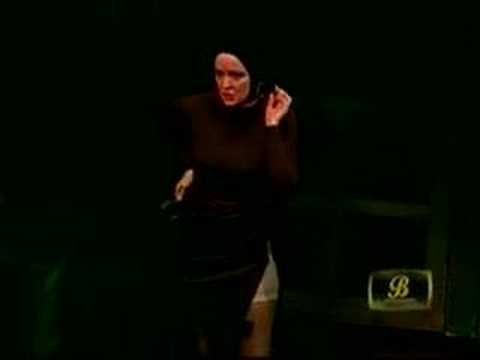
Review: why these lyrics cut
How do you write songs for people who are always performing, even when nobody is watching? Grey Gardens answers by making language into a stage. Michael Korie’s lyrics behave like polite society talk at first: clipped, stylish, half-sung as if the room might judge you for feeling too much. Then the rhymes tighten and the jokes turn into tells. The words are not just character. They are camouflage.
The show is built on a structural dare. Act I is 1941, a bright invention set inside the Beales’ moneyed world at their East Hampton estate. Act II lands in 1973 and leans hard into the documentary’s raw material. That shift changes what lyrics are allowed to do. In Act I, songs glide like cocktails: social codes, flirtation, reputation management. In Act II, lyrics become a blunt instrument. It is not simply confession. It is bargaining. Little Edie sings to win space in a shrinking house, to win oxygen in a conversation that keeps turning back to Mother.
Scott Frankel writes in a smart pastiche vocabulary, pulling from classic American song styles without turning the score into a museum. That matters because the Beales hear life as old music. Big Edie thinks in showbiz logic. Little Edie thinks in poses. The score gives them a shared grammar, and the lyricist keeps slipping in psychological detail that stains the pretty surfaces. When the songs are funny, they still feel cornered.
If you want a practical listener tip: play the Broadway cast recording straight through once without skipping. This is one of those albums where transitions and reprises do plot work, especially once Act II starts circling back on earlier promises.
How it was made
Grey Gardens is an unusual Broadway family tree: a musical based on a documentary, with Act II intentionally echoing the film’s rhythms. Doug Wright’s book has to invent in Act I and then submit to a different kind of truth in Act II. That split is the point. The first half imagines the life the Beales might have performed if the doors had stayed open. The second half shows what they perform when the doors are stuck.
In interviews around the UK premiere, the writers talked about the challenge of honoring the documentary while still writing musical theatre. That tension shaped the lyric approach. Korie’s best lines often sound like a person cleaning up a mess with a napkin that is already soaked. They do not explain away the Beales. They frame them, then let the frame crack.
The PBS documentary about the making of the stage piece is useful if you care about process rather than mythology. It tracks the move from cult film to stage musical and treats the creative team like working craftspeople, not geniuses in a vacuum. That kind of behind-the-scenes record is rare for a show that lives so much in legend.
One more craft detail that matters for lyric meaning: the show’s casting concept is built into the storytelling. The same performer who plays Big Edie in Act I becomes Little Edie in Act II, and the Act I Little Edie becomes Act II Big Edie. The audience hears repeated phrases differently because the mouths have changed.
Key tracks & scenes
"The Five-Fifteen" (Ensemble, 1941)
- The Scene:
- Guests arrive like a moving magazine spread. The estate is polished, the air is summer-thick, and everyone is pretending they are relaxed. Productions often light this with warm party glow that starts to feel too bright, like a photo taken with the flash too close.
- Lyrical Meaning:
- A social machine introducing itself. The lyric’s cheer is the point and the warning. It turns arrival into choreography, and you can hear how the Beales learned to confuse love with applause.
"Mother Darling" (Edie and Edith, 1941)
- The Scene:
- Mother and daughter alone, backstage in their own house. The room tightens. The party noise fades to a distant threat. The scene plays best when the lighting drops a notch, as if the house itself wants privacy for the fight.
- Lyrical Meaning:
- This is not a simple plea. It is a negotiation where affection is used as leverage. The lyric gives Edie sweetness that curdles in real time, and it paints Edith as both diva and jailer.
"Peas in a Pod" (Edie and Edith, 1941)
- The Scene:
- Two women performing sameness, almost like a vaudeville turn. Many stagings make this visually symmetrical: matching gestures, mirrored blocking, a choreographic joke that slowly stops being funny.
- Lyrical Meaning:
- The lyric sells “twinship” as comfort, but it also reveals the trap. If you are the same, you never have to leave. It is intimacy presented as destiny.
"The Telegram" (Edie, 1941)
- The Scene:
- A message arrives and the temperature changes. The party world keeps moving, but Edie freezes in a small pool of light, reading what life has decided without her.
- Lyrical Meaning:
- News in musical theatre is usually plot. Here it is fate. The lyric does not need to shout. It lets bureaucracy do the cruelty.
"Will You?" (Edith, 1941)
- The Scene:
- Edith as the evening’s headline act. The room becomes her stage. When directors lean into it, the lighting turns theatrical on purpose, a spotlight that exposes how much she requires an audience.
- Lyrical Meaning:
- The song is romantic on the surface, but the lyric reads like ownership. It is a question that expects agreement. In the context of the mother-daughter bond, it lands as a vow and a threat.
"The Revolutionary Costume for Today" (Edie, 1973)
- The Scene:
- Little Edie explains her outfit like a manifesto, surrounded by the house’s glorious ruin. Many productions sharpen the light here, turning the clutter into a runway. It can feel like stand-up comedy with teeth.
- Lyrical Meaning:
- Clothing becomes language. The lyric is witty, fast, and defensive. The joke is armor: if she narrates herself first, nobody else gets to.
"The House We Live In" (Edie and Ensemble, 1973)
- The Scene:
- The house is no longer a location. It is a character with a pulse. Stagings often let the ensemble move like memory or like pests, depending on taste, with lighting that emphasizes broken corners and leftover grandeur.
- Lyrical Meaning:
- The lyric turns architecture into biography. It is not only about decay. It is about choosing the story you will call home when the world stops calling.
"Another Winter in a Summer Town" (Edie and Edith, 1973)
- The Scene:
- A late-act reckoning that feels like the lights have gone down inside the body. Even in bright designs, directors often cool the palette here, giving the sense that summer is an idea, not a season.
- Lyrical Meaning:
- The lyric is the show’s emotional bill. It names stasis without glamour and lets love and resentment sit in the same chair, because that is what this relationship does.
Notes & trivia
- The original Broadway production opened on November 2, 2006 at the Walter Kerr Theatre and ran through July 29, 2007.
- The show’s setting is explicit: Act I takes place in July 1941 at Grey Gardens in East Hampton, and Act II shifts to 1973 in the same house.
- The Broadway run earned 10 Tony nominations and won three, including performance awards for Christine Ebersole and Mary Louise Wilson.
- The Off-Broadway cast recording hit stores on August 22, 2006.
- The Original Broadway Cast Recording was released on March 27, 2007 by PS Classics and later received a Grammy nomination for Best Musical Show Album.
- Version-spotting for lyric fans: the Broadway score introduced new songs and removed others from the Off-Broadway lineup, so “your favorite lyric” may belong to a specific edition of the show.
- Listening tip: if you want the cleanest narrative, use the Broadway cast album. If you want more alternate material and a different first-act architecture, sample the Off-Broadway recording too.
Reception
Early reactions tended to orbit one central surprise: this story, so notorious for squalor and voyeurism, could be made into musical theatre without turning the Beales into a cheap joke. Many critics praised the craft and the risk, even when they questioned the balance of invention and documentary.
“Grey Gardens” is as boldly odd, original and beguiling as its subjects.
Doug Wright has done a shrewd expansion job.
Grey Gardens isn’t the revolutionary musical for today, but you won’t see the likes of its star anywhere else.
What has aged best is not the headline premise. It is the score’s ability to hold two tones at once: period sheen and private desperation. That is why the lyrics keep earning fresh readings in smaller theatres, where the show plays like chamber music with a busted chandelier overhead.
Live updates 2025/2026
Information current as of January 27, 2026. Grey Gardens remains active as a licensed title, with new productions appearing in regional, community, and educational settings rather than as a long-running commercial tour. A clear example: Cedar Falls Community Theatre scheduled the musical for March 28 to April 6, 2025, with ticket prices publicly listed for adults and students.
For producers and performers, this is the show’s current footprint: it thrives where audiences are close enough to catch every small choice. If you are seeing it live, pick seats that keep you near facial detail, because a lot of the comedy and pain happens in the flicker between lines.
In rights and materials terms, Concord Theatricals lists the show for licensing and scripts, which is the practical indicator that the title is in circulation and bookable for new stagings.
There is also a parallel phenomenon worth noting: works inspired by the Grey Gardens story continue to appear (including cabaret-style projects announced for 2026). They are not the Frankel, Korie, and Wright musical, but they do signal ongoing cultural appetite for the Beales as icons.
Quick facts
- Title: Grey Gardens
- Year: 2006 (Off-Broadway premiere; Broadway opened November 2, 2006)
- Type: Musical drama
- Book: Doug Wright
- Music: Scott Frankel
- Lyrics: Michael Korie
- Based on: the 1975 documentary film Grey Gardens by Albert and David Maysles (with collaborators)
- Primary setting: Grey Gardens estate, East Hampton, New York (Act I: 1941; Act II: 1973)
- Original Broadway venue: Walter Kerr Theatre
- Cast album (Broadway): PS Classics, released March 27, 2007
- Cast album availability: widely available on major streaming platforms
- Licensing: listed through Concord Theatricals
Frequently asked questions
- Is Grey Gardens a true story?
- Act II closely follows the 1975 documentary’s world and language, while Act I is an imaginative backstory built around a fictionalized 1941 event that helps explain how the Beales arrived at the later reality.
- Who wrote the lyrics for Grey Gardens?
- Michael Korie wrote the lyrics, working with composer Scott Frankel and book writer Doug Wright.
- Why does the show switch eras between Act I and Act II?
- The split is the musical’s thesis. Act I shows the Beales inside the rules of wealth and social performance. Act II shows what happens when those rules collapse but the need to perform does not.
- Which recording should I start with?
- If you want the cleanest story path, start with the Original Broadway Cast Recording. If you want to compare material changes, try the Off-Broadway recording afterward and note what was added, replaced, or removed.
- Is Grey Gardens touring in 2025 or 2026?
- No major commercial tour announcement is reliably documented in the sources used here. The show is, however, actively produced via licensing, with recent examples in community and regional schedules.
- Is there an official film of the stage musical?
- There is extensive video material around the documentary, adaptations, and promotional clips, plus a PBS documentary about the musical’s making. A definitive, widely released filmed stage version is not indicated by the sources referenced for this article.
Key contributors
| Name | Role | Contribution |
|---|---|---|
| Doug Wright | Book | Built a two-era structure that contrasts invented 1941 material with a 1973 act that echoes the documentary’s texture. |
| Scott Frankel | Composer | Wrote a period-aware score that supports both social comedy (Act I) and late-life exposure (Act II). |
| Michael Korie | Lyricist | Lyrics that pivot from society polish to defensive self-mythmaking, with jokes that reveal character pressure. |
| PS Classics | Label | Released the Original Broadway Cast Recording (2007) and supported earlier recordings tied to the show’s development. |
| Concord Theatricals | Licensing | Lists the title for performance licensing and script materials, keeping the show available for new productions. |
| PBS Independent Lens | Documentary platform | Hosted the documentary about the musical’s journey from East Hampton to Broadway, offering process context. |
Sources: IBDB (Internet Broadway Database), Playbill, PS Classics, Apple Music, Variety, TIME, New York Magazine, PBS Independent Lens, Concord Theatricals, StageAgent, Musical Theatre Review, Cedar Falls Community Theatre.