
Addams Family, The Lyrics: Song List
- Addams Family Theme
- Overture
- When You're An Addams
- Pulled
- Where Did We Go Wrong
- One Normal Night
- Morticia
- What If
- Full Disclosure
- Waiting
- Full Disclosure - Part 2
- Just Around The Corner
- The Moon And Me
- Happy/Sad
- Crazier Than You
- Let's Not Talk About Anything Else But Love
- Let's Not Talk About Anything Else But Love (Reprise)
- In The Arms
- Live Before We Die
- Tango De Amor
- Move Toward The Darkness
About the "Addams Family, The" Stage Show
Release date of the musical: 2010
“The Addams Family (Soundtrack from the Musical) [Bonus Track Version]” – Album Guide to Tracks and Key Scenes
Review
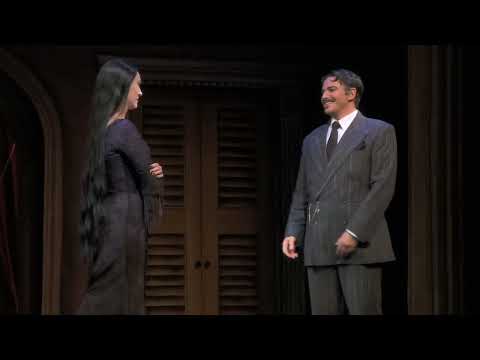
How do you write a family-friendly musical about a family that adores graveyards, torture racks and moonlit misery — and still make it feel warm and romantic? The cast recording of The Addams Family walks that tightrope with a knowingly camp grin. Across a little over an hour, the album spins the original Broadway story of Wednesday bringing her “normal” boyfriend Lucas and his Ohio parents to dinner at the Addams mansion, then letting secrets, potions and generational panic do their worst. As an audio experience, it plays like a darkly fizzy screwball comedy, anchored by Gomez and Morticia’s marriage and Wednesday’s growing-up crisis.
On record, Andrew Lippa’s score leans into old-school Broadway craft: character songs that actually move plot, punchline-heavy ensemble numbers, and a handful of big emotional turns that sneak up on you between jokes. Numbers like “Pulled,” “Happy/Sad” and “Crazier Than You” give the show an emotional spine under all the cobwebs, while the graveyard opener “When You’re an Addams” and the climactic “Move Toward the Darkness” frame the evening as one long family ritual. You can hear why the show divided critics but turned into a crowd-pleaser — the album preserves the show’s high gloss and its loopy, deadpan heart.
Genre-wise, the album lives in a playful mash-up: classic Broadway swing and patter for Gomez, smoky cabaret for Morticia, pop-rock and emo-tinged belting for Wednesday, and vaudeville novelty for Uncle Fester. Each style maps neatly to a character’s inner life — jazz-tinged grooves for Gomez’s romantic bravado, gothic pop for Wednesday’s teenage turmoil, a sentimental waltz sheen over Gomez’s panic in “Happy/Sad.” The score constantly rubs sunny musical-theatre warmth against morbid lyrics, so the surface polish clashes deliciously with the family’s love of death and doom. That tension is the whole point: the Addamses sound “wrong” in a way that ends up feeling deeply right.
How It Was Made
The musical itself began life in the late 2000s, when producers secured rights from the Tee and Charles Addams Foundation to create the first stage work based directly on Charles Addams’ cartoons rather than the TV or film versions. Marshall Brickman and Rick Elice shaped an original story about Wednesday falling in love with a “normal” boy, while Andrew Lippa wrote music and lyrics that riff on the macabre tone without simply recycling the television theme. After a major 2009 tryout in Chicago, the show opened on Broadway at the Lunt-Fontanne Theatre in April 2010 with Nathan Lane and Bebe Neuwirth heading the cast as Gomez and Morticia.
The original Broadway cast recording was produced by Decca Broadway, with Lippa himself as album producer. The cast recorded the album in April 2010 between performances, capturing most of the Broadway score in a tight studio session that smoothed out some of the onstage chaos into clean vocal and orchestral lines. The CD was available early at the theatre box office and then released commercially in June 2010; later digital editions — including the Soundtrack from the Musical [Bonus Track Version] — added material such as Lippa’s own performance of “Not Today” as a bonus cut. The record preserves several songs that would later be altered or replaced for the post-Broadway touring script, making it a snapshot of the first, more opulent version of the show.
Behind the songs, the same creative team that built the Broadway staging shaped what we hear. Orchestrator Larry Hochman gives the pit band a lush, sometimes tongue-in-cheek symphonic sound, while musical direction (originally by Mary-Mitchell Campbell) keeps the comedy rhythm razor-sharp. The producers lean into the show’s hybrid DNA: you get the famous Vic Mizzy television theme as a wink in the “Addams Family Theme / Overture,” then the recording dives straight into Lippa’s original material. The result is less a greatest-hits package and more a full audio tour through one very long, very weird family dinner.
Tracks & Scenes
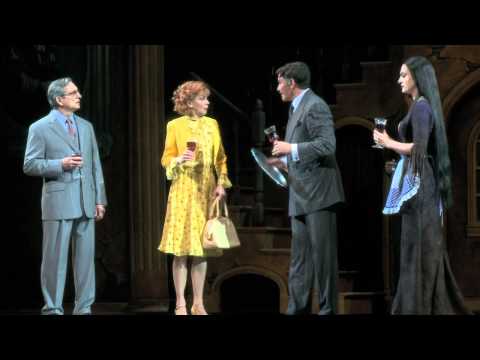
Below are key songs from the Broadway album and how they function in the story. Timings are approximate stage moments rather than strict timecodes — think of them as a guided listening map for the full show.
“Addams Family Theme / Overture” (Orchestra, Vic Mizzy motif & Andrew Lippa)
- Where it plays:
- The album opens with a sly nod to the iconic television theme, folding the famous snapped rhythm into a full orchestral overture. Onstage, this plays as the curtain rises and the ancestors begin to assemble in the graveyard. The music teases fragments of later melodies, setting a mischievous, slightly ominous atmosphere before any dialogue is spoken.
- Why it matters:
- It bridges the audience’s nostalgia for earlier Addams incarnations with Lippa’s new score, telling listeners “yes, this is that family, but in a new musical world.”
“When You’re an Addams” (Addams Family, Ancestors)
- Where it plays:
- Early in Act I, roughly 5–10 minutes into the show, the family gathers in the crypt for their annual graveyard celebration. Gomez leads a twisted family anthem while spectral ancestors burst from tombs and join a morbid line dance through the cemetery. Stage directions call for ghoulish party games, swordplay and choreography that turns the graveyard into a bizarre family reunion.
- Why it matters:
- It lays out the Addams code: loyalty, weirdness and blissful disregard for normal manners. On the album, it’s the mission statement track — big chorus, big orchestration, and instant mood-setter.
“Pulled” (Wednesday, Pugsley)
- Where it plays:
- Still in Act I, Wednesday torments Pugsley on a medieval rack in the playroom while confessing that she feels “pulled” in a new direction by her feelings for Lucas. The scene starts with comic sibling cruelty — the sound of stretching ropes, Pugsley’s delighted squeals — then shifts as she admits that love is messing with her carefully curated darkness.
- Why it matters:
- This is Wednesday’s “I want” song, framed as a mini emo power ballad. It signals that the plot will revolve around her internal tug-of-war between Addams gloom and inconvenient happiness.
“Where Did We Go Wrong” (Morticia, Gomez)
- Where it plays:
- Right after Wednesday’s confession, Morticia and Gomez share a moment in the mansion as they fret about their daughter’s alarming signs of normalcy. The orchestration softens and the two parents volley worries back and forth while gliding through the house like elegant spectres, checking in on their sleeping children and the lurking ancestors.
- Why it matters:
- The track reframes the Addamses as anxious parents rather than just punchline machines. The humor comes from their inverted values, but the concern is recognisably human.
“One Normal Night” (Company)
- Where it plays:
- As the Beinekes drive in from Ohio and approach Central Park, Wednesday pleads with both families to act “normal” for just one dinner. The song cross-cuts between the Addams mansion being frantically readied for guests and the Beinekes walking through the park, rehearsing small talk and trying to imagine what a “regular” New York family might be like.
- Why it matters:
- It crystallises the clash between gothic chaos and suburban repression, layering their two musical styles together until they literally collide at the front door.
“Morticia” (Gomez, Male Ancestors)
- Where it plays:
- Midway through the first act, Gomez and the male ancestors sneak away as he sings a Latin-flavoured love song about Morticia’s allure. Onstage, this often becomes a mini nightclub routine, with Gomez tangoing with spectres and conjuring visions of his wife framed in shadowy doorways and coffin-shaped arches.
- Why it matters:
- The number sells Gomez’s over-the-top devotion, which later makes his lying to Morticia about Wednesday’s secret feel much more painful.
“What If” (Pugsley)
- Where it plays:
- Pugsley gets a solo as he worries about losing Wednesday to her new boyfriend. In the nursery, surrounded by torture devices and creepy toys, he imagines scenarios where his sister leaves and his favourite tormentor is gone. The song often plays over a montage of him plotting to steal Grandma’s truth potion to keep the family from changing.
- Why it matters:
- It gives the youngest Addams a clear emotional engine, turning what could be a one-note sadist into a scared kid hiding behind mischief.
“Full Disclosure / Full Disclosure (Part 2)” (Company)
- Where it plays:
- The dinner party centerpiece: the Addamses insist the Beinekes join a party game called “Full Disclosure.” In the great hall, everyone sits around a long table as Gomez emcees, spirits swirl, and a goblet of spiked “Acrimonium” potion waits for its victim. Alice accidentally drinks the potion and, in Part 2, explodes with repressed anger and honesty, exposing the Beinekes’ failing marriage and shaking the room.
- Why it matters:
- On the album, these tracks are pure controlled chaos — overlapping vocals, shouted asides, and choral outbursts that dramatise the collision between truth and carefully curated family images.
“Waiting” (Alice)
- Where it plays:
- After the disastrous dinner, the potion fully hits Alice and she wanders through the mansion, confessing how long she has been waiting for Mal to see her as a partner again. The staging often puts her alone under a harsh spotlight, with ancestors echoing her words from the shadows like a ghostly support group.
- Why it matters:
- The song deepens the “normal” family. It shows that the Beinekes are at least as broken as the Addamses, just in less theatrical ways.
“Just Around the Corner” (Morticia, Ancestors)
- Where it plays:
- At the top of Act II, Morticia misreads the evening’s events as proof that she’s grown old and irrelevant. In the family graveyard, surrounded by tombstones and dancing ancestors, she cheerfully muses on the proximity of death, treating the afterlife like an exciting vacation she might book tomorrow.
- Why it matters:
- It’s a perfect distillation of Addams logic: the more cheerful Morticia sounds, the darker the subject matter. The tune is jaunty, almost music-hall in feel, which makes her fixation on mortality perversely uplifting.
“The Moon and Me” (Fester, Female Ancestors)
- Where it plays:
- Uncle Fester takes centre stage on the rooftop as he serenades the Moon, revealing that he’s literally in love with her. The female ancestors swirl around him as lunar spirits while he strums a ukulele and plans to strap himself to a rocket. The song plays like a gentle lullaby amid the surrounding chaos.
- Why it matters:
- It’s an unexpected emotional highlight: a silly concept played with such sincerity that Fester’s weird romance becomes oddly touching, underscoring the show’s belief that every kind of love deserves its song.
“Happy/Sad” (Gomez)
- Where it plays:
- Later in Act II, Gomez speaks to Wednesday alone, acknowledging that watching her grow up makes him both proud and heartbroken. Usually staged on a quiet part of the set — perhaps in a hallway or just outside the house — the scene strips away the gags, leaving just a father, his daughter and a simple melodic line.
- Why it matters:
- On the album, this is the emotional core of Gomez’s arc. The gentle, almost Sondheim-like harmonies underline that the real stakes are parental, not supernatural.
“Crazier Than You” (Wednesday, Lucas, often with Mal & Alice)
- Where it plays:
- In the woods near the mansion, Wednesday and Lucas argue about trust. Lucas allows Wednesday to blindfold him and shoot an apple off his head with her crossbow. The number escalates into a love duet, often joined by Mal and Alice as they rediscover their own spark amid impending disaster.
- Why it matters:
- It’s the show’s big pop-rock love song, built on the idea that real commitment means embracing how “crazy” the other person truly is. The cast recording captures the accelerating tempo and overlapping declarations.
“Let’s Not Talk About Anything Else But Love” (Gomez, Mal, Fester; Reprise with Grandma)
- Where it plays:
- In the Broadway version, the main song appears in Act II as Gomez and Fester try to coax Mal into admitting his feelings. Down in a shadowy grotto and later in Grandma’s cluttered space, they push him to stop hiding behind work and cynicism. The reprise brings Grandma in, weaving in bawdy jokes and a more relaxed swing feel.
- Why it matters:
- It ties the three couples together thematically — Gomez and Morticia, Wednesday and Lucas, Mal and Alice — by insisting that all the chaos swirling around them really comes down to whether they dare to love.
“In the Arms” (Mal, Alice)
- Where it plays:
- After a surreal detour (in the Broadway plot, Mal has a transformative encounter with the Addamses’ beloved squid, Bernice), he returns to Alice and admits he wants their marriage back. The song usually begins with Mal alone, then Alice joins, and the ancestors echo their renewed vows as the staging moves from comic absurdity into genuine tenderness.
- Why it matters:
- It completes the Beinekes’ arc from uptight visitors to willing participants in the Addams world, and musically, it softens the earlier brassy comedy into a gentle reconciliation duet.
“Live Before We Die” & “Tango de Amor” (Gomez, Morticia, Ancestors)
- Where it plays:
- Near the end of Act II, Gomez and Morticia confront their marital rift. “Live Before We Die” starts as a frustrated argument, then turns into a passionate re-commitment. As they seal their renewed vows, the orchestra surges into “Tango de Amor,” and the whole company joins in a huge, stylised tango sequence that covers the stage in swirling black dresses and flickering candelabras.
- Why it matters:
- These tracks are the musical’s romantic peak — a reminder that the Addams marriage is the show’s emotional anchor. On record, the tango arrangement lets the pit band cut loose.
“Move Toward the Darkness” (Company)
- Where it plays:
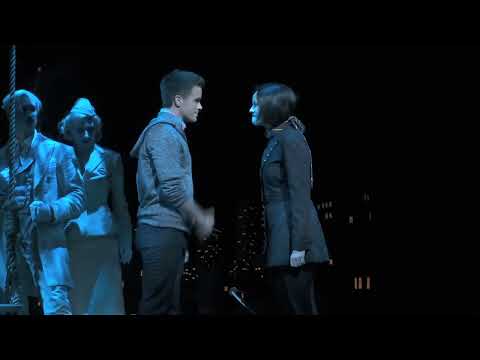
- The finale brings both families together in the mansion’s great hall as the ancestors watch from their crypts. Fester straps himself to a rocket to join his beloved Moon, Lurch finally sings a surprise solo, and Wednesday and Lucas stand with their parents in a newly united clan. The lighting often shifts to a silvery bluish wash as the family literally moves toward the darkness — and, metaphorically, toward honesty.
- Why it matters:
- It inverts the usual Broadway “walk into the light” trope. The music is warm and almost hymn-like, making the word “darkness” sound like home rather than doom.
Trailer & non-album cues
- Where they play:
- The official Broadway trailer (the YouTube video used above) cuts together moments from “When You’re an Addams,” “Pulled” and snippets of “Full Disclosure,” layered over shots of the graveyard opening, dinner table chaos and the tango. The familiar TV theme stinger often bookends TV spots, even when the full song doesn’t appear in the stage script.
- Why it matters:
- Marketing leans hard on what audiences already recognise — the snap rhythm and creepy visuals — then sneaks in Lippa’s original songs as the real selling point.
Notes & Trivia
- The album captures the pre-tour Broadway version of the score. Later licensed versions change the running order and replace songs like “Where Did We Go Wrong” with new material.
- “Not Today,” a song for Gomez in the touring script, appears on some digital releases as a bonus track sung by composer Andrew Lippa rather than the character.
- Although the show uses the famous television snap motif, nearly all the musical material on the album is original; the Vic Mizzy theme functions as a framing device, not a crutch.
- Because of the heavily visual gags onstage (puppetry, quick changes, squid tentacles), some listeners feel the album is actually the best way to appreciate the score cleanly, without distractions.
- Several later international productions made small lyric tweaks and trims, but they typically kept the Broadway album as the musical reference point for style and orchestration.
Reception & Quotes
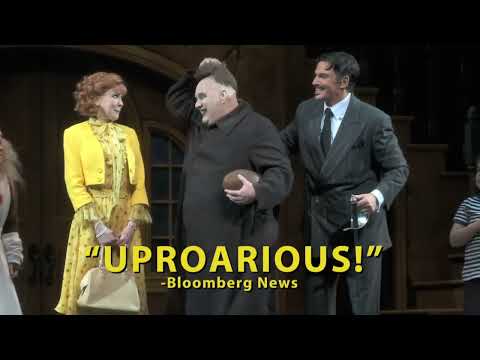
When The Addams Family opened on Broadway, critics were often harsh about the book and pacing but more generous about the cast and music. Reviews singled out Nathan Lane’s Gomez and Kevin Chamberlin’s Uncle Fester as standouts, and even negative notices grudgingly praised the lavish design and some of Lippa’s songs. At the same time, the show quickly became a commercial hit, selling strongly at the Lunt-Fontanne and building a global touring and licensing life that outlived its original New York run.
The cast album, perhaps surprisingly, drew kinder notices. Reviewers noted that without the busy staging, the score played as a tight, character-driven collection of songs. Some fan communities treat the album as a “secret favourite” — a record they enjoy even if they agree the Broadway book had structural problems. The recording has also become the de facto reference for amateur and school productions, even though many now use the revised tour script.
“Some cast recordings sound almost as good as the show live. The Decca recording of The Addams Family sounds better.” CD review, Washington-based theatre critic
“An A+ cast recording… the funniest new musical album of its season.” Online Broadway fan review
“Lane’s Gomez is so strong he nearly overpowers the show’s structural flaws.” Early Broadway review summary
“The score mixes pastiche and heartfelt ballads in a way that shouldn’t work, but somehow does.” Contemporary album review, 2010s
In terms of availability, the album has remained in print in various forms: the original Decca Broadway CD, digital releases branded as Original Cast Recording, and the Soundtrack from the Musical [Bonus Track Version] on major streaming platforms. Listeners should note that the album reflects the 2010 Broadway structure, not the later revised touring script that most modern productions perform.
Interesting Facts
- The musical was the first major stage work based directly on Charles Addams’ original cartoons, not on the TV shows or films.
- Despite mixed-to-poor Broadway reviews, the production won major design awards for its sets and achieved a long run and multiple tours.
- The album’s booklet on the original CD release included full lyrics and production photos, something many cast recordings had quietly dropped by 2010.
- Krysta Rodriguez’s performance of “Pulled” became a go-to audition and cabaret piece for musical-theatre performers worldwide, often discovered through this album.
- The show’s plot was significantly rewritten for the first national tour; the album therefore documents a “lost” version of the story now mostly preserved on disc.
- International productions in countries from Brazil to Sweden and Australia often retain the Broadway orchestrations heard on the recording even when translations change the lyrics.
- The success of the cast album helped justify the show’s large production budget for producers and investors, showing that the property had a life beyond Broadway.
Technical Info
- Title: The Addams Family (Soundtrack from the Musical) [Bonus Track Version] / The Addams Family (Original Broadway Cast Recording)
- Year: 2010 (recorded April 2010; initial release June 8, 2010, with early in-theatre sales from June 1)
- Type: Stage musical cast recording / soundtrack album
- Main creative work: The Addams Family – A New Musical Comedy (Broadway, Lunt-Fontanne Theatre)
- Music & lyrics: Andrew Lippa
- Book (show): Marshall Brickman & Rick Elice
- Principal performers on album: Nathan Lane (Gomez), Bebe Neuwirth (Morticia), Krysta Rodriguez (Wednesday), Kevin Chamberlin (Uncle Fester), Carolee Carmello (Alice), Terrence Mann (Mal), Wesley Taylor (Lucas), Jackie Hoffman (Grandma), Adam Riegler (Pugsley), Zachary James (Lurch)
- Label: Decca Broadway / Decca Label Group (later digital editions also listed under Verve/Decca family labels)
- Producers (album): Andrew Lippa (album producer) in association with Decca Broadway
- Music supervision / direction (stage basis): Mary-Mitchell Campbell (original Broadway music director), with orchestrations by Larry Hochman
- Recording details: Commercial studio recording featuring most Broadway musical numbers; some songs and reprises streamlined for album flow
- Selected notable placements (within the show): “When You’re an Addams” – graveyard prologue; “Pulled” – Wednesday and Pugsley in the torture playroom; “Full Disclosure” – dinner party game in the great hall; “The Moon and Me” – Fester’s rooftop serenade; “Move Toward the Darkness” – finale in the mansion hall
- Release context: Tied to the original Broadway production’s opening season; issued while the show was still running and before the score’s later revisions for touring
- Availability: CD, download and major streaming services (often under both “Original Cast Recording” and “Soundtrack from the Musical” branding)
- Chart / sales notes: Benefited from strong Broadway box-office interest; widely cited in industry press as a solid seller in Decca’s cast-album catalogue for the 2010s.
Key Contributors
| Subject | Relation | Object |
|---|---|---|
| Andrew Lippa | wrote music & lyrics for | The Addams Family (musical) |
| Marshall Brickman | co-wrote book for | The Addams Family (musical) |
| Rick Elice | co-wrote book for | The Addams Family (musical) |
| Charles Addams | created characters for | The Addams Family cartoons |
| Stuart Oken | produced | The Addams Family Broadway musical |
| Roy Furman | produced | The Addams Family Broadway musical |
| Elephant Eye Theatricals | served as lead producing organization for | The Addams Family Broadway production |
| Phelim McDermott | co-directed and designed | original Broadway staging |
| Julian Crouch | co-directed and designed | original Broadway staging |
| Sergio Trujillo | choreographed | original Broadway production |
| Nathan Lane | performed role of | Gomez Addams (original Broadway cast) |
| Bebe Neuwirth | performed role of | Morticia Addams (original Broadway cast) |
| Krysta Rodriguez | performed role of | Wednesday Addams (original Broadway cast) |
| Kevin Chamberlin | performed role of | Uncle Fester (original Broadway cast) |
| Carolee Carmello | performed role of | Alice Beineke (original Broadway cast) |
| Terrence Mann | performed role of | Mal Beineke (original Broadway cast) |
| Decca Broadway | released cast album | The Addams Family (Original Broadway Cast Recording) |
| Lunt-Fontanne Theatre | hosted Broadway run of | The Addams Family (musical) |
| Ford Center for the Performing Arts, Oriental Theatre (Chicago) | hosted pre-Broadway tryout of | The Addams Family (musical) |
| Andrew Lippa | produced album | The Addams Family Original Broadway Cast Recording |
Questions & Answers
- Is the cast album the same version of the show that theatres license today?
- Not exactly. The recording reflects the original 2010 Broadway version, while modern licensed productions usually use the revised touring script, which changes and replaces several songs.
- What is the difference between the “Original Broadway Cast Recording” and “Soundtrack from the Musical” editions?
- They draw from the same 2010 sessions, but digital “Soundtrack from the Musical” releases may add bonus tracks, alternate mixes and updated label branding while keeping the core track list.
- Does the album include the classic TV Addams Family theme in full?
- You hear the iconic snap rhythm and motif in the opening “Addams Family Theme / Overture,” but the score mostly uses Andrew Lippa’s original songs rather than a full cover of the TV theme.
- Which song should I start with if I just want a quick taste?
- For character comedy, try “Pulled” or “When You’re an Addams.” For emotional depth, go straight to “Happy/Sad” or the finale “Move Toward the Darkness.”
- Is there any music on streaming that isn’t heard in the Broadway production?
- Yes. Some digital releases include Andrew Lippa singing “Not Today,” written for later versions of the script, giving listeners a peek at how the score evolved after Broadway.
Sources: official Broadway and label materials; Wikipedia and Fandom musical entries; Apple Music and Spotify album pages; Discogs and retail listings; theatre reviews and CD reviews from 2010 onwards; licensed script and scene breakdown documents.