
Young Frankenstein Lyrics: Song List
- Act 1
- Overture
- The Happiest Town
- The Brain
- Please Don't Touch Me
- Together Again
- Roll In The Hay
- Join The Family Business
- He Vas My Boyfriend
- The Law
- Life, Life
- Welcome To Transylvania
- Transylvania Mania
- Act 2
- He's Loose
- Listen to Your Heart
- Surprise
- Please Send Me Someone
- Man About Town
- Puttin' On The Ritz
- Deep Love
- Frederick's Soliloquy
- Deep Love (Reprise)
- Finale
About the "Young Frankenstein" Stage Show
The script was written by now 90-years-old Mel Brooks and T. Meehan. Songs created M. Brooks. In October 2006, tryouts started. The spectacle was undertaken by director and choreographer S. Stroman. The cast involved: B. d'Arcy James, K. Chenoweth, S. Hensley, M. Kudisch & S. Foster. The premiere of a show was held in Seattle Paramount Theatre from Aug. to Sept. 2007. The production has been developed by S. Stroman. The theatrical included this cast of actors: R. Bart, C. Fitzgerald & A. Martin amongst others. In October 2007 were started new tryouts for Broadway. The play settled in the Hilton Theatre from late 2007 to beginning of 2009, exhibiting 29 preliminaries and 485 regular performances. The entire organization process belongs to S. Stroman. The show had such actors: R. Bart, S. Foster, C. Fitzgerald, S. Hensley & M. Mullally.
In September 2009, Providence Performing Arts Center hosted the start of the 1st North American tour. The tour gathered the following actors: R. Bart, S. Hensley, C. English, B. Oscar & B. Curry. From August to September 2010, it was suspended and then – resumed with the new composition of the actors. This time, it involved: C. Ryan, P. Truman Boyd, D. Benoit & J. DiVita. It completed in May 2011. In September 2011 started the 2nd national tour with such actors: A. J. Holmes, L. Dorsett, E. Pawlowski & R. Donovan. From January to March 2014, the play was hosted by Drury Lane Oakbrook Theatre. The director was W. Osetek, choreographer – T. Mader. The cast consisted of: D. DeSantis, T. Taylor, J. Dumas & P. Scrofano. In July 2016, the histrionics was held at The Muny. Theatrical has been developed by director M. M. Dodge and choreographer J. Rhodes. Actors, who participated: R. Petkoff, S. Gibson, S. Rosen & V. Lewis.
Release date of the musical: 2007
"Young Frankenstein" – The Musical Guide & Song Meanings
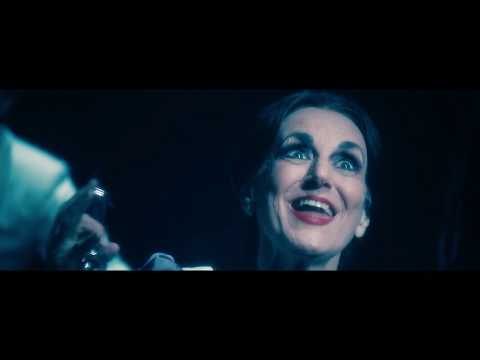
Review: what the lyrics are really doing
Can a parody of old monster movies support a full, two-act score without turning into a sketch revue with a merch table? “Young Frankenstein” mostly can, because Mel Brooks writes lyrics that behave like gears. They do three jobs at once: they deliver jokes, they explain the rules of this world, and they mark status. Frederick’s language is all denial and credentials, Elizabeth’s is all self-control and social performance, and the villagers’ is a mob with a rhyme scheme.
The score’s big trick is stylistic cosplay with intent. It leans into operetta-adjacent formality, pastiche Broadway belt, and old showbiz vamping, which matters because the characters are constantly pretending. Frederick pretends he isn’t a Frankenstein. The town pretends it’s welcoming. Even the Monster, once he’s in evening wear, performs “normal” like it’s a dance step. A cast member in the original lead-up described the writing as closer to operetta than “The Producers,” and that’s a useful lens: the jokes land harder when they’re delivered with mock-serious musical architecture.
Listener tip (Experience, not theory): if you’re new, play Act One through “Life, Life” before you see it. That’s the show’s entire argument. Then, in the theatre, sit far enough back to see full-stage symmetry (the big ensemble pictures) but close enough to catch face-level punchlines from Igor and Blucher. Rows that let you read expressions without losing the choreography are the sweet spot.
How it was made: from film reverence to stage mechanics
After “The Producers,” Brooks and Thomas Meehan started building “Young Frankenstein” for the stage in the mid-2000s, and early workshops were stacked with star casting experiments. Playbill’s workshop reporting from 2006 captures how quickly the project became a magnet for name talent, with readings trying out major comic personas before the eventual Broadway lineup settled. The point wasn’t only “make it funny.” It was “make it playable,” meaning: can the jokes be musicalized without losing tempo?
Brooks was still writing the score while talking publicly about it in 2006, including shaping a number for Frau Blucher with deliberately stylized German flavor. That matters because the show’s lyric strategy is accent-as-comedy, but also accent-as-character weapon. Blucher’s musical identity is a seduction trap dressed as a housekeeping schedule.
Then the technical side: the cast album wasn’t an afterthought. Decca Broadway announced a release for late December 2007, with orchestrator Doug Besterman producing the recording, and Playbill later noted the album even includes a bonus track of a cut song (“Alone”), sung by Megan Mullally. That tiny fact reveals something big: this show was edited like a comedy film. Bits got trimmed. Tracks survived as artifacts.
One more practical, fan-useful detail: MTI licenses both an “Original Broadway Version” and a “West End Version,” and third-party production notes point out that the West End version is engineered to be more keyboard-forward and smaller-pit friendly, with script and song differences. If you’ve only heard one recording, you may not have heard the same show your local theatre rents.
Key tracks & scenes: 8 lyrical moments that carry the plot
"The Brain" (Frederick)
- The Scene:
- New York. Lecture hall brightness. Frederick performs professionalism like it’s a lab coat he can button over family shame, while students become a rhythmic audience for his certainty.
- Lyrical Meaning:
- The lyric is a manifesto of control. Frederick is trying to outrun inheritance with vocabulary. Every confident phrase is a hedge against the word “Frankenstein,” which he can’t quite bury.
"Please Don't Touch Me" (Elizabeth)
- The Scene:
- A send-off in motion. The staging often treats her as immaculate and untouchable, a poised silhouette against travel bustle, listing boundaries with cheerful precision.
- Lyrical Meaning:
- Elizabeth’s lyric is a character bio written in negative space. The comedy is restraint. The plot function is crucial: Frederick’s romantic life is performative, so his eventual surrender to chaos reads like a reversal of values, not only a gag.
"Together Again (for the First Time)" (Frederick, Igor)
- The Scene:
- Transylvania Heights. First encounter with Igor, who arrives with a grin and a sales pitch. The lighting often cools into gothic angles: welcome to the family business, whether you like it or not.
- Lyrical Meaning:
- Igor’s lyric is recruitment. The jokes are in the confidence. He treats fate like a reunion tour. This number plants the show’s main engine: Frederick’s refusal, Igor’s persistence.
"Roll in the Hay" (Inga, Frederick, Igor)
- The Scene:
- On the wagon ride to the castle. Wind, travel, and a sense that the countryside is conspiring. Inga steers the energy, making the world feel less threatening and more hormonally inconvenient.
- Lyrical Meaning:
- This is lust as comic destabilizer. The lyric punctures Frederick’s sterile identity. It also sets up the show’s running contrast: intellectual control versus bodily impulse.
"Join the Family Business" (Victor and ancestors, Frederick)
- The Scene:
- Castle interior. Frederick falls asleep reading, and the room turns into a dream tribunal. Expect theatrical fog, ancestor silhouettes, and a sense that the set itself has opinions.
- Lyrical Meaning:
- The lyric is inheritance with choreography. It frames “mad science” as tradition, almost a holiday ritual. Frederick’s resistance becomes less rational and more psychological, which gives Act One its spine.
"He Vas My Boyfriend" (Frau Blucher)
- The Scene:
- The castle’s secret emotional center. A lone violin and a woman who knows exactly where the bodies are, emotionally and literally. Lighting tends to narrow, turning the room into confession.
- Lyrical Meaning:
- Brooks writes Blucher as desire with a ledger. The lyric makes her funny, but it also makes her dangerous: she’s not a caretaker, she’s a gatekeeper to the lab and to the past.
"Life, Life" (Frederick, Igor, Inga, Blucher)
- The Scene:
- The lab. Machines, sparks, ritual choreography. The temperature of the show changes here: the joke density stays high, but the stakes become physical. This is where the lighting usually goes electric and unflattering in the best way.
- Lyrical Meaning:
- The lyric is ambition turning into prayer. It’s also the show’s most important line of causality: words and rhythm summon consequences. After this, every joke is paid for.
"Puttin' on the Ritz" (Frederick, the Monster, company)
- The Scene:
- A theatre within the theatre at the Loews Transylvania Theatre. The Monster in evening wear. Spotlight glamour that dares the audience to laugh at elegance. Then stage lights go wrong, and the night collapses.
- Lyrical Meaning:
- Public performance is the plot. The Monster’s social “passing” is literally choreographed. Also, myth-check: this song is Irving Berlin’s, not Brooks’s, and the show uses it because a familiar standard makes the Monster’s transformation legible in seconds.
"Deep Love" (Elizabeth, the Monster)
- The Scene:
- A cave after the kidnapping. The comedy softens into something more revealing. Elizabeth finally stops narrating her virtue and starts narrating her appetite, with the Monster as a surprisingly patient audience.
- Lyrical Meaning:
- The lyric completes Elizabeth’s arc. She isn’t “chilly” because she lacks feeling. She’s been staging herself. This song gives her the vocabulary to want something without apologizing for it.
Live updates (2025-2026): where the Monster is roaming now
Information current as of February 2026.
The most visible recent commercial life for “Young Frankenstein” is in the UK. Hope Mill Theatre mounted a new production running 10 October to 30 November 2025, followed by a festive transfer to Liverpool Playhouse from 3 December 2025 to 3 January 2026. What’s notable is not only the calendar timing (Halloween into holidays) but the casting and production scale: the revival was led by Ore Oduba as Frederick, with a full named supporting lineup and a contemporary UK creative team built around director-choreographer Nick Winston.
If you’re tracking the show as a listener, this matters because revivals often adjust pacing, orchestration weight, and comedic “air.” Official licensing also reflects that reality: MTI offers both the Original Broadway Version and a revised West End Version, with documented differences designed for different venue sizes and pit resources. In other words, “the score” is not a single fixed object in the wild.
Notes & trivia: specifics, not folklore
- The cast album release was set for 26 December 2007 by Decca Broadway, with Doug Besterman producing the recording.
- Playbill reported the album includes a bonus track of a cut song, “Alone,” sung by Megan Mullally. That’s a rare, useful window into what was trimmed after opening.
- MTI’s official synopsis makes the show’s structure unusually clean: by the end of Act One, the Monster is loose; Act Two is containment, public image, and romantic re-sorting.
- The Loews Transylvania Theatre sequence is a deliberate “stage inside the stage,” letting the show comment on its own need to entertain the crowd before the plot punishes everybody for it.
- Myth-check: “Puttin’ on the Ritz” is Irving Berlin’s song. The musical uses it as a pre-loaded cultural signal for sophistication, which makes the Monster’s dance both funnier and faster to read.
- Early development workshops in 2006 experimented with different marquee personalities for the roles, documented by Playbill during the workshop phase.
- Modern productions frequently choose between MTI’s Broadway and West End versions; the choice changes orchestration approach and, in some cases, lyric and script details.
Reception: what critics praised (and what they side-eyed)
Broadway reviews in 2007 were mixed on the “why musicalize this?” question, even when they admired the craft on display. The split is revealing: the show’s pleasure is often mechanical, in the best sense. It’s an engineering project built to deliver laughs at scale.
“The Broadway Musical at its dizziest, glitziest and funniest! … Brooks's lyrics are bright and witty.”
Source: Clive Barnes, New York Post (as reprinted by MTI).
“A high density of talent … ‘Puttin on the Ritz’ is truly exhilarating.”
Source: Ben Brantley, The New York Times (as reprinted by MTI).
“It’s alive … but just barely.”
Source: USA Today review excerpt (via New York Theatre Guide).
My read: the lyrics succeed most when they are character tactics, not decorative punchlines. The show is funniest when someone is trying to win, seduce, deny, or control, and the rhyme scheme becomes a weapon. When a number exists mainly to remind you of the movie, the stage has to work harder to justify the runtime.
Awards
- Outer Critics Circle Awards (2008): Nominee, Outstanding New Broadway Musical (per MTI listing).
- Outer Critics Circle Awards (2008): Playbill reported the show led that season’s nominations with ten.
Quick facts for humans and search engines
- Title: Young Frankenstein
- Broadway opening: 8 November 2007 (Hilton Theatre, now the Lyric Theatre)
- Book: Mel Brooks; Thomas Meehan
- Music and lyrics: Mel Brooks
- Based on: the 1974 film “Young Frankenstein” (Brooks and Gene Wilder)
- Setting: New York and Transylvania
- Cast album: Original Broadway Cast Recording, released 26 December 2007 (Decca Broadway); 21 tracks listed on major digital platforms
- Recording notes: Doug Besterman produced the cast recording; includes bonus track of cut song “Alone”
- Licensing: MTI offers an Original Broadway Version and a West End Version
- Recent staging spotlight: Hope Mill Theatre (Manchester) 10 Oct to 30 Nov 2025; transfer to Liverpool Playhouse 3 Dec 2025 to 3 Jan 2026
Frequently asked questions
- Who wrote the lyrics for “Young Frankenstein”?
- Mel Brooks wrote the music and lyrics, and co-wrote the book with Thomas Meehan.
- Is the cast album the same as the version licensed to theatres?
- Not always. MTI licenses multiple versions, including a West End Version with documented differences. The Original Broadway Cast Recording reflects the Broadway production and its orchestrational identity at that time.
- Is “Puttin’ on the Ritz” original to the musical?
- No. It’s Irving Berlin’s standard, used here as a deliberate “instant sophistication” device for the Monster’s public makeover.
- Where does “Life, Life” happen in the story?
- In the castle laboratory during the reanimation experiment, where Frederick commits fully to his grandfather’s work and the Monster is brought to life.
- Is “Young Frankenstein” currently running anywhere?
- In 2025-2026, the headline production activity was the UK run at Hope Mill Theatre with a holiday transfer to Liverpool Playhouse. Beyond that, the show remains active in licensed productions through MTI.
- What’s the cleanest way to follow the plot if I’m only listening?
- Use “The Brain” (identity), “Please Don’t Touch Me” (relationship baseline), “Life, Life” (point of no return), and “Puttin’ on the Ritz” (public experiment) as your plot anchors. The rest snaps into place around them.
Key contributors
| Name | Role | Contribution |
|---|---|---|
| Mel Brooks | Book, Music, Lyrics | Primary authorial voice; lyric strategy built on character status, parody formality, and rapid joke cadence. |
| Thomas Meehan | Book | Structural clarity and scene-to-song propulsion; the comedy has to turn corners fast. |
| Susan Stroman | Director, Choreographer (Broadway/Original) | Large-scale staging language: ensemble architecture, theatrical “pictures,” and comedy through movement timing. |
| Doug Besterman | Orchestrations; Cast recording producer | Orchestral color that supports parody styles; produced the Decca Broadway cast album. |
| Glen Kelly | Musical supervision (noted in reporting) | Musical shaping and performance consistency for a score that shifts styles on purpose. |
| Decca Broadway | Label | Released the Original Broadway Cast Recording (Dec 2007). |
| Nick Winston | Director, Choreographer (UK 2025 revival) | Led the Hope Mill production and its holiday transfer, with a contemporary UK staging approach. |
References & Verification: MTI show page; MTI full synopsis; Playbill (cast album announcement); Playbill (bonus track “Alone”); IBDB production record; WhatsOnStage (2025 rehearsals and casting); Hope Mill Theatre listing; Theatre Weekly (Liverpool transfer dates); BroadwayWorld (2025 video highlights); Apple Music (album track count listing).