
Sunset Boulevard Lyrics: Song List
- Act 1
- I Guess It Was 5 A.M.
- Let's Have Lunch
- Every Movie's A Circus
- Car Chase
- At The House On Sunset
- Surrender
- With One Look
- Salome
- The Greatest Star Of All
- Every Movie's A Circus (Reprise)
- Girl Meet Boy
- Back At The House On Sunset
- New Ways To Dream
- Completion Of The Script
- The Lady's Paying
- New Year's Eve
- The Perfect Year
- This Time Next Year
- New Year's Eve (Back At The House On Sunset)
- Act 2
- Entr'acte
- Sunset Boulevard
- There's Been A Call
- Journey To Paramount
- As If We Never Said Goodbye
- Paramount Conversations
- Surrender (Reprise)
- Girl Meets Boy (Reprise)
- Eternal Youth Is Worth A Little Suffering
- Who's Betty Schaefer?
- Betty's Office At Paramount
- Too Much In Love To Care
- New Ways To Dream (Reprise)
- The Phone Call
- The Final Scene
- OTHER SONGS:
- Greatest Star of All (Reprise)
- On the Road
About the "Sunset Boulevard" Stage Show
Release date of the musical: 1994
"Sunset Boulevard" – The Musical Guide & Song Meanings
Information current as of February 2026. This guide discusses song meaning and dramaturgy. It does not reproduce copyrighted lyrics.
Review
Can a musical make you root for a star who treats reality like bad lighting? "Sunset Boulevard" tries, and it mostly succeeds by turning vanity into a survival skill. The lyrics (Don Black and Christopher Hampton) do not just “explain” plot. They weaponize perspective: Joe narrates like a guy who thinks cynicism is a sunscreen, while Norma sings like the camera still owes her money. The result is a score that keeps asking the same nasty question: what happens when your identity is built for applause, and the room goes quiet?
Musically, Andrew Lloyd Webber writes in glossy, late-romantic Broadway language with movie-score muscle. The big Norma numbers are structured like monologues with spotlit pivots: the melody swells, the harmony sweetens, and then the text exposes the lie she needs today. Joe’s material is more conversational and rhythmically pointed, often framed as commentary rather than confession. That split matters. It lets the show argue with itself inside the soundtrack: fame as a hymn, then fame as a hangover.
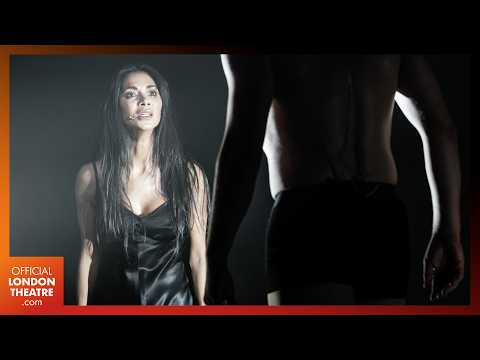
Viewer tip: If you are seeing the Jamie Lloyd staging, aim for a seat where you can read faces as well as bodies. The production leans hard on close-up imagery and the tension between live performance and live capture.
How It Was Made
The long fuse on "Sunset Boulevard" is part of its DNA. Andrew Lloyd Webber first explored the idea after a 1976 screening arranged by Hal Prince, who held the theatrical rights, and he sketched an idea around Norma’s return to Paramount before circling back in the early 1990s. The early writing process was unusually public and iterative: workshops at Sydmonton included a short early version, then a revised workshop the next year as collaborators shifted and the show’s voice sharpened.
The credits tell the real story of authorship pressure. Amy Powers was initially brought in as lyricist, with Don Black later joining, and the project ultimately settled into the Don Black–Christopher Hampton pairing for book and lyrics. That swap is not trivia; you can hear the tightening of language into something colder, more editorial, more European in its bite. The show’s famously turbulent casting history, including the Patti LuPone fallout, only underlined the theme: in this story, the business always edits the fantasy.
Craft note: Black has described a practical routine of morning meetings with Lloyd Webber, then lyric and scene writing in the afternoons with Hampton. It is unglamorous, which is exactly why it works for a musical about glamorous decay.
Key Tracks & Scenes
"Let’s Have Lunch" (Joe, Betty, Artie, Ensemble)
- The Scene:
- Morning at Paramount: a swarm of young hopefuls doing breezy small talk like it is cardio. Joe narrates with one foot already out the door, scanning for the next meeting, the next angle, the next exit.
- Lyrical Meaning:
- This is the show’s thesis in a grin: Hollywood friendliness as an instrument, not a feeling. The repeated social phrase becomes a chorus of polite evasion.
"With One Look" (Norma)
- The Scene:
- Inside the mansion, Norma snaps from brittle dismissal into performance mode. The staging directions frame her as summoning the essence of vanished stardom, sweeping the space as if it is still hers to command.
- Lyrical Meaning:
- Norma’s manifesto is simple: acting is power, and the camera is a weapon. The lyric’s rhetoric treats image as proof. It is also a confession she does not recognize as one: if the face is everything, then aging becomes an existential threat.
"The Perfect Year" (Norma, Joe)
- The Scene:
- New Year’s Eve at the house: Norma descends in formal glamour and pulls Joe into a private dance. The room is “ballroom” only because she declares it so, and Max quietly serves the fantasy.
- Lyrical Meaning:
- The lyric is romance shaped like a contract. Norma sells intimacy as destiny, Joe tries to add cautionary fine print, and the waltz rhythm makes the trap feel consensual.
"Sunset Boulevard" (Joe)
- The Scene:
- Act II opens in bright California light, with Joe lounging, addressing the audience like a man narrating his own bad decisions. The sunshine lands like irony, not comfort.
- Lyrical Meaning:
- Joe turns the street into a moral ecosystem: predatory, transactional, and weirdly proud of its own brutality. The lyric keeps the show from romanticizing its noir. This narrator knows the ending, and still can’t resist the middle.
"As If We Never Said Goodbye" (Norma)
- The Scene:
- At Paramount, Norma walks back into the machinery of her past. The text cues a sensory rush of corridors, morning chaos, and studio energy; then the stage focus shifts outside as Joe watches the world move on without her.
- Lyrical Meaning:
- This is nostalgia at full voltage: not memory, but reclamation. The lyric’s emotional trick is that it feels like gratitude, while it is actually entitlement. She is not asking to return. She is announcing that she already has.
"New Ways to Dream" (Joe, Betty) / "New Ways to Dream (Reprise)" (Max)
- The Scene:
- Joe and Betty write together, and work turns into intimacy. Later, Max reclaims the idea in reprise form, reframing “dreaming” as something he has engineered for Norma rather than something she owns.
- Lyrical Meaning:
- In the duet, dreaming is collaborative and future-facing. In the reprise, dreaming becomes caretaking and control. Same concept, different power dynamic. That is the show in miniature.
"The Phone Call" (Norma)
- The Scene:
- After the Paramount visit, a call reveals the cruel misunderstanding behind the studio’s interest. Norma’s response is not acceptance; it is escalation. The house closes around her as if the walls are complicit.
- Lyrical Meaning:
- The lyric dramatizes denial as action. It is not a quiet breakdown. It is a decision to live inside the version of events that hurts less, even if it kills everyone else.
Live Updates
The Jamie Lloyd revival ran in the West End (Savoy Theatre) in late 2023 into early 2024, then transferred to Broadway at the St. James Theatre with Nicole Scherzinger as Norma Desmond, opening in October 2024 and closing July 20, 2025. The production won the 2025 Tony Award for Best Revival of a Musical, and Scherzinger won Best Leading Actress in a Musical. The creative signature was stark: monochrome mood, live video language, and a recalibrated relationship between “star performance” and “camera performance.”
On the album front, the London cast recording (released as "SUNSET BLVD: The Album") arrived October 25, 2024, recorded live at the Savoy. That release has become the easiest way to hear the Lloyd interpretation in one uninterrupted listen. If you are comparing versions, note that the revival also experimented with streamlining, including at least one major cut discussed publicly in 2025. Those choices sharpen the show’s psychology by reducing the moments where the story offers relief.
As of February 2026, there is no ongoing Broadway run; new stagings continue to appear internationally and in licensed productions, so the “current” Sunset experience is increasingly defined by which version you see: traditional grand staircase spectacle, or Lloyd’s high-contrast austerity.
Notes & Trivia
- The original Broadway production opened November 17, 1994 at the Minskoff Theatre and ran 977 performances, closing March 22, 1997.
- Lloyd Webber’s earliest workshop presentation at Sydmonton was only about 30 minutes long, with Ria Jones and Michael Ball in the central roles.
- The lyric-writing credit history reflects the show’s developmental churn: Amy Powers worked on early versions before the project settled into the Don Black and Christopher Hampton partnership.
- The show’s real-world feud became part of Broadway lore: Patti LuPone’s departure from the planned Broadway transfer led to a lawsuit and a widely reported settlement.
- The 2024 London cast recording was recorded live at the Savoy Theatre and released October 25, 2024.
- The New York production’s minimalist revival aesthetics leaned on live video and close-up framing, making acting choices feel like edits happening in real time.
- "Every Movie’s a Circus" is one of the numbers noted as having been added during the Los Angeles reworking phase before the show reached Broadway.
Reception
Critics have long agreed on one thing: when "Sunset Boulevard" hits, it hits hardest in its Norma set pieces. The disagreement is usually about what surrounds them: whether the show’s melodrama is knowingly operatic or accidentally inflated. That debate has only intensified with Jamie Lloyd’s stripped-back approach, which removes scenic cushioning and makes the text and face do the heavy lifting.
“A performance of a lifetime.”
“A radical reimagination” that leans into stylization and video-driven theatricality.
The London cast recording was “recorded live” at the Savoy, capturing the production’s specific performance energy.
Quick Facts
- Title: Sunset Boulevard
- Broadway year (original): 1994
- Type: Musical drama (screen-to-stage adaptation)
- Music: Andrew Lloyd Webber
- Book & lyrics: Don Black and Christopher Hampton
- Based on: Billy Wilder’s 1950 film “Sunset Boulevard”
- Original Broadway theatre: Minskoff Theatre
- Key scene placements (selected): “Let’s Have Lunch” at Paramount; “With One Look” in Norma’s mansion; “The Perfect Year” on New Year’s Eve; “As If We Never Said Goodbye” during the Paramount return; “Sunset Boulevard” as Act II’s reopening monologue.
- Major albums: “Sunset Boulevard (Original Broadway Cast 1994 Recording)” and “SUNSET BLVD: The Album” (London cast recording, 2024).
- Availability: Both albums are widely available on major streaming platforms; physical editions vary by region and label.
- 2024–2025 Broadway revival: Jamie Lloyd direction; Nicole Scherzinger starred; production won the 2025 Tony Award for Best Revival of a Musical.
Frequently Asked Questions
- Who wrote the lyrics for "Sunset Boulevard"?
- The final Broadway and licensing version credits Don Black and Christopher Hampton for book and lyrics, with Andrew Lloyd Webber as composer.
- What is the show’s most important “plot song”?
- "As If We Never Said Goodbye" is the hinge: it places Norma back inside Paramount’s machinery and exposes how badly she needs the past to behave like the present.
- Is the 2024–2025 Broadway revival the same as the 1994 staging?
- No. Jamie Lloyd’s revival is known for minimal scenic framing and a heavy reliance on close-up video language, which changes how you read Norma and Joe moment to moment.
- Which cast album should I start with?
- If you want the classic Broadway-era sound world, start with the 1994 Original Broadway Cast recording. If you want the Lloyd revival’s performance style and pacing, try the 2024 London recording.
- Did the Broadway revival close?
- Yes. The 2024 Broadway run closed July 20, 2025 after an extended engagement.
- Is there a “best seat” for understanding the show?
- For traditional scenic-heavy versions, a centered mid-orchestra seat helps you read scale and architecture. For the Lloyd revival style, prioritize sightlines that let you read faces and screens clearly.
Key Contributors
| Name | Role | Contribution |
|---|---|---|
| Andrew Lloyd Webber | Composer | Score blending Broadway ballad architecture with filmic orchestral sweep. |
| Don Black | Lyricist / Book | Lean, often cutting lyric language that frames Hollywood as transaction. |
| Christopher Hampton | Lyricist / Book | Dramaturgical shape and text that sharpens the noir viewpoint shifts. |
| Jamie Lloyd | Director (2023–2025 revival version) | Minimal scenic framing and live video grammar that pushes intimacy and scrutiny. |
| Nicole Scherzinger | Performer (Norma Desmond, 2023–2025 revival) | Star persona leveraged as dramaturgy: charisma, fragility, and confrontation with “relevance.” |
Sources: IBDB (Internet Broadway Database), Playbill, The Guardian, TheaterMania, The Tony Awards (official site), AndrewLloydWebber.com (timeline/news), ALW Show Licensing (musical numbers), New York Theatre Guide, Apple Music, People, Vanity Fair, New York Post.