
Side by Side/What Would We Do Without You? Lyrics
Side by Side/What Would We Do Without You?
ROBERT:Isn't it warm?
Isn't it rosy?
Side by side by side.
SARAH [speaking]: He's such a cutie. Isn't he a cutie?
ROBERT:
Ports in a storm,
Comfy and cozy,
Side by side by side.
PETER: He never loses his cool.
HARRY: I envy that.
ROBERT:
Everything shines,
How sweet!
ROBERT, SARAH & HARRY:
Side by side...
SUSAN: We're just so fond of him.
ROBERT:
...by side.
Parallel lines
Who meet.
FRIENDS:
Love him!
Can't get enough of him!
ROBERT:
Everyone winks,
Nobody's nosy,
Side by side by side.
JOANNE: He is just crazy about me.
PAUL: He's a very tender guy.
ROBERT:
You bring the drinks
And I'll bring the posy--
ROBERT, JOANNE, LARRY:
Side by side...
LARRY: He's always there when you need him.
ROBERT:
...by side.
One is lonely and two is boring,
Think what you can keep ignoring
Side by side by side.
AMY: He's my best friend...I mean, apart from my husband.
FRIENDS:
Never a bother!
Seven times a godfather!
ALL:
Year after year,
Older and older...
LARRY: It's amazing. We've gotten older every year and he seems to
stay exactly the same.
ALL:
Sharing a tear,
Lending a shoulder.
DAVID: You know what comes to my mind when I see him? The Seagram's
building. Isn't that funny?
ALL:
Ain't we got fun?
No strain.
JOANNE: Sometimes I catch him looking and looking--and I just look
right back.
ALL:
Permanent sun,
No rain.
We're so crazy, he's so sane.
Friendship forbids
Anything bitter.
PAUL: You know, a person like Bob doesn't have the good things and he
doesn't have the bad things, but he doesn't have the good things either.
ALL:
Being the kids
As well as the sitter--
HARRY: Let me make him a drink. He's the only guy I know I feel should
drink more.
ROBERT:
One's impossible, two is dreary,
Three is company, safe and cheery.
ALL:
Side...
SARAH: He always looks like he's keeping score.
ALL:
By side...
SARAH: Who's winning, Robert?
ALL: By side.
ROBERT:
Here is the church,
Here is the steeple.
Open the doors
And see all the crazy married people.
FRIENDS:
What would we do without you?
How would we ever get through?
Who would I complain to for hours?
Who'd bring me the flowers
When I have the flu?
Who'd finish yesterday's stew?
Who'd take the kids to the zoo?
Who is so dear, and who is so deep,
And who would keep her/him occupied when I want to sleep?
How would we ever get through?
What would we do without you?
What would we do without you?
How would we ever get through?
Should there be a marital squabble,
Available Bob'll
Be there with the glue.
Who could we open up to,
Secrets we keep from guess who?
Who is so safe, and who is so sound?
You never need an analyst with Bobby around!
How would we ever get through?
What would we do without you?
What would we do without you?
How would we ever get through?
Who sends anniversary wishes?
Who helps with the dishes
And never says boo?
Who changes subjects on cue?
Who cheers us up when we're blue?
Who is a flirt, but never a threat,
Reminds us of our birthdays which we always forget?
How would we ever get through?
What would we do without you?
What would we do without you?
How would we ever get--
How would we ever get--
How would we ever get--
How would we ever get--through?
What would we do without you?
ROBERT:
Just what you usually do.
FRIENDS:
Right!
You who sit with us,
You who share with us,
You who fit with us,
You who bear with us,
You-hoo, you-hoo,
You-hoo, you-hoo...
ROBERT: Okay now! Everybody!
ALL:
Isn't it warm?
Isn't it rosy?
Side by side!
Ports in a storm,
Comfy and cozy,
Side by side!
Everything shines,
How sweet,
Side by side!
Parallel lines
Who meet,
Side by side!
Year after year,
Older and older,
Side by side!
Sharing a tear
And lending a shoulder,
Side by side!
One's impossible, two is gloomy,
Give another number to me,
Side by side by side by side
By side by side by side by side
By side!
Song Overview

Stephen Sondheim’s Company slips this number into the top of Act II like a grinning truth serum. The couples sweep Bobby into a celebratory swirl, praising his usefulness - the cheerful third wheel, the extra set of hands, the confidant whose life never intrudes. The music wears a vaudeville smile; the subtext sharpens like a stage light. By the final dance break, Bobby’s alone at center with silence looking back at him. Curtain on a revelation he cannot dodge anymore.
Review and Highlights
Quick summary
- Sits at the start of Act II - a celebratory roll call of couples rallying around Bobby.
- Music leans vaudeville - a wink-and-tap groove that masks an interrogation of singlehood.
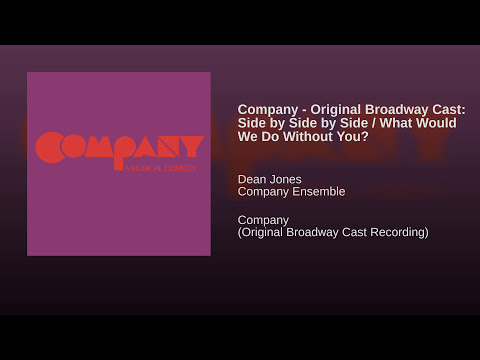
- Studio recording produced by Thomas Z. Shepard for Columbia Masterworks; first LP release May 13, 1970.
- The lyric sketches Bobby as indispensable to married friends - and simultaneously excluded.
- Revived and reimagined across productions, including the 2018 London cast with Bobbie at the center.
Creation History
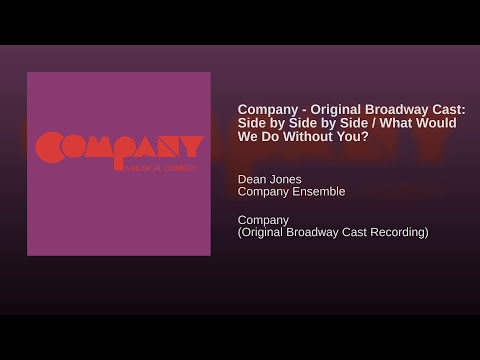
The studio take you hear on the original cast album emerged from a now-legendary marathon session captured in D. A. Pennebaker’s fly-on-the-wall film about the making of Company. The album was issued by Columbia’s Masterworks imprint, stewarded by producer Thomas Z. Shepard. That release stamped the show’s sound onto vinyl just weeks after the Broadway opening, preserving both Jonathan Tunick’s gleaming orchestrations and the ensemble’s dry zest. The number’s two-part structure - pep-rally verse and patter reply - sits right in Sondheim’s wheelhouse: fast, witty syllables riding crisp dance pulses. Later starry stagings, like the New York Philharmonic concert with Neil Patrick Harris, dialed up the brass and bite, underlining how the tune’s charm can turn on a dime into critique. And when the gender-switched London revival arrived, the staging pivoted the gaze toward Bobbie as couples re-examined their reliance on a single friend.
Song Meaning and Annotations
Plot
The couples call, coax, and schedule Bobby - a chorus of pet names and invitations. The ensemble glides into the show-within-a-show number, harmonies stacked like gifts at a birthday party. The hook is hospitality: ports in a storm, comfy and cozy. In the patter section, they rattle off everything he does for them: glue for squabbles, the friend who remembers anniversaries, the safe flirt who never threatens the marriage. Bobby trades quips, but the dance breaks say the quiet part: each couple gets a turn - until his. He steps out; the music drops to silence. The smile curdles. He is welcome at every table except the table that only two can share.
Song Meaning
It is a praise song that doubles as an X-ray. The couples adore Bobby’s availability because it costs him what they possess: a partner. The comic patter deflects a serious question: is he loved as himself, or as a convenience that keeps their lives humming? The form underscores the theme - buoyant call-and-response, then a solo dance answered by nothing. The emptiness after the flourish reframes the entire celebration. Friendship fills rooms; intimacy fills a life. That gap is the hinge on which the rest of Bobby’s arc will swing.
Annotations
“Parallel lines - Who meet”
Geometry joke turned worldview: parallel lines, by definition, do not meet. The lyric winks, then lands the point - Bobby and the couples move in sync, not together. The number lets him skate the surface of community without entering the deep water of commitment.
“By side” - with Bobby alone on the final “by side”
That isolated tag becomes staging grammar. He is inside the number’s harmonies but outside its final consonance. The device makes him stick out by sound, not just sight - the outsider who completes the chord without receiving one back.
“I mean, next to my husband”
Amy’s afterthought is the thesis in miniature. Bobby can be everyone’s favorite - until he bumps against the covenant that defines their pairhood. The blush of new marriage gives the line its sheepish truth.
“The Seagram Building”
A sly New York jab. Functional, rectilinear, a touch forbidding - the reference paints Bobby as an elegant square, admired and kept at arm’s length. In later productions, a swap to the Chrysler Building amends the metaphor - still an icon, but with flourishes that imply more character and risk.
“We’re so crazy - He’s so sane”
A callback to the opening’s “good and crazy people.” The couples offload their chaos onto a designated steady friend. It flatters Bobby while giving them permission to keep whirling.
“A person like Bob doesn’t have the good things - And he doesn’t have the bad things - But he doesn’t have the good things”
That looped logic restates the show’s troubling bargain: escape the friction of partnership and you also forfeit its shelter. The lyric’s repetition mimics the thought spiral of a friend rationalizing another’s solitude.
“Being the kids - As well as the sitter”
The quip lands both ways - Bobby as adorable distraction and as the practical helper who lets a couple ditch date night guilt. Either way, he remains instrumental to their comfort, not central to their lives.
“Here is the church - Here is the steeple - Open the door - And see all the crazy married people”
A children’s rhyme reframed to puncture nostalgia. From sandbox catechism to grown-up compromise, the show keeps asking whether the fairytale ever matched the facts.
“Who is a flirt, but never a threat?”
The compliment with a sting. He charms; he does not destabilize. The friends get sparkle without risk. The line exposes the tacit contract: Bobby will grease the wheels but never rock the car.
“What would we do without you?” - “Just what you usually do!” - “Right!”
The punchline empties the praise. If nothing would change, how essential is he? Laughter, then a hush that lingers. It is the sound of Bobby noticing the hole at the center of his own party.
Genre, feel, and engine
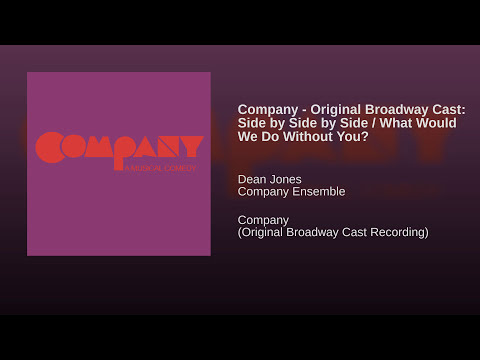
Call it Broadway vaudeville with modern wiring. The groove struts on two and four, percussion clicking like cufflinks. Brass pop through the texture, reeds decorate the stride, and the chorus rides tight, patter-ready syllables. The cheer is real - and it is tactical. Sondheim sets up the grin so he can tilt it at the end.
Emotional arc
From communal warmth to comic confession to that telling silence. He starts buoyed by affection, then clocked by absence. The number reframes companionship as a lovely living room with one door forever closed to him.
Historical touchpoints
New York insider references, a mid-century corporate skyline, the language of cocktail civility - and under it, post-60s questions about marriage, autonomy, and the usefulness of staying unattached. The tune is the party; the party is the argument.
Key Facts
- Artist: Original Broadway Cast of Company; album produced by Thomas Z. Shepard
- Featured: Robert and Couples
- Composer: Stephen Sondheim
- Producer: Thomas Z. Shepard
- Release Date: May 13, 1970
- Genre: Broadway, Show tune, Vaudeville-tinged ensemble
- Instruments: Orchestra with brass, reeds, rhythm section; dance-heavy ensemble vocals
- Label: Columbia Masterworks
- Mood: convivial, sly, self-revealing
- Length: approx. 3:00 on the original cast album
- Track #: 9 on the original LP sequence
- Language: English
- Album: Company - Original Broadway Cast
- Music style: uptempo ensemble with patter sections
- Poetic meter: mixed - conversational duple with patter acceleration
Canonical Entities & Relations
- Stephen Sondheim - wrote music and lyrics.
- George Furth - wrote the book of the musical containing this number.
- Thomas Z. Shepard - produced the original cast recording.
- Masterworks Broadway - label that issued the LP.
- Harold Prince - produced and directed the original Broadway production.
- Jonathan Tunick - orchestrations that frame the track’s sound world.
- D. A. Pennebaker - filmed the cast album session.
- New York Philharmonic - presented the 2011 in-concert staging captured on film.
- 2018 London Cast - revival that reframed Bobbie’s perspective and updated certain references.
Questions and Answers
- Who produced “Side by Side by Side / What Would We Do Without You” for the original cast album?
- Thomas Z. Shepard produced the recording for Columbia Masterworks.
- When was this track first released on record?
- The first LP release date for the original cast album was May 13, 1970.
- Who wrote the song?
- Stephen Sondheim composed the music and wrote the lyrics.
- Where does the number appear within the show’s structure?
- It opens Act II, moving from toast to truth-telling in one seamless musical sketch.
- What performance detail most clearly isolates Bobby?
- He lands the final “by side” alone, a small musical choice that makes a large dramatic point.
- What is the purpose of the nursery-rhyme riff in the middle?
- It subverts childhood idealism about marriage, swapping “people” for “crazy married people.”
- How have later revivals reinterpreted the song?
- Big-band color and casting shifts recalibrate the joke - from a bachelor’s buffer to Bobbie’s mirror in the London staging.
- Is the praise in the patter sincere?
- Yes, and self-serving. The couples adore the friend who keeps their lives tidy without threatening their balance.
- What does the “parallel lines” gag signify?
- It signals proximity without union - Bobby moves alongside couples, not within a pair.
- Why does the silence after Bobby’s dance break matter?
- It flips the number’s grin. The absence of an answering step is the show’s quiet indictment.
Awards and Chart Positions
While individual songs from Company were not singled out for trophies, the original Broadway production made awards history. The show earned a then-record 14 Tony nominations and won six, including Best Musical, Best Book, Best Original Score, and Best Direction. In later decades the work continued to garner major revival awards on both sides of the Atlantic. According to Playbill’s awards roundups and the Tony Awards database, the title’s haul remains a benchmark for concept-driven musicals. A 2011 New Yorker piece and subsequent Criterion materials helped spark renewed attention to the cast album’s creation, further cementing the score’s legacy in critical circles.
| Year | Honor | Category | Result |
|---|---|---|---|
| 1971 | Tony Awards | Best Musical | Won |
| 1971 | Tony Awards | Best Book of a Musical - George Furth | Won |
| 1971 | Tony Awards | Best Original Score - Stephen Sondheim | Won |
| 1971 | Tony Awards | Best Direction of a Musical - Harold Prince | Won |
How to Sing Side by Side by Side / What Would We Do Without You
Think classic Broadway sparkle with a vaudeville wink. Keep diction crisp, consonants popping, and let the ensemble bounce without blur. The piece rewards theatrical timing more than vocal pyrotechnics - until those patter flurries demand breath control and precision.
- Tempo: commonly marked around dotted-quarter 92 in a warm vaudeville style; modern recordings may ride brighter.
- Key: often set in F major on the original album; many productions transpose for cast comfort.
- Vocal forces: ensemble number led by Bobby; role ranges in licensing materials place Robert roughly G3 to G5, with ensemble parts spanning typical mixed-voice ranges.
- Feel: buoyant two-beat with patter pulses; think smile up front, subtext underneath.
Step-by-step HowTo
- Tempo setup: Rehearse at the marked feel first. Conduct a clap-then-count exercise to lock the two-and-four snap before adding text.
- Diction grid: Speak the patter in rhythm, then sing on one sustained pitch, then on the written melody. Keep plosives forward and sibilants tidy.
- Breath plan: Map breath marks across each patter chain. Share lines smartly in the ensemble so no one carries too long a phrase.
- Flow and rhythm: Let syncopations sit slightly back to preserve the vaudeville sway; resist rushing into the punchlines.
- Accents and humor: Place emphasis on reveal words - “glue,” “analyst,” “threat” - to sharpen the joke without shouting.
- Ensemble blend: Tune thirds and sixths in the refrains; drop vibrato on held chords to keep the smile clean.
- Mic craft: Onstage, keep the pickup consistent through patter; in concert, angle away slightly on group shouts to avoid overload.
- Common pitfalls: Over-tempo patter that smears text; under-supported consonants; a dance break that ignores the dramatic point. Make the final silence land - it is part of the score.
Practice materials: split-voice guide tracks, slow-tempo click with spoken scansion, and a lyric-only script pass to place subtext beats. According to Playbill’s coverage of the 2011 concert, the big-orchestra setting amplifies the brass-and-reed color; rehearse with that punch in mind so the text still sails.
Additional Info
Title echoes travel well. A Sondheim revue literally borrowed its name from this tune, a nod to how central the song has become in the composer’s canon. In 2011 the New York Philharmonic’s in-concert staging put it on a bigger musical canvas, the brass swinging like a party band with perfect posture. According to Playbill, that event reunited a starry cast for the Tonys broadcast later that season, turning the number into a national calling card for the show’s wit and bite. Masterworks Broadway’s album notes trace the quick path from Boston tryout to Broadway opening to cast album session; the brisk timeline helped capture the show’s electricity at full charge. And Pennebaker’s documentary - championed years later by outlets like the New Yorker and Criterion - turned an all-night studio slog into one of theatre’s essential behind-the-scenes portraits.
Sources: Masterworks Broadway, Playbill, Tony Awards, Wikipedia, British Theatre Guide, London Theatre 1, Ovrtur, The New Yorker, Criterion Collection.