Way Out West Lyrics — Babes In Arms
Way Out West Lyrics
I'd travel the plains.
Im mountain streams I'd paddle.
Over the Rockies I would trail.
I'd hark to the strains
of cowboys in the saddle-
not very musical but male.
I've roamed o'er the range with the herd,
where seldom is heard an intelligent word.
REFRAIN
Git along, little taxi, you can keep the change.
I'm riding home to my kitchen range
Way out west On west end avenue.
Oh, I love to listen to the wagon wheels
that bring the milk that your neighbor steals
Way out west On west end avenue.
Keep all your mountains
and your lone prairie so pretty,
give me the fountains
that go wring at Rodeo City.
I would trade your famous deer and antelope
for one tall beer and a cantaloupe
Way out west On west end avenue.
Yippee-aye-ay!
Song Overview
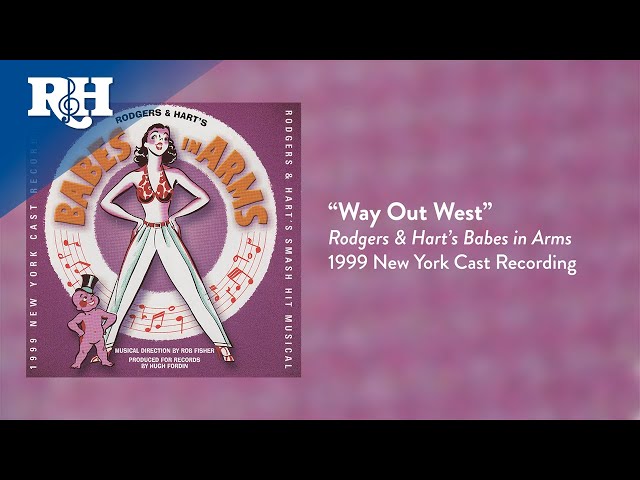
"Way Out West" is Babes in Arms at its most playful - a comic travel song that pretends to celebrate the frontier while really swooning over Manhattan. In the 1989 concert recording, Baby Rose gets the number as a bright piece of personality writing, and the joke lands fast: she has seen the plains, the Rockies, and cowboy life, but she would trade all that scenery for West End Avenue, elevators, Sardi's, and city comfort. It is a spoof of Western romance dressed as a love letter to New York.
Review and Highlights
This song is a sly little switcheroo. It starts with frontier imagery - mountain streams, cowboys, wagon wheels - and then keeps puncturing every Western cliché with an urban punchline. Lorenz Hart writes the lyric like a mock ballad of the range, but the real object of desire is apartment living, dark blinds over Central Park, and steak at Sardi's. Richard Rodgers meets that wit with a tune that has enough bounce to suggest a novelty number without collapsing into mere gag music. According to Rodgers and Hammerstein's official song page, Baby Rose sings it after traveling through the American West and decides New York has everything she needs. That is the whole comic engine right there.
In the 1989 concert recording, the song holds an early spot in the score as track 5, credited to Gregg Edelman and Judy Blazer on the official recording page and to the same live concert album on Apple Music. That placement is useful. By the time "Way Out West" arrives, the show has already established youthful struggle and romantic friction, so this number blows in like a gust of comic style. It widens the score's palette. A little brass, a little swagger, a little city snobbery in cowgirl boots.
Key Takeaways
- It is Baby Rose's comic ode to New York disguised as a Western song.
- The lyric keeps swapping frontier grandeur for urban comforts.
- The 1989 concert recording preserves it as a full featured number.
- Its humor comes from contrast - cowboy language, Manhattan desire.
Babes in Arms (1937 stage musical; 1989 concert recording) - diegetic. In the official synopsis, Baby Rose arrives in town and explains that after seeing the West, she still found everything she needed in New York City. The song matters because it introduces her as funny, theatrical, and impossible to mistake for a rustic innocent.
Appearances in Film, TV, and Stage Media - the song remained part of later stage and recording life, including the 1952 studio recording and the 1999 New York City Center version. According to Rodgers and Hammerstein's production pages, it also survived across major revivals of the score even when other material around it shifted.
Creation History
"Way Out West" was written by Richard Rodgers and Lorenz Hart for the original 1937 Broadway production of Babes in Arms. The official song page assigns it to Baby Rose, and the official synopsis places it at the point where she rejects the romance of California and the wide-open West in favor of New York. The 1989 Lincoln Center concert recording kept the number in the score, with the official recording page listing it as track 5. Apple Music dates that live benefit performance to June 5, 1989, and the album was later released commercially in 1990. So even in restoration-minded concert form, the song kept its place as one of the score's comic tone-setters.
Lyricist Analysis
Hart's lyric is built on comic reversal. He starts with the language of frontier freedom, then keeps pulling the rug out from under it. The cattle range gives way to kitchen ranges. Wagon wheels become milk delivery. A lone shack turns out to be a 14th-floor apartment. The trick is repetition with mutation. Each verse sounds like it might commit to the Western image, then dodges into New York domesticity or city vanity at the last second. That structure makes the lyric feel nimble and stage-smart. It also shows how good Hart was at writing character through diction. Baby Rose does not just sing a funny song. She reveals that her fantasy of the American West is really a clever excuse to brag about urban taste.
Song Meaning and Annotations
Plot
Baby Rose arrives and the local young people try to recruit her for their show. When Lee asks whether she misses California, she answers with "Way Out West." Instead of delivering a sincere frontier ballad, she turns the moment into a comic hymn to New York. Plot-wise, the number helps define her instantly. She is seasoned, theatrical, and more interested in style than sincerity.
Song Meaning
The song means that fantasy depends on point of view. To one person, the West stands for freedom and grandeur. To Baby Rose, it is mostly something to parody on the way back to Manhattan. Under the joke is a sharper idea about identity: she is not built for wilderness myth. She is a city creature, and she knows it. The number also pokes fun at American regional romance by making the supposedly wild space sound less appealing than an elevator and a restaurant steak.
Annotations
Git along, little taxi, you can keep the change, I'm riding home to my kitchen range way out west on West End Avenue.
That is the song's whole comic method in one shot. Hart takes cowboy language, then slams it into apartment life and upper-West-Side comfort. The joke is not subtle, but it is beautifully timed.
When the sun's a-risin' over Central Park, I pull the blinds and it's nice and dark.
Here the song makes city luxury sound like frontier bliss. Baby Rose does not want nature's grandeur. She wants control, privacy, and a room that keeps the world out. Funny, and a little revealing.
Those forty-niners who would stake a claim were hardy, I'll join the diners and I'll claim a steak at Sardi.
That rhyme is pure Hart. It replaces frontier conquest with restaurant preference, which tells you exactly how unserious the singer is about Western mythology. According to the official lyric page, that is not a paraphrase - it is the song's central joke pattern repeated at full strength.
According to Rodgers and Hammerstein's official synopsis, the number comes when Baby Rose is being courted for the show and decides to frame herself not as a rough Western traveler but as someone who found paradise in New York. That placement matters. "Way Out West" is less about geography than about persona.
Genre and style fusion
This is musical theater novelty writing with a mock-Western accent and an urban cabaret soul. It can be played broad, but the best performances keep a little style in reserve. Too much mugging and the lyric loses its elegance.
Emotional arc
The song does not build toward confession so much as toward comic certainty. It begins with travelogue color and ends with total confidence that the city wins. That confidence is the payoff.
Historical and cultural touchpoints
Babes in Arms came out of the late 1930s, when regional myth, show-business glamour, and urban aspiration could all collide in the same score. "Way Out West" turns that collision into comedy. According to Rodgers and Hammerstein's official pages, it remained present in the 1952 studio recording, the 1989 concert recording, and the 1999 City Center version, which suggests the number kept proving useful whenever the score was revisited.
Production and instrumentation
No solid public sheet-music listing surfaced for this specific song from the official or major commercial pages I checked, so there is not enough reliable public data here to pin down a standard key, tempo, or vocal range for the 1989 version. What is clear from the official lyric page and surviving performance clips is that the song depends on clean text, rhythmic bounce, and comic timing more than on vocal display.
Metaphors and symbols
West End Avenue is the song's master symbol. It turns the mythic "West" into something urban, specific, and faintly ridiculous. Once that substitution clicks, the whole song becomes a joke about replacing frontier romance with cultured convenience.
Technical Information (Quick Facts)
- Song: Way Out West
- Artist: 1989 Babes in Arms concert cast
- Featured: Baby Rose
- Composer: Richard Rodgers
- Lyricist: Lorenz Hart
- Producer: Public summaries emphasize the live concert recording and New World Records release rather than a consistently surfaced single producer credit
- Release Date: Originally published in 1937; included in the June 5, 1989 concert recording and commercially issued in 1990
- Genre: Musical theater comic number
- Instruments: Voice, piano, orchestra
- Label: New World Records for the 1989 concert recording release
- Mood: Playful, knowing, city-proud
- Length: 5:06 on the 1989 concert recording
- Track #: 5 on the 1989 concert recording
- Language: English
- Album: Rodgers and Hart: Babes In Arms
- Music style: Mock-Western novelty song with Broadway swing
- Poetic meter: Conversational accentual phrasing with refrain-driven comic reversals
Frequently Asked Questions
- Was "Way Out West" included in the 1989 Babes in Arms concert recording?
- Yes. The official Rodgers and Hammerstein recording page lists it as track 5, and Apple Music carries the same live concert album.
- Who sings "Way Out West" in the story?
- The official Rodgers and Hammerstein song page assigns it to Baby Rose, who uses it to celebrate New York while spoofing Western imagery.
- What is the song about?
- It is about preferring New York City to the mythic American West. The lyric pretends to admire prairie life, then keeps choosing taxis, elevators, Central Park blinds, and Sardi's instead.
- Where does the song appear in the plot?
- According to the official synopsis, it comes when Baby Rose arrives and explains that after her travels she found everything she needed in New York City.
- Is "Way Out West" a sincere Western song?
- No. It borrows Western language and rhythm for comic effect, but the real affection in the song is for city life.
- Did the song survive in later versions of the score?
- Yes. Official Rodgers and Hammerstein pages show it in the 1952 studio recording, the 1989 concert recording, and the 1999 City Center version.
- Is there reliable public key or vocal-range data for the song?
- Not from the solid public sources checked here. I did not find a dependable sheet-music listing for this specific number, so key and range are better left unstated than guessed.
- Why does the lyric still feel fresh?
- Because the joke is built on taste and attitude, not just period slang. City vanity, mocked through cowboy language, still lands.
Additional Info
- The official lyric page preserves the song's best comic substitutions, including taxis for horses and Sardi's for frontier glory.
- The official synopsis places the number right at Baby Rose's arrival, which makes it one of the show's cleanest pieces of character introduction.
- The 1989 album listing gives the track a surprisingly roomy 5:06, enough time for the joke to stretch out and enjoy itself.
- The 1999 City Center production also kept the song, which suggests it remained theatrically useful even after other parts of the score were reshaped over time.
Key Contributors
| Entity | Type | Relationship |
|---|---|---|
| Richard Rodgers | Person | Composed "Way Out West" |
| Lorenz Hart | Person | Wrote the lyrics for "Way Out West" |
| Baby Rose | Character | Sings the number in the show's official song page and synopsis framing |
| Judy Kaye | Person | Featured performer in the 1989 concert cast that included the song |
| Evans Haile | Person | Conducted the 1989 concert recording |
| New World Records | Organization | Released the 1989 concert recording |
| Babes in Arms | Work | Musical that introduced the song in 1937 |
Sources
Data verified via the official Rodgers and Hammerstein song, recording, synopsis, and production pages, Apple Music live-album listings, and concert-performance video listings on YouTube. No reliable public sheet-music listing with key and range surfaced for this specific number, so those details were omitted.
Music video
Babes In Arms Lyrics: Song List
- Act 1
- Where Or When
- Babes In Arms
- I Wish I Were In Love Again
-
Babes in Arms - Reprise
- Way Out West
- My Funny Valentine
- Johnny One-Note
- Ballet: Johnny One-Note
- Act 2
- Imagine
- All At Once
- Peter's Journey: Imagine Reprise 1
- Peter's Journey: Ballet: Peter's Journey
- Peter's Journey: Imagine Reprise 2
- The Lady Is A Tramp
- You Are So Fair
- Finale