Johnny One-Note Lyrics — Babes In Arms
Johnny One-Note Lyrics
And the note he sings was this
Ah!
Poor Johnny one-note
sang out with "gusto"
And just overlorded the place
Poor Johnny one-note
yelled willy nilly
Until he was bleu in the face
For holding one note was his ace
Couldn?t hear the brass
Couldn?t hear the drum
He was in a class
By himself, by gum!
Poor Johnny one-note
Got in Aida
Indeed a great chance to be brave
He took his one note
Howled like the North Wind
Brought forth wind that made critics rave,
While Verdi turned round in his grave!
Couldn?t hear the flute
Or the big trombone
Ev?ry one was mute
Johnny stood alone.
Cats and dogs stopped yapping
Lions in the zoo
All were jealous of Johnny's big trill
Thunder claps stopped clapping,
Traffic ceased its roar,
And they tell us Niag?ra stood still.
He stopped the train whistles,
Boat whistles,
steam whistles,
Cop whistles,
all whistles bowed to his skill
Sing Johnny One-Note,
Sing out with "gusto" and
Just overwhelm all the crowd
Ah!
So sing Johnny One-Note, out loud!!
Sing Johnny One-Note
Sing Johnny One-Note out loud!
Song Overview
"Johnny One-Note" is Babes in Arms cutting loose. In the 1989 concert recording, it arrives as the score's big comic vocal stunt - a novelty number about a novice opera singer who can produce only one note, then somehow bludgeons the world into submission with it. The premise is ridiculous, which is exactly why it works. Rodgers gives the tune bounce and lift. Hart gives it escalating comic images - brass sections drowned out, critics rattled, even Niagara apparently stopping to listen. It is less a character confession than a theatrical dare. Can one joke, sung with enough swagger, take over the room? Yes. Very much yes.

Review and Highlights
This song is pure comic overstatement. Hart starts with a tiny musical problem - one singer, one note - and turns it into a world-historical event. That is the fun. Every verse makes Johnny louder, stranger, and more impossible to ignore. By the time the whistles bow to his skill, the song is not really about opera anymore. It is about theatrical force, about the absurd beauty of someone committing so fully to a limited gift that the limitation becomes spectacle.
In the 1989 concert recording, the number still behaves like a showcase. The official recording page places it as track 7 at a brisk 2:12, followed immediately by a separate "Johnny One-Note Ballet." Smart structure. First the comic blast, then the extended physical payoff. The official synopsis also makes clear where it lands in the story: Baby Rose is in the show now and tells Beauregard a comical story about a novice opera singer. That means the song is not just a standard dropped in for applause. It is a little theatrical anecdote turned into an event.
Key Takeaways
- It is one of the score's fastest and funniest novelty songs.
- The central joke is escalation - one note becomes total domination.
- The 1989 concert recording keeps it as a short featured number with a separate ballet track after it.
- Its afterlife as a standard comes from its clean comic premise and belter-friendly shape.
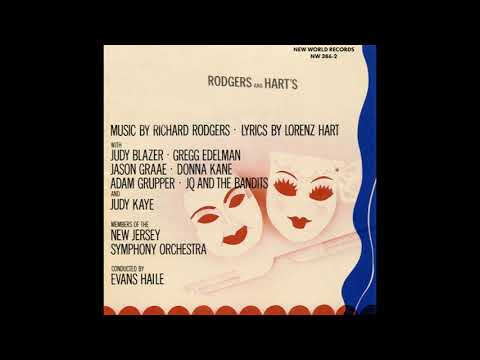
Babes in Arms (1937 stage musical; 1989 concert recording) - diegetic. In the official synopsis, the number appears after the show within the show is under way, when Baby Rose tells Beauregard a comic story about a novice opera singer. It matters because it broadens the score's tone - suddenly the musical is not just wistful or romantic, but gleefully ridiculous.
Appearances in Film, TV, and Stage Media - the song was a stage hit but did not make it into the 1939 film adaptation. Rodgers and Hammerstein's official song page notes that Judy Garland later sang it in the 1948 Rodgers and Hart biopic Words and Music. That gave the number a second life on screen even after it missed the first film round.
Creation History
"Johnny One-Note" was written by Richard Rodgers and Lorenz Hart for the original 1937 Broadway production of Babes in Arms. The official song page says it was introduced by Wynn Murray in 1937 and describes it as a charming novelty number about a forceful, if monotonous, young opera singer. The 1989 concert recording kept the song in place, with the official recording page listing it at track 7 and crediting Gregg Edelman and Judy Blazer on the concert album cast. The same page places the June 5, 1989 performance at Lincoln Center's Avery Fisher Hall, where narration replaced much of the original dialogue. In that leaner format, a number like "Johnny One-Note" had to hit fast. It does.
Lyricist Analysis
Hart writes this lyric like a vaudeville routine accelerated by musical obsession. The humor comes from accumulation. First Johnny sings one note. Then he sings it louder. Then nobody can hear the brass, the drum, the flute, the trombone. Then animals, weather, traffic, and whistles all surrender. The writing keeps raising the stakes while staying rhythmically nimble. That is the trick. A joke this repetitive should die on the page. Instead it keeps getting funnier because Hart varies the imagery and keeps the diction bouncing. He also gives the refrain a public-spectacle feel - "Sing, Johnny One-Note, out loud!" is part encouragement, part command, part threat to the audience's peace.
Song Meaning and Annotations
Plot
Inside Babes in Arms, the number arrives as a comic story song rather than a romantic or plot-advancing confession. Baby Rose tells Beauregard about Johnny, a novice opera singer whose single-note talent becomes a bizarre kind of superpower. The show uses the song as comic color, but it also gives Baby Rose a sharper theatrical identity. She is not here to be plain or natural. She is here to entertain.
Song Meaning
The song means that theatrical impact is not always about range, subtlety, or correctness. Sometimes it is sheer force. Johnny is absurdly limited, yet the song treats him like a conquering artist because he commits so completely to what little he has. Under the joke, there is a sly show-business idea there: style, nerve, and volume can beat refinement on a good night.
Annotations
Johnny could only sing one note and the note he sang was this: Ah!
The setup is immediate and perfect. One line, one problem, one sound. No waste. The song explains its own comic machinery before the first verse is properly underway.
Poor Johnny One-Note sang out with gusto and just overlorded the place.
"Overlorded" is the word that makes the whole thing tilt into comic fantasy. Johnny is not merely loud. He is tyrannical. Hart takes one-note singing and turns it into imperial conquest.
He stopped the train whistles, boat whistles, steam whistles, cop whistles, all whistles bowed to his skill.
This is escalation at full stretch. The world is no longer annoyed by Johnny. It is defeated by him. Great novelty-song writing usually depends on knowing when to stop. This one stops just after going gloriously too far.
The song's stage history also says something useful. Rodgers and Hammerstein's official page calls it a favorite with belters and lists performers from Mary Martin and Ella Fitzgerald to Shirley Bassey and Barbra Streisand. That makes sense. The number is built for singers who enjoy attack, comic bravado, and the chance to make a room laugh by sheer vocal nerve.
Genre and style fusion
This is musical theater novelty writing with a vaudeville pulse and a mock-operatic grin. It can live in Broadway performance, recital rooms, and cabaret because the joke is sturdy and the rhythm is clean.
Emotional arc
The arc is not emotional in the usual sense. It is comic inflation. Johnny starts as a singer with one note and ends as a force of nature. The number earns its applause by making that journey feel inevitable.
Historical and cultural touchpoints
Babes in Arms introduced several songs that became standards, and the official show page includes "Johnny One-Note" in that list alongside "My Funny Valentine," "Where or When," and "I Wish I Were in Love Again." This one took a more comic route into the songbook, but it stayed there. Its omission from the 1939 film also makes its later Garland appearance in Words and Music feel like a delayed screen redemption.
Production and instrumentation
Public sheet-music listings show more than one common arrangement. One Musicnotes page lists E-flat major with a vocal range of B-flat3 to B-flat4 and a bright tempo marked in 2. Another lists F major with a range of C4 to C5 at a moderate tempo. That spread tells you the song is flexible in practice, but always text-and-rhythm driven. The effect matters more than a single sacred key.
Metaphors and symbols
The one note itself becomes a symbol of obsessive singularity. Johnny has almost nothing to work with, and yet he overwhelms the world. It is comic, yes, but it also feels like a show-business myth in miniature.
Technical Information (Quick Facts)
- Song: Johnny One-Note
- Artist: 1989 Babes in Arms concert cast
- Featured: Baby Rose's comic story number
- Composer: Richard Rodgers
- Lyricist: Lorenz Hart
- Producer: Public summaries emphasize the live concert recording and New World Records release rather than a consistently surfaced single producer credit
- Release Date: Originally published in 1937; included in the June 5, 1989 concert recording and commercially issued in 1990
- Genre: Musical theater novelty song
- Instruments: Voice, piano, orchestra
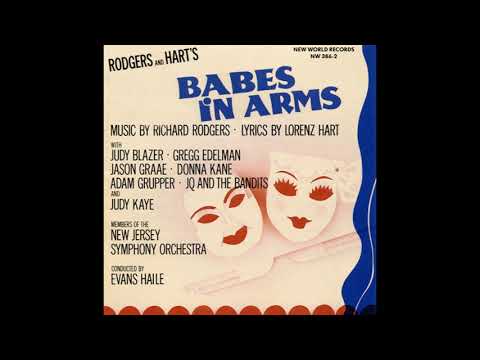
- Label: New World Records for the 1989 concert recording release
- Mood: Brash, comic, high-energy
- Length: 2:12 on the 1989 concert recording
- Track #: 7 on the 1989 concert recording
- Language: English
- Album: Babes In Arms (1989 concert recording)
- Music style: Belter-friendly novelty number with mock-operatic flair
- Poetic meter: Conversational accentual phrasing with escalating list structure
Frequently Asked Questions
- Was "Johnny One-Note" included in the 1989 Babes in Arms concert recording?
- Yes. The official recording page lists it as track 7 with a runtime of 2:12, followed by a separate "Johnny One-Note Ballet."
- Who introduced the song on stage?
- The official Rodgers and Hammerstein song page says Wynn Murray introduced it in 1937.
- What is the song about?
- It is about a young opera singer who can sing only one note but somehow turns that limitation into overwhelming theatrical force.
- Was "Johnny One-Note" in the 1939 film version of Babes in Arms?
- No. The official song page says it was not included in the 1939 film adaptation, though Judy Garland later sang it in the 1948 film Words and Music.
- Why do belters love this song?
- Because it rewards attack, comic timing, and vocal confidence. The official song page even calls it a favorite with belters.
- What keys appear in public sheet-music listings?
- One public Musicnotes arrangement lists E-flat major with a B-flat3 to B-flat4 vocal range and a bright tempo in 2. Another lists F major with a C4 to C5 range at a moderate tempo.
- Does the song move the plot forward?
- Not in a heavy dramatic way. It works more as comic storytelling and as a strong character-color moment for Baby Rose.
- Why has the song lasted outside the show?
- Because the premise is instantly understandable and the performance challenge is fun. It gives singers a joke they can win with.
Additional Info
- The official song page calls "Johnny One-Note" a favorite with belters and lists performers including Mary Martin, Blossom Dearie, Ella Fitzgerald, Eydie Gorme, Carol Burnett, Shirley Bassey, and Barbra Streisand.
- The official synopsis places the number inside the show within the show, which explains why it feels like a miniature vaudeville turn.
- The 1989 concert album gives the song and its ballet separate track identities, a nice reminder that the number worked both as vocal novelty and as stage business.
- Judy Garland missing the song in the 1939 film but singing it later in Words and Music gives it a funny little detour through screen history.
Key Contributors
| Entity | Type | Relationship |
|---|---|---|
| Richard Rodgers | Person | Composed "Johnny One-Note" |
| Lorenz Hart | Person | Wrote the lyrics for "Johnny One-Note" |
| Wynn Murray | Person | Introduced the song in the 1937 Broadway production |
| Baby Rose | Character | Uses the song as a comic story in the official synopsis framing |
| Judy Garland | Person | Later sang the song in the 1948 film Words and Music |
| Gregg Edelman | Person | Featured performer in the 1989 concert cast |
| Judy Blazer | Person | Featured performer in the 1989 concert cast |
| New World Records | Organization | Released the 1989 concert recording |
How to Sing Johnny One-Note
Public sheet-music listings show at least two practical routes into the song. One Musicnotes arrangement is in E-flat major with a B-flat3 to B-flat4 range and a bright pulse in 2. Another sits in F major with a C4 to C5 range at a moderate tempo. That tells you the essential thing: this number is about comic attack and rhythmic precision more than range. You do not need to sound grand. You need to sound unstoppable.
- Pick the key for ease of attack. Choose the version that lets you spit the text without tightening up.
- Start with clean comic setup. The opening line has to explain the whole joke in seconds.
- Keep the diction bright. This song lives on consonants and momentum.
- Treat the lists like escalators. Each image should top the last without sounding forced.
- Use breath for pace control. The danger is running ahead of the joke.
- Lean into the mock-operatic swagger. A little theatrical excess helps, but keep it disciplined.
- Do not overcomplicate the sound. The comedy gets flatter when the singing becomes too precious.
- Finish as a public event. The ending should feel like Johnny really has overwhelmed the crowd.
Sources
Data verified via the official Rodgers and Hammerstein song, show synopsis, show overview, and 1989 recording pages, Musicnotes public arrangement listings, and concert-performance video listings on YouTube.
Music video
Babes In Arms Lyrics: Song List
- Act 1
- Where Or When
- Babes In Arms
- I Wish I Were In Love Again
-
Babes in Arms - Reprise
- Way Out West
- My Funny Valentine
- Johnny One-Note
- Ballet: Johnny One-Note
- Act 2
- Imagine
- All At Once
- Peter's Journey: Imagine Reprise 1
- Peter's Journey: Ballet: Peter's Journey
- Peter's Journey: Imagine Reprise 2
- The Lady Is A Tramp
- You Are So Fair
- Finale