All At Once Lyrics — Babes In Arms
All At Once Lyrics
You're the most beautiful baby,
in your mother's eyes and mine,
and any other mother's child,
is too divine
Susie:
You're such a sensible fellow,
it's ashame you have no sense,
if you think i'm still a baby then,
you must
be
dense
All at once,
baby starts in toddling,
and all at once,
baby needs no coddling,
and soon,
knows all the names,
of toys and games,
discovers bliss in, kissin'
all at once,
baby need direction,
to fall at once,
in the right direction,
if you were wise,
or had eyes,
you'd be able to see,
all at once,
baby's gonna love me
Val:
all at once,
baby need direction,
to fall at once,
in the right direction,
Susie:
if you were wise,
or had eyes,
you'd be able to see
Val & Susie:
all at once,
baby's gonna love me
Song Overview
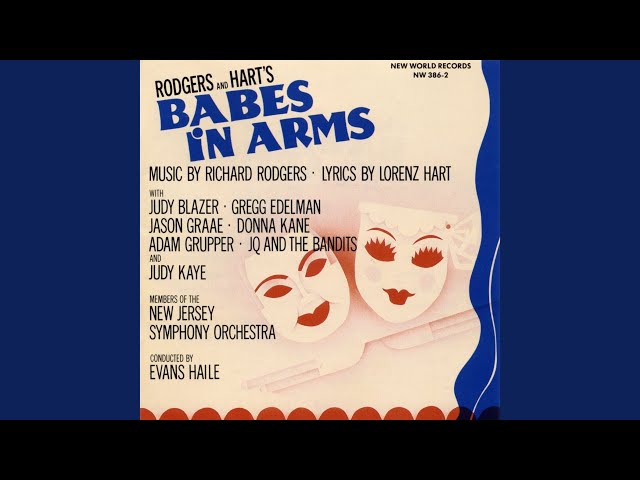
Written as a flirtatious stage duet, Babes in Arms's "All at Once" lyrics turn growing up into a fast, teasing romance number inside the 1989 concert recording. The song sits in Act Two after the work-farm setback, so it plays like a pocket of charm in rough weather - lighter than "Imagine," but still tied to the show's bigger ideas about youth, luck, and improvising your way through the Depression. Musically, it has a springy Broadway gait, a conversational melodic line, and just enough bite in the lyric to keep the sweetness from going soft.
Review and Highlights
"All at Once" has one of those Rodgers and Hart setups that looks feather-light until you notice how neatly it is built. Val and Billie trade memories, jokes, and half-mocking wisdom about childhood, but the real subject is not nursery nostalgia. It is the speed of attraction. The lyric keeps saying "baby" and talking about toddling, coddling, and growing up, yet the number is really about two people realizing that romance can sneak up on them in a single rush.
That double game is the fun of it. On paper the song could read like novelty writing, almost too cute for its own good. In performance, though, it lands as sly flirtation. Gregg Edelman and Judy Blazer sell it by keeping the tone brisk and a little knowing. They do not wallow in the innocence. They skate across it. That is the right instinct.
The 1989 recording also helps the number. This project came out of a concert restoration of the 1937 score, so the orchestral frame feels period-minded rather than slicked up for modern pop-theatre taste. You hear the bounce, the tidy phrase endings, the almost vaudeville wink in the structure. According to the Rodgers and Hammerstein synopsis, the song follows the gang's exhausted return from the farm fields and Val's gloomy realism, which makes its playful tone feel strategic. It is a little courtship scene tucked inside a larger story about survival.
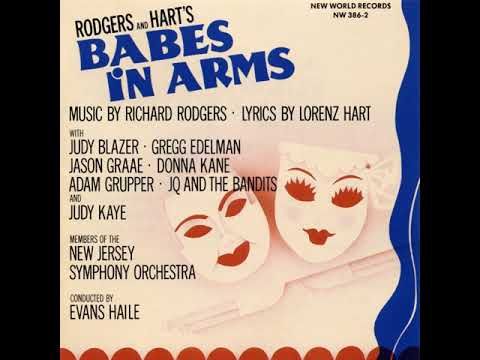
Babes in Arms (1989 concert recording) - stage duet - diegetic within the drama of the original 1937 plot. In the official synopsis, Val stays behind with Billie after the gang returns from the fields, and the two discuss his parents, luck, and her immaturity before the song. That placement matters because the number softens a hard patch in the story without breaking character logic.
Key takeaways:
- It is a comic-romantic duet about growing up fast and falling in love faster.
- The lyric uses nursery language as a cover for courtship banter.
- The 1989 recording keeps the number buoyant, dry-eyed, and historically grounded.
Creation History
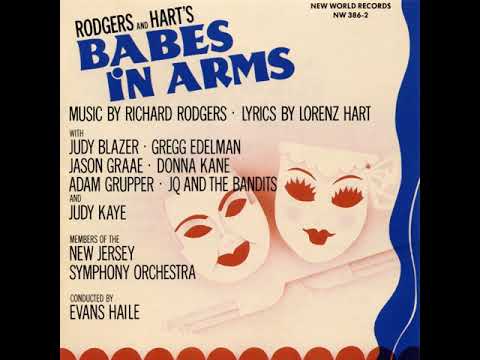
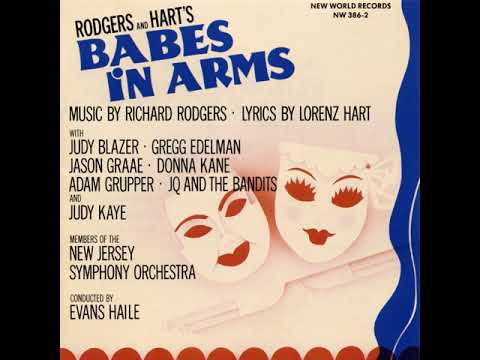
"All at Once" was written for the original 1937 Babes in Arms, with music by Richard Rodgers and lyrics by Lorenz Hart. The official Rodgers and Hammerstein song page notes that it was introduced by Mitzi Green and Ray Heatherton as Billie and Val, and describes it as a flirtatious duet about growing up. The 1989 version comes from the June 5, 1989 Avery Fisher Hall concert presentation at Lincoln Center, later recorded for New World Records and issued in 1990. On that release, the duet is performed by Gregg Edelman and Judy Blazer, and it sits between "Imagine" and "Imagine Reprise 1," which tells you a lot about its dramatic job - it bridges despair and renewed fantasy with charm instead of speeches.
Lyricist Analysis
Hart writes this lyric in speech-rhythm with a strong trochaic kick in the refrain. "All at once" drops like a quick verbal tap step, then the surrounding lines loosen into conversational patter. That combination gives the song its fizz. The meter is not military-clean from top to bottom, and it should not be. Hart wants the number to sound tossed off, as if Val is making up half his teasing philosophy on the spot.
The rhyme scheme shifts between compact refrain rhymes and looser interior play. In the chorus, Hart favors bright, easy matches that make the hook feel inevitable. In the anecdotal middle section, he gets more elastic. The effect is honest in a theatrical sense - polished enough to sing, casual enough to sound spoken. There is plenty of alliteration in the baby-talk phrasing, with plosives doing a lot of the comic lifting: baby, beauty, bogeymen, peppermint. Those sounds give the lyric bounce. The sibilants are lighter and less intimate than in a torch song, which fits the number's public, smiling manner.
Prosodically, the strongest stresses usually sit on the key comic nouns and verbs, so the song rarely fights its own melody. Hart also uses repetition smartly. Repeating "all at once" is not just a hook; it enacts the song's idea of sudden change. Childhood tips into adolescence, teasing tips into romance, and the whole thing seems to happen in one breath.
Song Meaning and Annotations
Plot
By the time "All at Once" arrives, the kids' homemade success story has already cracked. They are working on the farm they tried to avoid, morale is low, and Val has had enough of wishful thinking. In the official synopsis, he stays behind with Billie after lunch is called, reads a chirpy letter from his parents, and pushes back at her optimism. The duet grows out of that friction. It is not a random love song dropped into the middle of Act Two. It is a scene where irritation, attraction, and fatigue all share the same air.
Song Meaning
The meaning of "All at Once" is that growing up and falling in love feel both gradual and sudden. Hart wraps the idea in nursery imagery, but the subtext is adult. People act as if maturity happens in neat stages. The song says otherwise. One minute you are joking about toys and cream pies, the next you are staring at someone across the room and realizing the stakes changed while you were busy talking.
That is why the song works so well in this musical. Babes in Arms is obsessed with young people being pushed into adult situations before they are properly ready. Money, labor, jealousy, race, power, sex - none of that waits for a polite coming-of-age schedule. "All at Once" shrinks that pressure into a duet-sized joke. The joke lands because the larger truth is not funny at all.
Annotations
All at once / Baby starts in toddling, / And all at once / Baby needs no coddling.
Hart turns development into a comic jump cut. There is no smooth bridge from infancy to independence here. The phrase "all at once" keeps insisting that life speeds up behind your back. In context, that mirrors the whole show, where the kids are forced into self-government, work, and romance far too fast.
All the world's a nursery.
This is the slyest line in the number. It turns childhood from a life stage into a worldview. Everyone, the song argues, keeps some baby habits - fears, cravings, tricks, vanity. That lets the lyric flirt without getting syrupy. Val is not praising innocence. He is saying grown-ups are just older children with better timing.
When I was three, I was a siren.
The line is funny because it overstates everything. Billie rewrites her childhood as a miniature social career, all vamping and petty schemes. That exaggeration tells you who she is: a survivor, a performer, somebody who can make a story dance even when life is mud on boots and work-farm exhaustion.
Genre and musical style
The song lives in the sweet spot between classic Broadway duet, novelty patter, and light swing-era sophistication. It never hits the gas as hard as a comic showstopper, but it also refuses to drift like a ballad. The rhythm keeps nudging forward. That forward motion matters because the lyric is built on acceleration.
Emotional arc
The emotional movement is small but sharp. It starts with teasing instruction, swerves into autobiographical clowning, then lands in mutual recognition. Nobody declares eternal devotion. They circle it. In a way, that is more persuasive. The duet trusts chemistry more than speeches.
Historical touchpoints
According to the Rodgers and Hammerstein synopsis, the scene belongs to Depression-era Long Island, where abandoned vaudeville kids are trying to stay afloat after financial failure. So the song's baby talk has an edge. These are young people playing at childishness because adulthood has arrived early and uninvited. As stated on the official Rodgers and Hammerstein song page, the original scene has Val and Billie looking back on the highlights of their lives and joking that love was inevitable. That idea lands harder when their world is unstable.
Metaphors and symbols
The nursery is the big symbol. It stands in for memory, vulnerability, and social performance all at once. Toys and games are not really about children here. They are a language for desire, power, and habit. Hart also uses "baby" as both joke and flirtation. It infantilizes and seduces in the same breath. Tricky little word. Very Hart.
One last point. "All at Once" is easy to underrate because Babes in Arms is packed with giants - "Where or When," "My Funny Valentine," "The Lady Is a Tramp." But that actually helps this song. It gets to be nimble. No burden of anthem status. Just two performers, a clever premise, and a lyric that understands how attraction often arrives under cover of a joke.
Technical Information (Quick Facts)
- Song: All At Once
- Artist: Babes in Arms 1989 concert recording cast
- Featured: Gregg Edelman, Judy Blazer
- Composer: Richard Rodgers
- Producer: Elizabeth Ostrow
- Release Date: January 1, 1990
- Genre: Musical theatre, Broadway duet, traditional pop
- Instruments: Orchestra, duet vocals
- Label: New World Records
- Mood: playful, flirtatious, lightly wistful
- Length: 3:37
- Track #: 10
- Language: English
- Album: Rodgers and Hart: Babes In Arms
- Music style: restored 1930s Broadway romance duet
- Poetic meter: speech-rhythm with a trochaic refrain pulse
Frequently Asked Questions
- Who sings "All At Once" on the 1989 recording?
- The official 1989 concert-recording page lists Gregg Edelman and Judy Blazer as the performers for this track.
- Who introduced the song in the original 1937 production?
- According to the official Rodgers and Hammerstein song page, Mitzi Green and Ray Heatherton introduced it as Billie and Val.
- What is the song about?
- It is about growing up, flirtation, and the feeling that love seems to happen in a rush even when it has been building quietly for a while.
- Where does it appear in the plot?
- In the official synopsis, it comes after the gang returns from the farm fields exhausted. Val stays behind with Billie, and their exchange turns into the duet.
- Why does the lyric use so much baby and nursery language?
- Because Hart is using childhood imagery as a joke about adult behavior. The song says people do not really stop being children - they just get more practiced at hiding it.
- Is "All At Once" a comedy number or a love song?
- Both. It works as comic banter on the surface, but its real job is to show Val and Billie moving closer together under pressure.
- How does it differ from the bigger hits in Babes in Arms?
- It is less grand and less instantly famous than "Where or When" or "My Funny Valentine," but it is one of the score's cleverest scene-specific duets. According to Playbill's Steven Suskin, it is almost as deserving as the better-known standards.
- Was the 1989 release a studio album or a live album?
- It grew out of a June 5, 1989 concert at Avery Fisher Hall, then was recorded for New World Records and released in 1990, so it sits somewhere between concert preservation and cast album restoration.
- Is there another official recording of the song?
- Yes. Rodgers and Hammerstein also lists a 1952 studio cast recording and a 1999 New York City Center recording of Babes in Arms that include "All At Once."
Additional Info
- Playbill's Steven Suskin singled out "All at Once" as one of the Babes in Arms songs that deserves mention alongside the score's famous standards. That feels right. It is not the household title, but it is a first-rate duet.
- The official synopsis of the restored original version places the number in a much tougher dramatic neighborhood than the lyric alone suggests. That contrast gives the song its sly extra charge.
- The 1989 album was praised on the New World Records page through an Opera News pull-quote for presenting the score in near-entirety with original or near-original orchestrations. That restoration frame helps "All At Once" read as part of a dramatic fabric, not just a charming old chestnut.
Key Contributors
| Entity | Type | Relationship | Linked work or role |
|---|---|---|---|
| Richard Rodgers | Person | composed | "All At Once" and Babes in Arms |
| Lorenz Hart | Person | wrote lyrics for | "All At Once" and Babes in Arms |
| Gregg Edelman | Person | performed | Val on the 1989 recording of "All At Once" |
| Judy Blazer | Person | performed | Billie on the 1989 recording of "All At Once" |
| Mitzi Green | Person | introduced | Billie in the original 1937 staging |
| Ray Heatherton | Person | introduced | Val in the original 1937 staging |
| Elizabeth Ostrow | Person | produced | the 1990 New World Records release |
| New World Records | Organization | released | Rodgers and Hart: Babes In Arms |
| Avery Fisher Hall | Venue | hosted | the June 5, 1989 concert presentation |
Sources
Data verified via the official Rodgers and Hammerstein song page, synopsis page, and 1989 concert-recording page, plus the New World Records release listing and Playbill coverage of the score. A YouTube album upload was used only to confirm a workable Video ID for the figure images.
Music video
Babes In Arms Lyrics: Song List
- Act 1
- Where Or When
- Babes In Arms
- I Wish I Were In Love Again
-
Babes in Arms - Reprise
- Way Out West
- My Funny Valentine
- Johnny One-Note
- Ballet: Johnny One-Note
- Act 2
- Imagine
- All At Once
- Peter's Journey: Imagine Reprise 1
- Peter's Journey: Ballet: Peter's Journey
- Peter's Journey: Imagine Reprise 2
- The Lady Is A Tramp
- You Are So Fair
- Finale