My Funny Valentine Lyrics — Babes In Arms
My Funny Valentine Lyrics
his virtue doth parade.
Thou knowest not my dim witted friend,
the picture Thou hast made.
Thy vacant brow and Thy tousled hair
conceal Thy good intent.
Thou noble upright, truthful, sincere
And slightly dopey gent- you are..
My funny valentine
Sweet comic valentine
You make me smile with my heart
You looks are laughable, unphotographable
Yet you're my favorite work of art
Is your figure less than greek
Is your mouth a little bit weak
When you open it to speak, are you smart?
Don't change your hair for me
Not if you care for me
Stay little valentine stay
Each day is valentine's day
Song Overview
"My Funny Valentine" is the softest song in Babes in Arms, but not the simplest. In the 1989 concert recording, it arrives as a featured duet and turns affection into something more interesting than polished praise. The singer does not flatter Valentine by calling him glamorous. Quite the opposite. The lyric notices the oddness, the awkwardness, the slightly dopey charm, then loves him more for it. That is why the song lasts. It is tender without being syrupy and funny without breaking the spell.

Review and Highlights
This song has a hush to it. Not sleepy, not limp - just close. Rodgers writes a melody that moves like a slow exhale, and Hart answers with one of his smartest love lyrics, a lyric that refuses to pretend beauty is the point. Valentine is laughable, unphotographable, tousle-haired, vacant-browed, and still the singer's favorite work of art. That is the trick. The song sidesteps ideal romance and lands somewhere more believable: fondness sharpened by observation.
In the 1989 concert recording, the number is preserved as track 6, credited to Gregg Edelman and Judy Blazer, and that concert format suits it. With much of the original book replaced by narration, the song has to carry character and atmosphere fast. It does. One minute in, you know the relationship, the tone, and the ache. According to the official Rodgers and Hammerstein song page, the lyric concerns Valentine "Val" LaMar, the show's charming but slightly dopey protagonist. A neat summary, and a fair one.
Key Takeaways
- It is a love song built on affectionate imperfection.
- The 1989 concert recording preserves it as a featured duet.
- The lyric's humor is what keeps the tenderness honest.
- Its afterlife as a standard is huge because the emotional setup is universal.
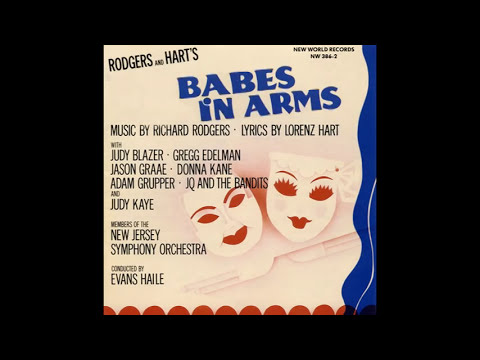
Babes in Arms (1937 stage musical; 1989 concert recording) - diegetic. In the show, Billie sings to Valentine and turns his supposed flaws into the very reason for her devotion. The number matters because it defines Val through somebody else's fond gaze rather than through swagger or plot action.
Appearances in Film, TV, and Stage Media - the song escaped the show almost immediately and became one of the most recorded entries in the American songbook. The official Rodgers and Hammerstein page says it has appeared on more than 1300 albums by over 600 artists, and the Library of Congress later honored the Gerry Mulligan Quartet with Chet Baker recording through the National Recording Registry. Not bad for a song teasing a boy with messy hair.
Creation History
"My Funny Valentine" was written by Richard Rodgers and Lorenz Hart for the original 1937 Broadway production of Babes in Arms. The official Rodgers and Hammerstein song page says it was first sung by Mitzi Green in the 1937 debut. The 1989 concert recording kept the number in a prominent spot, with the official recording page listing it as track 6, sung by Gregg Edelman and Judy Blazer, with a runtime of 4:05. That concert, presented on June 5, 1989 at Lincoln Center, used narration in place of much of the dialogue, so songs like this one had to carry even more dramatic weight than usual.
Lyricist Analysis
Hart's lyric is a master class in affectionate contradiction. He praises by gently insulting. He lists defects, then turns every one of them into an emblem of intimacy. "Your looks are laughable, unphotographable" should be brutal. Instead it lands as devotion because the line is cushioned by rhythm, wit, and the singer's unmistakable warmth. Hart also keeps the language mostly plain. No grand cosmic metaphors. No moonlight cliché. Just a sequence of physical and moral details that gradually build a portrait. That simplicity is deceptive. It takes real control to make understatement feel this rich.
Song Meaning and Annotations
Plot
In Babes in Arms, Billie sings to Valentine and frames him not as a polished leading man but as someone whose awkwardness is part of his appeal. The song does not push the plot forward with a big event. It does something subtler. It changes how the audience sees Val by showing how he is seen by someone who loves him.
Song Meaning
The meaning is simple but rare: love does not require perfection to be real. The singer sees the foolishness, the clumsiness, the odd angles, and answers them with loyalty rather than embarrassment. That is why the song still feels fresh. It is not selling beauty. It is selling recognition.
Annotations
My funny valentine, sweet comic valentine, you make me smile with my heart.
The key phrase is "with my heart." Not with amusement alone, not with detached irony. The smile comes from affection. The humor is intimate.
Your looks are laughable, unphotographable, yet you're my favorite work of art.
This is the line that made the song immortal. Hart takes a pair of lightly cruel observations and flips them into devotion. It is a balancing act most writers would drop. He lands it cleanly.
Stay little valentine, stay. Each day is Valentine's Day.
The ending shifts from description to plea. Suddenly the song is not only teasing. It is asking the beloved not to change. That tiny turn gives the whole lyric its ache.
According to the official Rodgers and Hammerstein page, the lyric was written specifically around Valentine "Val" LaMar, but its gender-neutral phrasing helped make it universal in performance. That portability explains the song's long standard-life. Singers could keep the intimacy and drop the plot without losing the core idea.
Genre and style fusion
This is musical theater writing that slipped almost effortlessly into jazz-standard life. It can be sung straight, swung lightly, or treated as a close cabaret ballad. The bones hold.
Emotional arc
The song begins in playful portraiture and ends in quiet attachment. No fireworks, no belt finish, no huge revelation. It just deepens. That is its power.
Historical and cultural touchpoints
The song came out of the 1937 Rodgers and Hart score for Babes in Arms, then quickly outran the show itself. The official song page calls it one of the most famous entries in the Great American Songbook, and the Library of Congress blog notes that the Mulligan Quartet with Chet Baker version is the only recording of the song in the National Recording Registry. As stated in the official Rodgers and Hammerstein page, more than 600 artists have recorded it.
Production and instrumentation
Public sheet-music listings show several common arrangements. One Musicnotes page lists a published key of C minor with a vocal range from C4 to E-flat5 and a very slow metronome marking of half note equals 44. Another arrangement is listed in E-flat major with the same voice range. That tells you something useful: performers have long treated the song as flexible, but always as a line-and-phrasing piece rather than a vocal stunt.
Metaphors and symbols
The strongest symbol is "favorite work of art." It turns an awkward human being into something worth contemplating, not because he is ideal but because he is singular. That is the song's whole ethic.
Technical Information (Quick Facts)
- Song: My Funny Valentine
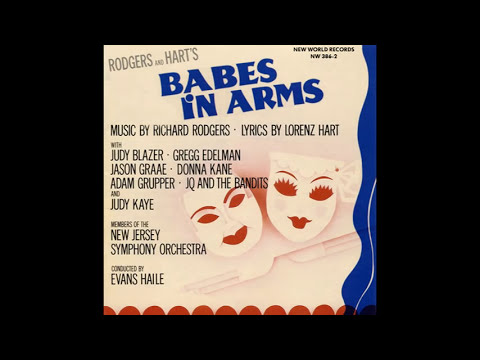
- Artist: Gregg Edelman and Judy Blazer on the 1989 concert recording
- Featured: Billie and Valentine
- Composer: Richard Rodgers
- Lyricist: Lorenz Hart
- Producer: Public summaries emphasize the live concert recording and New World Records release rather than a consistently surfaced single producer credit
- Release Date: Originally published in 1937; included in the June 5, 1989 concert recording and commercially issued in 1990
- Genre: Musical theater standard, ballad
- Instruments: Voice, piano, orchestra
- Label: New World Records for the 1989 concert recording release
- Mood: Tender, wry, intimate
- Length: 4:05 on the 1989 concert recording
- Track #: 6 on the 1989 concert recording
- Language: English
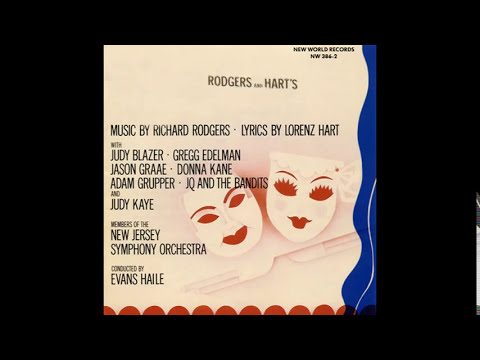
- Album: Babes In Arms (1989 concert recording)
- Music style: Theater ballad with durable jazz-standard life
- Poetic meter: Conversational accentual phrasing with gently repeated refrain shapes
Frequently Asked Questions
- Was "My Funny Valentine" included in the 1989 Babes in Arms concert recording?
- Yes. The official recording page lists it as track 6, credited to Gregg Edelman and Judy Blazer, with a runtime of 4:05.
- Who first sang the song on stage?
- The official Rodgers and Hammerstein page says Mitzi Green introduced it in the original 1937 Broadway production.
- What is the song about?
- It is about loving someone not despite the quirks but through them. The lyric turns awkward details into signs of closeness.
- Why did the song become such a major standard?
- Because the lyric is specific enough to feel personal and open enough to travel beyond the show. Performers can sing it without needing much plot explanation.
- Is it sung as a solo or a duet?
- In many concert and jazz settings it is a solo, but the 1989 concert recording credits it as a duet feature for Gregg Edelman and Judy Blazer.
- What key appears in public sheet-music listings?
- One Musicnotes arrangement lists C minor with a range from C4 to E-flat5 and a very slow tempo. Another public arrangement is listed in E-flat major with the same voice range.
- Did a famous recording of the song enter the National Recording Registry?
- Yes. The Library of Congress blog says the Gerry Mulligan Quartet with Chet Baker recording was added to the National Recording Registry in 2015.
- Why does the lyric feel so unusual for a love song?
- Because it uses teasing and imperfection instead of glamour. Hart makes affection sound observant, not idealized.
Awards and Chart Positions
There is no reliable evidence of a separate chart run for the 1989 concert-recording track itself, but the song has major cultural milestones. The official Rodgers and Hammerstein page says it has appeared on over 1300 albums by more than 600 artists, and the Library of Congress blog says the Gerry Mulligan Quartet with Chet Baker recording was added to the National Recording Registry in 2015. For a theater ballad, that is serious staying power.
| Year | Body | Recognition | Result |
|---|---|---|---|
| 2015 | Library of Congress | Gerry Mulligan Quartet with Chet Baker recording added to the National Recording Registry | Added |
Additional Info
- The official Rodgers and Hammerstein page says the song has appeared on over 1300 albums by more than 600 artists.
- Playbill's retrospective on the 1989 Babes in Arms recording called that earlier restoration commendable and highlighted Judy Blazer among the featured performers.
- The 1989 official recording page places "My Funny Valentine" between "Way Out West" and "Johnny One-Note," which gives the score a sharp turn from comic style into intimate ballad territory.
- The line about being "unphotographable" still lands because it is affectionate, not cruel. That balance is harder than it looks.
Key Contributors
| Entity | Type | Relationship |
|---|---|---|
| Richard Rodgers | Person | Composed "My Funny Valentine" |
| Lorenz Hart | Person | Wrote the lyrics for "My Funny Valentine" |
| Mitzi Green | Person | Introduced the song in the 1937 Broadway production |
| Gregg Edelman | Person | Featured performer on the 1989 concert recording |
| Judy Blazer | Person | Featured performer on the 1989 concert recording |
| Evans Haile | Person | Conducted the 1989 concert recording |
| New World Records | Organization | Released the 1989 concert recording |
| Babes in Arms | Work | Musical that introduced the song in 1937 |
How to Sing My Funny Valentine
Public sheet-music listings give a solid practical baseline. One widely used Musicnotes arrangement is in C minor with a vocal range from C4 to E-flat5 and a very slow pulse marked at half note equals 44. Another public arrangement sits in E-flat major with the same range. The takeaway is clear: this song is less about range than about line, breath, and nerve. You have to sing it simply enough that the lyric can do its dangerous little balancing act.
- Choose the key for intimacy. Pick the version that lets the line sit low and close rather than pushing for glamour.
- Start as if speaking to one person. The opening should feel private, not projected at a balcony.
- Keep the diction gentle but clear. Words like "laughable" and "unphotographable" need shape without turning hard.
- Do not oversell the joke. The humor works best when it sounds affectionate, not sarcastic.
- Map the breaths. Long phrases need quiet support so the melody can drift instead of chopping up.
- Lean into the turn at "favorite work of art." That is the emotional hinge of the song.
- Let the plea at the end stay small. "Stay little valentine, stay" should feel like a real request, not a finish-line stunt.
- Avoid lounge habits. A little rubato is fine. Too much smirk and the song curdles.
Sources
Data verified via the official Rodgers and Hammerstein song and recording pages, Musicnotes public arrangement listings, the Library of Congress music blog, Playbill's retrospective on the 1989 recording, and concert-performance video listings on YouTube.
Music video
Babes In Arms Lyrics: Song List
- Act 1
- Where Or When
- Babes In Arms
- I Wish I Were In Love Again
-
Babes in Arms - Reprise
- Way Out West
- My Funny Valentine
- Johnny One-Note
- Ballet: Johnny One-Note
- Act 2
- Imagine
- All At Once
- Peter's Journey: Imagine Reprise 1
- Peter's Journey: Ballet: Peter's Journey
- Peter's Journey: Imagine Reprise 2
- The Lady Is A Tramp
- You Are So Fair
- Finale