

The Lady Is A Tramp Lyrics
The Lady Is A Tramp
I get too hungry for dinner at eightI like the theatre but never come late
I never bother with people I hate
That's why the lady is a tramp
I don't like crapgames with Barons and Earls
Won't go to Harlem in ermine and pearls
Won't dish the dirt with the rest of the girls
That's why the lady is a tramp
I like the free fresh wind in my hair
Life without care
I'm broke, it's oke
Hates california is cold and is damp
That's why the lady is a tramp
Song Overview
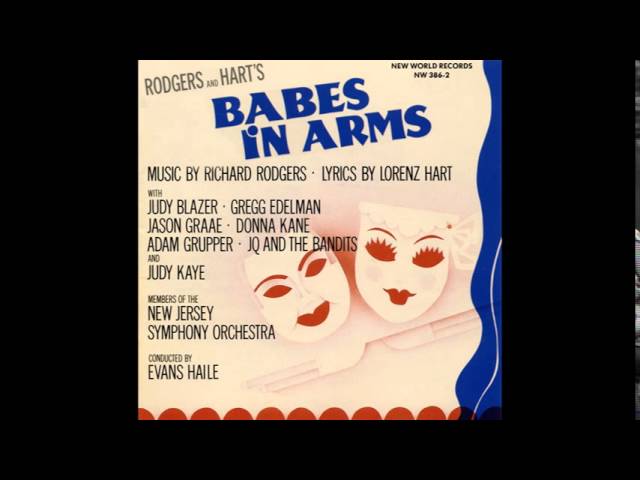
In Babes in Arms, "The Lady Is a Tramp" is not just a signature tune - it is Billie's declaration of independence, sung at the moment when farm life feels like a dead end. In the 1989 concert recording, the number lands deep in Act Two, after the kids have been ground down by work and disappointment. That dramatic spot matters. The song is funny, swaggering, and cool on the surface, but its real fuel is refusal. Billie would rather be broke, restless, and moving than obedient and stuck. That is the whole spark.
Review and Highlights
"The Lady Is a Tramp" has had such a long afterlife in cabaret, jazz, film, and pop that it is easy to forget how sharp it is in context. In Babes in Arms, Billie is not doing a generic anti-glamour turn. She is reacting to pressure, confinement, and the prospect of staying where she does not want to be. So when she sings about preferring wind in her hair, cheap coffee, ballgames, and the open road, the lyric hits as both style statement and escape plan.
That mix is the secret. Hart gives Billie a brag song that is also a survival speech. The wit comes first. You get the namedrops, the social jabs, the cracks about California, Sardi's, the Ritz, and all the people who mistake polish for personality. But under that patter is a character choosing motion over respectability. In the official synopsis, Billie tells Val she is going to leave the farm that night, with no real plan except not staying put. Then the song starts. Suddenly all that wisecracking has stakes.
The 1989 recording leans into that dramatic edge while keeping the tempo lively. Judy Blazer gives the song snap instead of lounge-room sprawl. Good choice. This is theater first. The arrangement still lets the melody strut, but it keeps the number tied to the show's Depression-era grit. According to the Rodgers and Hammerstein song page, the lyric is a playful satire of New York high society. True enough. But in the show, satire is only half the game. The other half is freedom.
Babes in Arms (1989 concert recording) - stage solo - diegetic. In the restored synopsis, Billie tells Val she would rather be free on the road than remain trapped on the farm, and then sings the number. That placement gives the song narrative force: it is a character choice, not just a hit dropped in for applause.
Key Takeaways
- The song is a character manifesto disguised as a social satire.
- Its joke-heavy lyric hides a serious urge to escape control and routine.
- The 1989 performance keeps the number theatrical, restless, and tied to Billie's point of view.
Creation History
"The Lady Is a Tramp" was written by Richard Rodgers and Lorenz Hart for the original 1937 Broadway production of Babes in Arms. Rodgers and Hammerstein's official song page notes that the lyric's wit and the melody's staying power helped it enter the Great American Songbook, and it also highlights the song's high-society satire. The 1989 version comes from the June 5, 1989 Avery Fisher Hall concert presentation, later preserved on the New World Records album released in 1990. In that revival-era restoration, the song appears after "Imagine" and its reprises, placing Billie squarely at a breaking point. The later fame of the number - through singers such as Frank Sinatra, Ella Fitzgerald, Shirley Bassey, Tony Bennett, and Lady Gaga, as listed on the official song page - can make the theatre roots seem almost secondary, but the 1989 recording pulls it back into the story where it began.
Lyricist Analysis
Hart writes this lyric like a street-smart monologue with a tune attached. The refrain lands in a tight, memorable rhythmic shape, but the surrounding lines move with conversational ease. That matters. Billie is not supposed to sound ceremonious. She sounds fast, amused, and gloriously unimpressed. The meter has a lively speech pulse, with strong stresses falling on the details that matter most - dinner, theater, people, tramp. The line endings do real comic work too. Hart loved a pointed final word, and here he keeps flicking the knife with proper nouns, social labels, and blunt little verdicts.
The rhyme scheme is clean enough to sing easily, but never so polished that the character loses her rough edges. You hear clipped city diction all over it. The internal textures help as well - crisp consonants, quick nouns, easy vernacular turns. There is also a wonderful balancing act between elevated references and plainspoken shrugging. One second you get Noel Coward or Sardi's, the next you get a nickel in a coffee machine. That jump is the point. Billie knows the fancy world. She just does not buy it.
Prosodically, Hart is doing more than clowning. The repeated tag line gives the song a mock-defensive structure: accusation first, self-definition second. "Tramp" becomes a reclaimed label. Billie hears the judgment and wears it anyway. That is why the lyric still has bite after decades of covers.
Song Meaning and Annotations
Plot
In the restored Babes in Arms plot, the kids are stuck working on the LaMar farm and morale is thin. Peter has already gone chasing quick fortune. The sheriff, the radio, and the threat of failure hang over everything. At the party in the field, Billie tells Val she plans to leave that night and would rather take her chances on the road than remain trapped in labor and frustration. That is where "The Lady Is a Tramp" enters. The song grows straight out of her decision to reject the life in front of her.
Song Meaning
The meaning of "The Lady Is a Tramp" in this musical is freedom at a cost. Billie would rather be poor than polished, restless than respectable, self-directed than caged. The lyric frames that choice as wit, but the mood underneath is tougher than the melody first suggests. She is tired of systems that tell her what kind of girl to be, where to sit, what to wear, and how to want. So she answers with a credo: I like what I like, I do not care whom that offends, and I would rather have air than approval.
The social satire sharpens the message. Hart uses status symbols as targets - fancy dinners, aristocrats, expensive neighborhoods, designer names, polished venues. Billie does not merely reject them because she cannot afford them. She rejects the values attached to them. That is a different thing. She hears the snobbery and wants no part of it. In a show about abandoned adolescents trying to govern themselves, that stance fits like a glove.
Annotations
I get too hungry for dinner at eight.
Right away Hart yanks the song away from etiquette. Hunger is bodily, immediate, and gloriously unrefined. Billie is saying that real appetite beats social timing. Tiny line, big thesis.
I like the free, fresh wind in my hair, life without care.
This is the anthem center of the song. The line turns freedom into sensation - wind, movement, the lack of confinement. In the synopsis, Billie is preparing to leave the farm, so the image is not just poetic scenery. It is an exit fantasy with dirt still on its boots.
I drop a nickel and coffee comes out.
That is classic Hart economy. One cheap, concrete image wipes out a whole hierarchy of luxury. Billie is not romanticizing wealth from afar. She is choosing ordinary city life over elite performance. That is why the lyric still feels alive.
Genre and style fusion
The song sits between Broadway character song, urban satire, and what later singers turned into swing and jazz standard territory. In the 1989 cast context, though, it stays rooted in stage storytelling. The rhythm drives forward with enough swagger to sound liberated, but it never loses the sense that a character is making a case for herself in real time.
Emotional arc
The emotional movement runs from irritation to assertion. Billie starts from refusal - no, I do not want that life - and then widens the frame into identity. By the end, "tramp" no longer sounds like an insult from the outside. It sounds like a banner she has decided to carry herself.
Cultural and historical touchpoints
Hart packs the lyric with city references and class markers that mattered in late-1930s American culture: Sardi's, the Ritz, Noel Coward, Walter Winchell, Robert Taylor, Harlem, Central Park Lake, Coney Island. These are not random ornaments. They map the social world Billie is pushing against. According to the official song page, the number is a playful satire of New York high society, and according to the official synopsis, it is also a roadward impulse from a young woman stuck on a farm. Put those together and the song becomes class comedy with real stakes.
Production and instrumentation
In the 1989 recording, the orchestra frames the number with period-aware Broadway muscle rather than sleek modern sheen. That helps. A too-satin arrangement can make the song sound like a cocktail standard. Here, it keeps some dust on its shoes. The melody struts, the accompaniment nudges, and the vocal line gets room to bite into Hart's details.
Idioms, symbols, and key phrases
"Tramp" is the core symbol. In common use it can signal judgment, drift, sexual suspicion, or class disdain. Hart lets Billie seize the term and twist it into autonomy. Road images, cheap pleasures, and public spaces then build the supporting vocabulary. Ballgames, beaches, prizefights, wind, coffee, grass underfoot - these are pleasures no velvet rope can improve.
One small irony hangs over the whole song. The number became so famous outside the show that it now arrives with prestige. But inside Babes in Arms, Billie is singing against prestige. That tension gives the 1989 version a nice kick. It reminds you that before the standards singers got hold of it, this was a young woman's refusal to play nice.
Technical Information (Quick Facts)
- Song: The Lady Is A Tramp
- Artist: Babes In Arms 1989 concert recording cast
- Featured: Judy Blazer, Gregg Edelman
- Composer: Richard Rodgers
- Producer: Elizabeth Ostrow
- Release Date: January 1, 1990
- Genre: Musical theatre, Broadway character song, traditional pop
- Instruments: Orchestra, solo vocal, ensemble support
- Label: New World Records
- Mood: defiant, witty, restless
- Length: 4:21
- Track #: 13
- Language: English
- Album: Rodgers and Hart: Babes In Arms
- Music style: restored 1930s Broadway satire number
- Poetic meter: speech-rhythm with strong refrain accents
Frequently Asked Questions
- Who sings "The Lady Is A Tramp" in the 1989 Babes In Arms recording?
- The available 1989 album listings associate the track with Judy Blazer and Gregg Edelman, and the dramatic context in the official synopsis makes Billie the key voice of the number.
- What does the song mean inside the musical?
- It means Billie would rather choose uncertainty and freedom than comfort tied to control. The song is a self-portrait built from refusals.
- Is it a satire of rich New York society?
- Yes. The official Rodgers and Hammerstein song page describes it that way, and the lyric keeps poking at status rituals, expensive venues, and social pretension.
- Why is the song so famous outside the theater?
- Because Hart's lyric is quotable, Rodgers's melody sticks after one hearing, and singers found endless room in it for swagger, irony, and phrasing tricks.
- Where does it appear in the plot?
- In the restored synopsis, Billie sings it after telling Val she plans to leave the farm that night because she would rather be free on the road than remain stuck there.
- Was it used in the 1939 film version of Babes In Arms?
- Not as a full featured number. According to the official production page for the 1939 film, the song survived only as underscoring during a dinner scene.
- Did later artists help turn it into a standard?
- Very much so. The official song page names Shirley Bassey, Tony Bennett and Lady Gaga, Bing Crosby, Ella Fitzgerald, Buddy Greco, Frank Sinatra, and Pat Suzuki among notable artists who recorded it.
- Why does the term "tramp" matter so much in the song?
- Because Billie takes a label that could be insulting and turns it into a mark of autonomy. Hart makes the judgment bounce back on the people doing the judging.
- Does the 1989 version sound more theatrical than lounge-like?
- Yes. The restored-cast setting keeps the song tied to Billie's circumstances, which makes it feel less like a nightclub turn and more like a dramatic decision sung out loud.
Additional Info
- According to the official Rodgers and Hammerstein song page, the title helped inspire Disney's 1955 film Lady and the Tramp. Strange little legacy, but a real one.
- Playbill has long treated the number as one of the crown jewels of Babes in Arms, and the New World Records page places it among the score's best-known hits.
- The 1939 MGM film version cut most of the original score, and the official production history says "The Lady Is a Tramp" survived there only as background music during a dinner scene.
- As stated on the official song page, the song's later interpreters stretch from jazz and traditional pop into crossover pop performance, which says a lot about how flexible the writing is.
Key Contributors
| Entity | Type | Relationship | Linked work or role |
|---|---|---|---|
| Richard Rodgers | Person | composed | "The Lady Is A Tramp" |
| Lorenz Hart | Person | wrote lyrics for | "The Lady Is A Tramp" |
| Judy Blazer | Person | performed | 1989 concert recording track |
| Gregg Edelman | Person | performed on | 1989 concert recording album |
| Elizabeth Ostrow | Person | produced | Rodgers and Hart: Babes In Arms |
| New World Records | Organization | released | 1990 album issue |
| Avery Fisher Hall | Venue | hosted | June 5, 1989 concert presentation |
| Frank Sinatra | Person | recorded | later cover version |
| Ella Fitzgerald | Person | recorded | later cover version |
| Tony Bennett and Lady Gaga | People | recorded | later cover version |
Sources
Data verified via the official Rodgers and Hammerstein song page, synopsis, 1989 concert-recording page, New World Records release page, plus later platform listings used only to confirm performer pairing, track length, and a workable video ID for image placeholders.