

Imagine Lyrics
Imagine
Imagine your bills are payed,Imagine you've made the grade with no dishes in the sink all you do is drink clarine lemmonade.
Imagine you own a car a trailer that has a bar your clothes fit you like a glove tellin what a love you are.
Your such a lucky kid folks boast of what ya did no wonder Mr. Baldwin made a bid.
Imagine your out of debt and love brings you no regret if you cant imagine this then you be nuts my pet.
Your broadway's britest star lights light up were you are your much a bigger star than even Maraline.
Imagine at 17 your queen of the silver screen if you cant imagine this then you must be nuts my pet.
Song Overview
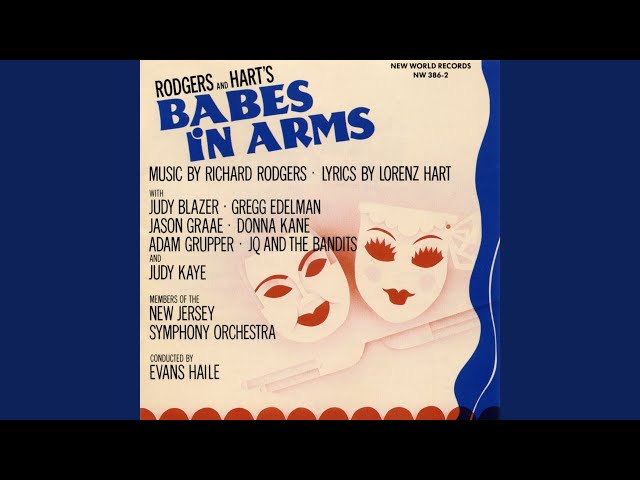
Written as a late-show release valve, Babes in Arms's "Imagine" lyrics turn a bleak work-farm setback into a comic daydream. In the 1989 concert recording, the number lands after the kids' homemade Follies collapses and the cast is sent off under a cloud, so the song works as both morale booster and plot hinge. Musically it plays like a jaunty fantasy piece with Broadway bounce, quartet color, and a sly wink in the phrasing. That mix is why the song sticks - it sounds light on its feet, but it is doing real story work.
Review and Highlights
"Imagine" is one of those Rodgers and Hart pieces that looks airy until you notice how much weight it carries. In story terms, the kids have been beaten back. Their show is shut down, money has vanished, and the work farm hangs over them like a bad joke. So the song arrives with a useful trick: it does not deny the trouble, it skirts around it with style. That matters.
What you hear first is motion. The number has a floating quality, but it is not sleepy. It moves with revue polish, built for a group texture that lets fantasy spread sideways through the scene. In the 1989 recording, Judy Kaye, Jason Graae, and JQ and The Bandits give it a bright theatrical snap. You can almost see the dust shake off the barn boards.
The title tells you the method. "Imagine" is about wishful thinking, sure, but not in the sanctified, sermon-like way the word sometimes gets treated elsewhere in pop culture. Here it is practical nonsense. The kids are down, so they spin luck out of thin air. A bottle of claret lemonade, sudden glamour, escape routes, impossible turns of fortune - the song treats fantasy like cheap fuel that still gets the engine running.
That comic tone is the hook. Hart was very good at letting a lyric smile and flinch at the same time. He gives the song a conversational looseness, then slips in images that feel just odd enough to jolt the ear. According to the New World liner notes, "Imagine" comes right after the Follies are closed and the kids are shipped to the work farm, which makes the song's buoyancy feel earned rather than decorative.
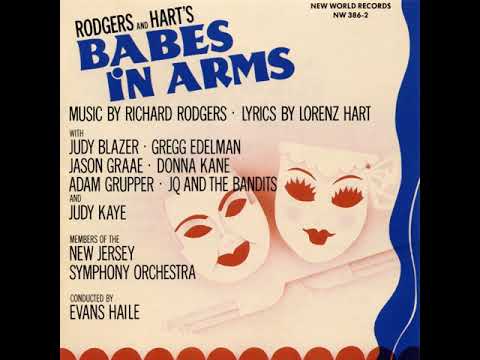
Babes in Arms (1989 concert recording) - stage musical number - diegetic within the drama of the original 1937 plot. It appears after Lee closes the Follies and the kids are sent to the work farm. In the restored synopsis, the song marks the shift from defeat to make-believe resilience, setting up the later "Imagine" reprises and Peter's comic fantasy journey.
Key takeaways:
- The song is a fantasy number with a job to do - it keeps the story alive when the plot turns sour.
- The 1989 recording favors period flavor, group harmonies, and restored orchestral style over modern polish.
- Its charm comes from Hart's ability to make optimism sound half sincere, half self-mocking.
Creation History
"Imagine" comes from Babes in Arms, the 1937 Rodgers and Hart musical that introduced a ridiculous amount of standard material into the theatre bloodstream. The original show opened at the Shubert Theatre on April 14, 1937, and the score was later restored for a June 5, 1989 concert at Avery Fisher Hall, with narration replacing much of the dialogue. That concert fed the New World Records album issued in 1990. The liner notes say the recording was made at the Manhattan Center in New York on August 7-9, 1989, preserving the original-or-near-original orchestrational world associated with Hans Spialek. So this 1989 version is not some random revival souvenir - it is part rescue mission, part cast album, part history lesson with swing in its step.
Lyricist Analysis
Hart writes this one in a speech-rhythm lane rather than a rigid, hammer-tap meter. You feel a light iambic pull in places, but the lyric keeps slipping into conversational timing, which suits a number built on improvising hope. That looseness is a feature, not a flaw. A strict metrical cage would make the song sound too composed, too certain. "Imagine" needs the feeling of kids talking themselves into a better world one shiny phrase at a time.
The rhyme work follows the same logic. Hart leans toward neat, crowd-friendly rhymes, then roughs up the surface with quick turns of phrase and comic detail. That keeps the song from getting precious. Its sound devices are subtle rather than showy - light consonant play, a few crisp plosives, and open vowels that let the melody lift. Breath economy matters here too. The phrases are roomy enough to sound relaxed, but not so long that the dream becomes lush or sentimental. This is a brisk fantasy song, not a torch ballad in disguise.
Prosodically, the natural stresses tend to sit where you want them, which is one reason the lyric feels effortless when sung well. The number also sets up the structural trick used later in the score: fantasy does not stay sealed inside one scene. It leaks forward into the two reprises, where the hopeful chatter mutates into Peter's comic self-invention. That is smart construction. The first number opens the door, the reprises run through it.
Song Meaning and Annotations
Plot
In the restored Babes in Arms storyline, the young cast members build their own show, lose control of it, and get shoved toward the work farm after a clash over money, power, and racism inside the group. "Imagine" arrives at that low point. Instead of stopping the action, it reframes it. The characters answer confinement with fantasy, and fantasy becomes a temporary form of resistance.
Song Meaning
The meaning of "Imagine" is simple on the surface and sharper underneath: when reality turns mean, people survive by inventing a livable version of it. The song is hopeful, but not innocent. It knows the dream is flimsy. That is part of the point. Hart and Rodgers let imagination act like a stage prop the characters can climb onto before the next plot disaster hits.
There is also a class angle humming in the background. These are abandoned kids trying to fend for themselves in a broken setup. So the song's fancy images are not random decoration. They are compensation. Luxury, travel, luck, glamour - all the things the characters do not have become the raw material of the lyric. It is funny because the gap is so large. It is moving because the gap is real.
Annotations
Imagine good luck coming right out of the sky.
That is the number in miniature. The line turns luck into weather - arbitrary, public, impossible to own. Billie tries to keep morale alive by treating fortune as something that can simply drift in. It is sweet, but it also exposes how little control these characters have.
Imagine as a work-farm song rather than a love duet.
The placement matters more than any single phrase. In another context, a fantasy lyric can feel ornamental. Here it is emergency writing. According to the synopsis in the liner notes, the song follows the collapse of the Follies and the forced move to the work farm, so every bright image lands against visible defeat.
Imagine does not end with the scene - it echoes in reprise.
That is a classic musical-theatre trick, and a good one. The first statement opens the emotional idea. Later reprises let Peter reshape it into his own comic travel fantasy. What begins as group coping turns into character portrait.
Genre and musical style
The piece sits in that pre-war Broadway space where revue energy, operetta sheen, and swing-era snap can all share a room without fighting. The quartet writing in the 1989 recording helps sell that hybrid. It is not heavy orchestral theater and it is not nightclub minimalism either. It lives in the smart middle - polished, playful, and a little old-school in the best way.
Emotional arc
The emotional movement is upward, but crookedly so. The song begins in discouragement, then pushes itself toward wit and make-believe. You hear the characters trying to cheer themselves before you fully believe they can. That tiny lag gives the number its pulse.
Cultural and historical touchpoints
Babes in Arms belongs to a 1937 Broadway moment when youthful ambition, show-business satire, and Depression-era anxiety could sit side by side. Tommy Krasker's notes describe the show as an affectionate but mildly satiric look at abandoned adolescents wrestling with money, politics, race, and romance. "Imagine" reflects that backdrop. Fantasy is not idle here - it is what poor kids make when institutions fail them.
Symbols and phrases
The song's imagery treats luck, luxury, and escape as portable objects. That matters because the characters themselves are not portable. They are trapped by age, money, and authority. So the lyric builds a symbolic exit route. Dream first, move later.
One more thing worth saying: the 1989 recording gives the song a cleaner historical frame than most casual listeners expect. Because the project aimed to restore the original score's shape, "Imagine" is heard less as an orphaned standard and more as a scene-specific piece. That changes how it plays. It is not merely a pleasant period song. It is a pressure valve in a musical that keeps bouncing between young-romantic charm and harder social material.
Technical Information (Quick Facts)
- Song: Imagine
- Artist: Babes in Arms 1989 concert recording cast
- Featured: Judy Kaye, JQ and The Bandits, Jason Graae
- Composer: Richard Rodgers
- Producer: Elizabeth Ostrow
- Release Date: January 1, 1990
- Genre: Musical theatre, traditional pop, stage and screen
- Instruments: Orchestra, ensemble vocals
- Label: New World Records
- Mood: wistful, comic, resilient
- Length: 4:11
- Track #: 9
- Language: English
- Album: Rodgers and Hart: Babes in Arms
- Music style: restored 1930s Broadway ensemble number
- Poetic meter: speech-rhythm with light iambic movement
Frequently Asked Questions
- Who sings "Imagine" on the 1989 recording?
- The New World liner notes credit Judy Kaye, JQ and The Bandits, and Jason Graae on track 9.
- Who wrote the song?
- Richard Rodgers wrote the music and Lorenz Hart wrote the lyrics, as part of the original 1937 Babes in Arms score.
- Where does the song appear in the story?
- It comes after the Follies are shut down and the kids are sent to the work farm, so it functions as a rebound number after a major setback.
- Is "Imagine" a standalone standard like "My Funny Valentine"?
- Not quite. It is admired by theatre fans and writers on Rodgers and Hart, but it remains more scene-bound than the score's biggest breakout songs.
- Why are there "Imagine" reprises later in the show?
- Because the musical keeps recycling the fantasy impulse. The first song is communal coping; the reprises narrow that impulse into Peter's private comic dream life.
- Was the 1989 release a full revival cast album?
- It grew out of a June 5, 1989 Avery Fisher Hall concert presentation, then was recorded that August and issued by New World Records in 1990.
- Does the song reflect the politics inside Babes in Arms?
- Indirectly, yes. The show's restored synopsis puts the number after a fight shaped by class pressure and racial exclusion, so the fantasy has a social edge under its light touch.
- Is there a later notable recording?
- Yes. Rodgers and Hammerstein's site also lists the 1999 New York City Center recording, where "Imagine" was performed by Melissa Rain Anderson, Peter Eldridge, Mark Lanyon, Daniel C. Levine, and Ben Saypol.
Additional Info
- Playbill called "Imagine" one of the Babes in Arms songs that deserves to be mentioned alongside the famous standards from the score. Fair enough. It never became a mass-market warhorse, but theatre people have kept a soft spot for it.
- According to Opera News, quoted on the New World Records page, the 1990 album was praised for presenting the score in near-entirety with original or near-original orchestrations.
- The 1989 restoration did not merely repackage familiar hits. It brought back connective tissue, including the "Imagine" sequence and reprises that help the show make dramatic sense.
Key Contributors
| Entity | Type | Relationship | Linked work or role |
|---|---|---|---|
| Richard Rodgers | Person | composed | "Imagine" and Babes in Arms |
| Lorenz Hart | Person | wrote lyrics for | "Imagine" and Babes in Arms |
| Evans Haile | Person | conducted | 1989 concert recording project |
| Judy Kaye | Person | performed as | Baby Rose and singer on "Imagine" |
| Jason Graae | Person | performed as | Gus Fielding and singer on "Imagine" |
| JQ and The Bandits | Organization | provided | quartet vocals on "Imagine" |
| New World Records | Organization | released | Rodgers and Hart: Babes in Arms |
| Avery Fisher Hall | Venue | hosted | June 5, 1989 concert presentation |
| Manhattan Center, New York | Location | hosted recording for | August 7-9, 1989 sessions |
Sources
Data verified via New World Records release page and liner notes, Rodgers and Hammerstein song, synopsis, and recording pages, MusicBrainz work listing, and Playbill commentary on the score. A YouTube auto-generated album upload was used only to confirm a workable video ID for the figure images.