
What Does a Man Do...? Lyrics
What Does a Man Do...?
[GOLDMAN, spoken]What does a man do
When before his eyes
He sees a vision of a new hope dawning for his toiling, agonizing brothers? What does a man do
When at last he realizes his suffering is caused not by the cruelty of fate
But by the injustice of his fellow human beings?
What does a man do
When he sees those dear to him starving
When he himself is starved?
What does he do?
What does he do?
(repeats, echoing)
Song Overview
Written as a spoken dramatic cue, Anne L. Nathan's "What Does a Man Do...?" lyrics from Assassins (The 2004 Broadway Revival Cast Recording) function as Emma Goldman's ideological spark in the show. It is not a ballad or a standalone pop-style number. It is a tight, charged monologue that frames Leon Czolgosz's anger in political terms - hunger, injustice, class pain, and the lure of radical action. The atmosphere is spare and theatrical, with the words doing the heavy lifting. That brevity is the trick: less than a minute, and it still shoves the story onto darker rails.

Review and Highlights
This piece is barely a song in the usual sense. It is a spoken invocation, a fuse being lit. Emma Goldman steps in, asks what a starving man does when he finally sees the source of his misery, and the show lets the question hang there like smoke. That matters because Assassins loves to turn motive into performance. Here, motive is stripped bare.
The highlight is the repeated question itself. "What does a man do?" sounds almost simple, but Sondheim and John Weidman load it with pressure. Every repetition narrows the moral room. By the time the line echoes back, the speech has become less a philosophical reflection and more a permission slip.
Key Takeaways: it is a character-defining spoken interlude, it links Emma Goldman to Czolgosz's radical imagination without turning her into a cartoon villain, and it sets up the factory-and-gun logic that hits even harder in the next track.
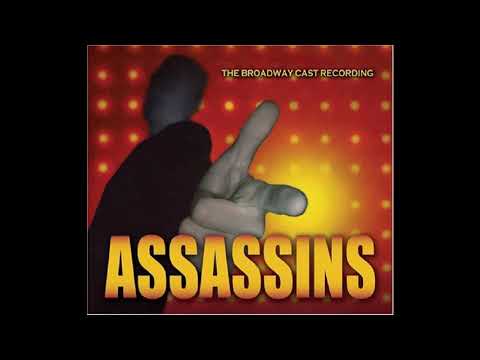
Assassins (2004) - stage interlude - diegetic within the show's theatrical frame. This is Emma Goldman's spoken address, placed after "How I Saved Roosevelt" and before "The Gun Song" on the 2004 revival album. Its job is not to stop the plot. It sharpens it. Goldman's rhetoric gives Czolgosz a language for grievance, then the next scene turns that language into action and object.
Creation History
"What Does a Man Do...?" comes from Stephen Sondheim and John Weidman's Assassins, with Anne L. Nathan performing Emma Goldman in the 2004 Broadway revival at Studio 54. Roundabout Theatre Company's revival opened on April 22, 2004, and PS Classics released the cast recording on August 3, 2004. On major digital services, the track is commonly listed under Anne L. Nathan and runs 0:51, which tells you what sort of piece this is: compact, functional, and very deliberate. The cast album was produced by Tommy Krasker and recorded during the revival's Tony-winning run, according to Playbill and PS Classics.
Lyricist Analysis
This is speech-rhythm writing, full stop. There is no stable verse-chorus structure, no decorative rhyme chain, no polished singability to hide behind. The text works like heightened political oratory. Sondheim uses repeated syntactic frames - "What does a man do" - to create momentum where melody is minimal. That repetition acts like a hammer. Not fancy. Effective.
Metric strictness is loose, but the phrasing has strong rhetorical stress. Words such as vision, hope, toiling, suffering, cruelty, injustice, and starving carry the weight, and the breath pattern keeps getting squeezed tighter as the speech continues. There is no neat rhyme scheme to reassure the listener. That absence helps. It makes the language sound less composed and more urgent, like thought turning into doctrine on the spot.
Phonetically, the piece leans on hard consonants and stressed abstractions. Toiling, agonizing, caused, cruelty - those words grind. The echoes at the end are crucial structural devices too. The text stops moving forward and starts reverberating, which gives the scene its unsettling after-ring.
Song Meaning and Annotations
Plot
Emma Goldman asks a series of escalating questions about what a man does when he recognizes that his pain is social rather than accidental. The speech names suffering, hunger, and class injustice. It does not describe violence directly, but it pushes toward it by making outrage sound rational, even inevitable.
Song Meaning
The meaning sits in the gap between sympathy and incitement. Goldman voices the conditions that shape Czolgosz - poverty, alienation, labor misery - and turns those conditions into a political awakening. In the show, that is dangerous ground. The speech does not say "go kill." It asks what happens when a man decides that the world has done the killing first.
That is why the cue works so well beside the tracks around it. "How I Saved Roosevelt" is comic and frantic. "The Gun Song" is grotesquely catchy. This brief speech stands between them like a dark hinge. It makes the next number feel less like random madness and more like ideology finding a weapon.
Annotations
What does a man do / When before his eyes / He sees a vision of a new hope dawning for his toiling, agonizing brothers?
The language is collective from the start. Goldman is not talking about one lonely soul in private despair. She is talking about a class, a brotherhood of workers, the kind of rhetoric that can make personal pain feel historical.
When at last he realizes his suffering is caused not by the cruelty of fate / But by the injustice of his fellow human beings?
That turn from fate to human systems is the core of the speech. Once suffering stops looking accidental, someone becomes responsible. That shift is pure political drama. It gives grievance a target.
When he sees those dear to him starving / When he himself is starved?
Now the language moves from theory to the stomach. Hunger is no longer abstract. It is domestic, bodily, humiliating. A line like this makes ideology feel less like a pamphlet and more like a bruise.
What does he do? / What does he do?
The repetition is the hook and the trap. In performance, it can sound like compassion, agitation, or a test. The show leaves just enough ambiguity for that tension to work. According to Britannica's summary of Emma Goldman and Leon Czolgosz, he claimed her ideas inspired him, even though the historical record does not support a direct operational link. That gray area is exactly where Assassins likes to live.
Lyrical Themes and Message
Class injustice is the obvious theme, but the deeper theme is moral permission. The speech maps a route from pain to explanation to action. It is persuasive language doing what persuasive language does when someone frightened, angry, and isolated is listening too closely.
Historical Context
Emma Goldman was one of the most visible anarchist voices in the United States, and Leon Czolgosz later claimed her influence after assassinating President William McKinley. PBS and Britannica both note that Goldman was arrested after the shooting and released for lack of evidence. The show compresses that history into a theatrical exchange, which is fair game for drama, but it keeps the political charge intact.
Production and Delivery
The 2004 revival cast recording does not over-decorate the cue. Good choice. A richer arrangement would weaken it. This needs the chill of speech, the clipped rise of a public address, the feeling that one mind is reaching into another mind.
Technical Information (Quick Facts)
- Song: "What Does a Man Do...?"
- Artist: Anne L. Nathan, Tommy Krasker
- Composer: Stephen Sondheim
- Lyricist: Stephen Sondheim
- Book: John Weidman
- Producer: Tommy Krasker
- Release Date: August 3, 2004
- Genre: Musical theatre, Broadway cast recording, spoken interlude
- Instruments: minimal underscore on cast recording
- Label: PS Classics
- Mood: urgent, ideological, foreboding
- Length: 0:51
- Track #: 5
- Language: English
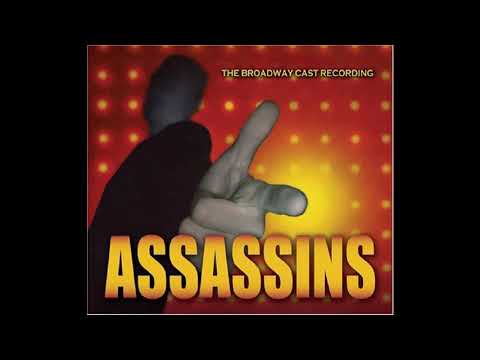
- Album: Assassins (The 2004 Broadway Revival Cast Recording)
- Music style: spoken theatrical recitative
- Poetic meter: conversational speech-rhythm with rhetorical repetition
Frequently Asked Questions
- Who wrote "What Does a Man Do...?"
- Stephen Sondheim wrote the music and lyrics for the piece, and John Weidman wrote the book of Assassins, which gives the speech its dramatic setting.
- Who performs it on the 2004 revival recording?
- Major streaming metadata usually lists Anne L. Nathan for the track, reflecting her role as Emma Goldman in the 2004 Broadway revival cast.
- Is it really a song?
- Only in the broad musical-theatre sense. It plays more like a spoken cue or recitative passage than a full standalone song.
- What role does Emma Goldman play here?
- She voices the political explanation for Czolgosz's despair. The speech gives language to his grievances and points the story toward violent consequence.
- Is the text based on Goldman's real writings?
- It is a theatrical paraphrase rather than a direct quotation. It captures her rhetoric about injustice, workers, and social causes without pretending to be a literal document.
- Why is the piece so short?
- Because it works as a hinge scene. It needs to strike, linger, and hand the audience straight into "The Gun Song" without losing tension.
- Did Emma Goldman actually order McKinley's assassination?
- No reliable historical source says she directed it. Czolgosz claimed inspiration from her ideas, but Goldman was arrested and released without evidence linking her to a plot.
- Why does the repeated question matter so much?
- Because it moves the listener from sympathy to justification. It frames violence as the answer that might follow unbearable conditions.
Awards and Chart Positions
There is no reliable standalone chart history or separate awards trail for this 51-second track. The recognition belongs to the album and the revival around it. The 2004 Broadway revival of Assassins won major Tony Awards, and the PS Classics cast recording later received a Grammy nomination for Best Musical Show Album.
Additional Info
- The track is placed at number 5 on the 2004 cast album, right before "The Gun Song," which makes its dramatic function crystal clear.
- Anne L. Nathan played Emma Goldman in the Broadway revival, as listed by IBDB.
- On Apple Music, the track is listed at 0:51, which is unusually brief even by cast-album scene standards.
- According to Playbill, the revival cast album was recorded during the production's Broadway run and released by PS Classics on August 3, 2004.
Key Contributors
| Entity | Type | Relationship |
|---|---|---|
| Stephen Sondheim | Person | Wrote the music and lyrics. |
| John Weidman | Person | Wrote the book for Assassins. |
| Anne L. Nathan | Person | Performed Emma Goldman in the 2004 Broadway revival and on the cast recording track. |
| Tommy Krasker | Person | Produced the PS Classics cast album. |
| Emma Goldman | Person | Historical figure portrayed in the piece. |
| Leon Czolgosz | Person | Historical figure whose radicalization is framed by the speech. |
| PS Classics | Organization | Released the 2004 Broadway revival cast recording. |
| Roundabout Theatre Company | Organization | Produced the 2004 Broadway revival. |
| Studio 54 | Venue | Hosted the revival on Broadway. |
Sources
Data verified via PS Classics release information, Playbill coverage of the June 2004 recording session and August 3, 2004 release, IBDB cast and production records for Anne L. Nathan and the Broadway revival, Apple Music metadata for track order and 0:51 duration, Discogs credits for the cast album, and historical background checked against Britannica and PBS American Experience material on Emma Goldman and Leon Czolgosz.