
Unworthy of Your Love Lyrics
Unworthy of Your Love
[HINCKLEY]I am nothing,
You are wind and water and sky,
Jodie.
Tell me, Jodie,
How I can earn you love.
I would swim oceans,
I would move mountains,
I would do anything for you.
What do you want me to do?
I am unworthy of your love,
Jodie, Jodie,
Let me prove worthy of you love.
Tell me how I can earn your love,
Set me free.
How can I turn your love
To me?
[FROMME]
I am nothing,
You are wind and devil and God,
Charlie,
Take my blood and my body
For your love.
Let me feel fire,
Let me drink poison,
Tell me to tear my heart in two,
If that's what you want me to do...
I am unworthy of you love,
Charlie darlin',
I have done nothing for your love.
Let me be worthy of your love,
Set you free-
[HINCKLEY]
I would come take you from you life...
[FROMME]
I would come take you from your cell...
[HINCKLEY]
You would be queen to me, not wife...
[FROMME]
I would crawl belly deep through hell...
[HINCKLEY]
Baby, I'd die for you...
[FROMME]
Baby, I'd die for you...
[HINCKLEY]
Even though-
[FROMME]
Even though-
[HINCKLEY+FROMME]
I will always know:
I am unworthy of
Your love,
Jodie\Charlie darlin',
[BOTH]
Let me prove worthy of your love.
I'll find a way to earn your love,
Wait and see.
Then you will turn your love to me,
Your love to me...
Song Overview
Review and Highlights
Quick summary
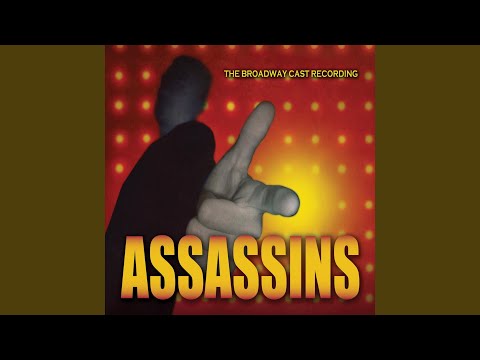
- Where it lives: A duet in Stephen Sondheim and John Weidman's stage musical Assassins, featured on the 2004 Broadway revival cast recording.
- Who sings it: John Hinckley Jr. and Lynette "Squeaky" Fromme, trading romantic language while aiming it at obsession.
- Sound: A pop-leaning ballad frame that keeps its pulse steady, even when the context turns sour.
- Why it hits: It makes fixation sound polite, almost tender, then lets the chill sink in.
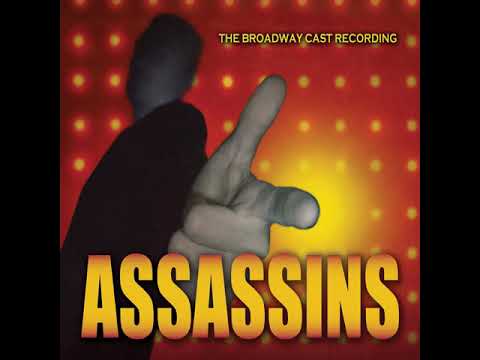
Assassins (2004) - stage musical - not diegetic. The number plays as a private confession split across two minds: Hinckley, alone with his idol, and Fromme, answering from her own devotion. On the cast recording it arrives mid-album as track 8 (4:29), starting with the soft setup at 0:00 and building into layered voices by the middle. The placement matters because it briefly drops the carnival bark and lets the show stare at longing as motive, not spectacle.
The Politician (2019) - TV series - not diegetic (a performance inside the episode). In Season 1, Episode 6 ("The Assassination of Payton Hobart, Part I"), the song is staged as a school-musical moment that mirrors the characters' own appetite for attention. The cover was also released on an EP tied to the series.
As a piece of writing, this is one of Sondheim's sharpest traps. He hands you the shape of a gentle love song: even phrases, careful rhymes, a tempo that does not panic. Then he loads that shape with people who have confused worship with intimacy. The melody keeps offering a sweet landing spot, and the lyric keeps pulling it away. That tension is the point.
The hook is how normal it sounds. That is not a compliment to the characters - it is the warning label. Hinckley and Fromme are not ranting. They are pleading, like pen pals who have practiced their signature in the margin. The music does the same thing: it behaves. It stays in lane. That obedience makes the moment feel more dangerous than the louder numbers around it.
Creation History
The song was written for Assassins (music and lyrics by Stephen Sondheim, book by John Weidman) and later carried into the revised licensed version shaped by the 2004 Broadway revival. The 2004 cast recording was made in New York and released in August 2004, capturing the revival's tighter pacing and modernized theatrical language. According to Playbill, the release also documented additions and structural choices that helped define how many productions now stage the show.
Song Meaning and Annotations
Plot
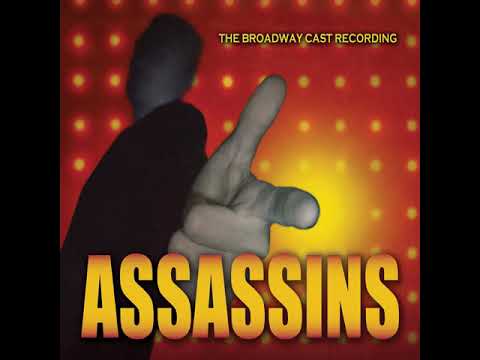
Hinckley is caught in a small, awkward scene that turns into a confession. Fromme interrupts him and mocks the idea of loving someone he does not know. He pushes her away, then pivots into a direct address to his idol, framing himself as weak, ashamed, and hungry for instruction. In parallel, Fromme answers with her own address to Charles Manson. The show layers the two voices so the audience hears the same posture - devotion as self-erasure - coming from two different histories. The scene tips forward into action, with Hinckley turning his fantasy into practice.
Song Meaning
The meaning is plain and nasty: they want approval so badly that violence starts to look like a gift. The song dresses that motive in courtly language - humility, loyalty, sacrifice - then exposes it as a kind of emotional blackmail. They are not offering love. They are offering proof. That distinction is where the number lives.
Annotations
I am nothing
The opening move is self-deletion. It is not romance, it is branding: make the self small enough that the obsession can fill the whole frame.
wind and water and sky
Nature imagery makes the idol feel vast and untouchable. The lyric is trying to turn a celebrity crush into a religion.
tell me how I can earn
That one word, "earn", flips the whole exchange into a transaction. Devotion is being treated like a job interview, with violence waiting in the lobby.
Charlie, darlin'
Fromme's diction can land like a postcard from the 1970s: casual endearment, homespun charm. The warmth is part of the disguise.
set me free
They talk like prisoners, but the bars are internal. The song keeps returning to captivity language, as if the idol has the key.
Driving rhythm and style
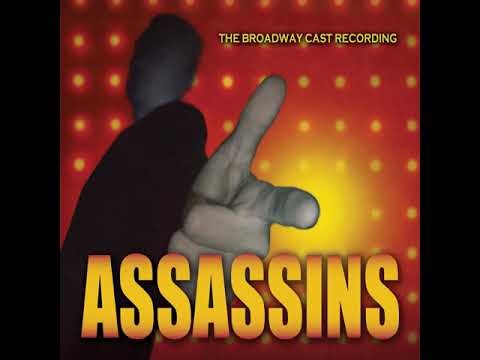
The engine is restraint: a moderato pace, clean phrasing, and the kind of pop-ballad glide that suggests a slow dance. That is why the number works in the middle of a show full of American musical costumes. It borrows the sound of sincerity, then lets the audience feel how that sound can be misused.
Emotional arc without the forbidden word
It starts with abasement, swells into promise, and ends in a pose that sounds noble while staying hollow. The harmony does not need to twist itself into ugliness. The ugliness is already in the idea: "If I do this, you will see me."
Symbols and cultural touchpoints
The song is pinned to two very public stories - an assassin chasing an actress, and a follower chasing a cult leader. In a different show, those details would be delivered with irony and distance. Here, the detail is treated as romantic biography, which is exactly the satire. The number is saying: America sells you the fantasy that attention is salvation, and some people believe it too literally.
Technical Information (Quick Facts)
- Song: Unworthy of Your Love
- Artist: Assassins (2004 Broadway Revival Cast)
- Featured: Alexander Gemignani, Mary Catherine Garrison
- Composer: Stephen Sondheim
- Producer: Tommy Krasker
- Release Date: August 3, 2004
- Genre: Musical theatre; pop ballad
- Instruments: Voice; piano and/or guitar-led accompaniment (common rehearsal setup); orchestra on cast recording
- Label: PS Classics
- Mood: sweet surface; unsettling intent
- Length: 4:29
- Track #: 8 (on the 2004 Broadway cast recording)
- Language: English
- Album: Assassins (The Broadway Cast Recording)
- Music style: pop ballad pastiche inside a theatrical score
- Poetic meter: mostly iambic-leaning pop phrasing with conversational breaks
Frequently Asked Questions
- Who is the duet between in the stage story?
- John Hinckley Jr. and Lynette "Squeaky" Fromme. Each sings to an idol rather than to each other, which is the trick.
- Is it played straight or played for laughs?
- Both, depending on staging. The music invites sincerity, but the context turns it into dark comedy without needing winks.
- Why does it sound like a normal love song?
- Because the show wants the audience to feel how easily devotion language can be repurposed into justification.
- What is the main dramatic function?
- It pauses the carnival energy and shows obsession as a private ritual, the quiet room where violence gets dressed as duty.
- What makes the lyric unsettling without being graphic?
- The politeness. The words lean on humility and service, which makes the underlying demand feel colder.
- Is the number connected to a specific moment right after it?
- Yes. In the stage synopsis, the scene turns toward practice and action, tightening the link between fantasy and attempt.
- Why has it become a common audition choice?
- It sits in a comfortable pop-theatre lane on the surface, but it asks for character clarity and steady storytelling underneath.
- What key and tempo are commonly referenced in sheet music listings?
- Many published arrangements cite B major and a moderato marking around 112 BPM.
- Are there notable modern covers?
- Yes. A high-profile version appears in Netflix's The Politician, and later cast recordings have spotlighted the number again.
- Does it require belting?
- Not by default. It rewards even tone, clean vowels, and controlled build more than raw volume.
Awards and Chart Positions
The song itself is not typically tracked like a pop single, but the 2004 Broadway revival and its recording collected major recognition.
| Year | Award | Category | Result |
|---|---|---|---|
| 2004 | Tony Awards | Best Revival of a Musical | Won |
| 2004 | Tony Awards | Director (Musical) - Joe Mantello | Won |
| 2004 | Tony Awards | Lighting Design - Jules Fisher and Peggy Eisenhauer | Won |
| 2005 | Grammy Awards | Best Musical Show Album (cast recording) | Nominated |
Additional Info
Two things keep pulling the number back into the spotlight. First, it is singable in a way that feels almost suspicious. Second, it is a character study disguised as a duet. According to Vogue magazine, performers and listeners have long treated the song as an audition staple because it sounds pop-friendly while still demanding clear acting choices.
The piece also keeps showing up outside the theatre. As reported by the Los Angeles Times, Netflix's The Politician used the duet in a 2019 episode built around a school production of Assassins. Playbill later noted that the series tie-in release packaged that performance on an EP with other songs from the show.
On the recordings side, the track has traveled: the original cast recording, the 2004 Broadway revival recording, compilation appearances, and later revival recordings have all kept it in circulation. The Sondheim Guide also logs multiple released versions across albums and projects, which is a quiet measure of how durable the number has become in the broader Sondheim catalogue.
Key Contributors
| Entity | Type | Relationship |
|---|---|---|
| Stephen Sondheim | Person | Wrote music and lyrics for "Unworthy of Your Love". |
| John Weidman | Person | Wrote the book for Assassins. |
| Alexander Gemignani | Person | Performed the Hinckley part on the 2004 cast recording. |
| Mary Catherine Garrison | Person | Performed the Fromme part on the 2004 cast recording. |
| Tommy Krasker | Person | Produced the 2004 Broadway cast recording. |
| PS Classics | Organization | Released the 2004 Broadway cast recording album. |
| Music Theatre International | Organization | Licenses Assassins and publishes the show synopsis. |
| Netflix | Organization | Aired The Politician episode featuring the song. |
How to Sing Unworthy of Your Love
Most singers get tempted to play this as pure sweetness. That can flatten it. The cleanest approach is to keep the tone sincere while letting the subtext leak through in tiny choices. Sheet-music listings commonly cite B major, a moderato feel, and a tempo around 112 BPM, with a shared vocal range that sits comfortably for many singers when paced well.
- Tempo first: Set a metronome around 112 BPM and speak the text on the beat. Do not rush the consonants.
- Diction: Keep names crisp. "Jodie" and "Charlie" should land like a private ritual, not a punchline.
- Breathing: Plan breaths before long promises. The song works when it feels like one uninterrupted vow.
- Flow and rhythm: Treat it like pop phrasing, but with theatre clarity. Let the ends of lines release instead of snapping shut.
- Accents: Lean into the plain words - "earn", "prove", "worthy". Those carry the motive.
- Duet balance: When the voices overlap, do not compete. Blend vowels and match vibrato speed so the obsession feels shared even when the targets differ.
- Mic and space: If amplified, sing closer and lighter than you think. The danger is in intimacy, not volume.
- Pitfalls: Avoid winking irony. Also avoid over-sobbing. A calm delivery can feel far more unsettling.
Practice materials: Work from a piano-vocal score, isolate the overlapping phrases, then rehearse with one singer speaking while the other sings to lock timing. Finish by swapping roles so both performers understand the same dramatic temperature.
Sources
Sources: Playbill; Musicnotes; Music Theatre International; The American Theatre Wing's Tony Awards; Los Angeles Times; Vogue magazine; Sondheim Guide