
Ballad of Booth Lyrics
Ballad of Booth
[BALLADEER]Someone tell the story,
Someone sing the song.
Every now and then
The country
Goes a little wrong.
Every now and then
A madman's
Bound to come along.
Doesn't stop the story-
Story's pretty strong.
Doesn't change the song...
Johnny Booth was a handsome devil,
Got up in his rings and fancy silks.
Had him a temper but kept it level.
Everybody called him Wilkes.
Why did you do it, Johnny?
Nobody agrees.
You who had everything,
What made you bring
A nation to its knees?
Some say it was your voice had gone,
Some say it was booze.
Some say you killed a country, John,
Because of bad reviews.
Johnny lived with a grace and glitter.
Kind of like the lives he lived on stage.
Died in a barn in pain and bitter
Twenty-seven years of age.
Why did you do it, Johnny,
Throw it all away?
Why did you do it, boy,
Not just destroy
The pride and joy
Of Illinois,
But all the U.S.A.?
Your brother made you jealous, John,
You couldn't fill his shoes.
Was that the reason, tell us, John-
Along with bad reviews.
[BOOTH]
Damn!
[HEROLD]
They're coming! they'll be here any minute-
[BOOTH]
I need your help.
I've got to write this and I can't hold the pen
[HEROLD]
Johnny, they've found us!
We've got to get out of here!
[BOOTH]
Not till I finish this.
[HEROLD]
Johnny-
[BOOTH]
No!
Have you seen these papers?
Do you know what they're calling me?!
A common cutthroat! A hired assassin!
This one says I'm mad!
[HEROLD]
We must have been mad to think
that we could kill the president and get away with it!
[BOOTH]
We did get away with it!
He was a bloody tyrant and we brought him down!
And I will not have history think I did it for a bag of gold
or in some kind of rabid fit!
[HEROLD]
Johnny we have to go-
[BOOTH]
No! I have to make my case!
And I need you to take it down!
[HEROLD]
We don't have time!
[BOOTH]
Take it down-
An indictment.
Of the former President of the United States,
Abraham Lincoln, who is herein charged
with the following high crimes and misdemeanors.
[BALLADEER]
They say you're ship was sinking, John...
[BOOTH]
One:
That you did ruthlessly provoke a war between the States,
which cost some six hundred thousand
of my countrymen their lives. Two:
[BALLADEER]
You'd started missing cues...
[BOOTH]
Two:
That you did silence your critics in the North,
by hurling them into prison without benefit of charge or trial. Three-
[BALLADEER]
They say it wasn't Lincoln, John.
[BOOTH]
Shut up! Three-
[BALLADEER]
You'd merely had a slew of bad
Reviews-
[BOOTH]
I said shut up!
[VOICE]
Booth! I have fifty soldiers out here Booth!
Give yourselves up or we'll set fire to the barn!
[HEROLD]
Don't shoot! I'm coming out!
[BOOTH]
No!
I have given my life for one act, you understand?
Do not let history rob me of its meaning.
Pass on the truth! You're the only one who can.
Please...
[BALLADEER]
He said
"Damn you Lincoln,
You had your way-
[BOOTH]
Tell'em, boy!
[BALLADEER]
With blood you drew out
Of blue and gray!"
[BOOTH]
Tell it all!
Tell'em till they listen!
[BALLADEER]
He said,
"Damn you, Lincoln,
And damn the day
You threw the 'U' out
Of U.S.A!"
He said:
[BOOTH]
Hunt me down, smear my name,
say I did it for the fame,
What I did was kill the man who killed my country.
Now the Southland will mend,
Now this bloody war can end,
Because someone slew the tyrant
Just as Brutus slew the tyrant-
[BALLADEER]
He said:
[BALLADEER, BOOTH]
Damn you, Lincoln,
You righteous whore!
[BOOTH]
Tell'em!
Tell'em what he did!
[BALLADEER, BOOTH]
You turned your spite into Civil War!
[BOOTH]
Tell'em!
Tell'em the truth!
[BALLADEER]
And more...
[BOOTH]
Tell'em, boy!
Tell them how it happened,
How the end doesn't mean that it's over,
How surrender is not the end!
Tell them:
How the country is not what it was,
Where there's blood on the clover,
How the nation can never again
Be the hope that it was.
How the bruises may never be healed,
How the wounds are forever,
How we gave up the field
But we still wouldn't yield,
How the union can never recover
From that Vulgar,
High and mighty
Niggerlover,
Never-!
Never. Never. Never.
No, the country is not what it was...
Damn my soul if you must,
Let my body turn to dust,
Let it mingle with the ashes of the country.
Let them curse me to hell,
Leave it to history to tell:
What I did, I did well,
And I did it for my country.
Let them cry, "dirty traitor!"
They will understand it later-
The country is not what it was...
[BALLADEER]
Johnny Booth was a headstrong fellow,
Even he believed the things he said.
Some called him noble, some said yellow.
What he was was off his head.
How could you do it,Johnny,
Calling it a cause?
You left a legacy
Of butchery
And treason we
Took eagerly,
And thought you'd get applause.
But traitors just get jeers and boos,
Not visits to their graves,
While Lincoln, who got mixed reviews,
Because of you, John, now gets only raves.
Damn, you Johnny,
You paved the way
For other madmen
To make us pay.
Lots of madmen
Have had their say-
But only for a day.
Listen to the stories.
Hear it in the songs.
Angry men
Don't write the rules
And guns don't right the wrongs.
Hurts a while,
But soon the country's
Back where it belongs,
And that's the truth.
Still and all,
Damn you Booth!
[Thanks to Thomas for corrections]
Song Overview
Quick summary
Written as a murder ballad inside Stephen Sondheim and John Weidman's Assassins, Neil Patrick Harris, Michael Cerveris, Brandon Wardell, and Tommy Krasker's credited recording of "The Ballad of Booth" lyrics turns John Wilkes Booth into both subject and argument. On the 2004 Broadway revival cast album, the number works as a scene-song, a history lesson, and a trap: it lets Booth state his case, then lets the Balladeer tear that case apart.
The sound is rooted in Americana and theatrical folk, with guitar-shaped storytelling, broad melodic phrases, and a mid-song expansion that feels almost hymn-like before it curdles. The craft hook is the split viewpoint: Sondheim gives Booth and the Balladeer overlapping authority, then uses rhyme, interruption, and repeated phrases to show how public myth and private delusion fight for control.
That tension is why the piece lasts. It is less a character solo than a staged cross-examination.
Review and Highlights
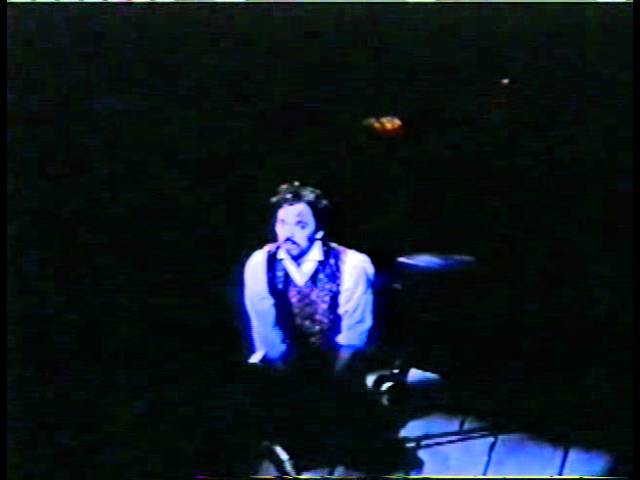
"The Ballad of Booth" is one of the sharpest numbers in Assassins because it refuses to flatten its villain. The Balladeer opens in the old American habit of turning disaster into song. Then Booth barges in, interrupts the verdict, and demands a hearing. That dramatic handoff is the whole engine of the piece.
The first half has the shape of a folk ballad. The melody sounds almost courtly, which fits Booth's self-image as a romantic actor in decline. Then the scene inside the barn changes the weather. The song stops reporting on Booth and starts letting him talk back. Once that happens, the number gets bigger, stranger, and more dangerous. You can hear Sondheim letting rhetoric swell until it exposes itself.
The best detail is the bait-and-switch in sympathy. For a minute, Booth sounds like a man trying to wrestle history into a sentence that will save him. Then the mask slips. The racist core of his politics shows through, and the song snaps into focus. Whatever poetry Booth thinks he has, the show denies him sainthood.
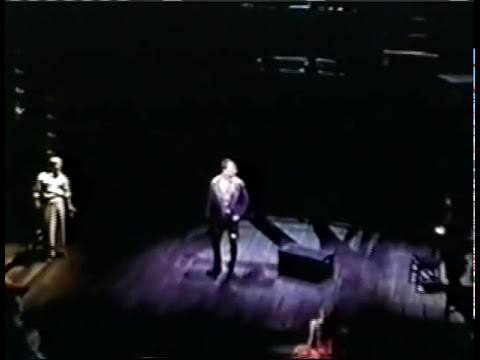
Assassins (2004) - stage musical number - non-diegetic and diegetic at once, in the way musicals often blur memory, commentary, and action. In the stage scene, the number begins right after Lincoln's assassination, moves through the fugitive barn sequence, and frames Booth through the Balladeer's running account. That placement matters because it turns one historical crime into the template for the rest of the show's argument about grievance, spectacle, and American self-justification.
Key takeaways:
- It uses the language of a traditional ballad to stage an argument over national memory.
- Booth is humanized without being excused.
- The Balladeer acts like a public conscience, then a prosecutor.
- The song's prettiest musical stretch carries Booth's ugliest beliefs, which is exactly the point.
Creation History
Assassins features music and lyrics by Stephen Sondheim and a book by John Weidman, based on an idea by Charles Gilbert Jr. The show first premiered Off-Broadway in 1990, but the version most listeners know from streaming comes from the Roundabout Theatre Company's 2004 Broadway revival at Studio 54. According to Playbill and MTI materials, that revival won five Tony Awards, and PS Classics released the cast album in summer 2004. Apple Music dates this track to July 27, 2004 on digital services, while PS Classics and Playbill place the album's commercial release on August 3, 2004. Tommy Krasker produced the recording. The Broadway revival cast for this number centers on Neil Patrick Harris as the Balladeer, Michael Cerveris as Booth, and Brandon Wardell as David Herold.
Lyricist Analysis
Sondheim writes this one with a speech-rhythm base that keeps slipping into cleaner ballad meter. The Balladeer's verses lean toward a steady, folk-style pulse with neat stresses: "Johnny Booth was a handsome devil" lands with a storyteller's swing, close to accentual verse more than strict textbook scansion. Booth's spoken indictment breaks that regularity on purpose. He does not sing like a folk hero. He argues like a man trying to force history to obey him.
The rhyme game is sly. Early lines give you clear, easy pairings - "song / wrong / along / strong" - the kind of chain that makes a public story feel fixed. Then Sondheim starts roughing the texture up with half-rhymes and repeated sounds, so certainty feels shakier. The result is honest in a crooked way. The song sounds traditional, but it never settles long enough to feel safe.
Phonetically, the piece is packed with hard consonants. Booth's language spits with plosives: "blood," "blue," "gray," "damn," "Brutus," "tyrant." Those punches matter. They turn his self-defense into attack. The Balladeer's lines, by contrast, often flow on softer sibilants and liquids, which helps him sound like history speaking in public, polished tones. Then, late in the piece, both sound worlds collide.
Prosodically, the number is smart about breath. The Balladeer gets contained phrases that feel singable, almost easy. Booth's big central run stretches longer, as though he is trying to outpace judgment with sheer verbal force. That is great theatre. Breath becomes ideology. He has to keep talking because silence would mean losing.
Structurally, the song works like a ballad that mutates into a courtroom scene and then into a fevered manifesto. The broad lyrical section beginning around Booth's vision of a broken country opens the harmonic space and gives him what sounds, for a few bars, like tragic stature. Then Sondheim slams the door. The song ends with the Balladeer's verdict, restoring form after Booth has tried to blow form apart.
Song Meaning and Annotations
Plot
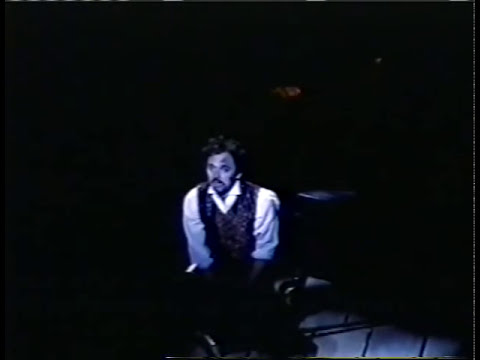
The number opens moments after Lincoln is shot at Ford's Theatre. The Balladeer starts telling Booth's story in a familiar American format - the sung tale of a handsome, gifted man who threw his life away. Booth then interrupts that neat version. Hidden in a barn with David Herold, he insists on dictating his own political defense before soldiers close in. He casts Lincoln as a tyrant, claims the Civil War destroyed the country he loved, and imagines history one day restoring his honor. The song ends by denying him that redemption. Booth dies, and the Balladeer answers with the harsher legacy: treason, imitation, and a line of future killers.
Song Meaning
The meaning sits in the collision between explanation and condemnation. This is a song about how violent men narrate themselves. Booth wants to be remembered as a patriot and martyr. The Balladeer frames him as an unstable actor who confused grievance with destiny. Sondheim and Weidman leave space for Booth's rhetoric because that is how propaganda works - it always arrives dressed as principle. Then they expose the rot inside it.
There is also a bigger idea running underneath: America keeps turning trauma into story. That is why the number is a ballad in the first place. Folk forms usually preserve communal memory. Here, the form is being fought over. Booth wants in. The Balladeer bars the door.
Annotations
Sic semper tyrannis!
That cry ties Booth to the Roman Brutus myth and to Virginia's state motto. Historically, witnesses disagreed about exactly when Booth shouted it, but the phrase matters because it shows how badly he wanted to cast himself as a classical liberator rather than a murderer.
Someone tell the story / Someone sing the song
This is the mission statement for the Balladeer. He is not a neutral narrator. He stands for public memory - the version of history that absorbs violence, names it, and keeps moving. In later versions of Assassins, the role's transformation into Lee Harvey Oswald makes that function even darker.
Why did you do it, Johnny? / Nobody agrees
That line catches the historical fog around Booth's motives. Scholars have pointed to Confederate loyalty, white supremacist rage, resentment of Lincoln, sibling rivalry with Edwin Booth, career anxiety, and the actor's taste for grand gestures. The song compresses all of that into one blunt question and then refuses a tidy answer.
Take it down!
Onstage, Booth forces Herold to become a witness and a secretary. That is a small but nasty theatrical detail. Booth does not only want to act. He wants publication. He wants a record. In historical terms, that matches his diary and his unfinished attempts to justify the assassination in writing while on the run.
Hunt me down, smear my name / Say I did it for the fame
This comes very close to Booth's surviving diary language. He insisted he acted "for my country" and complained that the public treated him like a cutthroat. The number turns that self-defense into song, which makes it more seductive and more absurd at the same time.
Because someone slew the tyrant / Just as Brutus slew the tyrant
Here the song links Booth's self-image, Shakespeare, and classical republican murder. Booth had recently appeared in Julius Caesar with his brothers, so the Brutus parallel was not random bookish dressing. It was part of the fantasy he built around himself.
The genre blend matters too. The piece starts in an American ballad lane, with folk and parlor-song traces, then swells toward something almost symphonic in Booth's longest passage. That expansion is dangerous in a useful way: it lets listeners feel how conviction can sound grand before language reveals its poison. According to Sondheim's own remarks in a published interview excerpt, he did not think of the number as packed with meter changes, which is telling - the song feels fluid because the dramatic pressure, not technical display, drives its shifts.
Historical touchpoints
The script pulls from real events and real attitudes. Booth grew up in Maryland, supported the Confederacy, first plotted kidnapping, then joined the April 1865 assassination conspiracy after Robert E. Lee's surrender. The barn scene compresses the end of his flight in Virginia, where federal troops cornered Booth and Herold. Some details are theatrical rather than literal - Booth did not actually die by suicide - but the show uses compression to get at his need to control the narrative of his death.
Symbols and phrases
"Story" and "song" are really shorthand for national memory. "Blue and gray" shrinks the Civil War into colors, almost like uniforms on a toy stage. "One act" is one of Sondheim's nastier puns here. Booth means one deed, but the phrase also drags in the theatre vocabulary he cannot stop thinking in. He remains an actor to the end. Even cornered, he is auditioning for posterity.
Technical Information (Quick Facts)
- Song: The Ballad of Booth
- Artist: Neil Patrick Harris, Michael Cerveris, Brandon Wardell
- Featured: Stephen Sondheim is also credited as a performer on platform credits
- Composer: Stephen Sondheim
- Producer: Tommy Krasker
- Release Date: August 3, 2004
- Genre: Musical theatre, Broadway, show tune, murder ballad
- Instruments: Voice, orchestra, guitar-led theatrical accompaniment
- Label: PS Classics
- Mood: accusatory, theatrical, bitter, reflective
- Length: 8:34
- Track #: 2
- Language: English
- Album: Assassins (The 2004 Broadway Revival Cast Recording)
- Music style: Americana-inflected stage ballad with dialogue passages
- Poetic meter: mixed accentual ballad meter with conversational speech-rhythm
Frequently Asked Questions
- Who wrote "The Ballad of Booth"?
- Stephen Sondheim wrote the music and lyrics for the song, while John Weidman wrote the book for Assassins.
- Who sings the 2004 revival cast recording?
- The credited track artists are Neil Patrick Harris, Michael Cerveris, and Brandon Wardell. Harris plays the Balladeer, Cerveris plays Booth, and Wardell appears as David Herold in the scene.
- When was the recording released?
- The album's commercial release on PS Classics was August 3, 2004. Some digital platform metadata dates the individual track to July 27, 2004, which likely reflects an earlier platform ingest or regional storefront date.
- What role does the song play in Assassins?
- It introduces Booth as the show's first assassin in focus and establishes the pattern the musical returns to again and again: public narrative versus private grievance.
- Is the song historically accurate?
- Broadly, yes in outline. It uses real elements from Booth's life, politics, flight, and writings. It also compresses events and changes details for theatre, especially the staging of Booth's final moments.
- Why is the Balladeer so important in this number?
- Because he does more than narrate. He frames, questions, mocks, and finally judges. He gives the audience a civic point of view while the show tests how persuasive violent self-myth can sound.
- Why does Booth compare himself to Brutus?
- He wants to recast assassination as tyrannicide. The Brutus reference lets him imagine a noble Roman precedent for killing Lincoln, which the song then tears down.
- Is the song sympathetic to Booth?
- It is interested in him, which is different. The number grants him language and stage time, but it does not pardon him. That distinction matters.
- What musical style shapes the piece?
- It starts in the language of an American folk ballad and grows into a more expansive theatrical argument, with spoken passages and broad lyric lines built for dramatic escalation.
- Did the track chart as a standalone song?
- No reliable standalone chart run for the individual track turned up in the sources reviewed. Recognition attaches more to the Assassins revival and its cast album than to single-song chart activity.
- Was there an official music video?
- No official music video for the 2004 cast recording surfaced in the sources reviewed. The available YouTube clip most often circulated is a reunion concert performance rather than a label-issued video.
Awards and Chart Positions
There is no solid evidence that "The Ballad of Booth" charted as a standalone track. The awards story belongs to the production and the album around it. The 2004 Broadway revival of Assassins won five Tony Awards, including Best Revival of a Musical and Best Featured Actor in a Musical for Michael Cerveris. The cast album was later nominated for the Grammy Award for Best Musical Show Album, with Tommy Krasker named as producer. According to the Grammys feature on Sondheim recordings, the 2004 cast recording still has a strong reputation among theatre listeners.
| Award body | Year | Recognition | Result |
|---|---|---|---|
| Tony Awards | 2004 | Assassins - Best Revival of a Musical | Won |
| Tony Awards | 2004 | Michael Cerveris - Best Featured Actor in a Musical | Won |
| Grammy Awards | 2005 ceremony | Assassins cast album - Best Musical Show Album | Nominated |
Additional Info
- The 2004 Broadway production added "Something Just Broke" to the score, a detail that helps explain why this revival cast album became a favored listening version for many Sondheim followers.
- According to Playbill, the 2004 staging was the winningest show at that year's Tony Awards.
- According to the Grammy feature on Stephen Sondheim's essential works, the 2004 Assassins cast recording is valued for how fully it captures the show's difficult beauty.
- Sondheim once pushed back on the idea that "The Ballad of Booth" is built from flashy meter changes. That is a useful clue. The number feels unstable because the drama keeps changing shape, not because it is showing off.
Key Contributors
| Entity | Relationship | Statement |
|---|---|---|
| Stephen Sondheim | composer and lyricist | Stephen Sondheim wrote the music and lyrics for "The Ballad of Booth." |
| John Weidman | book writer | John Weidman wrote the book for Assassins. |
| Neil Patrick Harris | performer | Neil Patrick Harris performs the Balladeer part on the 2004 recording. |
| Michael Cerveris | performer | Michael Cerveris performs Booth on the 2004 recording. |
| Brandon Wardell | performer | Brandon Wardell is credited on the track and appears in the barn scene as David Herold. |
| Tommy Krasker | producer | Tommy Krasker produced the cast recording. |
| PS Classics | label | PS Classics released the 2004 Broadway revival cast album. |
| Roundabout Theatre Company | producer | Roundabout Theatre Company produced the 2004 Broadway revival. |
| Studio 54 | venue | The 2004 Broadway revival played at Studio 54. |
Sources
Data verified via PS Classics release notes, Playbill reporting on the 2004 Broadway revival and cast album, MTI show history and billing pages, Tony Awards records, Apple Music and Shazam platform credits, plus Sondheim reference material and a Grammy feature on notable cast recordings.
How to Sing The Ballad of Booth
Reliable public sources for an exact published key and BPM for the 2004 cast recording are thin, so the practical route is style-first rather than number-first. This song lives or dies on narrative control.
- Start with tempo feel. Treat the Balladeer material like a measured folk ballad. Keep it moving. Do not wallow.
- Lock the diction. Consonants carry the storytelling. "Johnny Booth," "bad reviews," "blood," and "Brutus" all need crisp edges without sounding chewed.
- Plan breath before the long Booth passages. His central statements can tempt singers into over-pushing. Map breath marks early so the argument sounds driven, not winded.
- Separate the two vocal minds. The Balladeer should sound public, clear, a little detached. Booth should sound increasingly cornered, grand, and feverish.
- Watch the spoken-to-sung pivots. They matter more than fancy vocal color. The song gains force when speech seems to ignite into melody.
- Do not prettify the climax. The expansive section is seductive, but it should still feel unstable. Too much polish weakens the scene.
- Use ensemble awareness. In performance, this number depends on reaction, interruption, and timing with the other actor. Listen as much as you sing.
- Common pitfall: treating Booth as a tragic hero from bar one. Save the full intensity. Let the song reveal his self-myth, then let it crack.