
Something Just Broke Lyrics
Something Just Broke
WOMAN 1I was out
In the yard,
Taking down the bed sheets,
When my neighbor yelled across:
PROPRIETOR
"The president's been shot."
WOMAN 1
I remember where I was,
Just exactly where I was,
In the yard out back--
PROPRIETOR
"The president's been shot."
MAN 1
I was getting me a shoeshine--
WOMAN 1
--Folding sheets--
MAN 1
--When I heard--
WOMAN 2
We were waiting for a carriage--
MAN 1
--Newsboys--
WOMAN 2
Suddenly there's shouting in the street--
WOMAN 1
--Lizzie's sheets...
THE PROPRIETOR
"The president's been shot."
WOMAN 2
I'll remember it forever--
WOMAN 1
And I thought:
WOMAN 2 and MAN 1
--Where I was, what I was doing--
WOMAN 1
Something just broke...
PROPRIETOR
"The president's been shot."
MAN 1
My God--!
MAN 2
I was up near the ridge,
Plowing--
MAN 3
We were working at the plant--
WOMAN 2
I was halfway throguh correcting the exams--
MAN 2
--When my wife
MAN 3
It was Mike--
MAN 2
She comes tearing 'cross the field--
MAN 3
--Mike the forman--
WOMAN 2
In runs billy--
MAN 3
I mean, he was crying--
WOMAN 2
He was crying--
MAN 2
She was crying--
WOMAN 2, MAN 2, MAN 3
I'll remember it forever...
WOMAN 1
And I thought:
PROPRIETOR
"The president's been shot."
WOMAN 1
You know what?
There are presidents who aren't worth a lot.
WOMAN 2, MAN 2, MAN 3
I kept thinking:
WOMAN 1
There's the kind that gets elected, then forgot.
MAN 1 and WOMAN 1
Mr. Garfield--
WOMAN 2
Mr. Lincoln
MAN 1 and WOMAN 1
--He's a hack.
MAN 3 and WOMAN 1
Bill McKinley--
WOMAN 2
--He's a giant.
MAN 1, MAN 3, WOMAN 1
--He's a joke.
WOMAN 1
Still, something just broke...
PROPRIETOR
"The president is rallying."
"The president is sinking."
"The president is dead."
WOMAN 1
Something just broke.
MAN 2
I was down at the Exchange...
WOMAN 1
Something just made a little dent.
WOMAN 2
I'd been shopping...
MAN 1
I'd been sick...
WOMAN 1
Something just broke--
MAN 3
All I know, it was a Friday...
WOMAN 1
Only for a moment.
MAN1, MAN 2, MAN 3, BOY
I remember it exactly...
WOMAN 1
Something got bent.
WOMAN 2
I'm taking the order...
WOMAN 1
Something jsut left a little mark.
BOY
I was getting dressed...
WOMAN 2
...two potato soups...
WOMAN 1
Something just went a little dark.
Something just went.
MAN 2
And I wondered:
WOMAN 2
I was scared--
MAN 2 and WOMAN 2
What would follow...
WOMAN 1
Something to be mended.
MAN 1
Made me wonder who we are...
WOMAN 1
Something we'll have to weather--
MAN 2
It was seeing all those torches...
WOMAN 1
Bringing us all together--
MAN 2
He was me...
MAN 3
He was us...
WOMAN 1
--If only for a moment...
ALL
I'll remember it forever...
WOMAN 1
Nothing has really ended--
MAN 1, MAN 2, MAN 3, BOY
Where I was, what I was doing...
WOMAN 1
Only just be suspended...
MAN 1, MAN 2, MAN 3, BOY
Like a flash...
WOMAN 1
'Cause something just stirred...
VARIOUS
And I thought
And I thought to myself
And I thought
And I thought
I kept thinking
WOMAN 1
Something just woke.
ALL
Something just spoke,
Something I wish I hadn't heard,
Something bewildering occurred.
BOY and MAN 2
Fix it up fast,
Please--
MAN 2 and MAN 3
Till it's just smoke.
WOMAN 1 and WOMAN 2
Till it's only "Something just passed"--
--Nothing that will last.
WOMAN 1, WOMAN 2, MAN 1
Where I was, what i was doing...
MAN 2, MAN 3, BOY
Nothing but the moment...
WOMAN 2
Just an awful moment...
WOMAN 1
But something just--
[Thanks to Chance for lyrics]
Song Overview
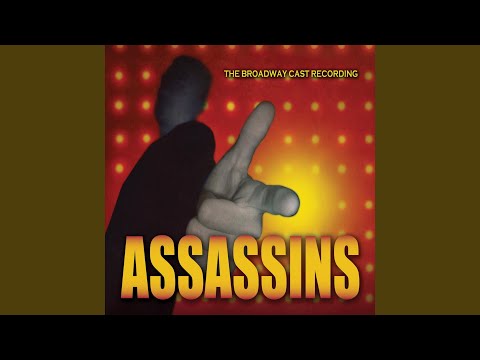
Review and Highlights
Quick summary
- What it is: A choral bystander scene, placed late in the show as the country reacts to the Kennedy assassination.
- Why it exists: It was added for the 1992 Donmar Warehouse production in London and later folded into the licensed version tied to the 2004 Broadway revival.
- On the 2004 album: Track 14 on the PS Classics release, running 3:20.
- How it plays: A steady Moderato pulse supports a collage of ordinary voices, like a news bulletin that learned how to sing.
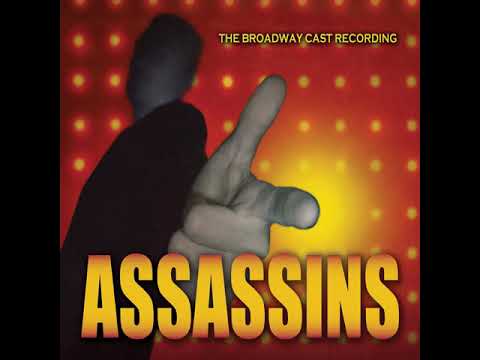
Assassins (2004) - stage musical - not diegetic. Full placement: late Act II, after the Oswald sequence, as five bystanders recount where they were when the news hit (cast-album track timing: 0:00-3:20). Why it matters: the show steps outside the assassins for a few minutes and lets the wider public speak, which changes the air in the room before the finale snaps back into carnival logic.
Most of the score lives in a crooked grin. This track does not. It arrives like someone switching off the music at a party because the phone just rang. The writing stays simple on purpose: small chores, small talk, then a sentence that breaks the day in half. You can hear the craft in how quickly the voices line up, as if a whole country suddenly shares one tempo.
Key takeaways
- It is a palate change with teeth. The show stops selling motives and shows consequences.
- The pulse is the message. A regular beat makes the shock feel communal, not personal.
- The chorus works like a montage. Different lives, one headline, one shared pause.
Creation History
According to Playbill, the 2004 Broadway revival cast recording (PS Classics) was recorded June 7, 2004 and released August 3 with dialogue and a 48-page booklet, and it included this song as track 14. The number itself was written for the 1992 London production at the Donmar Warehouse, directed by Sam Mendes, who wanted a choral angle on what a presidential assassination does to the public. In an interview transcript archived by the Internet Archive, Stephen Sondheim described it as a mourning moment with an intentionally strict, regular feel.
Song Meaning and Annotations
Plot
After the show has spent a long stretch inside the heads of the assassins, this scene cuts to everyone else: people at home, at work, mid-errand. Each voice describes a normal moment, then the news arrives. The chorus grows as the realization spreads, and the language turns from specific memory to a shared sense that the country has shifted. The scene clears space for the finale, where the carnival frame returns and the assassins reclaim the stage.
Song Meaning
This song is about national memory as a physical sensation: the instant when the familiar story of America takes a hit and everybody feels it at once. It does not argue politics. It tracks the feeling arc of shock into disbelief, then into the uneasy quiet that follows, when people realize they will remember the minute-by-minute details for decades.
As stated in The New Yorker, Mendes asked Sondheim for a new song to give a choral perspective on the horror, and that is exactly how it plays: the chorus is the point, not a decoration. According to TheaterMania, the scene is built around ordinary people reacting to the Kennedy assassination, which makes the number a civic snapshot rather than another assassin confession.
Annotations
"I was out in the yard"
A tiny domestic detail, placed up front like a pin on a map. The writing insists that history does not start in Washington. It starts in backyards and break rooms.
"The President's been shot"
The line lands with the bluntness of radio news. No metaphor, no flourish. That plainness is what makes the room go still.
"My God"
One of those phrases people say when language runs out. In performance, it often becomes the first moment when the voices stop sounding like separate characters and start sounding like a single crowd.
"Something just broke"
Notice the vagueness. The song never fully names what broke, because the break is larger than one event. It is trust, routine, the idea that tomorrow will look like today.
Genre mix and rhythm
The style sits where Broadway chorus-writing meets Americana hymn shapes, but it keeps the edges of spoken recollection. The rhythm is not flashy, yet it drives the scene forward by staying steady. That steady clock is the drama: everyone receives the same news, then everyone tries to keep moving anyway.
Why the chorus hits harder than a solo
Throughout the show, we are trained to listen to private logic. This number flips the lens: private lives become a public choir. In the interview transcript, Sondheim explained that he wanted the choral feel to stay absolutely regular, and that choice makes the moment feel less like one person falling apart and more like a whole system jolting.
What the song says about the show
It refuses to let assassination remain a character study. Instead, it sketches the blast radius: strangers sharing the same stunned sentence, then storing it in memory like a scar. The show can return to its carnival frame after this, but it cannot pretend there were no bystanders.
Technical Information (Quick Facts)
- Song: Something Just Broke
- Artist: Assassins (2004 Broadway revival cast)
- Featured: Ensemble
- Composer: Stephen Sondheim
- Producer: Tommy Krasker (cast album)
- Release Date: August 3, 2004
- Genre: Musical theatre; choral ballad; Americana
- Instruments: Voices with pit orchestra support
- Label: PS Classics
- Mood: Somber; hushed; collective shock
- Length: 3:20
- Track #: 14
- Language: English
- Album (if any): Assassins (The 2004 Broadway Revival Cast Recording)
- Music style: Bystander chorus, collage structure, strict pulse
- Poetic meter: Speech-led phrasing with repeated refrain cells
Frequently Asked Questions
- Where does the song sit on the 2004 cast recording?
- It is track 14, near the end of the album, just before the closing return to the opening number.
- Why is this number different from the rest of the score?
- It shifts away from the assassins and lets bystanders speak, so the story briefly becomes about the country rather than the perpetrators.
- Was it part of the first Off-Broadway version?
- No. It was added for the 1992 London production and later became part of the standard licensed version associated with the 2004 revival.
- Who asked for the song to be written?
- Sam Mendes, directing the Donmar Warehouse production, wanted a choral look at what a presidential assassination does to the public.
- Which assassination does it reference in the show?
- The song centers on reactions to the Kennedy assassination, with ordinary people describing where they were when the news arrived.
- Is it sung by the assassins?
- No. It is typically assigned to bystander voices, often five featured lines carried by ensemble members.
- What makes the rhythm feel so locked-in?
- The writing favors a strict, regular pulse, which helps the voices line up like a communal recollection rather than separate monologues.
- Is there sheet music that lists key, tempo, and range?
- Yes. A widely used digital edition lists the original published key as G Major, tempo as Moderato (quarter note = 80), and a vocal span that reaches from A3 up to E5 for the combined parts.
- Does the song appear outside the musical itself?
- Yes. It was included in the Broadway revue Sondheim on Sondheim, which featured material from across his catalog.
- Was the 2004 cast album recognized with major awards?
- It was nominated for a Grammy in the Best Musical Show Album category, with the award going to album producers and the primary composers and lyricists.
Awards and Chart Positions
This track is a cast-album cut, so it did not have a pop-singles chart life in the usual sense. Its awards story is tied to the 2004 Broadway revival and the recording that preserved it. The production won five Tony Awards at the 58th ceremony, and the cast album later received a Grammy nomination for Best Musical Show Album.
| Award body | Year | Category | Result |
|---|---|---|---|
| Tony Awards | 2004 | Best Revival of a Musical | Won |
| Tony Awards | 2004 | Best Direction of a Musical (Joe Mantello) | Won |
| Tony Awards | 2004 | Best Orchestrations (Michael Starobin) | Won |
| Tony Awards | 2004 | Best Lighting Design (Jules Fisher and Peggy Eisenhauer) | Won |
| Tony Awards | 2004 | Best Featured Actor in a Musical (Michael Cerveris) | Won |
| Grammy Awards | 2005 | Best Musical Show Album (cast recording) | Nominated |
Additional Info
There is a practical reason this number keeps showing up in licensed productions: it rewires the final stretch of the show. Without it, the story can feel like a locked room full of motive speeches. With it, the air changes. Suddenly there are people outside the room, and the locked door starts to look like a threat.
One detail I keep coming back to is how the chorus is written to sound like memory, not commentary. The lines are plain. The chord shifts do the heavy lifting. In the Internet Archive transcript of Sondheim on Music, he framed the scene as mourning and stressed how important it was that the choral material stay absolutely regular, almost mechanical, so the grief reads as shared rather than theatrical.
The song also built a second life in revues. Playbill published an early song list for Sondheim on Sondheim that included this number, which makes sense: it is one of his clearest examples of choral storytelling that still feels like overheard speech.
Key Contributors
| Entity | Type | Relationship (S-V-O) |
|---|---|---|
| Stephen Sondheim | Person | wrote music and text for the song and the musical |
| John Weidman | Person | wrote the book that frames the scene |
| Sam Mendes | Person | requested a new choral number for the Donmar Warehouse production |
| Donmar Warehouse | Organization | staged the 1992 London production where the song was added |
| Joe Mantello | Person | directed the 2004 Broadway revival tied to the licensed version |
| Michael Starobin | Person | created award-winning orchestrations for the revival |
| Paul Gemignani | Person | conducted the cast recording sessions referenced in reviews |
| Tommy Krasker | Person | produced the cast album nominated for a Grammy |
| PS Classics | Organization | released the 2004 Broadway revival cast recording |
Sources
Data verified via: Playbill track listing and release notes and Musicnotes arrangement details.
Context references: TheaterMania cast-album review, MTI production history, The New Yorker profile on Mendes, and Playbill song list for Sondheim on Sondheim.
How to Sing Something Just Broke
Because this is a chorus built from everyday speech, the hardest part is not range, it is control. The standard digital edition lists G Major, Moderato at quarter note = 80, and a combined vocal span that reaches from A3 up to E5. Think of it as disciplined storytelling: clear diction, steady breath, and zero melodrama.
- Tempo first: Lock the quarter-note pulse with a metronome at 80. The scene falls apart when singers start pushing or dragging for drama.
- Diction as camera work: Treat consonants like edits in a documentary montage. Crisp "t" and "k" sounds keep the text readable without forcing volume.
- Breath planning: Mark breaths at sentence ends, not mid-thought. The lines should sound remembered, not performed.
- Flow and rhythm: Speak the text in tempo before singing. When the rhythm sits, add pitch with the same pacing.
- Accents: Stress the ordinary words, not the headline. The power comes from normal life colliding with the news, not from shouting the news.
- Ensemble blend: Aim for one shared color. If one voice pops out, it should be because the staging needs a featured line, not because the singer is pushing.
- Mic technique: If amplified, stay close and consistent. Let the mic capture intimacy, rather than trying to manufacture it by singing louder.
- Common pitfalls: Over-singing the grief, rushing the conversational lines, and letting vowels spread on higher notes near E5.
- Practice materials: Record a spoken run-through on the metronome, then sing over it. It trains the body to keep the beat while the mind tells the story.
Sources: Playbill cast recording track listing (2004), MTI Assassins production history, Musicnotes digital sheet music details, The New Yorker Sam Mendes profile, TheaterMania cast-album review, Playbill Sondheim on Sondheim early song list, Grammy Awards 47th Annual nominees page