Other Pleasures Lyrics — Aspects of Love
Other Pleasures Lyrics
Other pleasures...
And I've known many...
Afternoons
In warm Venetian squares,
Brief encounters,
Long siestas...
Pleasures old and new
Can't compare with you.
You amaze me!
Where did you come from?
You do things
Champagne could never do.
Crystal winters,
Crimson summers...
Other pleasures --
I would trade them all
For you.
Pleasures old and new
Can't compare with you...
Wild mimosa...
The scent of evening...
Shuttered rooms
With sunlight breaking through...
Crazy soir?es...
Lazy Sundays...
Other pleasures...
I would trade them all
For you.
Sailing off
In the night
On a silver lake...
Taking more
From this life
Than I ought to take...
Other pleasures...
I would trade them all
For you.
JENNY
Quickly!
She's here now!
Don't be an old lazybones!
GEORGE (coming to and looking at his watch)
Good Lord!
The time!
For once she's managed
To arrive ahead of schedule!
ROSE (to JENNY, producing a gift-wrapped present)
Wait till you see
What I've got for you,
Darling.
And wait till you see
What I've got for you...
ALEX
I don't believe this...
ROSE (echoing him)
I don't believe this...
GEORGE (struggling with his emotions)
Good God, I wondered what had happened to you!
Rose, you really should have let me know!
Dear boy, you must meet Jenny!
ALEX
Hello, cousin.
Nice to meet you.
JENNY
So you're the soldier?
ROSE
This is Alex.
You remember.
JENNY
Yes, of course.
ROSE (to GEORGE)
He saw my last performance.
ALEX
She really was phenomenal.
JENNY
"A truly blazing star"!
GEORGE, JENNY, & ALEX
Rose, you're a wonder!
GEORGE
All the dreams we've worked for
Have come true
Song Overview
Review and Highlights
Quick summary
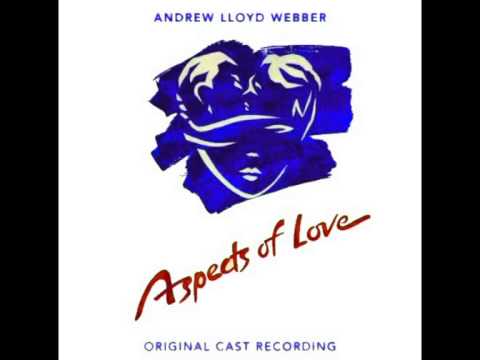
- Stage number from Aspects of Love (1989), with music by Andrew Lloyd Webber and lyrics by Don Black and Charles Hart.
- Sung by George Dillingham (baritone) in Act II, when family loyalty and private appetite start pulling in opposite directions.
- On the original London cast album sequence it lands as Disc 2, Track 6, running about 4:55.
- It plays like a polished self-argument: George tries to make stability sound like freedom, while wanting something messier.
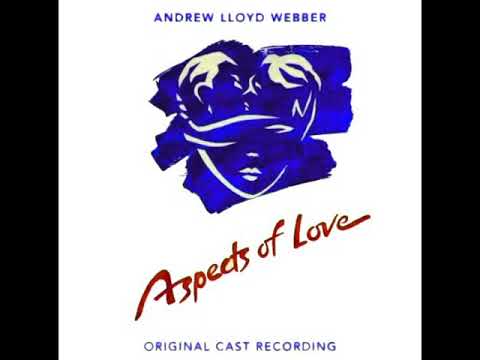
Aspects of Love (1989) - stage musical number - non-diegetic. Act II: George presses for Alex to stay at Pau as the household arrangement starts to look less like hospitality and more like strategy (cast album sequence: Disc 2, Track 6, starts around 8:38). Why it matters: it frames George as charming, controlling, and scared of being left behind - all in one breath.
This is one of those musical-theatre scenes where a character smiles while the floor shifts. George is not singing to win a room the way the big radio-friendly numbers do. He is singing to keep the room. The title feels like a polite shrug, but the subtext is a clenched hand on the doorknob.
What makes the song stick is its adult tone. George does not plead like a romantic hero. He bargains, he rationalizes, he name-checks the comforts of a settled life. The writing keeps him clever enough to be persuasive and brittle enough to be caught. You can hear why this show is often described as a chamber opera: the drama lives in close-up, not in fireworks.
Key Takeaways
- Character lens: George tries to turn desire into manners.
- Drama function: it reshapes the love polygon into a power map.
- Sound world: operetta polish with contemporary Broadway directness, built for text to land cleanly.
- Aftertaste: the more he lists what is "enough," the more you sense it is not.
Creation History
Aspects of Love opened in London in 1989 and the cast album followed soon after, produced by Andrew Lloyd Webber. The original recording sessions and credits place the song inside the show’s carefully controlled studio sound - a bright, theatrical mix that still keeps the singing forward so the story stays in focus. If you have ever wondered why this score can feel intimate even when it is played with real orchestral color, that production approach is a big part of the trick.
Song Meaning and Annotations
Plot
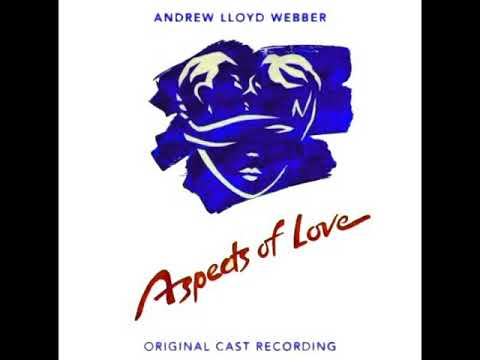
By Act II, the story has matured into consequences. Alex is older, Rose is still chasing the next opening night, and George has built a home life that depends on everyone staying in their assigned places. In this number, George argues for the comforts of remaining at Pau - a home, routines, small satisfactions - right when the audience can sense that the household is held together by wishful thinking and selective honesty.
Song Meaning
The surface pitch is simple: life offers more than one pleasure, so stay and enjoy what is already here. Underneath, it reads like self-defense. George is trying to make constancy sound like sophistication, as if wanting stability is the same thing as being above jealousy. It is not. The song turns "taste" into a mask for fear: fear of losing Alex, fear of being seen as needy, fear that love in this family always comes with an exit plan.
Annotations
"A remarkably daring piece of work."
Financial Times (quoted in Concord Theatricals materials)
That daring shows up in songs like this, where the leading energy is not youthful romance but adult bargaining. George is allowed to be charming and troubling in the same three minutes, and the show does not rush to excuse him.
"The daring shown here tonight deserves to win our admiration."
Daily Mail (quoted in Concord Theatricals materials)
You can take that as a note about form too. A character song that advances control and discomfort, without a neat moral bow, is a risk in mainstream musical theatre - and it is exactly why the scene has bite.
"Operetta, Contemporary Broadway."
Concord Theatricals (musical style description)
That blend fits George. He wants refinement, and he also wants a clean win. The style lets him sound polished while the text keeps poking holes in the polish.
Rhythm and arc
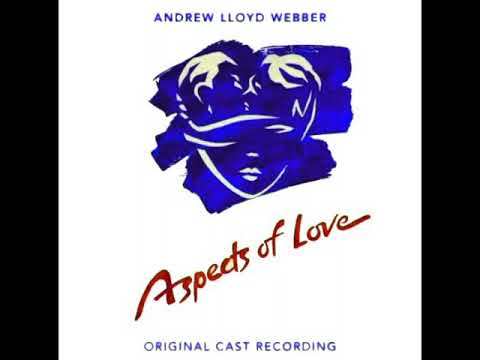
The number moves like conversation that has learned how to sing. It keeps returning to the same claim - there are other pleasures - but the repetition does not feel restful. It feels like someone rehearsing an argument they do not fully believe. The arc tilts from invitation to pressure, without ever raising its voice. That is the point.
Setting and touchpoints
The show lives in post-war Europe, with its mix of private liberty and public manners. George speaks that language fluently. The song’s cultural cue is that mid-century idea of "taste" as virtue: if you present your desires as civilized, maybe nobody calls them selfish.
Orchestration as character
As stated in Concord Theatricals' show notes, the score is written for a flexible 12-piece orchestration in its full version. That chamber scale matters here. The sound can stay elegant while the tension stays close to the skin - no need for a wall of brass to tell you what George wants.
Technical Information (Quick Facts)
- Song: Other Pleasures
- Artist: Aspects of Love Original London Cast (cast album context)
- Featured: George Dillingham (character vocal)
- Composer: Andrew Lloyd Webber
- Producer: Andrew Lloyd Webber
- Release Date: August 30, 1989
- Genre: Musical theatre
- Instruments: Voice with orchestral pit (12-piece scoring option)
- Label: Really Useful - Polydor
- Mood: Wry, persuasive, restless
- Length: 4:55
- Track #: Disc 2, Track 6 (original London cast album sequence)
- Language: English
- Album (if any): Aspects of Love (Original London Cast Recording)
- Music style: Operetta - Contemporary Broadway
- Poetic meter: Mixed, speech-like lines shaped for stage delivery
Frequently Asked Questions
- Who sings this number in the story?
- George Dillingham sings it. In production terms it is written for a baritone principal, and it plays as a character argument more than a showstopper.
- Where does it sit in the musical?
- It appears in Act II, after the Paris theatre material and before the score turns toward Giulietta's counterpoint number. It works like a hinge: home life is being negotiated in public, not just felt in private.
- Is it meant to be funny?
- It has wit, but it is not a comedy song. The humor reads as deflection - a civilized way to say "do not leave me" without saying it.
- What is George really asking for?
- He is asking for loyalty dressed up as comfort. He makes staying sound like a lifestyle choice, but the stakes are personal.
- Does it connect to the show title?
- Yes. The song argues that love is not one thing. It is routine, appetite, protection, and a little bit of control, sometimes all at once.
- Was it released as a standalone single?
- It is mainly known through the cast album and stage performances. The big commercial single from the show was a different number, which helps explain why this one feels like a deep cut for story-first listeners.
- What kind of singer does it suit best?
- A baritone who can act through text. It rewards clear diction and a tone that can shift from charm to steel without changing volume much.
- Is the orchestration large or small?
- The licensed materials describe a full orchestration option built around a 12-piece setup, which keeps the sound bright but close enough for detailed storytelling.
- Are there notable later performances?
- Yes. The song has been performed in touring contexts, and it has also shown up as a recorded cover outside the theatre cast-album world.
- Why do singers pick it for auditions?
- Because it is a character scene in song form. You can show taste, humor, and discomfort in a short span - and casting teams can see whether you can carry subtext without mugging.
Awards and Chart Positions
As stated in Concord Theatricals materials, Aspects of Love received multiple major award nominations, including six Tony nominations and five Drama Desk nominations. On the recorded-music side, according to the Official Charts Company, the original cast album hit No. 1 in the UK and stayed on the chart for a long run that is rare for a stage-cast release.
| Category | Result | Notes |
|---|---|---|
| UK Official Albums Chart (cast album) | Peak: 1 | Label listed as Really Useful - Polydor; first chart date in September 1989 |
| UK Official Albums Chart (cast album) | Weeks on chart: 29 | One week at No. 1, with extended chart presence beyond Top 40 |
| Tony Awards (show) | Nominated | Six nominations (including Best Musical and Best Original Score) |
| Drama Desk Awards (show) | Nominated | Five nominations (including Outstanding Musical and Outstanding Music) |
Additional Info
The number has had a second life outside the original cast album. There is a recorded cover by Peter Skellern, and touring-era performances have circulated online, including a George medley clip from the 2007 UK tour associated with David Essex. Those versions tend to play up different sides of the song - either the cabaret intimacy or the story tension.
It also shows up in singer resources. A Hal Leonard vocal catalogue listing for Andrew Lloyd Webber for Singers includes the song in the Men’s Edition lineup, which tracks with its baritone character center and its acting-first value.