Take Me Back To Manhattan Lyrics — Anything Goes
Take Me Back To Manhattan Lyrics
The more I travel, Across the gravel,
The more I sail the sea.
The more I feel convinced to the fact,
New York's the town for me.
That crazy skyline
Is right in my line,
And when I'm far away,
I'm able to bear it for several hours
Then I brake down and say.
Take me back to manhattan,
Take me back to New York.
I'm just longing to see once more
My little home on the hundredth floor!
Can you wonder I'm gloomy?
Can you smile when i frown?
I miss the east side, the west side ,
the north side, and the south side.
So take me back to manhattan,
That dear old dirty town!
Angles:
Take me back to manhattan,
Take me back to New York.
I'm just longing to see once more
My little home on the hundredth floor.
Can you wonder I'm gloomy?
Can you smile when i frown?
I miss the esat side, the west side,
The north side, and the south side.
Take me back to manhattan,
That dear old dirty town!
Dance
Reno:
I miss the east side, the west side,
the north side, and the south side - so,
Take me back to manhattan,
That dear old dirty town!
Reno:
The more I travel, Across the gravel,
The more I sail the sea.
The more I feel convinced to the fact,
New York's the town for me.
That crazy skyline
Is right in my line,
And when I'm far away,
I'm able to bear it for several hours
Then I brake down and say.
Take me back to manhattan,
Take me back to New York.
I'm just longing to see once more
My little home on the hundredth floor!
Can you wonder I'm gloomy?
Can you smile when i frown?
I miss the east side, the west side ,
the north side, and the south side.
So take me back to manhattan,
That dear old dirty town!
Angles:
Take me back to manhattan,
Take me back to New York.
I'm just longing to see once more
My little home on the hundredth floor.
Can you wonder I'm gloomy?
Can you smile when i frown?
I miss the esat side, the west side,
The north side, and the south side.
Take me back to manhattan,
That dear old dirty town!
Dance
Reno:
I miss the east side, the west side,
the north side, and the south side - so,
Take me back to manhattan,
That dear old dirty town!
Angles:
Take me back.
Reno:
Take me back
Angles:
Take me back
Reno:
Oh, I wanna go back.
Reno & Girls:
To my dear old dirty
dance
TOWN!Angles
Take me back.
Reno:
Take me back
Angles:
Take me back
Reno:
Oh, I wanna go back.
Reno & Girls:
To my dear old dirty
dance
TOWN!
Song Overview
Review and Highlights
Quick summary
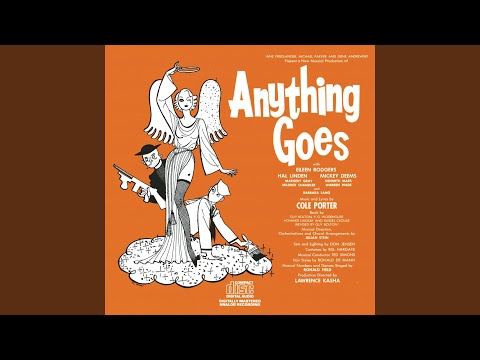
- Work: Anything Goes (Broadway premiere context: November 21, 1934), but this number appears as an added song in the 1962 Off-Broadway revision.
- Original origin: Written for The New Yorkers and published by Harms in December 1930.
- Who sings it in the 1962 edition: Reno Sweeney with Angels.
- What it does: A postcard to New York that doubles as a character reset - glamour gets real when she admits what she misses.
- Listening landmark: The 1962 Off-Broadway cast recording includes the track under Eileen Rodgers.
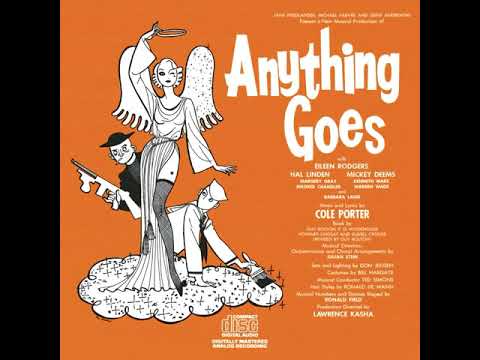
Anything Goes (1962) - stage revision - non-diegetic. This song is a love letter written with a sharpened pencil. The lyric moves like street talk dressed up for an opening night: brisk images, little internal turns, and that classic Porter trick of making a complaint sound like flirtation. As a show insertion, it does not try to advance the farce machinery. It gives Reno a private window - she is dazzling on deck, but her compass still points to New York.
Key takeaways: (1) Keep the tempo buoyant so the text stays conversational. (2) Let the chorus feel like a group of friends piling on, not backup singers doing duty. (3) The charm is specificity - treat each city detail like a remembered place, not a generic punchline.
Creation History
The paper trail explains why the number feels like it can live outside any single plot. A Porter sheet-music bibliography lists the title under The New Yorkers, published by Harms in December 1930. Decades later, the 1962 Off-Broadway revision of Anything Goes folded it into the score as a homesick feature for Reno, and cast-album listings keep it associated with that edition. According to Musicnotes arrangement data, the published key is Eb major with a moderate tempo marking, matching the songs easy, strolling feel.
Song Meaning and Annotations
Plot
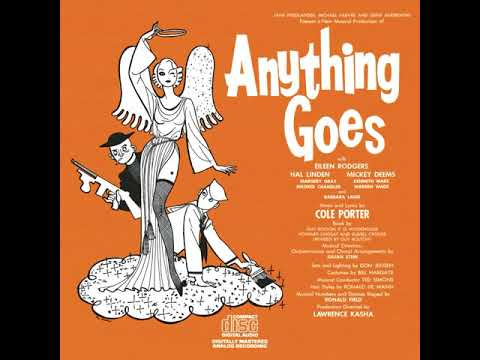
In Anything Goes, the SS American is a pressure cooker for romance and reputation. The 1962 revision leans into a broader catalog of Porter songs, and this one functions as a character-colored pause. Reno has been steering rooms with confidence, yet the lyric lets her admit a simple truth: the ship is fun, but it is not home. That confession makes her later choices read less like pure performance and more like a person chasing something familiar.
Song Meaning
The meaning is city loyalty, but with a stage twist. New York becomes a symbol of belonging - the place where Reno knows the rules, even when the rules are crooked. The chorus is not asking for romance, it is asking for a return to the pace, noise, and edge that suits her. It is also a performer speaking to her natural habitat: a town where energy is the currency and standing still feels suspicious.
Annotations
Originally written for The New Yorkers and published by Harms in December 1930.
That origin matters. The song was born as a stand-alone Manhattan valentine, so it carries its own momentum. When it is imported into Anything Goes, it arrives already complete, like a guest who knows how to work the room.
The 1962 Off-Broadway revision places it as a Reno and Angels feature.
This assignment turns the city praise into a showbiz number. The Angels let the lyric expand outward - not a diary entry, more like a group memory of nights that ran long.
Musicnotes lists Eb major, voice range C4 to Eb5, and a Moderato tempo marking.
Those anchors fit the delivery. The range sits comfortably for story-first singing, and Moderato keeps the words agile without turning the song into patter.
Cast-recording listings tie the track to Eileen Rodgers on the 1962 Off-Broadway album.
That is the quick way to hear the editions flavor: less brass-knuckle vaudeville, more polished nostalgia, like Reno is smiling while she misses the city.
Style fusion and rhythm
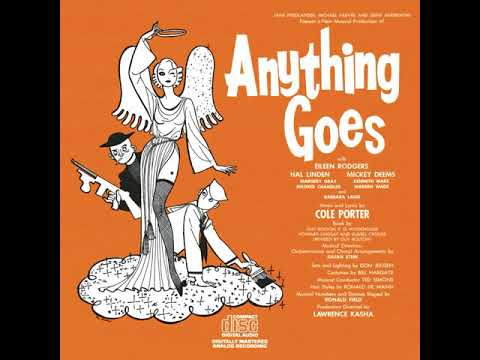
The song sits in that Porter pocket where cabaret polish meets Broadway chorus lift. The verse is chatty and image-driven, then the refrain opens into shared enthusiasm. Keep the pulse steady and let the lyric carry the humor. The best readings sound like someone telling you the truth at a bar, not performing a museum piece.
Technical Information (Quick Facts)
- Song: Take Me Back to Manhattan
- Artist: Cole Porter
- Featured: Reno Sweeney and Angels (1962 revision credit)
- Composer: Cole Porter
- Producer: Recording-dependent
- Release Date: December 1930 (sheet music publication); May 15, 1962 (cast-album release date listed on Apple Music)
- Genre: Musical theatre; city song
- Instruments: Voice; piano-vocal-guitar arrangement; pit orchestra in theatre
- Label: Recording-dependent
- Mood: Bright, longing, streetwise
- Length: 3:04 on the 1962 Off-Broadway cast album listing
- Track #: Track 13 on one Apple Music album listing
- Language: English
- Album (if any): Anything Goes (Off-Broadway Cast Recording (1962))
- Music style: American Songbook Broadway writing with chorus lift
- Poetic meter: Accentual, speech-forward phrasing
Frequently Asked Questions
- Is this number in the original 1934 opening-night score?
- It is documented as an added song used in the 1962 Off-Broadway revision, not a core 1934 number list.
- Where did the song start its life?
- It was written for The New Yorkers, with sheet music published by Harms in December 1930.
- Who typically sings it in the Anything Goes context?
- The 1962 revision frames it as a Reno feature with Angels, turning city nostalgia into a chorus-driven spotlight.
- What is the central idea of the lyric?
- A restless traveler admits that every road leads back to Manhattan, because that is where she feels most herself.
- Is there a reliable cast recording?
- Yes. Listings for the 1962 Off-Broadway cast album include a track performed by Eileen Rodgers.
- How long is the 1962 cast track?
- Major platform listings show a duration of 3:04.
- What key and range are common in published sheet music?
- Musicnotes lists Eb major with a printed vocal range of C4 to Eb5 for one widely used PVG edition.
- Does it function as plot movement or character color?
- In the revised score it is character color: a quick Reno confession that resets tone and keeps the show buoyant.
Additional Info
This number is a neat example of how Porter material gets re-homed when a revival wants a specific flavor. The lyric is not shipboard. It is sidewalk. That contrast is exactly why the 1962 revision uses it: it lets the audience feel the tug of the mainland while everyone is still trapped on a floating gossip factory. According to BroadwayWorld, a modern cast album of The New Yorkers includes the song in two parts, which is a reminder that the piece has its own theatre history separate from Anything Goes.
As stated in the Porter sheet-music bibliography, the title was already a Harms publication in 1930. That kind of early print life helps explain why the song reads like a self-sufficient standard: it is built to be sung in rooms that do not need a plot summary first.
Key Contributors
| Entity | Type | Relationship statement |
|---|---|---|
| Cole Porter | Person | Cole Porter wrote the music and lyrics for the song and later saw it reused in revised stage contexts. |
| The New Yorkers | Work | The New Yorkers is the original show for which the song was written and published. |
| Anything Goes | Work | Anything Goes (1962 revision) inserted the song as a Reno and Angels feature. |
| Harms, Inc. | Organization | Harms published the sheet music in December 1930. |
| Eileen Rodgers | Person | Eileen Rodgers performs the track on the 1962 Off-Broadway cast recording. |
| Masterworks Broadway | Organization | Masterworks Broadway distributes a digital track tied to the 1962 cast recording catalog. |
| Musicnotes | Organization | Musicnotes provides PVG arrangement metadata used for key and range reference. |
How to Sing Take Me Back to Manhattan
Musicnotes metadata for a common PVG edition lists Eb major, a vocal range of C4 to Eb5, and a Moderato tempo marking. Use those anchors, then shape the performance like spoken memory that happens to rhyme.
- Tempo: Keep Moderato moving. Think steady stride, like crossing a busy avenue without hurrying.
- Diction: Treat city nouns as landmarks. Crisp consonants make the lyric feel lived-in, not decorative.
- Breathing: Take quick breaths after punchy images, not mid-image. The line should feel like one thought rolling forward.
- Flow and rhythm: Speak-sing the verse, then open the tone for the refrain so the chorus lift feels earned.
- Accents: Stress the words that signal preference and longing. Let the funny bits pass lightly.
- Key choice: If Eb5 sits tight, transpose down. The song wants ease, not effort.
- Ensemble notes: If you have Angels or a chorus, match vowels on held syllables so the group reads as one shared memory.
- Pitfalls: Avoid turning it into a novelty. The humor lands when the feeling is real.
Sources
Sources: Cole Porter sheet-music bibliography, Musicnotes arrangement metadata, Anything Goes musical-numbers reference summary, Masterworks Broadway YouTube distribution track, Apple Music 1962 cast album listing, BroadwayWorld release note for The New Yorkers cast album
Music video
Anything Goes Lyrics: Song List
- Act 1
- Overture
- I Get a Kick Out of You
- There's No Cure Like Travel
- Bon Voyage
- All Through the Night
- Easy to Love
- I Want to Row on the Crew
- You're the Top
- Sailor's Chantey
- Freindship
- It's De-Lovely
- Anything Goes
- Act 2
- Entr'acte
- Public Enemy Number One
- Blow, Gabriel, Blow
- Goodbye Little Dream, Goodbye
- Be Like the Bluebird
- Gypsy in Me
- Buddie, Beware
- I Get a Kick Out of You (Reprise)
- Anything Goes (Reprise)
- Take Me Back To Manhattan