I Want to Row on the Crew Lyrics — Anything Goes
I Want to Row on the Crew Lyrics
I want to row on the crew, Mama,
That's the thing I want to do, Mama.
To be known throughout Yale as I walk about it,
Get a boil on my tail and then talk about it.
I'd like to be a big bloke, Mama,
And learn the new Argentine stroke, Mama.
You'll see your slim son
Putting crimps in the Crimson,
When I row on the Varsity Crew.
Song Overview
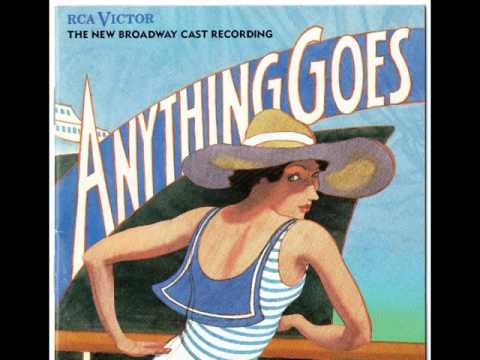
Review and Highlights
Quick summary
- Work: Anything Goes (1934 Broadway era), but this specific number is a later interpolation used in major revivals.
- Original origin: Written for the Yale show Paranoia (April 24, 1914), decades before it boarded the SS American.
- Stage function: A character-reveal comic burst for Elisha J. Whitney, usually placed in Act I to give him a personal spotlight.
- What makes it pop: Tight patter, collegiate bragging, and a punchy refrain that plays like an inside joke shared with the band.
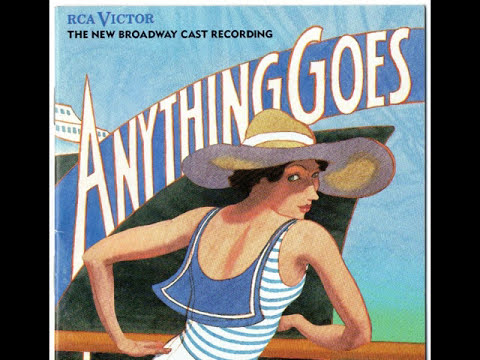
Anything Goes (1934) - stage musical - non-diegetic. In performance, this number works like a fast character passport. The plot can be busy, the deck can be crowded, and then Whitney steps forward and the song does the job of a whole monologue. The humor is not delicate. It is brash, proud, a little ridiculous, and perfectly timed for a boss who wants to sound youthful while he is very much not.
Key takeaways: (1) It is comedy built from rhythm, not volume. (2) The Yale references are the point, because they explain Whitney's self-image in five seconds. (3) In many recordings it is paired with "Sailor's Chantey," so the best performances keep momentum and do not treat it like a full-stop solo.
Creation History
The song predates Anything Goes. Reference documentation connects it to Paranoia, a Yale University Dramatic Association production from 1914, with Cole Porter credited as a writer. Decades later, the tune was borrowed into Anything Goes for the 1987 Broadway revival and kept in later editions, with IBDB listings assigning it to Elisha J. Whitney. That sort of reuse is classic Broadway behavior: the show finds a hole, a good Porter tune is sitting on the shelf, and suddenly a supporting character gets a moment that feels inevitable.
Song Meaning and Annotations
Plot
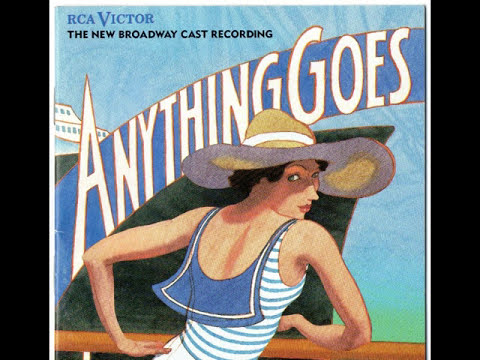
Anything Goes runs on romance, mistaken identity, and social scrambling aboard an ocean liner. Whitney sits slightly outside the central love tangles, which is why this added number matters in revival editions. It gives him a quick inner life: a man who still talks like his best years were on campus, now clinging to that glory while trying to impress the Harcourt family. In the 2021 filmed stage version, the moment reads as a comic detour that also sharpens the class-world satire: money can buy staterooms, but it cannot buy youth.
Song Meaning
The meaning is happily narrow. Whitney is selling a fantasy of being recognized, admired, and officially belonging to the elite club of the crew at Yale. The joke is that he frames discomfort as status. He brags about the physical misery because the misery proves the membership. Underneath, it is a very human instinct: if you cannot be the romantic hero, be the guy with a legendary past.
Annotations
"I want to row on the crew, Mama. That's the thing I want to do, Mama."
The repeated "Mama" is not just a rhyme. It turns bravado into a childish plea, which makes the whole boast funnier. He is trying to sound like a big shot and a kid at the same time.
The song was originally part of Paranoia (1914), then later borrowed into Anything Goes for the 1987 revival.
This is the cleanest lens for the tone. It is a college-show brag song that keeps its college-show DNA. Put it in a cruise-ship comedy, and you get a character who suddenly feels more specific than the plot requires.
IBDB assigns the number to Elisha J. Whitney in the Broadway revival song list.
That assignment matters because it makes the number a character tool, not a random cameo. It explains why directors keep it: it gives Whitney a reason to exist beyond being "the boss."
In the PBS filmed performance transcript, the lyric lands as a quick comic set before the scene snaps back to story business.
That is the ideal use of it. Do the joke cleanly, get the laugh, then move. If you linger, it turns into a sketch. If you keep it brisk, it feels like part of the engine.
Style and rhythm
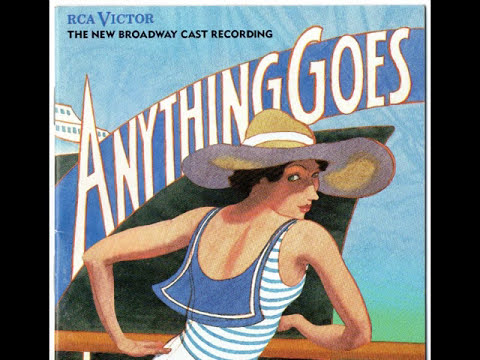
Most productions play it like patter with a steady bounce. The band needs clean articulation, and the singer needs crisp consonants. It can flirt with swing, but the priority is clarity, because the laugh is hiding in the details of the brag.
Emotional arc
It starts as a boast, turns into a vivid memory, and ends as a triumphant claim of identity. He is not changing as a person. He is insisting he has already been somebody, and he wants you to agree.
Technical Information (Quick Facts)
- Song: I Want to Row on the Crew
- Artist: Cole Porter
- Featured: N/A
- Composer: Cole Porter
- Producer: Recording-dependent
- Release Date: April 24, 1914 (Paranoia performance date); later used in Anything Goes revival editions
- Genre: Musical theatre; comic patter song
- Instruments: Voice; Broadway pit orchestra
- Label: Recording-dependent
- Mood: Brash, nostalgic, self-mocking
- Length: About 0:42 on the 1989 London cast recording track listing
- Track #: Varies by album (often paired with a sailors chanty in cast recordings)
- Language: English
- Album (if any): Anything Goes (1987 Broadway cast recording; 1989 London cast recording; 2011 Broadway revival recordings)
- Music style: Period comic song with collegiate references
- Poetic meter: Accentual, speech-forward phrasing
Frequently Asked Questions
- Is this song in the original 1934 Broadway production?
- It is associated with Anything Goes through later editions. Documentation for the 1987 Broadway revival lists it as an added number, not part of the 1934 original running list.
- Where did the song come from originally?
- Reference sources connect it to Paranoia, a Yale production from April 24, 1914 with Porter credited as a writer.
- Who sings it in Anything Goes?
- IBDB listings for the Broadway revival editions assign it to Elisha J. Whitney.
- Why is it sometimes called "The Crew Song"?
- Some revival materials and recordings use that nickname to clarify its function and separate it from other crew-related stage moments.
- Is it a long showcase number?
- No. Many cast recording track lists show it as very short, and it is often attached to "Sailor's Chantey" to keep Act I moving.
- What is the main joke in the lyric?
- Whitney brags about the prestige of rowing, treating discomfort as proof of status, which makes the pride sound both ridiculous and revealing.
- Does the PBS filmed version include it?
- Yes. The PBS Great Performances transcript includes the song text in the sequence, presented as a quick comic set piece before the scene continues.
- Is it useful for auditions?
- It can be, if you need a brief comic cut for a baritone character type. The lyric wants clean diction and a confident speaking-singing blend.
Additional Info
The best detail about this number is that it is literally an old story Whitney tells about himself. Scholarship and reference summaries describe the 1987 revival giving him a brief interpolated song, borrowed from Porter's Yale material, and that is exactly how it plays: a man trying to charm a room with a myth of his youth. I have always liked how Broadway uses these borrowed songs. They are not random extras. They are character glue. This one turns Whitney from a plot function into a person with a private shrine of memories.
According to PBS Great Performances, the lyric lands in performance as a quick laugh-maker before the dialogue snaps back to the stateroom business. That timing is the secret. Treat it like a fast, confident toast, and it sparkles. Treat it like a full aria, and it starts to feel like the ship has stopped moving.
Key Contributors
| Entity | Type | Relationship statement |
|---|---|---|
| Cole Porter | Person | Cole Porter wrote the song for Paranoia (1914) and it was later interpolated into Anything Goes revival editions. |
| Paranoia | Work | Paranoia is the 1914 Yale show documented as the original home of the song. |
| Anything Goes | Work | Anything Goes revival song lists assign the number to Elisha J. Whitney. |
| Elisha J. Whitney | Fictional character | Elisha J. Whitney sings the song as a comic character spotlight in revival editions. |
| The Broadway League (IBDB) | Organization | IBDB documents the revival song list and singer assignment for the number. |
| PBS Great Performances | Organization | PBS provides a filmed-performance transcript including the song excerpt. |
How to Sing I Want to Row on the Crew
This is a baritone character cut with very specific priorities: sell the words, keep the pulse, and make the brag sound effortless. StageAgent lists Elisha Whitney's range as C3 to D4, which is a helpful reality check: you are not here to belt high, you are here to land jokes cleanly. Streaming metadata for one cast track suggests a mid-tempo feel around 96 BPM, but the better guide is stage timing and breath comfort.
- Tempo: Keep it brisk enough to feel like patter, slow enough for every consonant to read. Think "confident speech with bounce."
- Diction: Over-articulate lightly on the campus references and the physical-comedy words. This is where the laugh lives.
- Breathing: Mark quick catch breaths after the "Mama" tags and before longer brag lines. Do not let breathing sound like effort, because the character is performing ease.
- Flow and rhythm: Ride the beat. If you drift, the number turns into a rant. If you lock in, it becomes musical comedy.
- Accents: Stress the status words (crew, Yale, known) and toss away the filler. That contrast builds swagger.
- Range choices: Aim for relaxed low notes and a clean top around D4. If the top feels tight, speak-sing closer to pitch rather than pushing volume.
- Acting: Smile like you are remembering your own legend, then let a tiny crack of self-awareness slip in for the bigger laugh.
- Pitfalls: Do not mug. Do not rush the punch words. Do not treat the song like a full-length showstopper.
Sources
Sources: IBDB song list for Anything Goes (1987 Broadway revival), Sondheim Guide Paranoia song list, Ovrtur Paranoia database entry, PBS Great Performances Anything Goes transcript, Apple Music track listing for 1989 London cast, StageAgent Elisha Whitney vocal range page, Hear The Boat Sing article on the Yale origin, YouTube cast-recording upload
Music video
Anything Goes Lyrics: Song List
- Act 1
- Overture
- I Get a Kick Out of You
- There's No Cure Like Travel
- Bon Voyage
- All Through the Night
- Easy to Love
- I Want to Row on the Crew
- You're the Top
- Sailor's Chantey
- Freindship
- It's De-Lovely
- Anything Goes
- Act 2
- Entr'acte
- Public Enemy Number One
- Blow, Gabriel, Blow
- Goodbye Little Dream, Goodbye
- Be Like the Bluebird
- Gypsy in Me
- Buddie, Beware
- I Get a Kick Out of You (Reprise)
- Anything Goes (Reprise)
- Take Me Back To Manhattan