
Goodbye Little Dream, Goodbye Lyrics
Goodbye Little Dream, Goodbye
[HOPE]Goodbye, little dream, goodbye,
You made my romance sublime,
Now it's time to fly,
For the stars have fled from heavens,
The moon's deserted the hill,
And the sultry breeze that sang in the trees
Is suddenly strangely still.
It's done little dream it's done,
So bid me a fond farewell,
We both had our fun.
Was it Romeo or Juliet who said
When about to die,
"Love is not all peaches and cream",
Little dream, goodbye.
Song Overview
Review and Highlights
Quick summary
- Work: Anything Goes (1934 Broadway era), but this song is a later Porter insertion used in major editions.
- Stage role: Hope Harcourt solo, placed after Billy is arrested, when the comedy suddenly leaves her alone with the consequences.
- Edition note: The 2011 Broadway revival restored an introductory verse that some earlier revival materials skipped.
- Why it hits: A breakup song aimed at a fantasy, not a person - she dismisses the dream like it betrayed her.
Anything Goes (1934) - stage musical - non-diegetic (in later editions). This is the show stepping aside and letting Hope tell the truth without a wisecrack as a safety rail. The writing is plain-spoken but not plain. Porter keeps the line moving, like she is trying to stay composed while the lyric keeps poking at the wound. The title phrase does the heavy lifting: it sounds tender, then it lands like a door closing.
Title (1934) - stage musical - non-diegetic. After Billy is arrested, Hope sings the number as she realizes she is in love too late. It matters because it flips her from society duty into human regret. The show needs this beat. Without it, Hope can feel like a prize. With it, she becomes a person who misread her own heart.
Creation History
The song has a long travel itinerary before it becomes part of Anything Goes in familiar modern editions. Reference appendices describe it as written for Born to Dance, then dropped from Red, Hot and Blue in 1936, with an early appearance tied to O Mistress Mine, before later Anything Goes versions adopted it for Hope. By the time of the 2011 Broadway revival, it is firmly integrated, with the revived opening verse included in that production's materials and recordings.
Song Meaning and Annotations
Plot
Anything Goes runs on speed: mistaken identity, romantic pursuit, and public scandal aboard the SS American. Then Act II tightens the screws. Billy is arrested, the ship crowd turns judgmental, and Hope is forced to sit with what she has been dodging. This number often comes right there, when the room stops moving for a minute and Hope finally looks straight at the cost of her choices.
Song Meaning
The meaning is a farewell to an illusion. Hope is not only saying goodbye to a romance. She is saying goodbye to the version of herself who believed love would arrive on a schedule, neatly approved by society. The lyric frames love as a "little dream" she tried to manage, then the music undercuts that control with a restless, forward-leaning line. She is grieving, but she is also scolding herself for believing the dream in the first place.
Annotations
Sung by Hope after Billy is arrested, when she realizes she is in love too late.
This placement makes the number more than a sad song. It is a plot hinge. Her realization changes how the audience reads the chase that came before.
In the 2011 Broadway revival, an introductory verse absent in some earlier revival treatments was reinstated.
That small restoration matters. A verse can function like a camera zoom-in: it sets the emotional temperature before the title phrase lands. Without it, the song can feel like it begins mid-thought.
The song was written for another project before becoming attached to Anything Goes in later versions.
Porter songs do this often: they migrate, then finally find the scene that makes them feel inevitable. Here, the migration helps explain why the lyric is so direct. It was built to stand on its own, then got rewarded with a perfect dramatic moment later.
Style and instrumentation
Arrangements usually keep the harmony clean and the accompaniment supportive: enough motion to keep the line alive, not so much color that it turns into melodrama. In performance, the best choice is often restraint. Let the lyric do the cutting.
Emotional arc
It starts with memory, then pivots into dismissal. The final effect is not collapse, it is decision. She is forcing herself to move on, and you can hear the effort in the phrasing.
Technical Information (Quick Facts)
- Song: Goodbye, Little Dream, Goodbye
- Artist: Cole Porter
- Featured: N/A
- Composer: Cole Porter
- Producer: Recording-dependent
- Release Date: November 21, 1934 (Anything Goes premiere context; song integrated in later editions)
- Genre: Musical theatre; ballad
- Instruments: Voice and orchestra or piano-vocal arrangement
- Label: Recording-dependent
- Mood: Reflective, regretful, resolute
- Length: 2:23 on the 2011 Broadway cast recording track listing
- Track #: Track 14 on the 2011 cast album track list
- Language: English
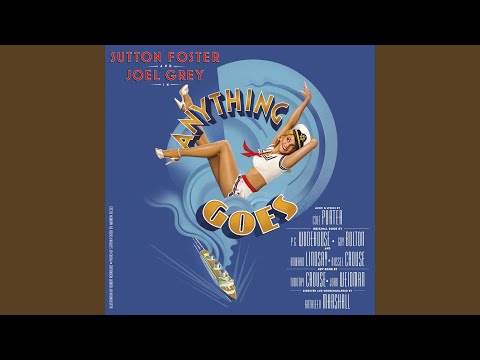
- Album (if any): Anything Goes (2011 Broadway Cast Recording)
- Music style: American Songbook ballad writing with theatre pacing
- Poetic meter: Accentual, speech-forward phrasing
Frequently Asked Questions
- Who sings this number in Anything Goes?
- Modern Broadway production song lists credit the solo to Hope Harcourt.
- Is it part of the original 1934 opening-night score?
- It is closely associated with Anything Goes through later editions and revivals, rather than the earliest 1934 lineup.
- Where does it appear in the story?
- Common descriptions place it after Billy is arrested, when Hope admits she understood her feelings too late.
- Why does the title repeat like a mantra?
- It is a self-command. Hope is trying to make the goodbye true by saying it out loud.
- What is the musical style?
- It is a theatre ballad with American Songbook phrasing: direct lyric lines over supportive harmony that keeps moving.
- Was there an added verse in some versions?
- Yes. Notes on the 2011 revival indicate an introductory verse was reinstated for that edition.
- What key and range are common in published sheet music?
- A widely used piano-vocal arrangement lists F major (transposable) and a vocal range from A3 to Eb5.
- How long is the 2011 cast recording track?
- Track listings for the 2011 cast album show a duration of 2:23.
- Is there an accessible recording for reference listening?
- Yes. The Ghostlight Records distribution includes a track credited to Laura Osnes on the 2011 cast album.
Additional Info
This song is a neat case study in how Porter material moved between projects. One scholarly appendix notes it was written for Born to Dance, then dropped from Red, Hot and Blue before finding an early home in O Mistress Mine, and only later becoming a natural fit for Hope in Anything Goes. That backstory tracks with how it feels onstage: it plays like a self-contained standard that Broadway later realized had the exact emotional job Hope needed.
According to IBDB song lists for major Anything Goes productions, Hope keeps the solo credit, which makes the number feel like a private confession in the middle of public chaos. And as stated in Musicnotes arrangement details, the commonly used piano-vocal version sits comfortably in F major with a range that favors clear storytelling over vocal stunt work.
Key Contributors
| Entity | Type | Relationship statement |
|---|---|---|
| Cole Porter | Person | Cole Porter wrote the music and lyrics. |
| Anything Goes | Work | Anything Goes uses the song as a Hope Harcourt solo in later editions. |
| Hope Harcourt | Fictional character | Hope Harcourt performs the song after Billy is arrested. |
| The Broadway League (IBDB) | Organization | IBDB lists singer credits and Act II placement in major productions. |
| Ghostlight Records | Organization | Ghostlight Records released the 2011 Broadway cast recording. |
| Roundabout Theatre Company | Organization | Roundabout Theatre Company produced the 2011 Broadway revival. |
| Laura Osnes | Person | Laura Osnes performs the song on the 2011 cast album track. |
| Musicnotes | Organization | Musicnotes lists published key and vocal range for a common piano-vocal arrangement. |
How to Sing Goodbye, Little Dream, Goodbye
Published arrangement data offers useful anchors. Musicnotes lists the original published key as F major (transposable) and a voice range A3 to Eb5. StageAgent describes the song as a Hope Harcourt solo and gives vocal notes that match that practical mid-soprano range. Use those facts as guardrails, then focus on acting the thought changes.
- Tempo: Keep it moving enough that it feels like a decision being made in real time. If it turns into a slow lament, the character loses agency.
- Diction: Treat the title phrase like a clean cut. Consonants should be gentle but final, like she is trying not to shake.
- Breathing: Plan one full breath before the first title line and another before the last. The song reads best when the goodbye lands on supported tone, not on fumes.
- Flow and rhythm: Let the verse feel conversational, then slightly narrow the timing in the chorus so the message sounds firmer.
- Accents: Stress the words that admit regret, and let the decorative words pass quickly. The story is the point.
- Key choice: If Eb5 feels exposed, transpose down a step or two. The performance should sound honest, not tight.
- Color: Start with a lighter tone, then darken it as she accepts reality. Keep vibrato controlled, so the sadness reads as contained.
- Pitfalls: Do not oversell heartbreak. This is a person trying to stay composed while her dream collapses.
Sources
Sources: IBDB Anything Goes (2011 Revival) song list, IBDB Anything Goes (1987 Revival) song list, Anything Goes Script:Vocal Book PDF, Musicnotes piano-vocal arrangement details, Oxford University Press appendices PDF, Discogs track list for the 2011 cast recording, Spotify track listing for the 2011 cast recording, Ghostlight Records Provided to YouTube track