
Easy to Love Lyrics
Easy to Love
[HOPE]You're being terribly bad, Billy.
Why, we hardly know each other.
[BILLY]
Yeah, I guess you're right.
Me and you -who am I kidding?
I know too well that I'm
Just wasting precious time
In thinking such a thing could be
That you could ever care for me.
I'm sure you hate to hear
That I adore you, dear,
But grant me, just the same,
I'm not entirely to blame, for...
You'd be so easy to love,
So easy to idolize, all others above,
So sweet to waken with,
So nice to sit down to the eggs and bacon with.
We'd be so grand at the game,
So carefree together that it does seem a shame
That you can't see
Your future with me
'Cause you'd be, oh, so easy to love...
You'd be so easy to love,
So easy to idolize, all others above,
So worth the yearning for,
So swell to keep ev'ry home fire burning for.
Oh, how we'd bloom, how we'd thrive
In a cottage for two, or even three, four or five,
So try to see
Your future with me
'Cause you'd be, oh, so easy to love...
[HOPE]
Billy, this is all wrong. I'm marrying Evelyn.
Nothing can change that!
[BILLY]
You can change that. All you have to do is say -
[HOPE]
No! If you don't let me alone, I'll make a scene!
[BILLY]
You love me, Hope - you're going to marry me!
[HOPE]
'Cause you'd be, oh, so easy to love...
Song Overview

Review and Highlights
Quick summary
- Work: Anything Goes (opened November 21, 1934).
- Version note: Written for the 1934 Broadway project as "You'd Be So Easy to Love," then cut during rehearsals and repurposed for the 1936 MGM film Born to Dance.
- Modern stage life: Added back into major revivals, including the 2011 Broadway revival, where it appears as a romantic scene song with a short reprise.
- Why it lasts: A classic Porter move - plainspoken devotion riding on harmony that keeps changing its mind.
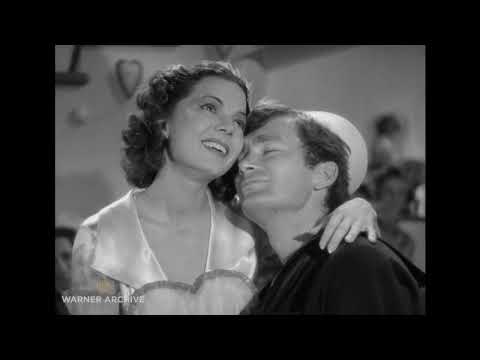
Anything Goes (1934) - stage musical - non-diegetic. The lyric sells admiration without bargaining: the singer does not negotiate, does not plead, does not try to outsmart feelings. That simplicity is the trick. It makes the melody feel like a confession that slipped out by accident, especially when performers lean into the conversational phrasing. In revivals, it often functions as a brief quiet pocket inside a show full of hustle.
Key takeaways: (1) The hook is the ease - the singer is already convinced. (2) The verse and chorus invite flexible timing, so jazz singers can stretch it while theatre singers can keep it scene-tight. (3) The title history matters: the Broadway draft and the film version carry slightly different dramatic weight even when the tune is the same.
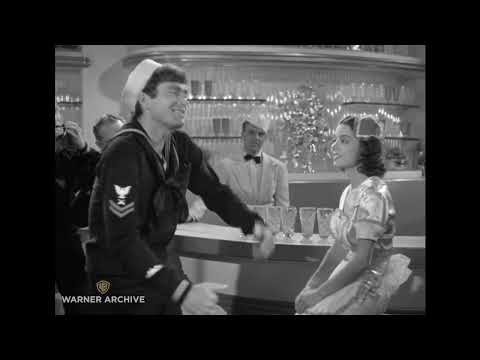
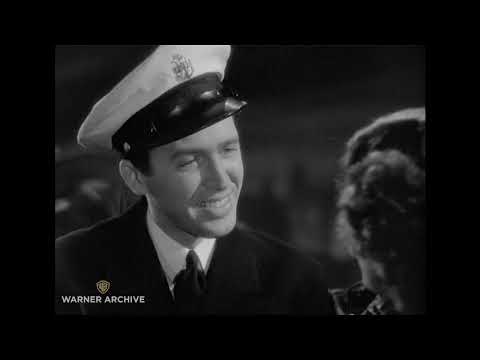
Born to Dance (1936) - film musical - diegetic. Performed as a staged set piece (Central Park spoof-conducting sequence), approx mid-film. It plays like entertainment within the story rather than private thought, which changes the vibe: less whispered romance, more showy charm. In the Warner Archive clip, the number is presented as a featured performance segment.
Creation History
Porter wrote the song for Anything Goes in 1934, but documentation of the show versions notes it was cut during rehearsals. Two years later it reemerged in Born to Dance (1936), one of the MGM vehicles that helped turn theatre writing into mass-market standards. By the time the 2011 Broadway revival arrived, the piece had fully crossed back over into stage life: it appears on the cast recording and is even given a short reprise, a neat way of saying, "This belongs in the romance thread now."
Song Meaning and Annotations
Plot
Anything Goes is a shipboard comedy where romance is constantly interrupted by disguise, status games, and fast-moving schemes. In that world, a direct love statement is almost suspicious. That is why this song lands so cleanly in revival placements: it briefly drops the mask. The film context in Born to Dance is different. There, the number sits inside a performance frame, so the same words can read as spectacle rather than secrecy.
Song Meaning
The meaning is devotion without drama. The singer lists the reasons admiration feels natural: the beloved is easy to cherish, easy to place above everyone else, easy to treat as the center of attention. The emotional arc is calm on purpose. It is the feeling of realizing you do not need to exaggerate. The confidence is the romance.
Annotations
Written for 1934, but cut during rehearsals.
This explains why the tune feels slightly outside the main comic engine of Anything Goes. It is more straightforward than the big wisecrack duets, which makes it valuable later: revivals can use it as a genuine romantic anchor.
Repurposed for Born to Dance (1936) under the shorter title "Easy to Love."
Film reshapes stakes. When the song becomes a staged set piece, it gains polish and loses a bit of private fragility. Same lyric, different room.
Added to major stage revivals, including 2011.
That return trip is part of its legend. A cut song coming back decades later is theatre justice: the tune kept winning fans in the jazz world, and eventually the stage invited it home.
Style and movement
Harmonically it is classic Porter, with changes that keep the melody floating instead of locking into a single safe landing. Rhythm is flexible: it can swing lightly, lean into rubato, or sit in a steady theatre tempo without sounding stiff.
Key phrases and character color
The lyric language is plain, almost disarmingly so. That is why performers often add character through timing: a tiny pause before "idolize," a quick smile through "all others above," or a softening on the last line to make the devotion sound earned rather than automatic.
Technical Information (Quick Facts)
- Song: Easy to Love
- Artist: Cole Porter
- Featured: N/A
- Composer: Cole Porter
- Producer: Recording-dependent
- Release Date: November 21, 1934 (Anything Goes premiere context; song later introduced on film in 1936)
- Genre: Musical theatre; jazz standard
- Instruments: Voice; orchestra or jazz ensemble
- Label: Harms, Inc. (1934 sheet music publication for Anything Goes); later recordings vary
- Mood: Warm, confident, lightly swinging
- Length: 3:34 on the 2011 Broadway cast recording track
- Track #: Varies by album
- Language: English
- Album (if any): Anything Goes (2011 Broadway Cast Recording); many jazz vocal albums
- Music style: American Songbook ballad with swing-friendly phrasing
- Poetic meter: Accentual, conversational lyric pacing
Frequently Asked Questions
- Was it actually sung in the original 1934 Broadway run?
- Version documentation for Anything Goes notes it was written for 1934 but cut during rehearsals, so it is associated with the project rather than the performed 1934 song list.
- Why does it sometimes appear as "You'd Be So Easy to Love"?
- That longer title is tied to the Broadway draft identity, and later stage revivals often restore it under that wording.
- How did it become widely known if it was cut from the show?
- It was repurposed for the 1936 MGM film Born to Dance, where it appears as a featured musical segment and reached a much larger audience.
- Who was the song originally written for?
- Reference summaries describe it as written for William Gaxton in the Anything Goes development period.
- Is it in the 2011 Broadway revival?
- Yes, the 2011 Broadway cast recording includes the song and a short reprise, reflecting its restored stage placement.
- Is it more of a ballad or a swing tune?
- Both approaches work. The harmony supports ballad pacing, and the phrasing supports light swing.
- What are reliable clues for tempo and range?
- Published arrangement metadata commonly lists moderate tempos and provides practical vocal ranges that vary by edition and key.
- Does the lyric change between editions?
- Most differences come from title wording and arrangement cuts rather than wholesale rewrites of the core text.
Additional Info
This tune has the rare career path that theatre people whisper about: written for a show, cut, then turning into a standard anyway. The paper trail backs up the folklore. Production-version summaries for Anything Goes mark it as written for 1934 but removed before opening, while film documentation for Born to Dance lists it as a major Porter showcase. That migration explains why the song feels camera-friendly: it can be performed as a number, not just lived as a scene.
The 2011 Broadway revival quietly makes another point by giving it a reprise. A reprise is a claim of ownership. It says the romance thread deserves a musical callback, and this melody is sturdy enough to do that job. According to the Warner Archive presentation of the film clip, the song also thrives as a featured segment, which helps explain its durability in later jazz and pop recordings.
Key Contributors
| Entity | Type | Relationship statement |
|---|---|---|
| Cole Porter | Person | Cole Porter wrote the music and lyrics. |
| Anything Goes | Work | Anything Goes is the 1934 Broadway project the song was written for and later restored into. |
| Born to Dance | Work | Born to Dance is the 1936 film that introduced the song to mass audiences. |
| William Gaxton | Person | William Gaxton is cited in reference summaries as the intended 1934 stage performer. |
| James Stewart | Person | James Stewart appears in film documentation as one of the performers associated with the 1936 presentation. |
| Eleanor Powell | Person | Eleanor Powell is featured in the film sequence presentation and is central to the number as staged on screen. |
| Ghostlight Records | Organization | Ghostlight Records released the 2011 Broadway cast recording that includes the song and reprise. |
How to Sing Easy to Love
Published arrangement metadata gives practical anchors: one edition lists a moderate tempo around quarter note 112, another shows a faster reference like quarter note 144, which is a reminder that style choices matter more than a single number. Treat it like speech set to harmony, not like a metronome exercise.
- Tempo first: Choose moderate swing if you want warmth and ease, or a brighter pace if you want a playful, public-facing feel closer to the film presentation.
- Diction: Keep the consonants clean on "idolize" and "above." The lyric is simple, so clarity is the drama.
- Breath plan: Breathe before the longer thought lines, not in the middle of them. Short breaths can work if they sound like a pause for meaning.
- Flow and rhythm: Sit slightly behind the beat on the verse for intimacy, then let the chorus land more squarely so the admiration feels confident.
- Accents: Lightly stress the word "easy" the first time, then relax it later. Repetition should feel like growing certainty, not insistence.
- Range management: Common published ranges in popular editions cluster around A3 to F5 (key dependent). Transpose if the chorus strains, because the song should sound effortless.
- Ensemble and doubles: If you have background voices, keep them airy. The lead line should remain conversational, not crowded.
- Mic and room: Close-mic suits the intimacy. If singing unamplified, shape vowels to keep the line floating over chord changes.
- Pitfalls: Do not over-swing the lyric or it can lose its sincerity. Do not over-ballad it or it can lose its charm.
Sources
Sources: Warner Archive film clip listing, Anything Goes version-summary documentation, Born to Dance film song list documentation, 2011 Broadway cast recording track listings, Musicnotes arrangement metadata, Cole Porter sheet music bibliography