
Blow, Gabriel, Blow Lyrics
Blow, Gabriel, Blow
[RENO]Brothers and sisters, we are here tonight to fight the devil...
Do you hear that playin'?
[COMPANY]
Yes, we hear that playin'!
[RENO]
Do you know who's playin'?
[COMPANY]
No, who is that playin'?
[RENO]
Well, it's Gabriel, Gabriel playin'!
Gabriel, Gabriel sayin'
"Will you be ready to go
When I blow my horn?"
Oh, blow, Gabriel, blow,
Go on and blow, Gabriel, blow!
I've been a sinner, I've been a scamp,
But now I'm willin' to trim my lamp,
So blow, Gabriel, blow!
Oh, I was low, Gabriel, low,
Mighty low, Gabriel, low.
But now since I have seen the light,
I'm good by day and I'm good by night,
So blow, Gabriel, blow!
Once I was headed for hell,
Once I was headed for hell;
But when I got to Satan's door
I heard you blowin' on your horn once more,
So I said, "Satan, farewell!"
And now I'm all ready to fly,
Yes, to fly higher and higher!
'Cause I've gone through brimstone
And I've been through the fire,
And I purged my soul
And my heart too,
So climb up the mountaintop
And start to blow, Gabriel, blow
[ALL]
Come on and blow, Gabriel, blow!
[RENO]
I want to join your happy band
And play all day in the Promised Land.
So blow, Gabriel, blow!
Come on you scamps, get up you sinners!
You're all too full of expensive dinners.
Stand up on your lazy feet and sing!
[ALL]
Blow, Gabriel, blow, (Blow, Gabriel!)
Go on and blow, Gabriel, blow. (Blow, Gabriel!)
I've been a sinner, I've been a scamp,
But now I'm willin' to trim my lamp,
So blow, Gabriel, blow.
I was low, Gabriel, low, (Low, Gabriel!)
Mighty low, Gabriel, low.
But now since that I have seen the light
I'm good by day and I'm good by night
So blow, Gabriel, blow.
[RENO]
Once I was headed for hell,
Once I was headed for hell;
But when I got to Satan's door
I heard you blowin' on your horn once more,
So I said, "Satan, farewell!"
And now I'm all ready to fly,
Yes, to fly higher and higher!
'Cause I've gone through brimstone
And I've been through the fire,
And I purged my soul
And my heart too,
So climb up the mountaintop
And start to blow, Gabriel, blow
[ALL]
Go on and blow, Gabriel, blow!
[RENO]
I want to join your happy band
And play all day in the Promised Land.
So blow, Gabriel!
[ALL]
Go on and...
Blow, Gabriel, blow
Blow, Gabriel, blow
Blow, Gabriel, blow
I wanna join your happy band
And play all day in the Promised Land,
So blow, Gabriel, blow, Gabriel, blow, Gabriel, blow!
Song Overview
Review and Highlights
Quick summary
- Work: Anything Goes (opened November 21, 1934).
- Who leads it: Reno Sweeney with ensemble support in the original production listing.
- Where it hits: Act II, right after the show resets with the entr'acte and the ship is hungry for a new sensation.
- Why it lands: It borrows revival-meeting heat and puts it in a nightclub voice - a sermon with swing shoes.
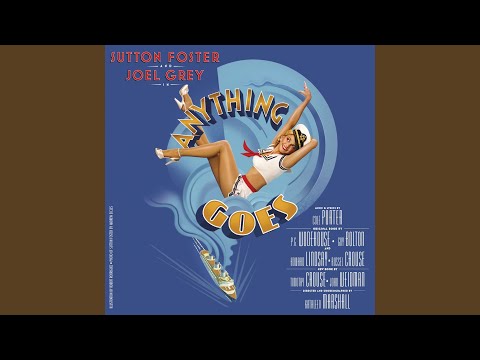
- Modern reference point: The 2011 Broadway cast recording presents it as a short, high-voltage ensemble feature.
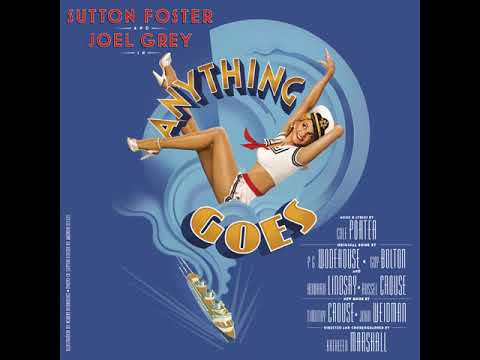
Anything Goes (1934) - stage musical - non-diegetic. This number is a theatrical trick that still feels fresh. Porter writes a mock-sermon that is not mocking the joy, only the performance of righteousness. Reno is a nightclub evangelist for the ship's mood: she spots the slump, calls for uplift, and gets everyone clapping along before the plot can complain.
The best part is how it turns communal. It starts as a lead showcase, then becomes a group engine. If the ensemble commits, the room feels like it has joined a temporary church of rhythm. If the ensemble holds back, the song turns into a solo, and you lose the point. Reno is not just singing at people - she is recruiting them.
Key takeaways: Keep the pulse steady, keep the diction sharp, and let the refrain grow by degrees. The lift comes from escalation, not from pushing the first chorus too hard.
Creation History
Production records for the original Broadway run list the number in Act II with Reno Sweeney and the ensemble. Printed sheet music was published in New York by Harms in 1934, with library catalogs describing a first-edition vocal score. Decades later, the song remained a calling card for the role. According to a Playbill survey of major recordings, Ethel Merman recorded her Act II showstopper in December 1947 with an orchestra led by Jay Blackton, a reminder that the piece never depended on one staging to survive.
Song Meaning and Annotations
Plot
Anything Goes locks its characters on the SS American and lets reputation, disguise, and romance collide. By Act II, the ship is running on rumor and nerves. Reno steps in as the mood manager. In plot terms, this is a cheer-up pivot: the show shakes off trouble and returns to motion, so the next cascade of misunderstandings can land cleanly.
Song Meaning
The lyric is a call for release. "Gabriel" is the signal for a big, public wake-up. Reno is asking the crowd to stop pretending it is above spectacle and simply enjoy it. The piece also carries a sly undertone: a performer can sell salvation the same way she sells a headline - with timing, charisma, and a chorus that knows when to answer.
Annotations
IBDB credits the number in Act II to Reno Sweeney and the ensemble.
That credit is the staging blueprint. The moment belongs to Reno, but the payoff belongs to the group. The song is designed to spread.
Sheet music catalogs list a 1934 Harms publication in New York.
This is the practical proof that the tune moved beyond the theatre quickly. It was built to be taken home, played, and performed.
Later versions and recordings keep it as a signature showstopper for the Reno role.
When a role has a signature, directors protect it. Even if other parts of the score shift by edition, this one keeps its place because it defines Reno's power: she can change the atmosphere on command.
The 1956 Anything Goes film includes the number among its primary Porter musical sequences.
Film trims many stage details, but it keeps the big title moments. That choice signals how strongly the song reads as a standalone set piece.
Genre blend and rhythm
The musical language sits between Broadway swing and gospel-tinged call-and-response. The "revival" vibe is carried by cadence and repetition, while the pit orchestra keeps the bounce polished and danceable.
Symbol and tone
"Gabriel" works as a theatrical signal: the trumpet call that announces change. In this context, it is not theology so much as stagecraft. The characters want a new chapter, and the band gives them permission to start one.
Technical Information (Quick Facts)
- Song: Blow, Gabriel, Blow
- Artist: Cole Porter
- Featured: N/A
- Composer: Cole Porter
- Producer: Recording-dependent
- Release Date: November 21, 1934 (Broadway premiere context)
- Genre: Musical theatre; ensemble showstopper
- Instruments: Voice and Broadway pit orchestra
- Label: Recording-dependent
- Mood: Exuberant, brassy, communal
- Length: About 2:24 on the 2011 Broadway cast track listing
- Track #: Varies by album, typically early Act II
- Language: English
- Album (if any): Anything Goes (2011 Broadway Cast Recording) and other cast/studio recordings
- Music style: Swing with call-and-response structure
- Poetic meter: Accentual, chorus-forward phrasing
Frequently Asked Questions
- Who sings it in the original Broadway listing?
- IBDB credits it to Reno Sweeney and the ensemble in Act II.
- Where does it sit in the show?
- It is an early Act II feature, following the entr'acte and the Act II opener sequence.
- Why does it feel like a sermon?
- The lyric uses revival-meeting language and call-and-response patterns, then the orchestra frames it in swing-era Broadway style.
- Is it considered Reno's main showstopper?
- It is widely treated that way in recordings and revival staging, where it often functions as the big Act II lift.
- Was it published as sheet music in 1934?
- Yes. Library catalogs describe a Harms vocal score publication dated 1934.
- Is it in the 1956 film version?
- Yes. The film is documented as keeping it among the primary Porter musical numbers.
- What key and range do singers commonly see?
- A common leadsheet listing gives Eb major with a printed range of Bb3 to F5, with tempo marked half note equals 120.
- Is there a widely available modern cast recording?
- Yes. The 2011 Broadway cast recording track is distributed online and is credited to Ghostlight Records.
Additional Info
This is one of those Porter numbers that teaches you what the show thinks it is. Anything Goes can flirt, it can scam, it can drop into romance, but it never forgets the pleasure of a crowd moving together. The song is built like a ladder: every return of the refrain adds bodies, volume, and confidence, until the ship feels less like a setting and more like a chorus pit with railings.
According to a Playbill guide to major recordings, a notable Merman studio take was recorded in December 1947 with Jay Blackton leading the orchestra, which underlines how performers kept claiming the tune long after the original run. And as stated in the Morgan Library catalog description of the 1934 vocal score, the sheet music was published as a first edition by Harms, which helps explain why it spread beyond Broadway quickly.
Key Contributors
| Entity | Type | Relationship statement |
|---|---|---|
| Cole Porter | Person | Cole Porter wrote the music and lyrics for the show and this number. |
| Anything Goes | Work | Anything Goes places the number in Act II as a Reno-led ensemble feature in production records. |
| Reno Sweeney | Fictional character | Reno Sweeney leads the number and drives the crowd response. |
| The Broadway League (IBDB) | Organization | IBDB documents the Act II song list and singer credits. |
| Harms Inc. | Organization | Harms published the 1934 vocal score sheet music in New York. |
| The Morgan Library and Museum | Organization | The Morgan catalog describes a first-edition 1934 printed vocal score. |
| Ghostlight Records | Organization | Ghostlight distributed the 2011 cast recording track online. |
| Ethel Merman | Person | Ethel Merman is associated with a widely discussed later studio recording of the number. |
| Jay Blackton | Person | Jay Blackton led the orchestra for a December 1947 Merman recording referenced in recording surveys. |
How to Sing Blow, Gabriel, Blow
Think of this as character plus crowd control. A common leadsheet listing provides useful anchors: original published key Eb major, printed range Bb3 to F5, and a tempo marking of half note equals 120. That does not mean you must race. It means the energy should feel driven, like the band has a destination.
- Tempo: Start with a firm pulse. If it drifts, the call-and-response loses snap. If it rushes, the lyric turns muddy.
- Diction: Treat consonants as percussion. The title phrase needs to read cleanly every time, even when the band is loud.
- Breathing: Plan breaths before the bigger refrain entrances. Save air for long phrases that sit over ensemble backing.
- Flow and rhythm: Keep the verse speech-forward, then lock into steadier time for the refrain so the ensemble can answer as one.
- Accents: Aim accents at the command words. Let secondary words stay light so the line stays buoyant.
- Range and key choice: If Eb pushes the top, transpose. The delivery should sound effortless, not strained.
- Ensemble blend: Match vowels on sustained harmony and agree on cutoffs. The crowd sound sells the premise.
- Mic and room: If amplified, keep the lead present and the ensemble wide. If unamplified, cluster the answering voices to reinforce unity.
- Pitfalls: Do not play it like parody. Commit to the uplift and let the situation provide the comedy.
Sources
Sources: IBDB production song lists, The Morgan Library and Museum catalog record, University of Maine DigitalCommons sheet music record, Playbill recording survey, Musicnotes leadsheet metadata, Anything Goes (1956 film) reference summary, Ghostlight Records YouTube distribution listing