
Anything Goes (Reprise) Lyrics
Anything Goes (Reprise)
[COMPANY]The world has gone mad today
And good's bad today,
And black's white today,
And day's night today,
When most guys today
That women prize today
Are just silly gigolos
And though I'm not a great romancer
I know that I'm bound to answer
When you propose,
Anything goes...
Anything goes!
Song Overview
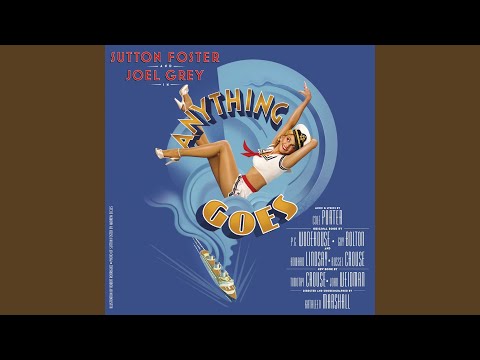
Review and Highlights
Quick summary
- Work: Anything Goes (opened November 21, 1934).
- Stage function: Finale reprise that stitches the show together, returning to the title hook as the last word.
- 1934 structure: Finale listed as a paired reprise sequence (Youre the Top and the title song), led by Reno with ensemble support.
- Revival variant: Later revivals swap the companion reprise (1987 uses the opening love duet; 2011 uses Its De-Lovely) while keeping the title tune as the closing stamp.
- Why it hits: The melody lands like a verdict - the plot may tidy up, but the world stays chaotic and the show laughs at that.
Anything Goes (1934) - stage musical - non-diegetic. A reprise is theater shorthand: the audience already knows the tune, so you can say more with fewer bars. Here, the title return is not just a reminder, it is a punchline. The score has spent two acts proving that status, scandal, and romance are all slippery on a ship. The finale then brings the theme back like a grin you cannot wipe off.
Key takeaways: Keep the rhythm crisp, keep the words clean, and treat the reprise as a group exhale. It should feel like the company taking the same dance step together one last time.
Creation History
Production song lists frame the ending as a finale built from reprises, with the title number serving as the closing anchor. Modern references also track how revivals reshuffled which earlier tune gets reprised alongside it, while preserving the final tag of the title refrain. Scholarship on the show points out that by late 1934 the title song already carried durable cultural weight, so it makes sense that the production treated it as the closing signature rather than a one-off scene piece.
Song Meaning and Annotations
Plot
By the finale, the SS American has survived arrests, disguises, love triangles, and an audience of gawkers who turn scandal into sport. The ending needs speed more than explanation. That is why the reprise format works. The story resolves while the music tells you what the show thinks about the whole mess: people will always find new rules to break, and the world will always keep moving.
Song Meaning
The meaning in the reprise is a distilled thesis. The title phrase is not a shrug, it is a diagnosis. Society pretends it runs on moral certainty, but the lyric lists the headlines and laughs. In the finale, that laughter becomes communal. It is the company declaring that the chaos was not an accident, it was the point.
Annotations
The finale is documented as a reprise medley that ends with the title song.
That structure turns the title hook into a curtain-line. Even if you forget the plot details, you leave with the concept stamped into your ear.
Later revivals change which earlier song is paired with the finale while keeping the title refrain as the closer.
This is a practical lesson in why the title tune is the backbone. You can rewire scenes, add or cut material, even swap a reprise partner, and the ending still feels like Anything Goes because the final tag carries the theme.
The 1936 film adaptation kept the title song among the Porter numbers that survived Production Code revisions.
That is a clue to its fame and utility. It could be adjusted for new contexts and still read as a commentary on modern manners.
Chart summaries from the era note Paul Whitemans 1934 recording as a top-five US hit.
Once a theater song becomes a hit record, a finale reprise stops feeling like an inside reference. It becomes a crowd-pleaser by default.
Rhythm and ensemble energy
The reprise usually plays in a quick, forward pulse. It is less about vocal display and more about shared timing. If the ensemble locks in, the ending feels inevitable. If it drifts, the joke softens.
Key phrases and symbols
The title phrase functions like a headline, a moral, and a dismissal all at once. In Act I it is commentary. In the finale it becomes a toast, because everyone onstage has just lived through the proof.
Technical Information (Quick Facts)
- Song: Anything Goes (Reprise)
- Artist: Cole Porter
- Featured: Ensemble (production-dependent)
- Composer: Cole Porter
- Producer: Recording-dependent
- Release Date: November 21, 1934
- Genre: Musical theatre; reprise
- Instruments: Voice and pit orchestra
- Label: Recording-dependent
- Mood: Brassy, celebratory, sly
- Length: Varies (often part of a finale medley)
- Track #: Often embedded in Finale tracks on cast albums
- Language: English
- Album (if any): Anything Goes cast recordings
- Music style: Swing-era Broadway anthem writing
- Poetic meter: Accentual, list-driven phrasing
Frequently Asked Questions
- What is this reprise in the score?
- It is the finale tag that brings back the title refrain as the last musical statement.
- Is it a separate full song?
- Most productions treat it as a short return inside a finale medley rather than a complete standalone.
- What does the reprise do dramatically?
- It summarizes the shows worldview in a few bars: rules bend, scandals recycle, and people keep dancing.
- Did the finale change across revivals?
- Yes. Documentation notes the companion reprise shifts by edition, but the title hook remains the closing anchor.
- Was the title song popular outside the theater?
- Yes. Era chart summaries cite Paul Whitemans recording as a top-five US hit in 1934.
- Did the number appear in the 1936 film?
- Yes. The films soundtrack lists the title song among the retained Porter numbers.
- Who typically leads the finale reprise onstage?
- Common production lists place Reno at the center of major ensemble moments, with the company joining for the final sweep.
- Does the reprise require big vocal range?
- Not usually. It is built for ensemble drive and clear text more than high-note display.
- Are there standard published keys?
- Sheet-music listings vary by arrangement, but common digital metadata often lists C major and a mid-range vocal span around C4 to E5.
Awards and Chart Positions
The reprise itself is not tracked as a standalone chart item, but the title song that it quotes became a hit in the same season it premiered on Broadway. That popularity is part of why the finale tag plays so confidently - audiences already knew the hook from radio and records.
| Year | Version | Chart note | Source note |
|---|---|---|---|
| 1934 | Paul Whiteman and His Orchestra (vocal Ramona Davies) | Top five US chart listing | Chart-summary sites list the record as a US top-five hit in 1934. |
| 1934 | Broadway premiere season | Song circulated quickly beyond the theater | Discography notes Whiteman recorded the tune on October 26, 1934. |
Additional Info
The funniest thing about a finale reprise is that it can feel casual while doing serious work. It tells the audience where to look back. It points at the hook and says, that was the thesis, you heard it the first time, now hear it again with the story resolved. According to the University of Illinois Press scholarship excerpt on the song, by November 1934 the title number already showed signs of long-term cultural staying power, which makes its finale role feel less like repetition and more like branding before the word got fashionable.
And the screen afterlife reinforces the point. The 1936 film kept the title number in its soundtrack lineup, with notes that Porters lyrics were revised for Production Code demands. That kind of migration - stage to record to film - is how a refrain becomes a shared reference. I have always liked how the finale tag plays as both celebration and shrug: the couples may pair off, but the world outside the ship is still a headline machine.
For a plain-language reference, as stated in Concord Theatricals production notes, the show has been repeatedly revived and honored (including major awards for revivals), which helps explain why the finale hook still reads as current even when the gossip references are vintage.
Key Contributors
| Entity | Type | Relationship statement |
|---|---|---|
| Cole Porter | Person | Cole Porter wrote the music and words and built the title refrain as the shows final tag. |
| Anything Goes | Work | The musical ends with a finale medley that returns to the title refrain. |
| Reno Sweeney | Role | Reno is listed as the central vocalist for the title number and typically leads the ensemble return at the end. |
| The Broadway League (IBDB) | Organization | IBDB lists songs by act and documents the title number in Act I. |
| Ovtur | Organization | Ovtur publishes verified musical-number lists including the title number placement. |
| Ghostlight Records | Organization | Ghostlight distributed the 2011 cast recording, including the Finale track that contains the reprise tag. |
| Paramount Pictures | Organization | The 1936 film adaptation includes the title song in its soundtrack list. |
How to Sing Anything Goes (Reprise)
Because the reprise is a condensed return, the most useful technical anchors come from widely used sheet-music metadata for the main song. Musicnotes listings often show C major as a published key and a vocal range around C4 to E5 for a common piano-vocal edition. Treat those as a starting point, then make scene logic your real boss: this moment should sound collective, not effortful.
- Tempo: Keep it buoyant and forward. A finale tag should feel like a running finish, not a victory speech.
- Diction: Prioritize the consonants on the title phrase. The audience needs the hook to read instantly through applause energy.
- Breathing: Take one prepared breath before the final refrain so you can land it without pushing.
- Flow and rhythm: Phrase in short, confident shapes. Do not over-legato the line, because the comedy lives in momentum.
- Ensemble blend: Match vowels with the group. The reprise wins when everyone sounds like they are smiling on the same beat.
- Key choice: If your production transposes, keep the tessitura friendly. The finale should feel easy enough to dance through.
- Pitfalls: Avoid turning it into a solo showcase. The point is a shared landing, not an extra lap of vocal tricks.
Sources
Sources: IBDB Anything Goes (Original Broadway Production) songs list, Ovtur verified 1934 musical-numbers list, Wikipedia Anything Goes musical numbers and finale variants, Wikipedia Anything Goes (Cole Porter song) popularity note, Musicnotes sheet-music metadata for the title song, Syncopated Times Paul Whiteman discography entry, MusicVF top songs of 1934 listing, Wikipedia Anything Goes (1936 film) soundtrack list, Concord Theatricals accolades and revision notes, University of Illinois Press scholarship excerpt on the title song