
I Get a Kick Out of You Lyrics
I Get a Kick Out of You
[RENO]My story is much too sad to be told,
But practically ev'rything leaves me totally cold
The only exception I know is the case
When I'm out on a quiet spree
Fighting vainly the old ennui
And I suddenly turn and see
Your fabulous face.
I get no kick from champagne.
Mere alcohol doesn't thrill me at all,
So tell me why should it be true
That I get a kick out of you?
Some get a kick from cocaine.
I'm sure that if I took even one sniff
That would bore me terrific'ly too
Yet I get a kick out of you.
I get a kick ev'rytime I see
You standing there before me.
I get a kick though it's clear to me
You obviously don't adore me.
I get no kick in a plane,
Flying too high with some guy in the sky
Is my idea of nothing to do,
Yet I get a kick out of you.
Song Overview
Review and Highlights
Quick summary
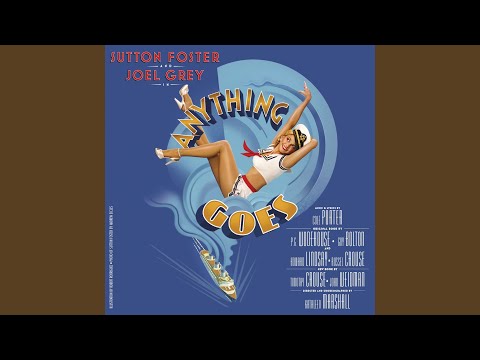
- Work: Anything Goes (opened November 21, 1934) - musical comedy set aboard the SS American.
- Original stage voices: Introduced by Ethel Merman as Reno Sweeney, paired in the show with Billy Crocker.
- Why it hits: A love song that refuses to act like one - it keeps name-dropping temptations, then shrugs them off like bad cocktails.
- Afterlife: It moved fast from Broadway into the American Songbook, then kept resurfacing in revivals, films, and a high-profile 2021 pop-jazz single.
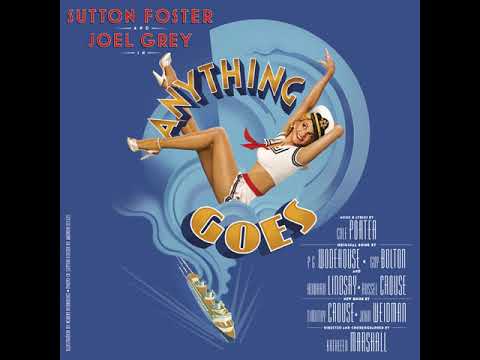
Anything Goes (1934) - stage musical - non-diegetic. In the original production, the number arrives as the show is still warming up its engine: the room is a bar, the vibe is fast, and the romance is already tangled in showbiz swagger. The melody glides, but the lyric keeps its guard up. It is funny without mugging, and sincere without turning soft.
What I love about this song is how it does the opposite of pleading. The narrator lists the usual vices with a straight face, then dismisses them. That trick gives the chorus its snap: the hook is not only the tune, it is the personality. You can feel why jazz singers adopted it so quickly. The structure invites interpretation, like a suit that looks different on every body.
Creation History
The number was written for Anything Goes and published in 1934 by Harms, Inc. It is one of those theatre songs that escaped the theatre almost immediately, because the language is compact and the harmony gives bandleaders room to play. The earliest public identity is still tied to Merman and the original Broadway staging, but the piece became a standard through recordings that treat it less like a scene and more like a conversational set piece. According to Rolling Stone, the 2021 Tony Bennett and Lady Gaga release helped push Cole Porter repertory back into the mainstream spotlight for a new audience.
Song Meaning and Annotations
Plot
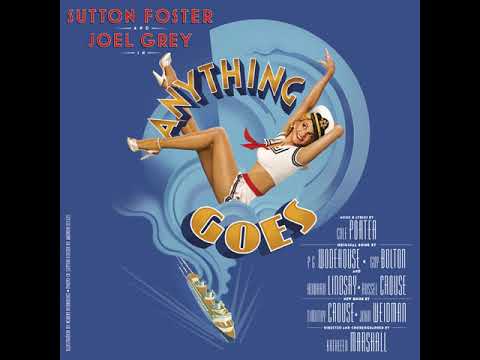
Anything Goes runs on disguise, class games, and cruise-ship mix-ups. Reno Sweeney is a celebrity singer with a public persona and private feelings; Billy Crocker is a romantic schemer chasing the woman he wants. This song sits inside that world as a kind of sideways confession. Rather than saying "I love you" directly, the lyric tests every substitute pleasure it can name, then admits none of them work the same way.
Song Meaning
The core meaning is simple, but the delivery is sly: desire is framed as preference, almost as taste. Champagne, drugs, flying, and glamorous chaos all get waved away. The real thrill is a specific person, and the singer cannot hide it for long. The humor is a cover story, but not a fake one. It is the coping mechanism that makes the truth sayable on stage.
Annotations
"My story is much too sad to be told."
That opening line is a magician's patter: it implies heartbreak, then immediately pivots into jokes. It tells the audience, "I am not here to suffer in public," while also hinting the character has done plenty of suffering offstage.
"I get no kick from champagne."
The gag is the understatement. This is not moralizing. It is a performer saying, "Sure, I have tried the deluxe version of fun. Still not impressed."
Early lyrics were adjusted to avoid a reference linked to the Lindbergh kidnapping era.
That detail matters because it shows how quickly Broadway lyrics could react to public events. The song is playful, but it lives in a real timeline, where a single line can suddenly feel too sharp for comfort.
The number appears in the 1936 film version and later screen uses, even outside Anything Goes.
Once a show tune becomes a standard, directors treat it like a familiar perfume: one quick cue and the audience already knows what kind of room they are in.
Style and motion
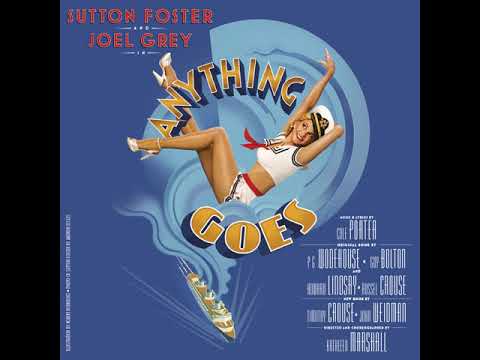
Most performances sit in swing territory, even when the tempo relaxes. The melody likes to slide, then pop up on a bright note, like the singer is pretending not to care and then accidentally caring. Harmonically, it is classic Porter: elegant changes, but never fussy.
Emotional arc
The verse acts bored with the world. The chorus betrays that act. By the end, the singer is not arguing anymore - it is more like a shrug that turns into a grin. Comedy is doing the heavy lifting, but romance still gets the last word.
Images and key phrases
The "kicks" list is not just a list. It is a ranking system for thrills. Each rejected item is a little decoy that makes the final admission feel sharper. The lyric is also built for timing: pauses, asides, and a sense that the singer is winking at the band as much as at the person across the room.
Technical Information (Quick Facts)
- Song: I Get a Kick Out of You
- Artist: Cole Porter
- Featured: N/A
- Composer: Cole Porter
- Producer: Recording-dependent
- Release Date: November 21, 1934 (Broadway premiere context)
- Genre: Musical theatre; jazz standard
- Instruments: Voice; orchestra or jazz rhythm section (common performance practice)
- Label: Harms, Inc. (original sheet music publisher); later recordings vary
- Mood: Flirtatious, wry, bright
- Length: Recording-dependent (often 3-4 minutes in standard vocal takes)
- Track #: Varies by album and edition
- Language: English
- Album (if any): Anything Goes cast recordings; many jazz and pop albums
- Music style: Swing-inflected show tune with American Songbook harmony
- Poetic meter: Accentual, conversational lyric pacing (no fixed classical foot is consistently dominant)
Frequently Asked Questions
- Who sings it in the original Broadway production?
- IBDB credits it to Reno Sweeney and Billy Crocker in Act I of the 1934 Broadway production.
- Is it a love song or a comedy number?
- Both. The jokes are the armor. The confession still lands.
- Is it in the 1936 film version?
- Yes, the song appears in the 1936 Paramount film associated with Anything Goes, including a widely circulated performance clip with Ethel Merman.
- Did the song exist as sheet music in 1934?
- Yes. Library and archival listings document 1934 publication by Harms, Inc., and the era sheet music carries that publisher credit.
- What is the typical key for singers?
- Many published editions list Eb major as the original published key, and it is a common jazz-standard choice for vocalists.
- Does it have a fixed tempo?
- Not really. Some arrangements sit moderate, others push fast swing. Published arrangements can vary widely by performer and style.
- Did it win any major awards?
- A notable win is the 1996 Grammy Award for Best Instrumental Arrangement with Accompanying Vocal(s), awarded to arranger Rob McConnell for a Mel Torme performance.
- What happened with Tony Bennett and Lady Gaga's version?
- Their 2021 recording became a lead single for Love for Sale and earned major Grammy nominations, including Record of the Year.
- Is it used outside Anything Goes in movies?
- Yes. The tune is cited in film use discussions and has been used as a cultural shorthand for sophisticated romance and showbiz charm.
- Why do some lyrics differ between performances?
- The lyric has a documented history of revisions, including adjustments made to avoid a topical reference that became uncomfortable in the early 1930s news climate.
Awards and Chart Positions
| Item | Recognition | Date |
|---|---|---|
| Mel Torme with Rob McConnell and The Boss Brass | Grammy win: Best Instrumental Arrangement with Accompanying Vocal(s) (arranger: Rob McConnell) | 1996 |
| Tony Bennett and Lady Gaga | Grammy nominations: Record of the Year, Best Pop Duo/Group Performance, Best Music Video | 2022 nominations announced November 23, 2021 |
| Anything Goes (2011 Broadway cast recording) | Reported No. 1 on iTunes Soundtrack Chart and No. 17 overall in release-week reporting | August 2011 |
| Anything Goes (2011 Broadway cast recording) | Reported debut at No. 1 on Billboard Cast Album Chart | September 2011 |
Additional Info
The lyric revision story is a reminder that show tunes are not frozen museum pieces. A single topical reference can sour overnight, and Broadway writers were practical: keep the joke, lose the sting. In this case, the history has been documented in song commentary and reference write-ups, and you can also see period publishing context reflected in archival sheet music listings.
One more detail I keep coming back to: the song works as a duet or a solo without breaking. In the musical it is tied to character chemistry, but in a jazz room it becomes a monologue addressed to the one person who can still derail the speaker's cool. That is why it survives translation into so many styles, from big band polish to intimate late-night phrasing. According to the Recording Academy, the Bennett and Gaga release pulled the tune into the center of the 64th Grammy conversation, which is not a bad encore for a 1934 theatre number.
Key Contributors
| Entity | Type | Relationship statement |
|---|---|---|
| Cole Porter | Person | Cole Porter wrote the music and lyrics for the song and the musical score. |
| Ethel Merman | Person | Ethel Merman introduced the number on Broadway as Reno Sweeney and performed it in the 1936 film. |
| The Broadway League (IBDB) | Organization | IBDB documents the 1934 Broadway production and lists who sings the number. |
| Harms, Inc. | Organization | Harms, Inc. published the sheet music in 1934. |
| The Recording Academy | Organization | The Recording Academy published the official 64th Grammy nominations list including the Bennett and Gaga nomination. |
| Ghostlight Records | Organization | Ghostlight Records released the 2011 Broadway cast recording that includes the number. |
| Roundabout Theatre Company | Organization | Roundabout Theatre Company is credited in rights statements for the 2011 cast recording release. |
How to Sing I Get a Kick Out of You
Most singers meet this one through published keys and jazz practice, and Eb major is a common home base in printed editions. From there, the real task is not range gymnastics. It is attitude management: you are selling restraint, then letting it crack at the right moment.
- Start with tempo choice: Decide if you want moderate swing or fast swing. Many arrangements label it Moderato, but some modern versions push it harder.
- Diction first: The jokes land on consonants. Keep the words crisp, especially in the list of rejected thrills.
- Breath map: Mark where the lyric wants an aside. Short breaths are fine if they sound like thought, not strain.
- Ride the rhythm: Do not iron it flat. Sit slightly behind the beat on the verse, then tighten up into the chorus when the admission gets bolder.
- Accent the turn lines: The best moments are the pivot phrases, where the singer stops pretending everything is "totally cold."
- Handle the range realistically: Published vocal editions often place the line in a mid-to-upper register (for example, a common printed range is around C4 to F5 in one popular digital edition), but transposition is normal. Choose the key where the chorus can brighten without sounding forced.
- Micro-acting: Pick two facial beats: the bored shrug in the verse, and the involuntary smile when the subject appears. You do not need more than that.
- Pitfalls: Do not oversell the humor, and do not smooth out the final admission. The charm is the tug-of-war.
Sources
Sources: IBDB production record, Ghostlight Records track list, Playbill reporting on iTunes and Billboard Cast Album Chart performance, The Recording Academy press release on 64th Grammy nominations, Grammy.com coverage of Love for Sale nominations, Musicnotes sheet music metadata, University of Maine digital sheet music catalog, YouTube performance and audio listings, Rolling Stone reporting on the 2022 Grammys context