
There's No Business Like Show Business (Reprise) Lyrics
There's No Business Like Show Business (Reprise)
MEN'S CHORUS:The cowboys, the wrestlers, the tumblers, the clowns
The roustabouts that move the show at dawn
WOMEN'S CHORUS:
The music, the spotlights, the people, the towns
Your baggage with the labels pasted on
MEN'S CHORUS:
The sawdust and the horses and the smell
WOMEN'S CHORUS:
The towel you've taken from the last hotel
ALL:
There's no business like show business
If you tell me it's so
Traveling through the country is so thrilling
Standing out in front on opening nights
Smiling as you watch the benches filling
And see your billing up there in lights
There's no people like show people
They smile when they are low
Even with a turkey that you know will fold
You may be stranded out in the cold
Still you wouldn't trade it for a sack o' gold
Let's go on with the show
Let's go on with the show!
The show!
The show!
Song Overview

A reprise can be a reminder, a victory lap, or a pressure tactic. In Annie Get Your Gun, the "There's No Business Like Show Business" reprise functions as all three, and it does it fast. The company does not simply repeat a catchy chorus for applause. They repeat it to close a deal: Annie has to agree to join the show, and the tune becomes the room's collective argument.
Review and Highlights
Quick summary
- Work: Annie Get Your Gun (opened on Broadway May 16, 1946) - stage musical
- Where it appears: Act I, when Annie agrees to join the traveling Wild West show
- Usual singers: varies by edition; commonly Frank Butler, Buffalo Bill, Charlie Davenport, and Annie (company energy around them)
- Stage job: turns "show life" from a sales pitch into an accepted reality
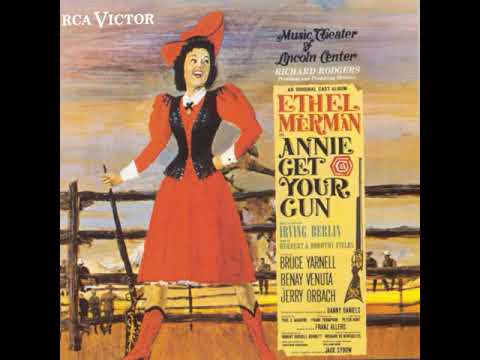
Annie Get Your Gun (1946) - stage musical - diegetic-adjacent. The characters sing it to persuade and confirm, not to entertain a paying in-story audience. Wikipedia summarizes the plot beat directly: the opening anthem returns when Annie agrees to join the touring show, which makes the reprise less decoration than action.
Berlin keeps the reprise compact, because the point is not to re-argue the thesis. The point is to make the thesis stick. The refrain becomes a stamp of approval from the troupe, like a chorus of signatures. In performance, this number lives or dies on ensemble exactness: shared consonants, shared cutoffs, and a shared belief that the line is not just clever, it is true enough to bet your week on.
Key takeaways
- Function: a plot hinge that seals Annie's entry into the troupe
- Sound: chorus-first rally writing, usually presented as a single burst rather than a full stand-alone
- Acting task: sell the slogan as persuasion, not nostalgia
Creation History
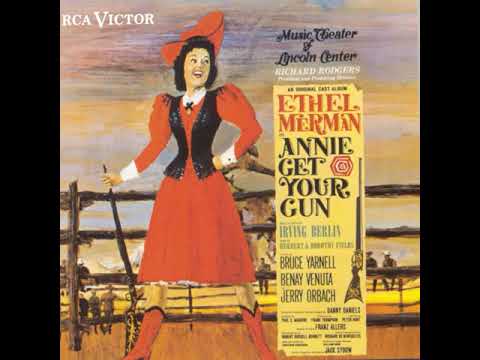
Irving Berlin wrote the parent song for the 1946 Broadway score, and reference listings date its copyright to April 12, 1946. The reprise follows the Broadway habit of recycling a memorable hook at the exact moment the story needs a decision. Recording history shows it persisting as a track title across major editions, including the 1966 Lincoln Center cast album and the 1999 Broadway cast album, each shaping the reprise length and crediting differently.
Song Meaning and Annotations
Plot
The Wild West show has identified Annie as a ticket-selling miracle. The earlier anthem introduces the traveling business and its appetite for spectacle. The reprise arrives when Annie says yes to joining the troupe, turning the company pitch into a completed transaction. Ovrtur credits a 1999 revival version of the reprise to Frank Butler, Buffalo Bill, Charlie Davenport, and Annie, which matches how the scene often plays: principals confirm the decision while the company surrounds them with momentum.
Song Meaning
In the reprise, the slogan stops being philosophy and becomes recruitment culture. The meaning is simple and slightly sharp: the show business machine has a way of making its own logic feel inevitable. Annie steps into a world where talent is celebrated, sold, and scheduled. The tune is the invitation, and the invitation is also the trap. You can feel the warmth, and you can feel the contract.
Annotations
The song is reprised at the moment Annie agrees to join the traveling show.Plot placement, rewritten
This is classic musical structure. A reprise is a memory device, but it is also a pressure device. The familiar line helps the audience feel the decision is right, even if the characters have not yet counted the cost.
Revival track lists often split the reprise into numbered segments.Recording practice, rewritten
That numbering is not trivia. It signals how producers and music directors treat the refrain like modular scenery: insert where needed, remove where not needed, keep the tune as a narrative tool rather than a fixed-length feature.
Style and rhythm
The reprise inherits the parent number's march-like propulsion: steady, bright, and easy for many voices to lock together. It is less about melodic surprise than about unanimity. The rhythm says "forward," which is exactly what Annie is doing in the story.
Technical Information (Quick Facts)
- Song: There's No Business Like Show Business (Reprise)
- Artist: cast and chorus (varies by recording)
- Featured: commonly principals with ensemble support (example credit in a 1999 revival listing: Frank, Buffalo Bill, Charlie, Annie)
- Composer: Irving Berlin
- Producer: varies by recording/label
- Release Date: written for the 1946 stage premiere; reprise appears as separate track titles on later cast albums
- Genre: musical theater
- Instruments: voice and orchestra
- Label: varies (example: Masterworks Broadway for a label-provided audio track of the reprise)
- Mood: persuasive, company-proud, decisive
- Length: examples include about 1:19 on the 1966 Lincoln Center cast album and about 1:36 on the 1999 Broadway cast album (numbering varies by edition)
- Language: English
- Album (if any): Annie Get Your Gun (1966 Lincoln Center Cast Recording); Annie Get Your Gun (1999 Broadway cast album)
- Music style: chorus anthem reprise with march-like drive
- Poetic meter: accentual, stress-led group diction
Frequently Asked Questions
- When does the reprise happen in the story?
- It returns in Act I when Annie agrees to join the traveling Wild West show.
- Who typically sings it?
- Credits vary by production, but revival listings often place it with principal show operators and Annie, supported by company energy.
- Is it a separate song or a short return of the chorus?
- It is a short return, usually built from the parent song's refrain and staged as a fast confirmation beat.
- Why reprise this tune at that moment?
- Because the story needs a decision to feel inevitable. The familiar hook makes Annie's "yes" sound like a door opening, not a gamble.
- Why do some recordings label it Reprise 1 or Reprise 2?
- Because different editions place the refrain in multiple spots. Numbering tracks helps listeners follow how the show reuses the motif.
- Is the reprise on major cast recordings?
- Yes. Track listings include versions on the 1966 Lincoln Center cast album and the 1999 Broadway cast album.
- Does the reprise change the lyric?
- Often it trims and focuses rather than rewriting, keeping the key slogan intact while compressing the scene.
- What is the main performance challenge?
- Ensemble precision. A short reprise has no time to warm up, so timing and diction must be locked from the first beat.
- How should it feel dramatically?
- Like a deal closing in public. Even if it is cheerful, the scene should carry a sense of commitment being made.
Additional Info
The reprise has a quiet paper trail that reveals how productions treat it. A 1966 Lincoln Center cast track list presents it as its own brief item, while the 1999 Broadway album splits reprise moments into numbered tracks, with one version credited to Tom Wopat, Bernadette Peters, and the company and another credited to Peters. The effect is structural: you hear the refrain returning as the show keeps negotiating what "business" costs and what it pays.
One more wrinkle: some performance resources file the reprise as a finale-ready excerpt, specifying key and a short intro in an accompaniment format. That is not how Berlin wrote it in story terms, but it is how modern rehearsal rooms survive: modular pieces, ready to be dropped into medleys, curtain calls, and audition books.
Key Contributors
| Entity | Type | Relation (S-V-O) |
|---|---|---|
| Irving Berlin | Person | Berlin wrote the music and lyrics; the reprise recycles the parent refrain as a plot hinge. |
| Annie Oakley | Person | Annie agrees to join the show, and the reprise confirms the decision in musical form. |
| Frank Butler | Person | Frank is commonly credited in revival listings as part of the reprise lineup that seals Annie's entry. |
| Buffalo Bill | Person | Buffalo Bill represents the show business machine and helps drive the recruitment moment. |
| Charlie Davenport | Person | Charlie supports the pitch and is credited in some revival listings for the reprise moment. |
| Masterworks Broadway | Organization | Masterworks Broadway distributes a label-provided audio track titled as the reprise. |
How to Sing There's No Business Like Show Business (Reprise)
Treat this as an ensemble sprint. One commercial backing-track listing describes a "big reprise for your finale" format with an 8-bar intro and identifies Ab as the key for that arrangement. Even if your production uses a different key, the practical lesson holds: the reprise must sound confident from the first beat, with no onstage searching for tempo.
- Tempo: count it in clearly. A reprise has no patience for a tentative pickup.
- Diction: unify consonants on "business" and "show business" so the slogan lands as one collective statement.
- Breath: plan stagger breathing in chorus moments. The texture should stay full through the final word.
- Cutoffs: rehearse releases as much as entrances. Clean cutoffs make the ensemble feel like a machine.
- Dynamic plan: start bright, then lift again on the last chorus repetition. The audience should feel the decision lock in.
- Acting focus: aim the lines at Annie, not at the footlights. Persuasion sells better than celebration.
- Pitfalls: avoid rushing the lyric because it is short. Clarity matters more than speed.
Sources
Sources: Wikipedia - Annie Get Your Gun (musical), Ovrtur recording listing, Apple Music track listings (1966 and 1999 cast albums), Masterworks Broadway label-provided YouTube audio, SecondHandSongs work data, Theatre Music Shop backing-track listing