I'm a Bad, Bad Man Lyrics — Annie Get Your Gun
I'm a Bad, Bad Man Lyrics
I'm honored, I'm flattered,
This greeting really mattered.
This welcome is grand
But I'm really concerned.
I like your attention
But this I have to mention
You're playing with fire
And up to get burned!
There's a girl in Tennessee
Who's sorry she met up with me
I can't go back to Tennessee,
I'm a bad, bad man!
There's a girl in Omaha,
But I ran faster than her Pa,
I can't go back to Omaha
There's a girl in Wyoming,
And they're combing Wyoming
To find a man in white
Who was out with her that night!
There's a girl in Arkansas,
The Sheriff is her brother-in-law,
I can't go back to Arkansas,
I'm a bad, bad man!
I'm enlightened, but frightened.
Though my int'rest you've heightened.
It might turn out to be
That too much, too much for me!
So I'll go back to my tent,
And someday when you're old and bent,
Think of those you might have spent
With a bad, bad man!
Song Overview
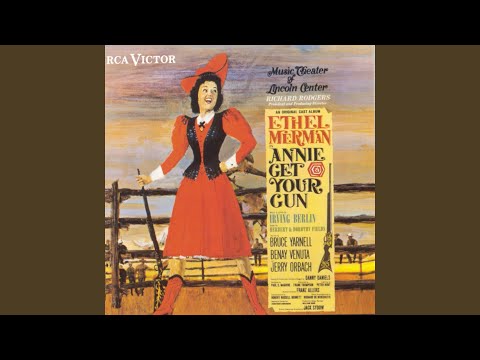
"I'm a Bad, Bad Man" is Frank Butler lighting his own marquee. In Annie Get Your Gun, the character is a traveling sharpshooter with a habit of treating romance like a sport, so Berlin gives him a song that swaggers and confesses at the same time. It is not a villain aria. It is a charm offensive with a warning label tucked inside the grin.
Review and Highlights
Quick summary
- Work: Annie Get Your Gun (opened on Broadway May 16, 1946) - stage musical
- Where it appears: early Act I, after the troupe arrival, before the shooting match hook lands
- Usual singer: Frank Butler (often with a small female chorus in stage listings)
- Stage job: establishes Frank as a flirt who performs confidence as a defense
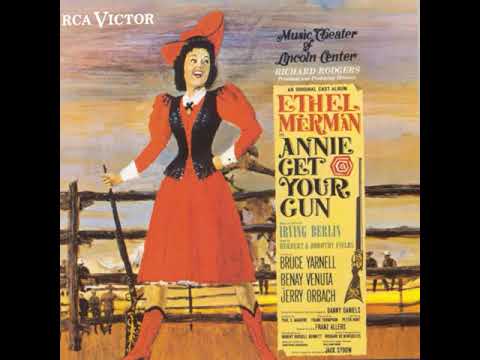
Annie Get Your Gun (1946) - stage musical - diegetic-adjacent. The moment plays like Frank entertaining the crowd and himself, with flirtation presented as part of his public persona. According to IBDB, the number is assigned to Frank Butler with "Girls" in the original Broadway listing, a clue to its showy, public-facing stance.
Berlin writes a melody that stays conversational, then lets the lyric do the heavy lifting. Frank stacks up comic proof that he is trouble, but the proof is deliberately harmless: it is more about leaving town at the right time than breaking hearts on purpose. The rhythm has a steady, walk-and-talk feel that makes the punch lines land cleanly. If you have ever watched a performer win an audience by admitting to their own nonsense, you already know the tactic.
Key takeaways
- Character work: Frank frames his own weakness as a selling point, which is classic musical comedy self-protection.
- Craft: simple phrases, tight rhymes, and a buoyant pace that keeps the confession from turning sour.
- Dramaturgy: it primes the rivalry with Annie by showing Frank is used to being the headline.
Creation History
Irving Berlin wrote both music and lyric for the show, and the song sits in the opening stretch where the musical builds its world through performance. The sheet music edition labels the tempo as "Allegro moderato" and prints the vocal as "FRANK," making the intent plain: this is a brisk character number, not a romantic linger. Later recordings (cast, studio, and concert) keep the same spine but vary in orchestral weight and comic timing; as stated in the Masterworks Broadway notes for the 1966 Lincoln Center edition, that revival context can shape how the material is framed for listeners.
Song Meaning and Annotations
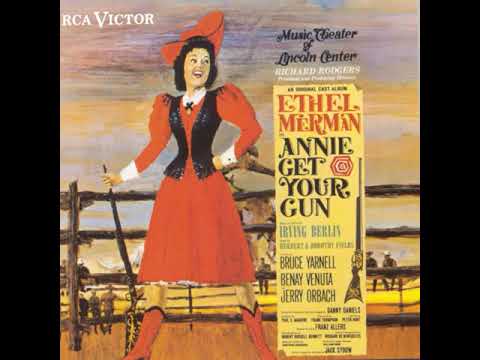
Plot
The Wild West show has arrived, and Frank Butler, the star attraction, signals his reputation before the central contest with Annie Oakley takes off. In the plot summary, Frank is described as a handsome, womanizing showman, and this song functions as his onstage handshake: confident, funny, and a little slippery.
Song Meaning
The number is Frank telling the room, "I am a risk, so do not pretend you were not warned." The warning is theatrical. It is designed to be enjoyed. The comic list of places and near-misses paints him as restless and self-aware, a man who turns flight into flirtation. Underneath the jokes is a practical idea: Frank believes he is safer as a story than as a partner.
Annotations
The standard production listing pairs Frank Butler with "Girls."Stage assignment detail
That detail tells you how the number plays: public, performative, and built for callouts and reactions. The chorus is not just decoration. It is social proof, the sound of a showman being endorsed by the room.
The sheet music labels the vocal entrance "FRANK" and marks the opening tempo "Allegro moderato."Printed score cues
This is Berlin being practical. The tempo marking keeps the patter moving and supports crisp diction. If the song drags, the jokes feel like explanations. If it moves, they feel like choices.
Genre and rhythm
The style is Broadway Americana with a lightly marching pulse. The rhythm is the engine: it keeps the lyric from sounding like a confession and instead makes it read as a routine. That is the fusion at work - character comedy delivered with the bounce of a show number.
Symbols and key phrases
The repeating "bad, bad" is not about menace. It is about pattern. Frank is admitting he repeats himself: same charm, same exit, different town. The comedy comes from how proudly he announces what should embarrass him.
Technical Information (Quick Facts)
- Song: I'm a Bad, Bad Man
- Artist: cast and ensemble (varies by recording)
- Featured: Frank Butler (often with Girls or ensemble)
- Composer: Irving Berlin
- Producer: varies by recording/label
- Release Date: written for the 1946 stage premiere; later issued on multiple recordings
- Genre: musical theater
- Instruments: voice and orchestra
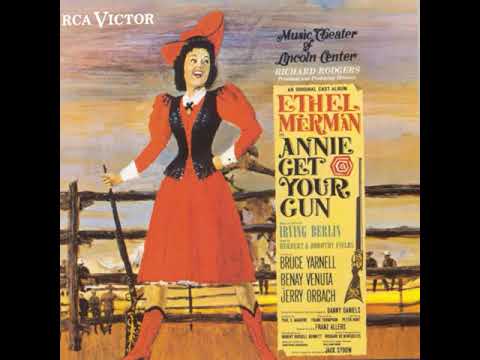
- Label: varies by edition (example: Masterworks Broadway for the 1966 Lincoln Center cast recording distribution)
- Mood: cocky, comic, self-advertising
- Length: often about 2-3 minutes (varies by edition)
- Track #: commonly early Act I track
- Language: English
- Album (if any): appears on major cast recordings including the 1966 Lincoln Center edition
- Music style: character patter and swing-leaning Broadway comedy
- Poetic meter: accentual, lyric-driven (performance cadence over strict classical meter)
Frequently Asked Questions
- Who sings the number in the stage show?
- Frank Butler, with some editions crediting an accompanying group labeled as Girls.
- Where does it sit in Act I?
- Early, as Frank establishes his reputation before the shooting-match plot accelerates.
- Is Frank confessing, bragging, or joking?
- All three. The joke is that the brag and the confession are the same performance.
- What does "bad, bad" mean in context?
- It signals pattern rather than danger: he repeats a flirt-and-flee routine, then dares you to find it charming.
- Why does the song need a steady tempo?
- The comedy relies on forward motion. If the pace slows, the lyric turns explanatory instead of sly.
- Does the musical treat Frank as a villain?
- No. The story treats him as proud, competitive, and insecure, which is why the romance can soften him without rewriting him.
- Why pair him with a small chorus?
- It frames the moment as public entertainment, turning his self-description into a mini act inside the larger show world.
- Do recordings differ significantly?
- Yes. Cast and studio versions vary in orchestral brightness, comic spacing, and how much ensemble is audible.
- Was the song present in major revivals?
- It appears in original and many revival song lists, though certain productions have cut or reshuffled material across the score.
- What is the dramatic purpose beyond comedy?
- It sets a baseline: Frank is used to being the star, which makes Annie's rise both thrilling and threatening for him.
Awards and Chart Positions
The number itself is usually experienced as part of cast albums, not as a chart single. The best-documented chart story here belongs to the original Broadway cast recording as a whole, which reached a peak of number 2 on Billboard's Best-Selling Popular Record Albums chart. Later recognition also attaches to the album rather than this track: the original cast recording was added to the Grammy Hall of Fame in 1998.
| Item | Metric | Result |
|---|---|---|
| Annie Get Your Gun original Broadway cast recording (1946) | US Billboard Best-Selling Popular Record Albums | Peak: 2 |
| Annie Get Your Gun original Broadway cast recording (1946) | Grammy Hall of Fame | Inducted: 1998 |
Additional Info
First performance credit trails are unusually tidy for a show tune: cover databases and production records point to Ray Middleton as the original Frank Butler on the 1946 Broadway run, which matches the song's vocal profile - genial baritone confidence with a quick comic snap. If you listen across decades, you can hear how different Franks negotiate the same problem: the song wants you to like him even while he admits he is unreliable. That tension is the engine.
Notable recorded alternatives include studio-cast and revival readings, plus concert-style recordings that treat the number as a standalone character vignette. SecondHandSongs lists a spread of covers across cast and orchestral contexts, a useful map if you are comparing pacing and orchestration choices rather than hunting for a single canonical take.
Key Contributors
| Entity | Type | Relation (S-V-O) |
|---|---|---|
| Irving Berlin | Person | Berlin wrote the music and lyrics for the song and the musical score. |
| Frank Butler | Person | Butler performs the number as a self-description and public act. |
| Ray Middleton | Person | Middleton originated the role of Frank Butler on Broadway and first performed the song in that context. |
| Bruce Yarnell | Person | Yarnell performs the song on the 1966 Lincoln Center cast recording. |
| Masterworks Broadway | Organization | Masterworks Broadway distributed the 1966 Lincoln Center cast recording in modern releases. |
| IBDB | Organization | IBDB documents the song assignment and show credits for Broadway productions. |
| Annie Get Your Gun | Work | The musical places this number early to establish Frank's persona before the central contest. |
Sources
Sources: IBDB production record, Masterworks Broadway album notes, SecondHandSongs cover listing, Wikipedia production and musical-number list, University of Manitoba sheet music scan
Music video
Annie Get Your Gun Lyrics: Song List
- Act 1
- Overture
- Colonel Buffalo Bill
- I'm a Bad, Bad Man
- Doin' What Comes Natur'lly
- Girl That I Marry
- You Can't Get a Man With a Gun
- There's No Business Like Show Business
- They Say It's Wonderful
- Moonshine Lullaby
- I'll Share It All With You
- There's No Business Like Show Business (Reprise)
- My Defenses Are Down
- I'm an Indian, Too
- Act 2
- I Got Lost in His Arms
- Who Do You Love, I Hope
- I Got the Sun in the Morning
- Old Fashioned Wedding
- Anything You Can Do
- Finale