
Miracle Song Lyrics
Miracle Song
Yo AbeBreak me off a piece of that miracle funk!
John: 2
Mother Mary got invited to a wedding
Everybody's drinking, excited
When all of a sudden
The wine gave out
Mary on the QT gave JC a shout (Hey!)
Jesus said
"Woman what do I have to do with you?"
He was only there to party with his twelve member crew
But Mary was his mama so He said
"Fill up those cups with water."
And they did thinkin' it was worth a shot
Jesus said
"Take some out and give it to the waitah"
He drank it said,
"Why'd you save the good stuff for latah?"
The weddin' was a hit
and everything turned out fine
But how'd he make the water turn into wine?
Christ how'd you do that?
How'd ya make it happen?
Christ how'd you do that?
How'd you make it go down?
Mark: 1
Galilee was where he was
Castin' out demons and preachin' like he does
When a leper showed up
And begged the Big Man
"Make me clean! If you're willing you can!"
JC feeling sorry 'cause he knew that leprosy is
A whack disease that makes a homie go to pieces
Reached out his hand and touched him (eww)
"And I will him be cleansed"
He said
And it worked too!
The man was aiight 'cause he came to my boy
Not since Second Kings had anybody heard this noise
And all He had to do was give that guy one little touch
So amazin' I wanna know so much!
Christ how'd you do that?
How'd ya make it happen?
I just gotta ask Jesus Christ
How'd you do that?
Matt:14
His posse's in the water
Rowin' all night
While Jesus prayed to his father
They were hellah far from shore
And the sea was wicked rough
When they saw a ghost just walkin' on the water (scary stuff!)
They all cried out in fear
Thinkin' things were pretty bleak
Floating on the ocean but up a creek
"It was I"
Jesus said
"Don't be afraid"
But they had doubt
So Jesus said to Peter
"Stand up and get out o' the boat and come to me"
And Pete was walkin' like a pro
But the wind kicked up
And he was sinkin' like a stone
So back into the boat Pete n' Jesus hopped
But when they sat down
The wind just... stopped
Seein' is believin' (ooh)
Seein' is believin' (ohoooh)
Seein' is believin' (whoooa)
Seein' is believing (ooh)
He coulda laid low (Seein' is believin')
In a carpenter shop
Just hammerin' away (Seein' is believin')
With the surrogate pop
But He took it to the streets
And kept it real
A lotta folk's sayin'
"This guy's the real deal!"
They aksed for His help (Seein' is believin')
And He did-n't avoid 'em
Rolled up His sleeves (Seein' is believin')
And Siegfried and Roy'd 'em
no hat, no wand, no abra cadabra (Seein' is believin')
Pretty fly stuff to this
Lowly rapper
But some dude said (Seein' is believin')
"That was a long time ago"
"When's the last time He did a magic show?" (Seein' is believin')
Well if your eyes ain't shut (Seein' is believin')
And your heart ain't (iced?)
You might find yourself sayin'
Jesus...
Christ how'd you do that? (nah nah nah nah nah naaah)
How'd ya make it happen?
Christ how'd you do that?
How'd you make it go down?
Christ how'd you do that? (nah nah nah nah nah naaah)
How'd ya make it happen?
Christ how'd you do that?
Jesus, Jesus, Jesus, Jesus, Jesus! Christ!
Jesus Christ!
Song Overview
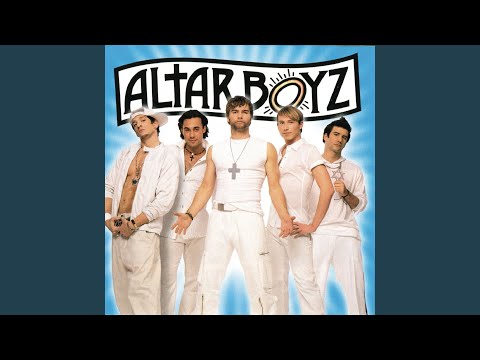
Review and Highlights
Quick summary
- Cast-album listing: track 5 at 3:00; licensing track lists in show order place it later, after the origin-and-roles section.
- Function: a "proof" number, where the band tries to rack up saved souls with a brisk, crowd-facing showcase.
- Style fusion: rap and beatbox energy that pivots into a churchy throw-down, with call-and-response baked into the phrasing.
- Common rehearsal anchors from commercial listings: B flat minor and about 102 BPM, with a slower practice option also sold.
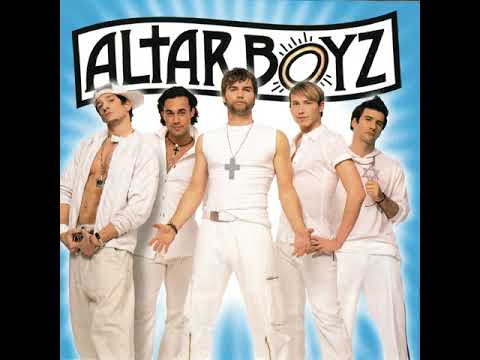
Altar Boyz (2005) - stage musical number - diegetic. Mid-concert tactic to bring the Soul Sensor number down, performed straight to the room as part of the set. Why it matters: the show tests its own sales pitch here - if pop-performance can move souls, this is the demonstration track.
There is a canny bit of craft in how the number keeps changing costumes without leaving the beat behind. It begins with percussive vocal work and a rap-forward attack, then opens into gospel-flavored riffs and group shout-backs. The dramaturgy is not subtle: the band wants the audience to feel the miracles, then feel themselves responding, and then feel that response count. Dctheaterarts described the beatbox-and-high-harmony workload as thrilling and a little terrifying for the performer playing Abraham, which tracks with how the score functions: it is meant to look effortless while asking for tight coordination.
Key takeaways
- Rhythm is the plot: the beatbox and rap phrasing act like a fuse, lighting the later call-and-response section.
- Variety with purpose: style shifts are not decoration - they are tactics for pulling different parts of the audience in.
- Ensemble truth test: if releases, consonants, and cues are not unified, the number stops sounding like a band and starts sounding like five people trying hard.
Creation History
Music and lyrics are by Gary Adler and Michael Patrick Walker with a book by Kevin Del Aguila. The original cast recording came out May 17, 2005 on Ghostlight (Sh-K-Boom). The official-audio upload credits Ghostlight Records and the 2005 Sh-K-Boom release; it is the studio gloss version of what many productions treat as a choreographic pressure cooker.
Song Meaning and Annotations
Plot
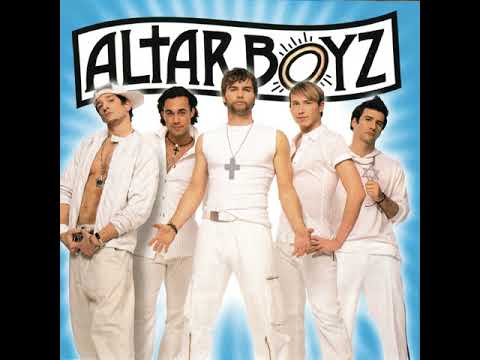
The show is staged as the final stop of a touring faith-forward boy band. After the concert premise and the origin story are established, the group launches into a number about miracles as a direct audience-play: a fast way to demonstrate message, charisma, and control, while also trying to reduce the onstage "souls to save" target.
Song Meaning
The surface meaning is testimonial: miracles happened, miracles matter, and the band is here to point you toward them. The stage meaning is more theatrical than devotional. This is the moment the show turns belief into a performance metric, counting response as progress. That is not a cheap jab; it is a story engine. The number asks whether the audience is moved by the content, the style, or the sensation of being included.
Annotations
-
The number is described in the synopsis as a rap about three of Jesus's miracles that saves a few souls.
Notice how the show frames the result: the lyric is not only storytelling, it is a scoreboard move. The song is written to feel like action, not reflection.
-
A performer interview notes the beatbox opening and very high harmony work for Abraham, plus ad-lib style riffs over four-part harmony.
This is arrangement as character writing. Beatbox places Abraham inside the rhythm section, while the high harmonies place him above the blend, always slightly exposed.
-
A review praises the track for starting with rap and beatbox and then shifting into gospel riffs and call-and-response.
The style fusion is the dramaturgy: rap gives urgency and specificity, gospel gives communal lift, and the call-and-response makes the audience feel recruited.
-
Commercial accompaniment listings offer B flat minor and a slower alternate.
Practical detail, but revealing: the song is often learned in pieces, then reassembled at tempo once breath and cues stop fighting the choreography.
Driving rhythm and emotional arc
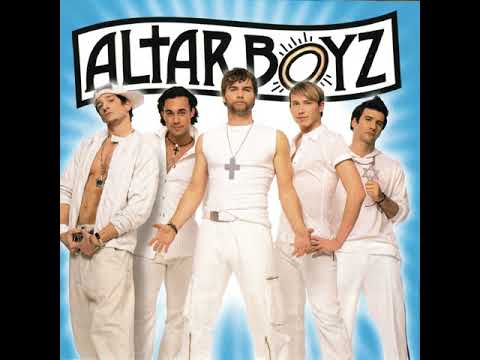
The emotional curve runs hot-to-higher: first the percussive swagger (rap and beatbox), then the release into a churchy uplift section where the ensemble can broaden the sound. The rhythm keeps the stakes from turning preachy; the uplift keeps the mechanics from feeling like a stunt.
Technical Information (Quick Facts)
- Song: The Miracle Song
- Artist: Altar Boyz (Original Off-Broadway Cast)
- Featured: Ensemble
- Composer: Gary Adler; Michael Patrick Walker
- Producer: Not consistently credited at track level across major public listings
- Release Date: May 17, 2005
- Genre: Musical theatre; pop parody; rap and gospel inflections
- Instruments: Lead and backing vocals; beatbox elements; rhythm section; keys; guitar
- Label: Ghostlight Records; Sh-K-Boom Records
- Mood: Tactical, kinetic, communal lift
- Length: 3:00
- Track #: 5 (cast album)
- Language: English
- Album (if any): The Altar Boyz (Original Cast Recording)
- Music style: Rap-forward opening into gospel-call-and-response ensemble writing
- Poetic meter: Speech-rhythm delivery with mixed stress patterns
Frequently Asked Questions
- Is this number treated as a private scene or part of the concert?
- It is performed straight to the room as part of the set, keeping the show in its concert premise.
- What makes the style feel different from earlier tracks?
- It leans harder into rap delivery and vocal percussion, then pivots into gospel-style riffs and communal shout-backs.
- Where is it on the cast album?
- Major album listings place it at track 5 with a length of 3:00.
- Does the show tie it to the Soul Sensor goal?
- Yes. In the synopsis, the band uses the number to save a few souls, so the song doubles as tactic and entertainment.
- Why is the beatbox detail more than a gimmick?
- Because it makes one performer function like percussion, which tightens the groove and raises the coordination stakes onstage.
- Do accompaniment listings provide a key?
- Commercial tracks list B flat minor, and they also sell a slower option for practice.
- Is there a commonly cited tempo?
- Audio-analysis listings often tag it around 102 BPM, useful as a rehearsal starting point.
- What is the most common performance pitfall?
- Letting the rap section turn conversational. The groove must stay locked or the later call-and-response loses its lift.
Awards and Chart Positions
The track is not usually treated as a chart single, but the production behind it has real receipts. Altar Boyz won the 2005 Outer Critics Circle Award for Best New Off-Broadway Musical, and Playbill magazine reported the cast recording appearing on Billboard's Top Cast Albums chart during its 2007 coverage. Those facts matter here because the score is written to impersonate commercial pop, and the recording briefly shared space with mainstream cast-album traffic.
| Item | Result | Date / Year | Notes |
|---|---|---|---|
| Outer Critics Circle Award - Best New Off-Broadway Musical | Winner | 2005 | Production-level award recognition |
| Billboard Top Cast Albums (cast recording) | Chart coverage reported | 2007 | Reported in Playbill coverage of the Billboard countdown |
How to Sing Miracle Song
Public listings give usable anchors: B flat minor and about 102 BPM, plus a slower practice version sold commercially. Use those as the first layer, then solve the real problem: breath and coordination under movement.
- Tempo first: rehearse at 92-96 BPM to map breaths and cues, then move toward about 102 BPM once the rap phrasing stays steady.
- Beatbox clarity: keep consonants crisp and short so the percussion reads without swallowing the next sung entrance.
- Rap diction: place text forward, but do not bark. The groove needs speech rhythm, not theater declamation.
- Breath map: mark inhalations before any longer rap strings and before the gospel-lift section, where singers tend to over-sing and run out of air.
- Call-and-response discipline: treat responses like dance hits. Unison attacks and unified releases are the difference between "band" and "mess."
- Harmony stacking: in B flat minor, match vowels on sustained chords so the blend stays clean even after physical exertion.
- Mic habits: keep a consistent distance during the rap section, then widen slightly for bigger ensemble moments to avoid blasting peaks.
- Pitfalls: rushing the rap, letting beatbox smear, and turning gospel riffs into shouting instead of placement and spin.
Additional Info
If you want a quick lens on why this number is a crowd favorite, look at the workload. It is not just singing and dancing. It is also vocal percussion, ad-lib style riffing, and quick handoffs between musical idioms. That complexity is not there to show off; it is there to make the conversion attempt feel undeniable. The show is basically saying, with a grin: we can hit your ears from three angles, and one of them is bound to land.
Key Contributors
| Entity | Type | Relationship (S-V-O) |
|---|---|---|
| Gary Adler | Person | Adler wrote music and lyrics for Altar Boyz. |
| Michael Patrick Walker | Person | Walker wrote music and lyrics for Altar Boyz. |
| Kevin Del Aguila | Person | Del Aguila wrote the book for Altar Boyz. |
| Ghostlight Records | Organization | Ghostlight Records released the cast recording through its label imprint. |
| Sh-K-Boom Records | Organization | Sh-K-Boom Records is credited on the 2005 release. |
| Playbill | Organization | Playbill reported the cast album's Billboard chart activity in 2007. |
Sources
Sources: Apple Music album listing, Concord Theatricals show page (track list), YouTube official audio upload (Ghostlight Records), PianoTrax accompaniment listing, TuneBat tempo and key listing, Dctheaterarts performer interview, Dctheaterarts production review, Playbill Billboard cast-album chart coverage, New York Theatre Guide summary of 2005 Outer Critics Circle winners