
I Believe Lyrics
I Believe
[Abe]One beam of light, is enough to see where you're going
One wrong turn, is enough to loose your way
One choice, is all you have to make
One ounce of faith could save the day
I believe, that I came to know you for a reason
I believe, that the things that you say will come true
I believe that with you in my life I'll make it
I believe in you .stlyrics
[Juan]
One Mistake, doesn't have to mean that it's over
[Luke]
One bad day, only means there's work to do
[Mark]
One night, is sometimes all it takes
[All]
To realize one thing is true
I believe, that I came to know you for a reason
I believe, that the things that you say will come true
I believe that with you in my life I'll make it
I believe in you
[Matthew]
Take a picture of me now, take a look at who I am
Yesterday I wasn't half as strong
[Abe, Juan, Luke, and Mark]
Take a picture of us all, what we've been and what we are
Look at that, and tell me I'm wrong
[Matthew]
I BELIEVE!
[Abe, Juan, Luke, Mark]
That I came to know you for a reason
[All]
I believe, that the things that you say will come true
[Matthew}
Oooohhh
[All]
I believe that with you in my life I'll make it
I believe in you
I believe in
[Matthew]
You
[Abe, Juan, Luke, Mark]
I believe in
[All]
You-ooh-hoo
Song Overview
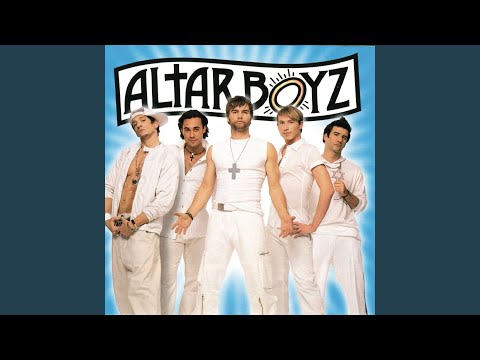
Review and Highlights
Quick summary
- Finale number: the band sings as a single unit after the onstage break-up lands.
- Cast-recording timing: commonly listed at 3:46, followed by a hidden bonus track on the album.
- Stage function: a stitched-together goodbye that keeps the concert frame intact while the story finally stops pretending.
- Where it appears: at the end of the show, after the last-ditch attempt to save the remaining souls fails.
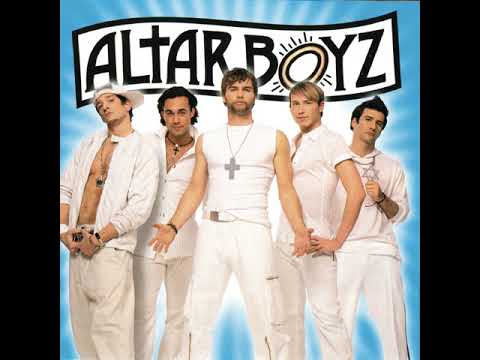
Altar Boyz (2005) - stage musical finale - diegetic. Sung to the audience as the last song of the set, but it functions like a private vow said in public. Why it matters: the show cashes the checks it has been writing all night about friendship, teamwork, and what faith looks like when it is not merchandised.
This finale does not win by getting louder. It wins by getting simpler. After the frantic "Number 918" episode fails, the machinery of the band is exposed: solo deals, exits, competing dreams, and Abraham standing there with the one thing they cannot buy back - the reason the group existed in the first place. The song is built as an ensemble braid, and that is the point. The show can spoof pop formulas all evening, but it closes by insisting that harmony is a social act. Concord frames the whole piece with that line about constellations and single voices, and the finale makes it feel less like a slogan and more like a last-minute truth.
Key takeaways
- Ensemble-first writing: the climax is collective, not a final solo stunt.
- Story clarity: the lyrics are designed to read in a room, not to hide behind hooks.
- Aftershock control: it must follow chaos without sounding like an apology.
Creation History
Music and lyrics are by Gary Adler and Michael Patrick Walker with a book by Kevin Del Aguila. The original cast recording was released May 17, 2005 by Sh-K-Boom, and the official-audio track is distributed via Ghostlight on YouTube. TheaterMania notes a practical listener detail: after the finale, the album includes a hidden bonus track that remixes material from the score, a playful tag that lands only because the finale has already done the serious work.
Song Meaning and Annotations
Plot
The show is staged as the final concert stop of a fictitious Christian boy band. The Soul Sensor scheme drives the evening, until the last few holdouts remain and the band tries the emergency song "Number 918." It does not work. Luke pushes for an encore, Matthew halts the set and admits he has signed a solo deal, and the others reveal they are leaving too. Abraham, who has refused his own offer, gives the group his completed song. They enter one by one and sing together for the last time, promising friendship and meaning beyond the tour.
Song Meaning
In context, the title reads less like doctrine and more like a decision. The band has been selling belief as a product - faith with choreography, salvation with a counter. Now the counter fails, the brand collapses, and the only belief left is interpersonal: that these five people mattered to each other, and that the time together was not a stunt. The number is not naive about the break-up. It treats belief as a craft you practice when the easy versions stop working.
Annotations
-
Summaries describe the finale as the moment each member joins the song one by one after the solo-deal confession.
This staggered entry is musical staging as storytelling. The band has been splintering, so the score rebuilds them in real time, voice by voice.
-
Concord highlights the show message that a single star is not as bright as its constellation, and there notes no harmony in a single voice.
That is the finale's job description. It has to make the audience feel the thesis in their ears, not just hear it recited.
-
A review warns listeners not to stop when the listed tracks end because a hidden remix follows the finale.
A cheeky album trick, yes, but it also signals confidence. The finale can carry weight and still let the show crack a grin afterward.
Style, arc, and touchpoints
The style is pop-rock musical theater with a deliberate softening of satire. The emotional arc is repair: not a reunion, not a reversal, but a shared decision to leave the stage with some dignity. One useful touchpoint is the later life of the song itself. In 2020, alumni from multiple productions reunited virtually to perform the number for a fundraiser, and that only works because the finale was written to be carried by community rather than star wattage.
Technical Information (Quick Facts)
- Song: I Believe
- Artist: Altar Boyz (Original Off-Broadway Cast)
- Featured: Ensemble
- Composer: Gary Adler; Michael Patrick Walker
- Producer: Doug Katsaros (recording producer credit on official-audio metadata)
- Release Date: May 17, 2005
- Genre: Musical theatre; pop-rock
- Instruments: Lead and backing vocals; rhythm section; keys; guitar; stage-band textures
- Label: Sh-K-Boom Records; Ghostlight Records distribution on official-audio
- Mood: Resolute, communal, farewell-with-purpose
- Length: 3:46 (cast recording listing)
- Track #: 17 on the Concord licensing song list; often presented as the finale on show song summaries
- Language: English
- Album (if any): The Altar Boyz (Original Cast Recording)
- Music style: Ensemble finale with pop-rock lift and clear theatrical phrasing
- Poetic meter: Mixed stress patterns aligned to singable, speech-forward lines
Frequently Asked Questions
- Is this the finale of the musical?
- Yes. It is presented as the final group song, arriving after the band admits the tour is ending and the members are splitting up.
- Who sings it?
- The full ensemble. The song is structured so the group can re-form vocally after the story has fractured them.
- What triggers the finale in the plot?
- After the emergency attempt to save the remaining souls fails, Matthew reveals a solo deal, the others admit they are leaving too, and Abraham offers his completed song to close the night.
- How long is the cast recording track?
- Disc listings commonly show 3:46 for the cast recording.
- Is there anything after the finale on the album?
- Yes. A review notes a hidden bonus track follows, built as a remix of material from the score.
- What is the show message tied to this song?
- Concord summarizes the idea as unity through harmony, suggesting a constellation is brighter than a single star and that harmony requires more than one voice.
- Was the song used in any notable reunion performance?
- In 2020, alumni from multiple productions joined a virtual performance of the number to benefit The Actors Fund.
- Is it written more like pop or like a traditional theater finale?
- Both. It keeps pop-rock drive, but the phrasing and entry structure are classic musical-theater craft, designed to land the story cleanly in a live room.
Awards and Chart Positions
The song is not typically treated as a chart single, but the show carries award history. Concord lists a 2005 Outer Critics Circle win for Best Off-Broadway Musical and notes multiple Drama Desk nominations and Lucille Lortel nominations. Wikipedia also lists a Theatre World Award win for Tyler Maynard and a Lucille Lortel win for choreography, which helps explain why the finale plays so well in the room: the show is staged like a real concert, with real theater muscle behind it.
| Item | Result | Date / Year | Notes |
|---|---|---|---|
| Outer Critics Circle - Best Off-Broadway Musical (show) | Winner | 2005 | Listed on the licensing page |
| Drama Desk Awards (show) | Nominations | 2005 | Listings include nominations for book, music, and lyrics among others |
| Lucille Lortel Awards (show) | Nominations and one win | 2005 | Wikipedia lists a choreography win and additional nominations |
| Theatre World Award (Tyler Maynard) | Winner | 2005 | Per Wikipedia awards list |
How to Sing I Believe
Public music-metric listings commonly tag this track around F major and about 144 BPM. A choral arrangement listing from Hal Leonard places the run time around 3:30, which is a practical reminder that ensembles often tighten the form outside the full cast-album pacing.
- Tempo first: rehearse at 120-126 BPM to lock consonants and entrances, then move toward the listed tempo once the group stays aligned.
- Unison honesty: start with clean, speech-forward unison. This is not a place to decorate. The finale reads when the text lands.
- Breath budgeting: mark stagger-breath points for sustained ensemble lines so the sound never collapses in the last minute.
- Harmony tuning: on stacked chords, agree on vowel shapes early. One mixed vowel can smear a whole cadence.
- Build control: let the intensity rise through focus and forward placement, not brute force. Otherwise the last chorus turns shouty.
- Staging and breath: if you are moving, rehearse the final build while moving from day one. Stamina is part of the orchestration.
- Mic habits: keep consistent distance on lyric-heavy phrases, and give a touch more space on bigger sustained notes to avoid harsh peaks.
- Pitfalls: rushing entrances, over-scooping into pitches, and treating the finale like a medley rather than a single argument.
Additional Info
According to Playbill, more than thirty former cast members reunited virtually in 2020 to perform the song for a fundraiser. That is the sort of afterlife you cannot engineer with branding. It happens when a finale is sturdy enough to hold different voices across different years. TheaterMania, writing about the cast album, also points to the hidden remix track after the finale. I like that sequencing. It feels like the show saying: yes, the goodbye is real, and yes, we still know how to throw an after-party.
Key Contributors
| Entity | Type | Relationship (S-V-O) |
|---|---|---|
| Gary Adler | Person | Adler wrote music and lyrics for Altar Boyz. |
| Michael Patrick Walker | Person | Walker wrote music and lyrics for Altar Boyz. |
| Kevin Del Aguila | Person | Del Aguila wrote the book for Altar Boyz. |
| Doug Katsaros | Person | Katsaros is credited as recording producer in the official-audio metadata. |
| Sh-K-Boom Records | Organization | Sh-K-Boom released the 2005 cast recording. |
| Ghostlight Records | Organization | Ghostlight distributes the official-audio track on YouTube. |
| Concord Theatricals | Organization | Concord publishes the licensing song list and show accolades. |
| The Actors Fund | Organization | The 2020 virtual performance benefited The Actors Fund. |
Sources
Sources: Concord Theatricals show page and song list, YouTube official audio (Ghostlight Records), Discogs cast recording entry, Wikipedia production synopsis and awards list, TheaterMania Cornucopia column, Playbill fundraiser coverage, Hal Leonard Broadway Choral listing