
Get Ready Lyrics
Get Ready
I never met a girl who makes me feel the way that you do(It's alright)
Whenever I'm asked who makes my dreams real
I say that you do
(you're outta sight)
So fee fi fo fum
Look out baby 'cause here I come
And I'm bringing you a love that's true so get ready
So get ready
I'm gonna try to make love to you so get ready
So get ready here I come
I'm on my way
If you wanna play hide and seek with love let me remind you
(It's alright)
The loving you're gonna miss and the time it takes to find you
(It's outta sight)
So fiddle-lee-dee fiddle-lee-dum
Look out baby 'cause here I come
And I'm bringing you a love that's true so get ready
So get ready
I'm gonna try to make love to you so get ready
So get ready here I come
I'm on my way
All my friends shouldn't want me to I understand it
(Be alright)
I hope I'll get to you before they do the way I planned it
(Be outta sight)
So twiddle-dee-dee twiddle dee dum
Look out baby 'cause here I come
And I'm bringing you a love that's true so get ready
So get ready
I'm gonna try to make love to you so get ready
So get ready here I come
I'm on my way
Get ready 'cause here I come, boy
Get ready 'cause here I come, boy
Get ready 'cause here I come, boy
Song Overview
Review and Highlights
Quick summary
- Where it sits onstage: Act I, right after "My Girl" - a gear shift from velvet romance to dance-floor urgency.
- Original identity: 1966 single by the Temptations, written and produced by Smokey Robinson.
- Stage function: a momentum-builder that signals the group can sell joy on command, not only tenderness.
- Cast album note: the Broadway track runs 1:41, trimmed for story pacing, not radio completeness.
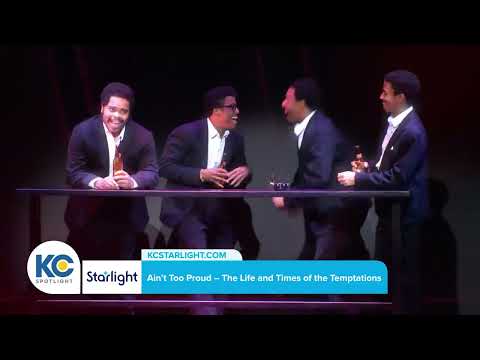
Ain't Too Proud: The Life and Times of The Temptations (2019) - stage musical number - non-diegetic. In the Broadway song list, it lands in Act I as a clean jolt after the sweetness of "My Girl". That placement is savvy stagecraft. The show is telling you, early, that the Temptations are not one mood. They are a machine with multiple gears, and this is the gear that makes an audience sit up straighter.
On record, the song is a dance invitation with a salesman grin. Onstage, it becomes a thesis statement about performance: five men turning rhythm into charisma, then letting the story catch up. As stated in the London theatre guide to the score, the show uses "Get Ready" as part of a Motown tapestry - a way to keep the evening from becoming a single-artist recital.
- Key Takeaways: hook-first chorus; tight call-and-response; and a tempo that turns blocking into forward motion.
- Listen for: the bright, high lead profile that lets the chorus pop without brute-force volume.
- Watch for: how directors treat the title phrase like a cue - the stage can literally "get ready" by changing formations on that line.
Creation History
The Temptations released the single on February 7, 1966, recorded at Hitsville USA in late 1965. Smokey Robinson wrote and produced it, and reference accounts describe it as a bid to match a then-current dance craze called "The Duck". The backstory has real stakes: the same sources describe a label bargain where the next release would switch producers if this one did not hit as expected. The song still hit No. 1 on the U.S. R&B chart, yet its pop peak sat lower than earlier singles, helping open the door for Norman Whitfield's takeover of the group's sound.
Song Meaning and Annotations

Plot
The singer is smitten and impatient. He tells the girl (and, by extension, the room) to prepare for a night where restraint is not the headline. In the musical, the lyric reads less like a private plea and more like a public demonstration: the group proving it can turn desire into choreography.
Song Meaning
Meaning here is not mysterious: anticipation as seduction. But the show gives it a second layer. Coming right after "My Girl", "Get Ready" underlines how quickly Motown could pivot from tenderness to kinetic flirtation. If "My Girl" is a slow, direct gaze, this one is a hand already pulling you onto the floor.
Annotations
I never met a girl who makes me feel the way that you do.
It is a simple setup, almost spoken, which is exactly why it works. In performance, do not decorate it. Let the groove do the persuasion.
Get ready, get ready.
A chorus built like a stage command. It lands even in a shortened cast-album cut because repetition is the architecture.
Cause I'm bringing you a love that's true.
The lyric sells sincerity while the beat sells speed. That tension is part of the fun: romance with a stopwatch.
Driving rhythm and stage logic
Tempo is the story. At around the mid-130s BPM in many tempo databases, it plays like controlled sprinting. That is why it lives comfortably in Act I: it keeps the theater from settling into nostalgia, and it dares the performers to stay precise while moving fast.

Technical Information (Quick Facts)
- Song: Get Ready
- Artist: The Temptations (original); performed in Ain't Too Proud by the Original Broadway Cast
- Featured: Lead vocal spotlight associated with Eddie Kendricks era profile; ensemble responses
- Composer: William "Smokey" Robinson
- Producer: William "Smokey" Robinson
- Release Date: February 7, 1966 (single); March 22, 2019 (cast album digital release)
- Genre: Soul; R&B; Motown pop-soul; stage jukebox arrangement
- Instruments: Lead and backing vocals; drums; bass; guitars; keys; horns (arrangement dependent)
- Label: Gordy (Motown) for the single; Universal Music Enterprises for the cast album
- Mood: Up-tempo flirtation; dance-floor urgency
- Length: 2:39 (single reference); 1:41 (cast recording track listing)
- Track #: Act I number; Track 8 on the original Broadway cast album
- Language: English
- Album (if any): Gettin' Ready (The Temptations); Ain't Too Proud: The Life and Times of The Temptations (Original Broadway Cast Recording)
- Music style: call-and-response chorus with dance-craze propulsion
- Poetic meter: Accentual pop phrasing with refrain emphasis
Frequently Asked Questions
- Where does the number appear in the stage show?
- It appears in Act I, placed immediately after "My Girl" in the published Broadway song list.
- How long is the cast recording track?
- Digital track listings show the Broadway cast cut at 1:41.
- Who wrote and produced the original recording?
- Smokey Robinson wrote and produced the Temptations single.
- Which Temptations member is strongly associated with the lead profile?
- Eddie Kendricks is commonly cited as the key lead voice on the original recording.
- Why does it feel like a dance number even without new lyrics?
- Because it was shaped as a dance-craze response, with a repetitive chorus and a rhythm section that drives constant forward motion.
- Did it change the group's producer direction at Motown?
- Reference accounts describe it as the last Robinson-produced Temptations single, with Norman Whitfield moving into the main producer role after this release cycle.
- What is the most famous cover version?
- Rare Earth recorded a long, concert-style version that became a major pop hit, peaking high on the U.S. Hot 100 in 1970.
- Why do theater directors like it?
- The chorus is an instruction, which makes it easy to stage: it can trigger entrances, formation changes, and crowd energy spikes.
- Is it connected to early hip hop performance culture?
- Yes. Reference writing describes DJs favoring the long Rare Earth recording because its extended groove and drum break supported dancers.
Awards and Chart Positions
The Temptations version had a split personality on the charts: No. 1 on the U.S. R&B listing, but a lower pop peak in the U.S. The UK treated it more generously, later carrying it to a Top 10 peak. Then Rare Earth flipped the narrative in 1970: their version became the big pop event, reaching the U.S. Hot 100 Top 5 and finishing as a high year-end hit. According to Classic Motown, the original track was cut in Detroit in late 1965, and you can hear that house-band snap in every bar.
| Release | Chart | Peak | Notes |
|---|---|---|---|
| The Temptations single (1966) | US Billboard Hot 100 | No. 29 | Pop crossover, but below prior Top 20 run |
| The Temptations single (1966) | US Billboard R&B | No. 1 | Major R&B success |
| The Temptations single (1969 UK run) | UK Singles Chart | No. 10 | Official Charts peak listing |
| Rare Earth single (1970) | US Billboard Hot 100 | No. 4 | Breakout pop hit |
| Rare Earth single (1970 year-end) | Billboard Year-End Hot 100 | No. 8 | High annual ranking |
How to Sing Get Ready
For rehearsal anchors, one widely used sheet-music edition lists the published key as D minor with a vocal range of A3 to C5. Tempo databases commonly place it around 135 BPM in 4/4. Treat these as practical starting points, then adapt to your music director's arrangement.
- Tempo: Practice at 110 BPM first, then climb to 135 once consonants stay crisp on repeated chorus words.
- Diction: Make "get" and the "t" in "ready" audible. This number dies when the title phrase turns to mush.
- Breath: Use quick, planned breaths before chorus entrances. Do not wait until you are empty, because the hook must land clean.
- Rhythm: Lock into the backbeat and resist rushing. Fast songs feel faster when you stay steady.
- Style: Keep tone bright and agile, not heavy. The charm is athletic, not operatic.
- Ensemble blend: Match vowel shapes on "ready" across the line. If vowels match, tuning becomes much easier.
- Movement integration: Rehearse with choreography early. The point is precision under motion, which is pure Temptations stage language.
- Pitfalls: Do not over-sing the chorus. Save intensity for clean accents and the last chorus lift.
Additional Info
The song has a surprisingly dramatic backstage story for something that sounds like pure dance instruction. Reference accounts frame it as the last Robinson-written and Robinson-produced Temptations single, with a label bargain that cleared the path for Whitfield's later run. That makes the number feel like a hinge: light on the surface, career-shaping underneath.
Then there is the cover afterlife. Rare Earth recorded an extended live-style take that turned the same chorus into a marathon groove, and year-end lists show it as one of the biggest U.S. pop hits of 1970. Reference writing also links that long version to early Bronx DJ culture because its length and drum feature made it useful for dancers. Same song title, different ecosystem, different kind of crowd control.
Key Contributors
| Entity | Type | Relationship statement (S-V-O) |
|---|---|---|
| William "Smokey" Robinson | Person | Robinson wrote and produced the original Temptations single. |
| The Temptations | MusicGroup | The Temptations released the song on Gordy in 1966 and performed it in the show. |
| Eddie Kendricks | Person | Kendricks is commonly cited as the lead voice profile on the original recording. |
| Berry Gordy | Person | Gordy is cited in reference accounts connected to producer-role changes after this release. |
| Norman Whitfield | Person | Whitfield rose into the main producer role for the group after this era. |
| Rare Earth | MusicGroup | Rare Earth recorded a 1970 hit version that charted far higher on the U.S. pop listing. |
| Original Broadway Cast Of Ain't Too Proud | MusicGroup | The cast recorded a shortened stage arrangement for the 2019 album release. |
| Universal Music Enterprises | Organization | Universal Music Enterprises released the original Broadway cast recording. |
| Ain't Too Proud: The Life and Times of The Temptations | CreativeWork | The musical places the number in Act I after "My Girl" to boost momentum. |
Sources
Sources: London Theatre, Apple Music, Spotify, Wikipedia, Classic Motown, Official Charts Company, Billboard, Musicnotes, SongBPM