
Glory Days Lyrics: Song List

About the "Glory Days" Stage Show
J. Gardiner wrote the book, describing the relationship between 4 friends, which became the foundation of the theatrical, while Nick Blaemire was engaged in a musical component.
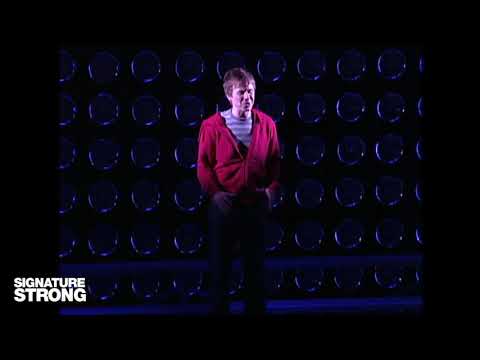
Signature Theatre (A. County in Virginia) became a stage, where the premiere of the theatrical in 2008 took place. E. D. Schaeffer was the director, however, the other person, who helped with the performance, was M. Gardiner. Musical arrangement consisted of four-part group. The musical has earned a good reputation at the theatre and received an enthusiastic comment from The Washington Post.
Broadway theatrical opened in April of the same year in NY at the Circle in the Square Theatre and lasted less than a month. The same person was engaged in direction, and the same actors starred in the second musical, namely: S. Booth, A. C. Call, J. P. Johnson & A. Halpin. Well-known Sasha Ludwig-Siegel was engaged in making costumes for the show.
It was closed very quickly because of low sales, as producers reported.
Release date of the musical: 2008
"Glory Days" – The Musical Guide & Song Meanings
Review
“Glory Days” lives on a football field at night, which is already a thesis. The setting forces the language to do the heavy lifting. Four guys show up carrying beer, old injuries, and the kind of confidence that only survives in reunion lighting. Nick Blaemire’s lyrics are bright and chatty, then suddenly blunt. They mimic how teenage friends talk when they are trying to avoid saying what they mean. When the show works best, the rhymes feel like a defense mechanism and the choruses feel like a flare shot straight up, partly for help, partly for attention.
Musically, this is pop-rock written for a small space and a tight cast. That matters. There is no ensemble to hide behind, no dance break to change the subject. Each number is basically a confession in musical form. The libretto is structured like a single-sitting argument, with songs functioning as evidence. The lyrics drive plot because they trigger reveals: identity, betrayal, envy, and the moment the prank stops being the point. Even the title phrase lands with a wince. The show keeps asking what you do when nostalgia stops feeling like comfort and starts feeling like a trap.
How it was made
The show’s origin story is unusually young and unusually direct. TheaterMania reports that Blaemire wrote early songs the summer after his freshman year at the University of Michigan, and he and James Gardiner built the piece from lived experience, then refined it together while still in college. They connected with director Eric Schaeffer after a Kennedy Center master class, and that relationship pulled the musical into Signature Theatre, where it drew a younger crowd than usual and picked up serious local heat.
Then Broadway happened fast. In hindsight, the same interview frames the warning signs: no stars, marketing problems, an aggressive timetable, and producers early in their careers. The piece arrived at Circle in the Square with a small-cast regional identity and suddenly had to survive the most unforgiving kind of scrutiny. On May 6, 2008, it opened. It also closed. That fact became the headline, but it also became the show’s shadow. The interesting part is what happened after: the writers kept working, a cast album arrived in 2009, and “Glory Days” turned into a campus and small-theatre staple precisely because it is compact, emotional, and playable.
Key tracks & scenes
"My Three Best Friends" (Will)
- The Scene:
- Late night on the high school football field. Bleachers. One guy alone before the others arrive. The light feels like stadium spill, not a spotlight, which makes the intimacy feel accidental.
- Lyrical Meaning:
- Will narrates friendship as mythology. The lyric is full of fond labels and clean origin stories. It is also a tell: he is already editing the past to protect himself from the present.
"Right Here" (All)
- The Scene:
- The four finally line up on the same idea: Will’s prank, timed for a charity game. They shift from small talk into group momentum. Staging often tightens the circle, like peer pressure made physical.
- Lyrical Meaning:
- This is the show’s first big “agreement” song, and it sounds like unity. Underneath, the lyric is bargaining. Each guy is negotiating how much of his new life he has to reveal to stay included.
"Open Road" (Jack)
- The Scene:
- The first real plot turn. Jack comes out. The field suddenly feels enormous, because silence takes up space. Lighting can flatten into something colder, as if the night air got sharper.
- Lyrical Meaning:
- The lyric treats disclosure as movement. He frames truth as travel, which is brave and also heartbreaking: he has been driving away from the version of himself his friends still expect.
"Things Are Different" (Will & Andy)
- The Scene:
- Andy pulls Will aside after Jack’s reveal. Two friends, slightly apart from the group, speaking in the tone people use when they want permission to be angry.
- Lyrical Meaning:
- The lyric is about betrayal, but it is also about fear. “Different” becomes a code word that covers both discomfort with Jack and panic about losing the old group rules.
"Generation Apathy" (Skip)
- The Scene:
- Skip takes the field like it is a podium. He is the Ivy League guy, the thinker, the one who wants a theory for what they are feeling. The light often isolates him, because he is performing insight.
- Lyrical Meaning:
- The lyric is self-aware in a way that is almost comic. He diagnoses a whole cohort, but the subtext is personal: he is terrified his ambition has made him unrecognizable.
"The Good Old Glory Type Days" (All)
- The Scene:
- They find Will’s journal and use it as a time machine. The song is built for shared memory. The staging usually loosens, with physical callbacks and a sense of boys reenacting boys.
- Lyrical Meaning:
- Nostalgia becomes a drug with a chorus. The lyric celebrates the past, then quietly shows the cost: they only sound unified when they are talking about something that is already over.
"Other Human Beings" (Jack & Andy)
- The Scene:
- The argument blows open. Andy and Jack finally speak to each other instead of around each other. It is one of the show’s most volatile moments, usually staged with the men far apart, then colliding, then separating again.
- Lyrical Meaning:
- This is where the lyric gets rougher. The language is less clever, more direct. The song insists on the basic fact Andy is resisting: Jack is not an idea, he is a person, and that makes cruelty harder to excuse.
"My Turn" (Andy)
- The Scene:
- After Jack leaves, Andy turns on the friends who remain. He lays out what Will lied about and why it mattered. The field becomes a courtroom, and Andy is both prosecutor and witness.
- Lyrical Meaning:
- The lyric is about entitlement, but it is also grief. Andy is furious that the friendship script changed without his consent. The repeated insistence reads like panic dressed up as dominance.
"My Next Story" (Will)
- The Scene:
- Will alone again, after the others have peeled away. The prank is irrelevant now. The lighting can soften toward dawn, or stay stubbornly dark, depending on whether a production wants hope or aftermath.
- Lyrical Meaning:
- This is the show’s reset button. The lyric admits that clinging to the “glory days” has been a way to avoid writing the next chapter. It is an acceptance song, and it is also an apology that arrives late.
Notes & trivia
- The Broadway run is one of the most extreme on record: 17 previews and 1 performance at Circle in the Square, with opening and closing on May 6, 2008.
- The show is built as a one-act, 90-minute chamber musical for four men, making it unusually practical for colleges and small companies.
- Playbill identified the Signature Theatre premiere band as a four-piece group, aligning with the pop-rock intent while keeping the texture lean.
- The cast album was released November 24, 2009 through Sh-K-Boom’s Ghostlight Records label.
- The writers have openly framed the original material as loosely drawn from Blaemire’s experiences, which helps explain why the lyrics keep sounding like remembered conversations.
- Licensing is currently promoted through Concord Theatricals, including perusal options for libretto and score.
- Myth check: many people assume the show vanished after Broadway. It did not. Later articles and licensing notes describe it as frequently produced, especially in collegiate settings.
Reception
“Glory Days” prompted a familiar argument: is sincerity a virtue, or a lack of craft? Supporters heard a new pop voice writing honestly for young men. Detractors heard a show still learning how to shape scene into drama. The split was sharpened by context. A small, intimate piece can feel exposed on Broadway, where reviewers are listening for structure as much as feeling.
“Glory Days swiftly, tunefully and yes, authentically latches onto the rhythms of late adolescence.”
“The production manages to seem fresh and seriously stale at the same time.”
“Sadly, given the over-night reviews and our low advance sales, we believe it is prudent to close the show on Broadway immediately.”
Live updates (2025/2026)
Information current as of January 2026. “Glory Days” is not a touring title in the commercial Broadway sense. Its present-tense life is licensing, concerts, and regional revivals. Concord Theatricals actively lists the show for licensing, with digital perusal materials and an explicit 4m, 90-minute profile that fits schools and small stages.
In February 2024, Keen Company presented a benefit concert billed as the show’s “second performance,” with a new set of simplified arrangements and a high-profile cast, signaling continued industry affection for the score even as the Broadway story stays infamous. In 2025, at least one Los Angeles production drew fresh critical attention, which is a useful reminder for buyers: the piece plays differently when it is treated as an intimate rock confessional rather than a Broadway event.
If you are listening before seeing it, start with “Open Road,” then “Other Human Beings,” then “My Next Story.” Those three numbers show you the whole engine: reveal, rupture, repair. If you are casting it, look for actors who can handle conversational text. The lyrics often sit in the mouth like real speech, and the music asks for clean storytelling, not just volume.
Quick facts
- Title: Glory Days
- Year: 2008 (Signature Theatre premiere and Broadway opening)
- Type: One-act pop-rock chamber musical
- Music & Lyrics: Nick Blaemire
- Book: James Gardiner
- Original Broadway theatre: Circle in the Square Theatre
- Broadway run: 17 previews, 1 performance (opened May 6, 2008; closed May 6, 2008)
- Director (Signature and Broadway): Eric Schaeffer
- Music supervisor / arranger / orchestrator (noted by Playbill): Jesse Vargas
- Setting: High school football field at night, one year after graduation
- Cast: 4 men (Will, Andy, Jack, Skip)
- Selected notable placements: “Open Road” as the coming-out reveal; “Other Human Beings” as the confrontation peak; “My Next Story” as the closing pivot forward
- Cast album: Glory Days (The Original Broadway Cast Recording)
- Label / release: Ghostlight Records, released November 24, 2009 (15 tracks)
- Availability: Streaming widely; physical/digital via Ghostlight
- Licensing: Listed through Concord Theatricals
Frequently asked questions
- What is “Glory Days” about?
- Four friends reunite on their old high school football field a year after graduation, planning a prank, and end up confronting how much they have changed.
- Who wrote the lyrics?
- Nick Blaemire wrote the music and lyrics. James Gardiner wrote the book.
- Is it a jukebox musical?
- No. It is an original score written in a pop-rock idiom, structured as a one-act chamber piece.
- Why did it close so fast on Broadway?
- Producers cited low advance sales and the impact of opening-night reviews when announcing the immediate closure.
- Is there a cast recording?
- Yes. The Original Broadway Cast Recording was released by Ghostlight Records in 2009.
- Can small theatres license it now?
- Yes. It is currently listed for licensing through Concord Theatricals, including perusal options for script and score.
Key contributors
| Name | Role | Contribution |
|---|---|---|
| Nick Blaemire | Composer, Lyricist | Wrote the pop-rock score and conversational lyric style that turns a reunion into a series of musical confessions. |
| James Gardiner | Book writer | Structured the one-night football-field scenario that lets songs function as arguments, reveals, and aftermath. |
| Eric Schaeffer | Director | Directed Signature Theatre and Broadway productions, shaping the piece as an intimate, fast-moving chamber event. |
| Jesse Vargas | Music supervisor, arranger, orchestrator | Built the show’s lean pop-rock sound world and supervised the recording and production musical architecture. |
| Ghostlight Records (Sh-K-Boom) | Label | Released the Original Broadway Cast Recording (2009), preserving the score beyond the Broadway run. |
| Concord Theatricals | Licensing | Current listing for performance licensing and perusal materials, sustaining the show’s ongoing production life. |
Sources: IBDB, Playbill, Washington Post, Variety, TheaterMania, Concord Theatricals, Ghostlight Records, Nick Blaemire official site, Stage Scene LA.