
Corpse Bride Lyrics: Song List
- Main Title
- According to Plan
- Victor's Piano Solo
- Into the Forest
- Remains of the Day
- Casting a Spell
- Moon Dance
- Victor's Deception
- Tears to Shed
- Victoria's Escape
- The Piano Duet
- New Arrival
- Victoria's Wedding
- The Wedding Song
- The Party Arrives
- Victor's Wedding
- Barkis's Bummer
- The Finale
- End Credits Pt. 1
- End Credits Pt. 2
- Ball And Socket Lounge Music 1
- Ball And Socket Lounge Music 2
About the "Corpse Bride" Stage Show
Johnny Depp voiced Victor and Helena Bonham Carter voiced Emily. Tim Burton was the director, writer, and developer of the characters, involving his company in the production. Rights for the distribution were sold to Warner Bros. Pictures. This musical collected USD 117 million in the worldwide box office.
This is a classic musical, not scenic, executed as a film. Its production was completed in 2005 (development was for two years). This is the first film in the genre of stop-motion, which has been directed by Tim Burton. Both previous were made by his colleague, Henry Selick. He has even a nomination for Oscar, but did not get the reward – that year another film won, on an interesting coincidence, also with the participation of Helena Bonham Carter, spouse of Tim Burton.
In parallel with Tim Burton’s work on the film Charlie and the Chocolate Factory (where Johnny Depp and Helena Bonham Carter also played), he develops this. It was assumed at first that movie to be shot with film technology, but then the concept has been changed to shooting with digital still cameras, at the last minute, everyone liked the idea & it was considered viable.
All work on the shooting took place in London and involved 12 animators and puppeteers. Their number has tripled by the end of production. To manipulate puppets with growth of 17 inches each, a special control technology was developed, as well as the three leading dolls were made with facial expressions, which complicated the work. Shooting was in 25 to 35 different filming pavilions, each had their own cameras and software that allowed uploading photos directly to one place to check the quality by line producers.
Each image was pre-tested and approved & then was filming, in a series of frames, because there was not possible to re-shoot due to time constraints.
Release date of the musical: 2005
"Corpse Bride" (2005) – The Musical Guide & Song Meanings
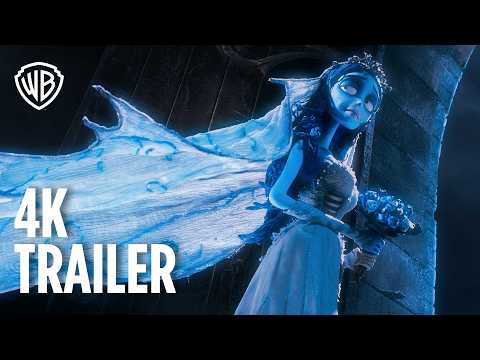
Review: why the lyrics hurt more than the visuals
What’s the crueler joke in Corpse Bride: the accidental marriage, or the way the songs keep insisting that everyone is acting “properly”? The score draws a bright line between worlds, but the lyrics draw the sharper line between people. In the living world, words are contracts. In the underworld, words are confessions. That split is the musical’s thesis, and it’s why the soundtrack still plays like a storybook with its pages torn at the edges.
Elfman’s musical language is deliberately old-fashioned: waltz shadows, parlour-piano nerves, then a sudden left turn into hot-jazz cabaret when the dead start partying. That shift is not just color. It is character. The living characters sing like they are obeying instructions. The dead sing like they have already survived the worst part. The lyrics keep returning to money, duty, and “arrangements,” then Emily’s lines cut through with something more naked: loss that never got witnessed.
If you came here looking for full lyrics, I can’t reproduce complete copyrighted lyric sheets. What I can do is walk you through the scenes, the intent, and the writing choices, with short quoted phrases only when they are essential.
How it was made: Elfman, August, and the cut song
Corpse Bride is often described as “a musical,” but it is really a score-first film that uses four lyrical songs as plot hinges. The album credits and contemporary coverage repeatedly link the lyric work to Danny Elfman with collaboration from screenwriter John August, which matters because the songs behave like screenplay pages that happen to rhyme. The writing goal is efficient storytelling, not pop-hook maximalism.
One key behind-the-scenes detail: a solo number for Victor was written and then removed to keep the film lean. The song is commonly referenced under the title “Erased,” and the anecdote is telling: Victor’s inner monologue was considered too slow for a 77-minute fairy tale that already asks the audience to hold a love triangle, a murder story, and a class satire in the same hand.
Another: Bonejangles, the skeletal bandleader, became Elfman’s own vocal role after the production tried multiple singers and still did not hear the voice Burton wanted. That choice shapes the soundtrack’s identity. Bonejangles is not just a character. He is the composer stepping into the world to sell you its rules, one swung syllable at a time.
Key tracks & scenes: 7 moments that define the story
"Main Titles" (Orchestra)
- The Scene:
- Grey-blue daylight. A town that looks rinsed of warmth. The camera moves like it is afraid of making noise. The main theme arrives almost immediately (heard at the very start of the film), setting a romantic line that will keep getting interrupted by obligation.
- Lyrical Meaning:
- No lyrics, but it is still “text.” This theme teaches you how the film speaks: tenderness first, then the world tries to correct it.
"According to Plan" (Ensemble)
- The Scene:
- Wedding rehearsal preparations in the living world. Brightness is scarce, the interiors feel over-managed, and even smiles look rehearsed. In the early minutes of the film, this song operates like a split-screen argument between two families who want opposite things from the same marriage.
- Lyrical Meaning:
- The hook is not romance. It is compliance. The repeated idea of everything proceeding “according to plan” is the point: the lyric treats marriage as a transaction, and that chill becomes the pressure Victor eventually flees. (A music-analysis study even timestamps passages of this number in the film’s early stretch, underscoring how quickly the song establishes the social machine.)
"Victor’s Piano Solo" (Victor)
- The Scene:
- Victor at the piano, trying to communicate the feelings he cannot say out loud. The room is polite, but the melody is private. A scholarly analysis of Elfman’s Burton scores pinpoints this diegetic piano passage in the first act, emphasizing how meter and touch separate Victor from the space around him.
- Lyrical Meaning:
- No lyrics, but it is a character aria in disguise. The “words” are hesitations, repeats, and the little rushes where he almost believes he can be brave.
"Remains of the Day" (Bonejangles)
- The Scene:
- Victor’s arrival in the underworld is greeted like a nightclub entrance. Neon energy, swinging bones, and a bandleader who addresses tragedy with showmanship. The number lands as both party and exposition, revealing Emily’s past while the underworld insists on joy.
- Lyrical Meaning:
- This is the film’s most ruthless lyric trick: it tells a murder story like entertainment, because the underworld has had time to metabolize pain. The song frames Emily’s romance as a con, replacing sentiment with a punchline, and that tension becomes her wound. An academic music study even timestamps the shout-chorus burst of this sequence, a reminder that the number is built for precise story beats.
"Tears to Shed" (Emily, Maggot, Black Widow)
- The Scene:
- Back in the land of the dead, Emily’s hurt finally stops being funny. The lighting goes softer, the pace drops, and the song is staged like a small intervention. Her companions try to talk her down from the ledge of self-erasure, literally stitching her confidence back together with jokes.
- Lyrical Meaning:
- Emily’s lyric is self-accusation that keeps morphing into self-defense. The line between “I was chosen” and “I was used” is where she lives. One of the smartest choices is how the song lets other characters interrupt, as if Emily cannot hold a loving thought without someone helping her carry it.
"The Piano Duet" (Victor & Emily)
- The Scene:
- Emily at the piano in the underworld, with Victor joining in. The camera treats their hands like dialogue. A detailed academic analysis places this duet late in the film (with precise time markers), reading it as a moment where musical “speech” succeeds where spoken vows failed.
- Lyrical Meaning:
- No lyrics, but the duet is a reconciliation scene. It translates apology into balance: who leads, who supports, who listens. It is also the film’s quiet promise that Emily can be loved without being possessed.
"The Wedding Song" (Ensemble)
- The Scene:
- Underworld wedding preparations erupt into organized chaos. Spiders tailor a suit, dead relatives line up like a parade, and the film temporarily treats death as community service. The staging is bright and busy, because the underworld knows how to throw a party even when the premise is poison.
- Lyrical Meaning:
- The lyric sells ritual as excitement. That is the danger. It makes the irreversible sound celebratory, which is exactly why Emily later stops Victor. The song is the soundtrack’s loudest argument that love should not require a death sentence.
Live updates (2025–2026): re-releases, streaming churn, and why it matters
The most meaningful modern development is the 20th anniversary home-media cycle: a 4K Ultra HD release was scheduled for September 23, 2025, framed as an anniversary edition. That kind of release tends to pull the soundtrack back into rotation as well, because viewers rewatch and then go hunting for “that jazz number” again.
Also worth tracking: streaming availability has been volatile. Seasonal programming routinely boosts and then removes catalog titles around late October. In practice, that means the soundtrack’s search traffic spikes when the film is widely available, then shifts back to individual songs (especially “Remains of the Day” and “Tears to Shed”) when the movie rotates out.
For the album itself, the simplest reality is that the official soundtrack remains easy to find on major music platforms, with the 2005 release date and a 24-track program that mixes score cues, songs, and underworld source-jazz bonus tracks.
Notes & trivia
- Bonejangles’ voice ended up belonging to Danny Elfman after extensive auditions did not land the right sound for Burton’s underworld bandleader.
- A Victor solo song titled “Erased” was written and then cut to keep the runtime tight; a demo later surfaced in a limited edition Burton and Elfman box set context.
- “According to Plan” is designed as social commentary in melody form, contrasting two families’ motives inside the same cheery wedding language.
- Musicologists have published time-stamped transcriptions for specific Corpse Bride moments, including excerpts of “According to Plan,” “Remains of the Day,” “Victor’s Piano Solo,” and “The Piano Duet.”
- The soundtrack album program includes multiple “Ball & Socket Lounge Music” tracks and a “Combo Lounge Version” of “Remains of the Day,” leaning into the underworld’s source-music identity.
- The film’s home-media resurgence in 2025 included a 4K marketing push, a reminder that catalog titles can get “new” musical lives through format upgrades.
Reception: what critics said then, and what changed
In 2005, reviewers tended to praise the craft and tone, and when they singled out the music it was often for how the songs carry story information quickly. Over time, the conversation has shifted toward something more specific: Corpse Bride as a case study in how to write songs that do narrative labor without turning the film into a nonstop singalong.
A stop-motion treat with “inspired songs” and “a genuine whimsy” rarely found in today’s movies.
The songs propel the narrative, and “Remains of the Day” fills in the complicated backstory.
A macabre musical, “high-spirited” and “darkly poignant.”
Not every critic loved the songs as standalone listening, and that split remains fair: on the album, the underscore often feels more emotionally continuous than the vocal tracks. But in-film, the lyrics do their job with blunt efficiency. They tell you what the characters cannot admit in dialogue: who is trapped, who is performing, and who is finally telling the truth.
Quick facts (album + film)
- Title: Corpse Bride (Original Motion Picture Soundtrack)
- Year: 2005
- Type: Film soundtrack album (score + songs + source jazz)
- Composers: Danny Elfman
- Lyrics (songs): Danny Elfman, with lyric collaboration credited to John August on multiple songs
- Directors: Tim Burton, Mike Johnson
- Label / release: Warner Sunset / Warner Bros. (released September 20, 2005)
- Album length: 24 tracks, roughly 59 minutes
- Notable song placements: “According to Plan” (living-world rehearsal), “Remains of the Day” (underworld jazz reveal), “Tears to Shed” (Emily’s emotional break), “The Wedding Song” (underworld preparation montage)
- Chart note (UK): Reported peak at No. 13 on the Soundtrack Albums Chart (late Oct 2005)
- 2025 home-media update: 20th anniversary 4K release dated September 23, 2025
Frequently asked questions
- Does Corpse Bride have more songs than the four big vocal numbers?
- Yes. The film is packed with score cues and underworld source-jazz, but the lyric-driven plot pillars are “According to Plan,” “Remains of the Day,” “Tears to Shed,” and “The Wedding Song.”
- Who wrote the lyrics?
- Danny Elfman is credited as composer, and multiple soundtrack sources credit lyric collaboration from screenwriter John August on several songs.
- Where does “Remains of the Day” happen in the movie?
- In the underworld lounge sequence shortly after Victor arrives among the dead; it functions as Emily’s backstory delivery and the underworld’s statement of personality.
- Is there a deleted song?
- Yes. A Victor solo number commonly cited as “Erased” was written and cut to reduce runtime.
- Why do the living characters sing so stiffly?
- It’s dramaturgy. The lyrics in the living world are written like social scripts, because the characters are performing class and propriety, not confessing desire.
- Is the soundtrack officially available now?
- It remains widely available on major music platforms, and the 2025 anniversary reissue cycle helped renew attention around the album and clips.
Key contributors
| Name | Role | Contribution |
|---|---|---|
| Danny Elfman | Composer, songwriter, producer, performer | Composed score and songs; voiced and performed Bonejangles; produced the soundtrack album. |
| John August | Screenwriter, lyric collaborator | Credited as lyric collaborator on multiple songs alongside Elfman. |
| Tim Burton | Director, producer | Co-directed; shaped the film’s musical storytelling priorities and tone. |
| Mike Johnson | Director | Co-directed the stop-motion production and performance staging for musical sequences. |
| Nick Ingman | Conductor | Conducted orchestral sessions for the recorded score. |
| Steve Bartek | Orchestrator | Part of the orchestration team translating Elfman’s writing to the orchestra. |
| Dennis Sands | Recording and mixing | Recorded and mixed the score and songs for the album release. |
Sources: Warner Bros. Entertainment (4K trailer), Blu-ray.com (4K UHD release details), Apple Music (soundtrack listing), RogerEbert.com (review), The Times (2025 review excerpt), MOVIE MUSIC UK (album review + credits), Mental Floss (production trivia), Wikipedia (film + music overview), Academic music-analysis paper on Elfman/Burton scores (time-stamped transcriptions), Metacritic (critical-review excerpting).