
City Of Angels Lyrics: Song List
- Act 1
- Prologue
- Double Talk
- What You Don't Know About Women
- You Gotta Look Out For Yourself
- The Buddy System
- With Every Breath I Take
- The Tennis Song
- Ev'rybody's Gotta Be Somewhere
- Lost And Found
- All You Have To Do Is Wait
- You're Nothing Without Me
- Act 2
- Stay With Me
- You Can Always Count On Me
- Alaura's Theme
- It Needs Work
- L.A. Blues
- With Every Breath I Take-Duet
- Funny
- I'm Nothing Without You
- Epilogue
About the "City Of Angels" Stage Show
The show opened on Broadway in 1989 and was closed only after 3 years, having produced a dozen theatrical seasons and 879 regular exhibitions (excluding the 24 preliminary ones). Michael Blakemore was a director of the musical, Paul Gallo was lighter, Florence Klotz – costume designer, music was done by Cy Coleman. Robin Wagner was a stage and prop designer. After such an above-average success on Broadway, the show began in the USA in summer of 1991 in the Shubert Theater and lasted until the fall of the same year. Actors were: C. Cox, S. Bogardus, J. McCarthy, L. Mitchell, J. Naughton & R. Graff.
Show was revised and updated during the national tour and a new version of it first played in 1992 in Florida, in Tampa Bay Performing Arts Center, and then in New York in the autumn of 1992. Philadelphia saw the show also in 1992.
Show overstepped the other side of the ocean in March of 1993. R. Allam, M. Smith and H. Goodman starred there. Despite the very commendable reviews of the show, its box office was not successful, so the show closed after 4 months. As many as 5 nominations for the Laurence Olivier Award, including one for Best Musical Award, went to the show in 1994. Then followed its resumption in the West End, for 1 winter season 2014 – 2015. D. Warehouse was the director, and J. Rourke was the art director. Actors were: S. Barks, H. Fraser, K. Kelly, T. Mutu & R. Craig. This production also received 5 nominations on Laurence Olivier Award, winning two, among which for Best Musical.
In other productions of musical there were two-month ride in Los Angeles with the actors S. Bogardus, B. Moses, T. T. Damiano & V. Lewis. The musical was staged in Melbourne in 2015 under the leadership of Martin Crift.
Release date of the musical: 1989
"City of Angels" – The Musical Guide & Song Meanings
Review
What happens when a writer loses control of his own hero, and the hero notices? That question is the engine in City of Angels, and the lyrics keep turning the key. David Zippel’s lines are built like a screenplay: quick pivots, sharp buttons, and a habit of exposing motive while the characters pretend they do not have any. Larry Gelbart’s book creates two worlds at once, and the lyric writing does the dirty work of keeping them in sync. When the Hollywood plot compromises a scene, the noir plot pays the emotional bill, usually with a joke that lands like a bruise.
Cy Coleman’s score sits in jazz, big-band swing, torch song, and studio polish. That choice matters. Jazz is social music, but noir is lonely. The show lives in the friction between the two. The music keeps flirting, the story keeps accusing, and the lyric writing becomes the courtroom. Even the structure is an argument: the “real” writer and the “reel” detective sing in parallel, then collide, then start stealing each other’s oxygen. By the end of Act I, a duet turns into a custody battle over authorship, masculinity, and blame.
How It Was Made
City of Angels came out of a very specific kind of anger: the writer’s anger, sharpened by Hollywood’s talent for “help.” Contemporary reporting around the Broadway launch frames Gelbart’s satire as fueled by both affection and irritation, and the show never hides which side is winning a given moment. The Coleman–Zippel partnership was also a story of timing and trust. Coleman is quoted describing a “hunch” that Zippel could write lyrics that made sense onstage and carried story with laughs, a neat mission statement for a musical that refuses to stop being narrative even when it is dancing.
Zippel later described the pressure of matching Coleman’s melody for “With Every Breath I Take,” generating multiple lyric attempts under a tight deadline and chasing a standard he felt the tune demanded. That anxiety shows up in the finished work as discipline: these are lyrics that behave like plot, not decoration. Even the show’s central conceit, the “rewind” and rewrite in front of us, reads like a compositional ethic. The piece admits revision is violent. It changes people.
Key Tracks & Scenes
"Prologue: Theme from City of Angels" (Company)
- The Scene:
- A band-forward opening with a noir frame. Stone is introduced in the afterglow of damage, then the story backs into motion. The stage grammar is already split: one world performing, one world watching.
- Lyrical Meaning:
- The show announces its obsession with voice-over truth versus lived truth. Even before anyone confesses, the language feels like it is narrating a lie on purpose.
"Double Talk" (Stone / Alaura; Buddy / Stine)
- The Scene:
- Two versions of the same encounter, rewound and replayed with alterations. In one lane, Stone meets Alaura in the black-and-white crime movie. In the other, Buddy and Stine bargain in Technicolor Hollywood.
- Lyrical Meaning:
- This is the musical’s thesis in motion: everyone sells a story, and the price tag changes mid-sentence. The lyric writing mirrors negotiation itself, with phrases that sound helpful while tightening the trap.
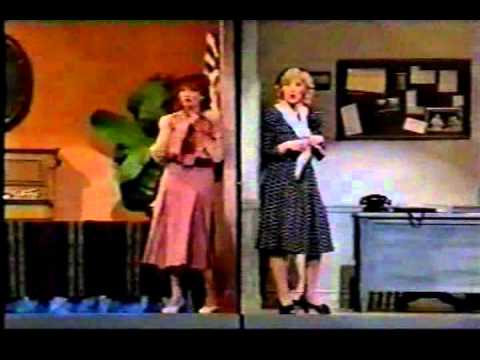
"What You Don’t Know About Women" (Gabby / Oolie)
- The Scene:
- A domestic room in the Hollywood plot bleeds into the office rhythm of the noir plot. The women occupy different worlds but speak like they share the same headache. The lighting often favors separation: side pools, mirrored blocking, parallel frustration.
- Lyrical Meaning:
- The song refuses the “supporting” role. It treats listening as plot-critical. The lyric strategy is repetition with escalation, showing how being ignored becomes a personality fracture.
"With Every Breath I Take" (Bobbi)
- The Scene:
- A torch number in a club setting, staged as memory with smoke and distance. In the noir lane, Bobbi’s performance feels like confession. In the Hollywood lane, it becomes source material, something that can be stolen.
- Lyrical Meaning:
- Desire is described as surveillance: intimacy counted, tracked, measured. The lyric choices make romance sound like a stakeout, which is exactly the point in a show where love and leverage share a coat rack.
"The Tennis Song" (Alaura / Stone)
- The Scene:
- At the mansion, the flirtation is weaponized as sport. The scene plays bright in rhythm and dark in implication, with movement that looks graceful until you notice the threat beneath it.
- Lyrical Meaning:
- The song turns seduction into a contest of control. The wordplay lands like banter, then reveals a contract: who owes whom, and for how long.
"All You Have to Do Is Wait" (Muñoz and Trio)
- The Scene:
- Stone is boxed in, arrested, and placed inside the system. The musical leans into procedural music, the sound of bureaucracy smiling while it tightens the cuffs.
- Lyrical Meaning:
- Patience becomes cruelty. The lyric idea is simple and brutal: the world will punish you on its schedule, and that schedule is the real authority in the room.
"You’re Nothing Without Me" (Stine / Stone)
- The Scene:
- Act I lands on a showdown at the typewriter. The creator and the creation argue in public, with the band swinging hard beneath a conversation that is basically a fistfight. The staging often emphasizes the split-stage concept by forcing them into the same light for the first time.
- Lyrical Meaning:
- This is meta-theatre that still functions as character. The lyric writing turns ego into choreography, and authorship into a love-hate duet. It is funny, then it is revealing, then it is mean.
"It Needs Work" (Gabby)
- The Scene:
- Back in New York, the marriage is revised the way a script is revised: with notes, objections, and exhausted precision. The scene is emotionally bright but morally cold.
- Lyrical Meaning:
- Gabby’s lyric perspective treats betrayal like a draft that keeps returning. The brilliance is the restraint. The song does not beg; it edits.
"Funny" (Stine)
- The Scene:
- Near collapse, Stine faces the wreckage: career, marriage, self-image. The number plays like a nervous breakdown in perfect time. The room feels too loud even when it is quiet.
- Lyrical Meaning:
- The show finally lets the jokes curdle. The lyric voice becomes a defense mechanism that fails mid-flight, exposing shame underneath the punchlines.
Live Updates
City of Angels is not a standing Broadway title right now, but it has a steady afterlife because the material fits both conservatory talent and adult regional seasons. Licensing remains active, and the show’s flexible scale helps. In 2025 it appeared on multiple local calendars, including a May run in Arizona and late-summer dates in New Mexico. A 2025 Australian production has also been scheduled for October.
Looking into 2026, the title is still turning up as a “name” season slot rather than a novelty pick. A major U.S. regional venue, Ogunquit Playhouse, announced the musical for summer 2026 with performance dates and a named director. Community and semi-pro companies are also booking it into early 2026 runs, which tracks with a broader pattern: the piece gets produced when theatres want a smart comedy that still sounds expensive.
Notes & Trivia
- The split-stage idea is baked into the show’s official description: Stine’s Hollywood appears in full color while Stone’s noir plays in black-and-white.
- The Original Broadway production opened December 11, 1989 at the Virginia Theatre and ran 879 performances.
- The Broadway creative credits include director Michael Blakemore, scenic designer Robin Wagner, costume designer Florence Klotz, and lighting designer Paul Gallo.
- IBDB credits the Broadway orchestration to Billy Byers, with vocal arrangements by Cy Coleman and Yaron Gershovsky, and Gordon Lowry Harrell as musical director.
- The Original Broadway Cast Recording was released in 1990, with producers credited as Cy Coleman and Mike Berniker, and studio recording dates documented in January 1990.
- Zippel recalled writing multiple lyric drafts for “With Every Breath I Take” under pressure, chasing the strength of Coleman’s melody.
- The Donmar Warehouse revival won the Olivier Award for Best Musical Revival, and the production performed material from the show on the 2015 Olivier broadcast.
Reception
At launch, critics tended to talk about craft: the engineering of the double narrative, and how confidently the score threads motifs through shifting worlds. Over time, the conversation has tilted toward how contemporary the show feels as an industry satire. The lyric writing plays a big role in that longevity. It treats compromise as a daily language, not a single tragic decision.
“From Coleman’s scintillating, thematically linked score to Gelbart’s ingenious, multilayered story, the show doesn’t play safe.”
“This clever show … ripples with wit and is immaculately presented.”
Coleman said he had “a hunch” Zippel could write lyrics “that made sense … carried the story forward … and had a few laughs.”
Quick Facts
- Title: City of Angels
- Broadway year: 1989 (opened Dec 11, 1989)
- Type: Musical comedy; film noir parody with parallel storylines
- Book: Larry Gelbart
- Music: Cy Coleman
- Lyrics: David Zippel
- Original Broadway director: Michael Blakemore
- Original Broadway design (selected): Robin Wagner (scenic), Florence Klotz (costumes), Paul Gallo (lighting)
- Original Broadway musical director: Gordon Lowry Harrell
- Cast album: City of Angels (Original Broadway Cast Recording)
- Cast album release context: Commercial studio recording; released 1990
- Album producers: Cy Coleman, Mike Berniker
- Selected notable placements: 1990 Tony Awards performance clip; 2015 Olivier Awards broadcast performance (Donmar revival)
- Availability: Major streaming platforms list the cast recording (1990)
Frequently Asked Questions
- Who wrote the lyrics to City of Angels?
- David Zippel wrote the lyrics, working with composer Cy Coleman and book writer Larry Gelbart.
- What is the show’s split-stage concept?
- The “real” Hollywood writing rooms play in full color while the detective story being written plays in black-and-white, letting scenes echo and contradict each other.
- Is there a film version?
- No released film adaptation exists. The show’s structure is already a film-within-a-film satire, which may be one reason it keeps returning to the stage instead.
- Which recording should I start with?
- The 1990 Original Broadway Cast Recording is the standard entry point. It preserves the score’s tonal shifts, from torch ballad to swing to comic patter.
- What are the most referenced songs?
- “You’re Nothing Without Me” is the signature duel, “What You Don’t Know About Women” anchors the parallel-women structure, and “With Every Breath I Take” is the emotional core.
- Is City of Angels running in 2025 or 2026?
- It is not a resident Broadway run, but theatres continue to mount new productions. Multiple companies scheduled it in 2025, and Ogunquit Playhouse announced it for summer 2026.
Key Contributors
| Name | Role | Contribution |
|---|---|---|
| Larry Gelbart | Book | Built the dual narrative that lets Hollywood rewrite noir in real time. |
| Cy Coleman | Composer | Wrote a jazz-forward score that moves between swing, torch song, and studio sheen. |
| David Zippel | Lyricist | Wrote plot-driving lyrics with fast comic timing and sharp emotional reversals. |
| Michael Blakemore | Director (Original Broadway) | Staged the piece’s double vision so the two worlds can collide cleanly. |
| Gordon Lowry Harrell | Musical Director (Original Broadway) | Led the Broadway production’s musical execution; also credited in recording documentation. |
| Mike Berniker | Cast Album Producer | Co-produced the 1990 Original Broadway Cast Recording with Coleman. |
Sources: IBDB (Internet Broadway Database), Concord Theatricals, Masterworks Broadway, Los Angeles Times, The Guardian, Playbill, AllMusic, Amazon Music, Wikipedia, BroadwayWorld.