
Children's Letters to God Lyrics: Song List
- Act 1
- Prologue
- Questions, Questions
- Thirteen
- Arnold
- Like Everybody Else
- Questions for the Rain
- Ants
- A Simple Holiday Song
- Six Hours as a Princess
- An Only Child
-
When I Am in Charge

- Act 2
-
Daydreams
-
Kicker Brown
- Silly Old Hat
- How Come?
- Star Letters
- I Know
- I Know (reprise)
- Joanna's Lament
About the "Children's Letters to God" Stage Show
David Evans wrote the music for the show, and Douglas J. Cohen has created lyrics and Stoo Hample, who wrote a book in 1991, which became a bestseller, adapted libretto. Lamb's Theatre took staging in 2004. It has never reached Broadway, as was expected during the work-out. Target audience – children and their parents who are open-hearted and who is not disgusted by an easy narrative style of writing, with humor.
Director of the musical was Stafford Arima, scenic design performed by P. Wilcox, sets by A. Louizos, K. Bookman and P. Hylenski were responsible for lighting and sound, respectively; G. Brassard was the costume designer, the actors and the composition were as follows: L. Jacobson, G. Canonico, A. Fischer, S. Kapner, A. Zutty & J. Dieffenbach.
This resulted in a soft, warm and filled with childlike directness musical, which very clearly presents the material and easily displays such complex concepts as the change of inner world as a result of external events and our assessment of things and notions. To put simply, this set of interrelationships is called a process of growing and learning. This is clearly shown in one of the scenes, when a boy who hates bugs, crums and slugs, ruthlessly crushes them underfoot. But when he was bombarded with the ridicule by his friends (and by sister), he realizes that it hurts, the same as the beetle experience the death, whom he killed and he fundamentally changes own attitude towards them.
The musical does not claim for the big breadth or depth, but if to look something both for children and for adults at the same time, this show is a brilliant representative of the search result. Show has 1 nomination for Drama Desk Award.
Release date of the musical: 2004
"Children's Letters to God" – The Musical Guide & Song Meanings
Review and lyric themes
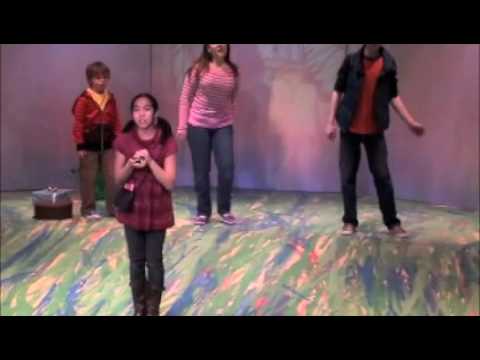
What kind of musical builds its whole structure around questions it refuses to answer? “Children’s Letters to God” does. That is the trick and the risk. The show is 75 minutes of kids testing the borders of belief, not with sermons, but with the kind of blunt logic that adults spend years learning to hide. It is present-day, contemporary street-clothes theatre, and it uses that plainness as a weapon. Nothing is mythic. Everything is immediate.
Douglas J. Cohen’s lyrics work like overheard diary entries that rhyme when they feel cornered. They chase a very specific sound: the moment a child tries to be brave and accidentally becomes funny. The writing keeps returning to power. Who has it at home. Who has it at school. Who has it in the sky. The show’s best numbers let a joke land, then let the silence afterward do the emotional work.
David Evans’ score is piano-first and audience-facing. It moves quickly because the show moves quickly. Each song is an emotional snapshot, and the style shifts to match the kid holding the frame. When it is sweet, it is sweet on purpose. When it is sharp, it is sharper than many people expect from a “family” title.
How it was made
The source material is not a plot. It is a stack of letters. The musical is based on the bestselling book by Stuart Hample and Eric Marshall, a collection built from children’s real notes addressed to God. Early coverage of the Off-Broadway run emphasized that the stage piece also quotes real letters, which explains why the show feels like a scrapbook more than a standard book musical.
One of the most revealing origin details comes from a 2004 review that points to the program notes: Hample reportedly pursued the idea after hearing that “All I Really Need to Know I Learned in Kindergarten” had been adapted successfully for the stage. That is a very specific kind of producer-brain spark. Take a familiar, episodic literary property. Translate it into a string of scenes. Let the audience supply the connective tissue.
The Off-Broadway premiere opened June 30, 2004 at the Lamb’s Theatre and ran through early January 2005. The project’s afterlife has been even bigger than its New York run. It is built for schools and youth companies, and its minimalist production demands make it easy to program. Piano. A handful of kid leads. A flexible ensemble if you want it. Then the writing does the rest.
Key tracks and scenes
"Questions, Questions" (Company)
- The Scene:
- The kids enter like a class that cannot stay on one subject. Bright, simple lighting. A present-day playground or classroom feel. They fire questions outward, like paper airplanes that keep returning.
- Lyrical Meaning:
- This opening lays down the contract. Curiosity is the engine. Doubt is not framed as bad behavior. It is framed as personality.
"Thirteen" (Brett)
- The Scene:
- Brett sits at the edge of the group, trying to look older than he feels. A single chair. A baseball cap that reads like armor. The lighting narrows because the song is a private panic disguised as swagger.
- Lyrical Meaning:
- The lyric turns adolescence into a negotiation with time. Brett wants authority, but what he is really asking for is stability. When the words land, you hear how thin the bravado is.
"Questions for the Rain" (Iris and Company)
- The Scene:
- Kids cluster under imaginary umbrellas or a doorway. Blue wash lighting. The rhythm suggests weather as conversation. Iris leads, the others echo like thunder that does not know whether it is comforting or threatening.
- Lyrical Meaning:
- Rain becomes a stand-in for every mystery adults dismiss. The lyric keeps asking why nature seems to have rules and people do not. It is wonder with teeth.
"Six Hours as a Princess" (Joanna)
- The Scene:
- Joanna claims space. A small fantasy zone appears inside the everyday, often with a quick costume piece or prop. The lighting warms, then flickers back to reality when interruption arrives.
- Lyrical Meaning:
- This is not just dress-up. It is control. Joanna imagines a world where she chooses how she is seen, because real life keeps deciding for her.
"When I Am in Charge" (Company)
- The Scene:
- A group daydream with comic precision. Kids line up, each one pitching a new rule for the universe. Quick lighting bumps. Small physical bits. The song plays like a school election mixed with a prayer.
- Lyrical Meaning:
- Power fantasy as self-soothing. The lyric exposes how often “fairness” means “my turn.” It is funny, then quietly sad.
"Daydreams" (Company)
- The Scene:
- The show loosens its grip on realism. The kids drift in and out of thought as if the stage is a shared brain. Softer light. Fewer jokes. A sense that the musical is finally listening instead of talking.
- Lyrical Meaning:
- This is the score admitting that kids are not only witty. They are also abstract. The lyric becomes stream-of-consciousness, and it lets longing exist without a punchline.
"Wyoming" (Brett)
- The Scene:
- Brett steps away again, but this time the distance feels chosen. The stage empties. The light feels like open space. The song plays as travel without leaving, a kid building an exit in his head.
- Lyrical Meaning:
- The lyric turns a place name into a coping mechanism. It is escape as geography. It also hints at what Brett does not say directly about home life.
"I Know" (Company)
- The Scene:
- The kids gather as if finishing a letter together. The lighting steadies. The tone is calm but not smug. It feels like a group exhale after a night of asking.
- Lyrical Meaning:
- The lyric does not claim certainty about God. It claims certainty about connection. The show’s emotional answer is community, not doctrine.
Live updates 2025/2026
In 2025 and 2026, the title’s center of gravity is licensing. Concord Theatricals continues to license the show in the US and UK, and the materials emphasize a piano-only orchestration and a 75-minute run time, which keeps it attractive for youth and school calendars. Concord’s German-language listing also highlights a German translation, a practical sign that the show keeps circulating beyond English-speaking markets.
Recent programming also confirms where the show thrives: local stages and youth companies. Middletown Lyric Theatre scheduled performances at the Sorg Opera House in Middletown, Ohio for May 9 and May 10, 2025, with low, flat ticket pricing that signals family targeting rather than prestige positioning. Separately, K-12 theatre recommendation coverage for the 2025-26 school year continues to include the title, framing it as a dependable, small-cast musical for young performers.
There is no single “current cast” because the show is not in a commercial sit-down run. Its real-life status is wider than that. It is a repertory title now, and the proof is the calendar of small and mid-sized productions that keep reintroducing it to new audiences.
Notes and trivia
- The Off-Broadway run opened June 30, 2004 and closed January 2, 2005 at the Lamb’s Theatre.
- Concord’s licensing listing notes a 75-minute duration and piano-only orchestration.
- Early Playbill coverage described the show as quoting real letters from real kids, matching the book’s documentary feel.
- A 2004 review notes the program’s origin anecdote: Stuart Hample pursued the concept after hearing that “All I Really Need to Know I Learned in Kindergarten” had been adapted for theatre.
- The cast album is billed as the Original Off-Broadway Cast and was released January 4, 2005, with a recording date listed as September 13, 2004.
- Concord’s history section cites two world premieres before New York: Lyric Stage of Dallas and Harwich Junior Theatre.
- The show’s cast size is commonly listed as 2w, 3m, with flexibility for gender substitutions and ensemble expansion.
Reception then vs. now
The critical conversation has always been about balance. How much is this for kids. How much is it for the adults bringing them. In 2004, a lot of reviewers settled on the same takeaway: the show is charming, but charm is not the same as depth. That said, the show’s strongest writing is not trying to be deep. It is trying to be true to the way kids bounce between comedy and fear in a single breath.
“As cheery and uplifting as a live-action Charlie Brown special …”
“Douglas J. Cohen has come up with some clever lyrics and he rarely settles for the obvious rhyme.”
“With no plot … little point beyond reminding adults of the eternal good-natured and hopeful …”
Now, the show’s reputation is sturdier than its initial reviews suggest. The ecosystem has shifted. Youth theatre has grown more musically literate, and audiences are more comfortable with short-form, vignette storytelling. That makes “Children’s Letters to God” feel less like a novelty and more like a format that arrived early.
Quick facts
- Title: Children’s Letters to God
- Year: 2004 (Off-Broadway premiere)
- Type: Youth-oriented, vignette musical
- Book: Stuart Hample
- Music: David Evans
- Lyrics: Douglas J. Cohen
- Based on: The book “Children’s Letters to God” by Stuart Hample and Eric Marshall
- Off-Broadway venue and dates: Lamb’s Theatre, opening June 30, 2004; closing January 2, 2005
- Run time: 75 minutes (commonly listed as no intermission)
- Orchestration: Piano only (with licensing listings also describing a piano-vocal setup)
- Selected notable placements: “Questions, Questions” opens the show; “Thirteen” centers Brett’s adolescence; “Six Hours as a Princess” frames Joanna’s fantasy; “I Know” closes as ensemble resolution
- Cast album: “Children’s Letters to God (Original Off-Broadway Cast)” released January 4, 2005; recording date listed as September 13, 2004; duration about 48 minutes
- Licensing availability: Concord Theatricals (US/UK); German-language Concord listing notes a German translation
Frequently asked questions
- Is “Children’s Letters to God” a religious musical?
- It uses God as the address on the envelope, but the show is commonly described by licensors as not specifically religious. The engine is childhood wonder and anxiety, not doctrine.
- How many kids are in the show?
- The core is five young friends, commonly listed as 2w, 3m, with the option to expand the ensemble and adjust gender casting depending on your group.
- What age is it best for?
- Licensing listings position it as appropriate for all audiences, and it is especially popular with schools and youth theatres because the material sits close to kid experience.
- Does it require an orchestra?
- No. Licensing materials describe it as orchestrated for piano only, which is part of why it tours so easily through smaller venues.
- Is there a cast recording?
- Yes. The Original Off-Broadway Cast recording was released in January 2005, with recording-session details listed in standard discography sources.
- What is the show actually “about” if there is no plot?
- It is about the emotional weather of growing up: divorce, sibling rivalry, holidays, grief, first crushes, and the impulse to ask a question bigger than your room.
Key contributors
| Name | Role | Contribution |
|---|---|---|
| Stuart Hample | Book writer (musical), co-author (source book) | Adapted the stage text from the letter-collection concept and its episodic logic. |
| Eric Marshall | Co-author (source book) | Co-created the underlying collection that shaped the show’s voice and structure. |
| David Evans | Composer | Wrote a piano-forward score built for fast character shifts and ensemble warmth. |
| Douglas J. Cohen | Lyricist | Wrote lyrics praised for avoiding obvious rhyme and for capturing kid logic with bite. |
| Stafford Arima | Director (Off-Broadway) | Directed the original Off-Broadway production at the Lamb’s Theatre. |
| Patricia Wilcox | Musical staging | Shaped movement for a show that often plays like a living collage. |
| Carolyn Rossi Copeland | Producer (Off-Broadway) | Produced the Off-Broadway run at the Lamb’s Theatre. |
| John Yap | Producer (cast recording) | Produced the Original Off-Broadway Cast recording released in 2005. |
Sources: Concord Theatricals (US/UK/DE listings), Playbill, TheaterMania, The New York Post, TalkinBroadway, AllMusic, Apple Music, Spotify, Playbill archive (Lyric Stage Dallas premieres), Middletown Lyric Theatre / CincyTicket, Breaking Character (K-12 2025-26 list), DouglasJcohen.com, Wikipedia.