
Bright Lights, Big City Lyrics: Song List
- Bright Lights, Big City
- Back in the City
- Sunday Morning 6 A.M.
- Coma Baby
- Fact and Fiction
- I Hate the French
- Brother
- I Hate the French (Reprise)
- Odeon
- Happy Birthday Darling
- Missing
- To Model
- So Many Little Things
- Back in the City, Pt. 2
- Kindness
- Perfect Feeling
- Bright Lights, Big City, Pt. 2
- You Couldn't Handle It Jamie
- My Son
- Wednesday
- Camera Wall
- Heart and Soul
- Brother, Pt. 2
- Mummies at the Met
- Are You Still Holding My Hand?
- Brother, Pt. 3
- Monstrous Events
- Stay in My Life
- Wordfall
About the "Bright Lights, Big City" Stage Show
Actors who have played in the musical in New York in 1999, when it first took place, were the following: N. Diaz, P. Wilson, J. L. Graney, J. Dixon, A. Milazzo & N. D. Groves. Richard Barone was the conductor of the orchestra. Michael Greif was responsible for the choreography and was the director of the musical. Theatre Workshop hosted the play. Critics and audiences responded to the musical mostly negative, because recently, before the play, in the same theater was staged almost the same with much similar cast, director and all the rest of the crew (what a crucial coincidence!).
In Britain, London, the production took place in 2010 in Hoxton Hall and it was created by the following actors: M. Cormack, P. Ayres, O. Roll, M. Gent, S. Armfield, L. H. Fox, R. Austin, R. Wooding, G . Maguire & J. Jacobs. Sue Knox was the producer, Fabian Aloise was the choreographer and director was Christopher Lane.
Release date of the musical: 2005
"Bright Lights, Big City" – The Musical Guide & Song Meanings
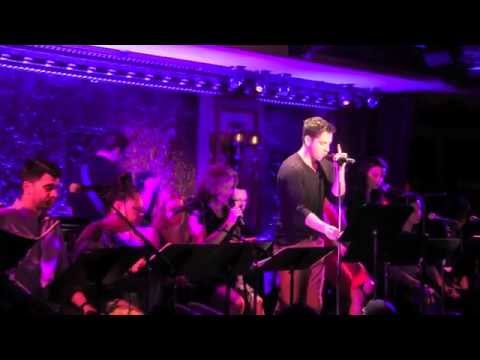
Review
Is “Bright Lights, Big City” a cautionary tale, or a confession that refuses to apologize? Paul Scott Goodman writes it like the second. The show follows Jamie through one week in Manhattan in 1984, when grief and ambition turn into a nightlife routine. The book is blunt. The lyrics are blunter. They name the seductions, then they name the cost, often in the same breath.
The smartest lyrical move is the narrator pressure. Jamie is not just “in” the city; he is being narrated by it, haunted by it, and sold to it. Goodman’s rock language is not a nostalgic pose. It’s a coping mechanism. When Jamie can’t tell the truth in speech, he shouts it in rhythm. The songs swing between office comedy, club menace, and family ache, and the whiplash is the point. This is what denial sounds like when it’s still energetic.
Musically, the score lives in a tight band setup and leans into guitar grit, pulsing keyboards, and vocal writing that asks performers to keep emotional clarity while the tempo keeps daring them to spin out. The best productions do not prettify it. They let the music be slightly aggressive. They let the lyrics be slightly embarrassed. That’s how the show stays human.
How It Was Made
Goodman wrote the book, music, and lyrics himself, adapting Jay McInerney’s 1984 novel into a sung-through, rock-forward stage piece. The musical premiered Off-Broadway at New York Theatre Workshop on February 24, 1999, directed and staged by Michael Greif, in the same venue ecosystem that had recently birthed “Rent.” That proximity became part of the conversation around the show, for better and for worse.
The most revealing origin detail comes straight from the author. In a note published with the licensing materials, Goodman remembers writing the opening riff in August 1996 on the deck of a country house near Woodstock, then returning to Manhattan as songs arrived “directly inspired” by the novel’s heightened poetry. It reads like a musician describing an intake of oxygen. The city gave him the story. The book gave him the language. The guitar gave him the engine.
The 2005 studio cast recording, released by Sh-K-Boom, is a key artifact in the show’s history. It captures a version that had already been shaped by concerts and revisions, and it helped keep the score circulating long after the initial run. In this show’s ecosystem, the album is not a souvenir. It’s a survival tool.
Key Tracks & Scenes
"Bright Lights, Big City" (Chuck Bean, Jamie, Company)
- The Scene:
- The show opens like a streetlight snapping on. Stark white beams. Bodies moving like they’re late for something. Jamie is pushed into the frame while the narrator energy sells New York as both promise and trap.
- Lyrical Meaning:
- It’s an invitation with teeth. The lyric puts “bright” next to “big” like a dare, and you can already hear how the city will rename Jamie’s pain as entertainment.
"Sunday Morning 6 AM" (Chuck Bean, Jamie, Mother, Company)
- The Scene:
- Morning arrives too early and too loud. A hangover landscape of fluorescent office light and memory flashes that slide in like unwanted pop-ups.
- Lyrical Meaning:
- Jamie’s week begins to tilt. The lyric makes “morning” feel like punishment. It’s the first clear musical sign that the spiral is not glamorous, it’s repetitive.
"Fact and Fiction" (Clara, Jamie, Company)
- The Scene:
- Gotham Magazine. Desks like cages. Paper stacks like small monuments to boredom. Clara’s authority lands in clipped phrases, and Jamie’s self-image starts to crack.
- Lyrical Meaning:
- The lyric weaponizes the job title. Jamie checks other people’s truth while avoiding his own. The song turns “fact” into control and “fiction” into longing.
"I Hate the French" (Clara, Jamie, Company)
- The Scene:
- An office meltdown played as comedy. Bright, unforgiving work light. Co-workers join in like a Greek chorus of irritations. The joke keeps sharpening until it stops feeling like a joke.
- Lyrical Meaning:
- This is Jamie’s displacement in rhyme. He can’t say “I hate my life,” so he hates France, hates the assignment, hates the obligation to be precise. Precision is what he’s lost.
"Odeon" (Jamie, Tad, Company)
- The Scene:
- The club. Low ceilings of sound. Colored flashes that hit the audience like camera bulbs. Tad moves like he owns the night; Jamie moves like he wants to be erased by it.
- Lyrical Meaning:
- The lyric is intoxication as argument. It sells oblivion as belonging. The number is less “party song” than recruitment pitch.
"Brother" (Michael, Jamie)
- The Scene:
- A sudden pocket of stillness. Warmer light, almost domestic, as if family is the only place the city can’t fully contaminate. Michael’s presence forces Jamie to look backward.
- Lyrical Meaning:
- The lyric frames brotherhood as witness. Michael isn’t just hurt; he remembers. The song makes Jamie’s self-destruction feel measurable, not abstract.
"Kindness" (Vicky)
- The Scene:
- Vicky appears like clean air. Softer focus. Less frantic movement. The staging often lets her stand still while the city keeps twitching around her.
- Lyrical Meaning:
- The lyric refuses cynicism. It argues that tenderness is not weakness, it’s a choice. In this score, that is a radical idea.
"Camera Wall" (Chuck Bean, Amanda, Jamie, Company)
- The Scene:
- Images pile up. Flashbulbs. Photo poses. Memory fragments. The lighting can turn strobe-like, as if Jamie’s brain is flipping through evidence against him.
- Lyrical Meaning:
- The lyric makes spectatorship feel violent. Jamie has been watching his own life instead of living it, and now the “wall” shows him what that costs.
"Bright Lights, Big City 3" (Jamie, Company)
- The Scene:
- Endgame. The city noise recedes just enough to hear the human underneath. A single practical light. A sense of going home, not as victory, but as next step.
- Lyrical Meaning:
- Where the opener sells the city, the closer takes inventory. Jamie’s lyric voice stops performing for the room and starts writing for himself again.
Live Updates
In 2026, “Bright Lights, Big City” is not a Broadway commodity. It’s a licensed title with a durable recording, a clear performance warning, and a band setup that makes it attractive to training programs and companies that can cast strong actor-singers. Concord Theatricals continues to license the show, and their materials outline a compact rock instrumentation that supports the score’s punch.
For a concrete 2026 datapoint: Trinity Laban has scheduled an amateur production for March 20 to 21, 2026 at the Laban Theatre in London, presented by arrangement with Concord. That kind of listing is the show’s current footprint: credible institutions programming it as a tough, contemporary acting-musician challenge rather than a nostalgia piece.
The studio cast album remains the easiest “entry point” for new fans. It’s widely available on major streaming services, and it preserves the show’s sung-through momentum in a way that still feels urgent.
Notes & Trivia
- The studio cast recording was released June 21, 2005 by Sh-K-Boom Records, with 29 tracks.
- AllMusic lists the recording date as May 23, 2004, with sessions spanning multiple New York studios.
- Goodman’s published author note remembers writing the opening riff in August 1996 near Woodstock on an Ovation 12-string.
- The Off-Broadway premiere opened February 24, 1999 at New York Theatre Workshop, directed and staged by Michael Greif.
- The same Playbill announcement that hyped the 2005 album notes that the recording reflects a revised version presented in concert at the Guggenheim as part of “Works and Process.”
- Concord’s music section lists a small rock combo orchestration, including two guitars, drums, bass, and two keyboard books.
- A professional UK production ran at Hoxton Hall in November 2010, keeping the piece visible outside the U.S.
Reception
The show’s reputation is defined by friction. It arrived in a downtown moment when rock theatre was being judged against the “Rent” template, and critics were quick to frame it as either sibling or impostor. That debate sometimes obscured what the score is actually doing: making addiction and self-mythology sound exciting, then making them sound empty.
With distance, the reception splits by geography and production approach. The 1999 response often fixated on structure and on Goodman’s onstage narrator presence. The 2010 London reviews were more willing to meet the piece on its own terms, praising its stripped-back intensity and the performers’ stamina. In other words: the closer a production gets to emotional honesty, the less it needs to “compete” with anyone else’s downtown legend.
“Its inherent design flaws will probably keep it from ever taking off.”
“A wonderfully slick, raw and honest production which favours a stripped back style.”
“One of the most anticipated new musicals of the New York theatre season.”
Technical Info
- Title: Bright Lights, Big City
- Year: 2005 (studio cast recording release); 1999 (Off-Broadway premiere)
- Type: Rock musical (sung-through / rock opera framing in multiple sources)
- Book, Music, Lyrics: Paul Scott Goodman
- Based on: “Bright Lights, Big City” (novel) by Jay McInerney
- Original premiere: New York Theatre Workshop, Feb 24, 1999; directed and staged by Michael Greif
- Studio album: Sh-K-Boom Records; released June 21, 2005; 29 tracks
- Recording context: AllMusic lists May 23, 2004 recording date in New York studios
- Label / distribution: Sh-K-Boom (album release and Playbill announcement); album widely available via Apple Music and Spotify listings
- Selected notable placements: Office fact-checking numbers (“Fact and Fiction,” “I Hate the French”); club sequence (“Odeon”); family reckoning (“Brother”); montage hallucination energy (“Camera Wall”)
- Orchestration profile: Small rock combo (two guitars, drums, bass, two keyboard books) as published in licensing materials
- Licensing: Concord Theatricals
- 2026 example listing: Trinity Laban, London (Mar 20 to 21, 2026)
FAQ
- Who wrote the lyrics for “Bright Lights, Big City”?
- Paul Scott Goodman wrote the book, music, and lyrics.
- Is the musical the same story as the 1988 film?
- Both adapt Jay McInerney’s novel. The musical keeps the story in a sung-through rock form and emphasizes Jamie’s inner narration.
- Which songs are the best “story map” if I’m new to the show?
- Start with “Bright Lights, Big City,” then “Sunday Morning 6 AM,” “Fact and Fiction,” “Odeon,” “Brother,” “Kindness,” and “Bright Lights, Big City 3.”
- Is there an official cast recording?
- Yes. A studio cast recording was released June 21, 2005 by Sh-K-Boom Records and is available on major streaming platforms.
- Is the show available for licensing right now?
- Yes. Concord Theatricals lists it as available for licensing and provides rental and orchestration details.
Key Contributors
| Name | Role | Contribution |
|---|---|---|
| Paul Scott Goodman | Book, Music, Lyrics | Turns a 1980s NYC self-destruction narrative into a rock confession with an onstage narrator edge. |
| Jay McInerney | Source Author | Wrote the 1984 novel that supplies the voice, the era, and the moral hangover. |
| Michael Greif | Director (original Off-Broadway) | Staged the 1999 NYTW premiere with a downtown rock-theatre performance grammar. |
| Patrick Wilson | Key Performer (recording) | Stars as Jamie on the 2005 album, tying the recording to the role’s original downtown identity. |
| Sh-K-Boom Records | Label | Released the 2005 studio cast album that kept the score in circulation. |
| Concord Theatricals | Licensing | Licenses the show and publishes core production data, song list, and orchestration profile. |
| Roger Butterley | Music Direction / Arrangements (recording) | Credited in performance listings as music director and arranger for the studio recording context. |
| Jesse Vargas | Orchestrations / Additional Arrangements | Credited in 2026 listing materials as providing orchestrations and additional arrangements. |
Sources: Concord Theatricals; Playbill; The New Yorker; WhatsOnStage; AllMusic; Apple Music; Spotify; Trinity Laban.