
Boy From Oz, The Lyrics: Song List
- Act 1
- The Lives of Me
- When I Get My Name in Lights
- When I Get My Name in Lights (Reprise)
- Waltzing Matilda
- Love Crazy
- All I Wanted Was the Dream
- Only an Older Woman
- Best That You Can Do
- Don't Wish Too Hard
- Come Save Me
- Continental American
- She Loves to Hear the Music
- Quiet Please, There's a Lady on Stage
- I'd Rather Leave While I'm in Love
- Not the Boy Next Door
- Act 2
- Bi-Coastal
- If You Were Wondering
-
Sure Thing Baby

- Everything Old Is New Again
- Everything Old Is New Again (Reprise)
- Love Don't Need a Reason
- I Honestly Love You
- You and Me
- I Still Call Australia Home
- Don't Cry Out Loud
- Once Before I Go
- Finale: I Go to Rio
- Tenterfield Saddler
About the "Boy From Oz, The" Stage Show
This musical has had several productions: on Broadway, in Australia and in the form of the international tour. On Broadway it opened in 2003, in October, in the Imperial Theatre. Hugh Jackman starred in it, which we all know for his roles in films about X men, where he depicted The Wolverine. This character could protrude sharp claws from his hands at the first request and in general, no one could kill him because of the particular mutation that renewed his body and he was additionally reinforced with the incredible metal alloy.
After the closure of the musical one year later (along with the completion of the contract of Hugh), the adaptation of musical was performed under the American audience.
Characters of Judy Garland and Liza Minnelli – mother and daughter – were greatly enlarged to the public from US, (character of Liza was married on Hugh). It had 365 plays – the same number as the days of the year – and 32 more pre-showing. Philip W. McKinley was the director, choreographer – Joey McKneely. The main role possessed again Hugh Jackman, and other roles played by: J. Hill, S. J. Block, J. Emick, B. Fowler, I. Keating. Hugh has won several prestigious awards for his play – Tony and Drama Desk Award (both in 2004), and the musical received another reward, Drama Desk Award and four Tony nominations. The musical recouped its investment in a little more than USD 8 million.
Hugh Jackman is back with a reworked staging in 2006 (which was designed for large halls that can accommodate over 10 thousand spectators). Together with them, J. Gates, A. Toohey, R. Newton, S. Fahey-Leigh, C. Amphlett & D. Speedy played. In addition to them, it was 40 dancers, and when a musical went to Australia with the tour, it has a choir of more than 100 girls.
Peru staged a Spanish version of the musical.
Release date of the musical: 2003
"The Boy from Oz" (2003) – The Musical Guide & Song Meanings
Review
What happens when your greatest defense mechanism becomes your brand? “The Boy from Oz” puts Peter Allen on a concert platform, then keeps pulling the curtain back: childhood in Tenterfield, the Hong Kong hotel set where Judy Garland first clocks his hunger, the marriage to Liza Minnelli, the strobe-lit glamour of New York, and the private arithmetic of love during the AIDS crisis. The structure is brisk, often episodic. That is not accidental. This is a show about a man who learned to keep moving before anyone could look too closely.
Lyrically, it’s a split brain. Many songs arrive from Allen’s existing catalog, so the “lyrics driving plot” job happens by re-context. A line that once played as nightclub sparkle becomes a mask in a marriage scene. A patriotic anthem becomes a farewell. The book (Martin Sherman for Broadway) leans into that re-context by placing numbers inside concrete, named moments: Radio City Music Hall, the Copacabana, and the Allen family home, with Judy and Liza staged as both people and myth. The best sequences make you feel the show choosing not to sanitize the contradictions. He wants fame. He wants safety. He wants to be loved. He also wants to be untouched.
Musically, the palette swings from pop sheen to torch-song ache. That range is the character. Allen’s voice, as the show frames it, is rarely “pure.” It is persuasive. Even the tender songs sound like he’s winning the room. That’s the tragedy under the sequins: the performance is never fully off, even when he’s alone.
How It Was Made
The Broadway version opened at the Imperial Theatre on October 16, 2003 and ran through September 12, 2004, built around Hugh Jackman’s star heat and physical charisma. IBDB’s production notes also underline the show’s geographic logic: the story ricochets between Australia, Hong Kong, and New York, with set pieces tied to specific venues like Radio City Music Hall and the Copacabana. It’s biography written as itinerary.
Under the hood, “The Boy from Oz” is two related shows. In Australia, the musical was developed with a book by Nick Enright (commissioned from the biography by Stephen MacLean). For Broadway, playwright Martin Sherman revised the text for an American audience, with reporting at the time noting the reconfiguration and the push to make the Garland-Minnelli material land hard in a Broadway house. The result is a bio-musical that behaves like a tribute concert, but keeps slipping into scenes that feel like documentary reenactment.
The cast album story is unusually clean and well documented. Playbill reported the recording session date (October 20, 2003), the label (Decca Broadway), and the producer credit (Phil Ramone), with release set for November 18, 2003. That matters because the album is the show’s long tail. For many listeners, the “lyrics” of this musical are first experienced as a curated narrative playlist.
Key Tracks & Scenes
"The Lives of Me" (Peter)
- The Scene:
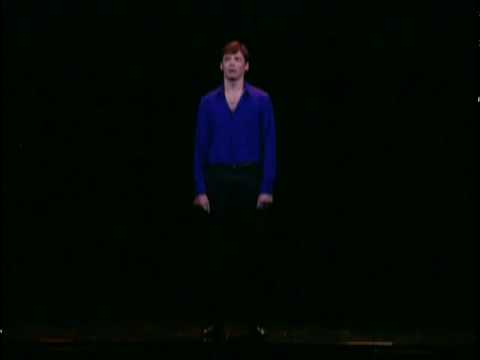
- Opening. A concert frame. Peter addresses the crowd like he’s starting a set, but the lighting often isolates him so the “banter” feels like confession with a mic stand.
- Lyrical Meaning:
- The lyric is a mission statement: identity as a collage. It gives the show permission to jump through time, and it sets up the central theme: reinvention is thrilling, but it can also be avoidance.
"When I Get My Name in Lights" (Young Peter, Company)
- The Scene:
- Tenterfield, childhood performance. In the Broadway framing, the show cuts from adult Peter’s stage to the boy performing for money, with the ensemble shaping the room into a pub. Expect bright, eager lighting and a sense of “look at me” that’s already desperate.
- Lyrical Meaning:
- Fame as a promise that will fix everything. The lyric plays as cute. The staging makes it feel like a coping strategy being born in real time.
"All I Wanted Was the Dream" (Judy)
- The Scene:
- Hong Kong Hilton sequence. Peter coaxes Judy into singing, and the number often lands in a tight spotlight, with the room around her dimmed like a bar at closing time. One critic described the visual impact in vivid costume detail, ending on the audience’s gasp.
- Lyrical Meaning:
- Judy’s lyric becomes both warning and mirror. The dream was real. The bill arrived anyway. The song teaches Peter what stardom looks like when it starts to fray.
"Best That You Can Do" (Peter, Liza)
- The Scene:
- New York introduction and courtship. The staging typically makes it feel like a whirlwind: a famous mother nearby, a young woman lit like a new headline, and Peter performing charm at full volume.
- Lyrical Meaning:
- It’s romantic on the surface, but the lyric also reads as negotiation. “The best that you can do” is love with conditions. In a bio-musical, that ambiguity is gold, because it can play as sincere and defensive at the same time.
"Not the Boy Next Door" (Peter)
- The Scene:
- Homecoming and self-definition. In one documented scene breakdown, it appears in the stretch that includes Marion’s home and the Australian concert material, which makes the number feel like a public declaration delivered with private stakes.
- Lyrical Meaning:
- This is the show’s thesis in glitter. The lyric insists on difference, and dares you to call it a flaw. It’s also Peter rehearsing the line he wants the world to repeat back to him.
"Everything Old Is New Again" (Peter, The Rockettes)
- The Scene:
- Radio City Music Hall set piece. Bright, high-production lighting. The choreography sells legitimacy: Peter isn’t just a nightclub act, he’s headline material, surrounded by precision bodies.
- Lyrical Meaning:
- The lyric reads like a party line, but the show uses it as philosophy. Reinvention isn’t a phase. It’s his engine. That’s triumphant, and a little terrifying.
"Love Don't Need a Reason" (Peter, Greg)
- The Scene:
- Late story turn as Greg becomes seriously ill. The room simplifies. Fewer bodies, less spectacle. Lighting often narrows to a bedside hush.
- Lyrical Meaning:
- One of the rare moments where the lyric stops selling and starts stating. The line is plain, almost stubborn. In a show built on performance, that plainness hits like truth.
"I Still Call Australia Home" (Peter, Company)
- The Scene:
- Final concert for Australia. In a scene outline published by CurtainUp, it sits in the “Australian Concert” portion alongside Marion’s big ballad and Peter’s goodbye material, which frames the anthem as both national address and personal farewell.
- Lyrical Meaning:
- It’s an anthem, yes. In this show, it’s also a last attempt to talk to his mother without saying the one thing he can’t say. The lyric becomes a substitute confession.
"Once Before I Go" (Peter)
- The Scene:
- Near-end farewell. The show’s concert frame collapses into something closer to a curtain call with consequences. The lighting often feels like “end of set,” but emotionally it’s “end of life.”
- Lyrical Meaning:
- Allen’s lyric is short on self-pity. That’s the gut punch. It’s less an apology than a tally. In a bio-musical, that restraint can read as bravery, denial, or both.
Live Updates
As of January 14, 2026, “The Boy from Oz” is not in an active Broadway run, but it is visibly alive in licensed productions and local seasons, especially in Australia. Rights and licensing information is handled through David Spicer Productions, which continues to present the show as a licensable title.
Recent public listings underline that “Boy from Oz” still plays well outside commercial centres: for example, Inner West Theatre Company scheduled a run in June 2025 (Petersham Town Hall), and Free-Rain Theatre Company mounted an October 2024 season in the Canberra region, with multiple press quotes collected on the production page. These are not nostalgia museum pieces. They’re working shows, built for audiences who know the hits and want the life story attached.
If you are hunting for a big-ticket tour or arena-scale revival announcement, the practical signal is quieter: Ticketmaster Australia’s listing shows no upcoming on-sale dates at the moment it was checked, which usually means nothing national is currently marketed through that channel. In 2026, the “trend” is less about one centralized revival, more about steady repertory circulation.
Notes & Trivia
- The Broadway production opened October 16, 2003 and closed September 12, 2004 at the Imperial Theatre.
- IBDB lists the Broadway setting as a multi-location itinerary spanning Tenterfield, Hong Kong, and New York venues including the Copacabana and Radio City Music Hall.
- The original Broadway cast album was recorded October 20, 2003, produced by Phil Ramone, and released November 18, 2003 on Decca Broadway.
- Playbill reported the show’s advance sales momentum and noted that it recouped its initial Broadway capitalization despite lukewarm reviews.
- The material exists in different book versions: Nick Enright for the Australian development and Martin Sherman for the 2003 Broadway adaptation.
- A published scene-and-song outline (used in some production materials) explicitly labels “Hong Kong scene change” beats before Judy’s entrance and “All I Wanted Was the Dream.”
- CurtainUp’s scene list places “I Still Call Australia Home,” “Don’t Cry Out Loud,” and “Once Before I Go” together in the late “Australian Concert” stretch, highlighting how the finale is structured as a sequence of farewells.
Reception
The critical pattern is consistent across outlets: reviewers often separated the central performance from the show’s narrative scaffolding. That split is useful for lyric analysis. It suggests the songs, by themselves, can land as personal fireworks, while the book sometimes struggles to make the life story feel inevitable rather than assembled.
“Jackman is giving a vital and engaging performance in this pitifully flimsy musical.”
“The audience gasps: we’re in the presence of a great theatrical star impersonating a great theatrical star.”
“As the protagonist, Hugh Jackman looks nothing like … Peter Allen, and lacks some essential spark.”
Technical Info
- Title: The Boy from Oz
- Year: 2003 (Broadway opening)
- Type: Jukebox bio-musical built around Peter Allen’s songbook
- Music & Lyrics: Peter Allen (with select co-writers on individual songs, depending on number)
- Book: Martin Sherman (Broadway); Nick Enright (original Australian book)
- Broadway theatre and run: Imperial Theatre; Oct 16, 2003 to Sep 12, 2004
- Setting (Broadway): Tenterfield, Australia; Hong Kong; New York City locations including Peter and Liza’s apartment, the Copacabana, and Radio City Music Hall
- Cast recording: Recorded Oct 20, 2003; released Nov 18, 2003; Decca Broadway; produced by Phil Ramone
- Selected notable placements: Childhood dream framing (“When I Get My Name in Lights”); Hong Kong Judy encounter (“All I Wanted Was the Dream”); marriage pressure (“Best That You Can Do”); Radio City spectacle (“Everything Old Is New Again”); late Australian-concert sequence (“I Still Call Australia Home,” “Once Before I Go”)
- Licensing (notable current pathway): David Spicer Productions
FAQ
- Is “The Boy from Oz” a jukebox musical?
- Yes. It is built around Peter Allen’s existing songs, with the book shaping those lyrics into biography and concert narrative.
- Who wrote the Broadway version’s book?
- For Broadway (2003), the book is credited to Martin Sherman, with the Australian book credited to Nick Enright in earlier versions.
- When did the Broadway production run?
- It opened October 16, 2003 and closed September 12, 2004 at the Imperial Theatre.
- When was the original Broadway cast recording released?
- Playbill reported a November 18, 2003 release on Decca Broadway, produced by Phil Ramone, after an October 20 recording session.
- Where do theatres license the show in 2026?
- Licensing information is widely routed through David Spicer Productions, and the title continues to appear in local seasons and production listings.
Key Contributors
| Name | Role | Contribution |
|---|---|---|
| Peter Allen | Music & Lyrics | Source songbook: pop hooks, torch-song candor, and self-mythologizing lines that gain new meaning when staged as autobiography. |
| Martin Sherman | Book (Broadway) | Reframes the life story for Broadway, emphasizing the U.S. celebrity orbit and building scene-based context for catalog songs. |
| Nick Enright | Original book (Australia) | Anchors the Australian development of the biography, later revised for different markets. |
| Hugh Jackman | Original Broadway Peter Allen | Star performance that critics repeatedly singled out as stronger than the show’s “bio-musical” framework. |
| Phil Ramone | Cast album producer | Produced the Original Broadway Cast Recording for Decca Broadway; recording date and release plan were reported by Playbill. |
| David Spicer Productions | Licensing | Ongoing licensing pathway and materials access for productions. |
Sources: IBDB; Playbill; Variety; The New Yorker; New York Magazine; CurtainUp; David Spicer Productions; TheatreTrip; Ticketmaster Australia; Wikipedia (production history and numbers list); Inner West Theatre Company; Free-Rain Theatre Company.