
Andrew Lloyd Webber Divas Lyrics: Song List
- Memory - Betty Buckley
- Music Of The Night - Katherine Jenkins
- Don't Cry For Me, Argentina - Madonna
- All I Ask Of You - Shirley Bassey
- Surrender - Sarah Brightman
- With One Look - Glenn Close
- Learn To Be Lonely - Minnie Driver
- The Perfect Year - Dina Carroll
- I Don't Know How To Love Him - Yvonne Elliman
- Buenos Aires - Patti Lupone
- As If We Never Said Goodbye - Barbra Streisand
- Rainbow High - Elaine Paige
- Tell Me On A Sunday - Marti Webb
- The Heart Is Slow To Learn - Kiri Te Kanawa
- Another Suitcase Another Hall - Barbara Dickson
About the "Andrew Lloyd Webber Divas" Stage Show
It is not a musical, but a gathering of the best-famous songs extracted from musicals, films and other art works from the repertoire of Sir Andrew L. Webber. These are songs that were presented by divas and several amongst them are, in fact, have become famous because of these performances. Are they all considered divas? Amazingly, the bigger part – yes. Minnie Driver – hardly a diva even at close inspection with magnifying glass. Glenn Close (101 & 102 Dalmatians – were the very memorable among her roles in the movies and made her famous for several years broadly throughout the globe. And yet another part where she depicted the presidential wife) is shown here with her song With One Look. And Madonna, of course, with her mega-famous Don’t Cry For Me Argentina.
Yvonne Elliman presented an interesting vintage version of the melody I Don't Know How to Love Him from the Jesus Christ Superstar opera, Marti Webb – Tell Me On A Sunday, Betty Buckley – Memory, and the famous Patti LuPone impressed us with her Buenos Aires.
Release date of the musical: 2006
"Andrew Lloyd Webber Divas" – The Musical Guide & Song Meanings
Review
Is “Divas” a love letter to Lloyd Webber’s women, or a reminder that the biggest feelings in these scores were engineered to sell? The answer is both, and the friction is the point. As a compilation, the album rearranges decades of theatre into a single emotional argument: the female voice is where the confession lives, where the plot either cracks open or gets papered over with glamour. It is not a “greatest hits” in the neutral sense. It is a curatorial thesis built on public-facing vulnerability.
Listen to the lyrical shape across the selections. So many of these songs hinge on a single rhetorical trick: an “I” speaking to a crowd while pretending it is speaking to one person. Eva Perón’s balcony address is the obvious model, but the technique repeats everywhere. Christine’s romance is staged as a bargain. Norma Desmond’s self-mythology is staged as a camera test. Grizabella’s pain becomes a communal hymn. The words keep asking for permission to be seen, then punishing the listener for watching.
Musically, “Divas” draws a line from pop-ballad directness to quasi-operatic swell. The style matters because it controls how much distance the characters get from their own crises. When the harmony turns expensive, the text can become brutally simple and still feel “true.” That is Lloyd Webber’s signature engine: big melodic certainty colliding with lyrical doubt. The album makes that engine feel less like theatre craft and more like an aesthetic ideology.
How It Was Made
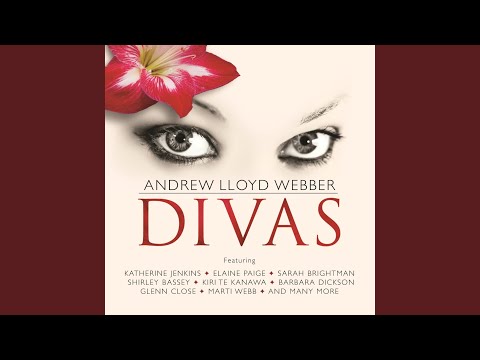
“Andrew Lloyd Webber Divas” arrived as a label-backed compilation, positioned as a star-powered gateway for listeners who knew the songs but not always their original contexts. Playbill’s announcement framed it plainly as a “new compilation disc” scheduled for release on Decca Broadway in late September 2006, with a roster built to read like a marquee. The hook was not novelty. It was recognition. :contentReference[oaicite:0]{index=0}
But the deeper origin story is in the way these scores were written in the first place. “Memory,” the album’s north star, was not born as a safe, finished product. Reporting on the making of “Cats,” The New Yorker describes how a needed centerpiece forced a late-stage creative pivot, turning a fragment into a ballad designed to land like a cultural event. The song’s eventual dominance makes it feel inevitable now. It was not. :contentReference[oaicite:1]{index=1}
That tension is what “Divas” bottles: songs that started as problem-solving in rehearsal rooms, now repackaged as icons. Compilation albums always flatten history. This one also clarifies it. It says the “diva” in Lloyd Webber is not a personality type. It is a structural role: the person who gets the melodic close-up when the plot needs oxygen.
Key Tracks & Scenes
"Memory" (Grizabella)
- The Scene:
- A ruined glamour cat steps into a circle of bodies like a spotlight trap. The night is smoky. The movement around her quiets. The lighting feels like it is searching for a face it used to know.
- Lyrical Meaning:
- The words are an audit of time. Not nostalgia as comfort, nostalgia as evidence. “Memory” makes shame singable, then makes forgiveness sound like a key change. Its real power is that it is both confession and audition.
"Don't Cry for Me Argentina" (Eva Perón)
- The Scene:
- A public address staged as intimacy. The balcony is a proscenium inside a city. The crowd becomes an instrument. The performer shapes the air like it is law.
- Lyrical Meaning:
- This lyric is persuasion dressed as tenderness. Eva claims honesty while controlling the frame. The song teaches the audience how to be complicit: you are allowed to doubt her, but you are also asked to love her for knowing you might.
"With One Look" (Norma Desmond)
- The Scene:
- A decaying mansion turned into a private screening room. A woman replays her past like a religion. The light is projector-light, ghostly, and it worships her as much as it exposes her.
- Lyrical Meaning:
- The lyric is pure self-myth. It argues that charisma is moral proof. Norma’s “one look” is not seduction. It is revisionist history. The song is a manifesto for a person who cannot survive without applause.
"All I Ask of You" (Christine, with the promise of Raoul)
- The Scene:
- A brief pocket of warmth inside a story built on surveillance. The space feels safe because it is private. The orchestra feels like a curtain being pulled over danger.
- Lyrical Meaning:
- It is a love song built from conditions. The lyric asks for quiet, for protection, for a life without the gaze. That request is tragic because the show is about the impossibility of leaving the gaze behind.
"I Don't Know How to Love Him" (Mary Magdalene)
- The Scene:
- Stillness. A woman tries to name what devotion is when it cannot be coded as romance or duty. The staging often isolates her, because the conflict is internal and immediate.
- Lyrical Meaning:
- This lyric is an argument against simplification. It refuses the neat categories that musicals usually reward. The uncertainty is the point. She is not asking to be saved. She is asking to understand herself.
"Tell Me on a Sunday" (The unnamed heroine)
- The Scene:
- A one-woman stage picture. Letters, phone calls, and waiting become scenery. The light shifts like mood swings. Time passes in the space between sentences.
- Lyrical Meaning:
- The lyric is a study in self-deception. Hope becomes a scheduling tactic. The song turns romantic fantasy into something logistical, and that is why it hurts.
"Learn to Be Lonely" (A late addition to the Phantom mythos)
- The Scene:
- Not a traditional stage moment, but a reflective coda energy: aftermath, distance, the sense that the story has ended yet the psychological weather has not cleared.
- Lyrical Meaning:
- The text sells resilience while admitting damage. It is loneliness as skill, loneliness as inheritance. A modern kind of epilogue: the cost of surviving the romance.
"The Heart Is Slow to Learn" (A melody that refuses to stay put)
- The Scene:
- Concert-style storytelling: a voice in formal stillness, the orchestration doing the acting. The emotion reads as private, even when performed to thousands.
- Lyrical Meaning:
- The lyric circles the idea that love is not a switch. It is a pace. The song matters on this album because it shows Lloyd Webber’s habit of treating melody like a character that can reincarnate across projects.
Live Updates
In 2025 and into 2026, “Divas” lives less as a CD-era product and more as a streaming artifact. The album is currently listed on major platforms including Spotify and Apple Music, with platform metadata reflecting different configurations by territory and reissue cycle. That matters for listeners: you might see a shorter 2005-era track count on one service and an expanded 2007 listing on another. :contentReference[oaicite:2]{index=2}
For chart context, the UK’s Official Charts archive shows “ANDREW LLOYD WEBBER - DIVAS” reaching a peak of 10 on the Official Compilations Chart during its 2005 run, a useful reminder that the “diva” framing worked commercially, not just theatrically. :contentReference[oaicite:3]{index=3}
What has changed is how audiences encounter the material. The algorithm now treats each track like a stand-alone confession rather than a chapter in a score. That shift can sharpen the lyrics, but it can also strip away the narrative alibi. Heard in isolation, these songs reveal how often Lloyd Webber and his lyricists write women who must make a case for their own legitimacy in real time.
Notes & Trivia
- Playbill reported the compilation’s Decca Broadway street date as September 26, 2006. :contentReference[oaicite:4]{index=4}
- AllMusic lists the release under the Really Useful, Decca Broadway, and Universal Classics & Jazz umbrella for a September 26, 2006 release entry. :contentReference[oaicite:5]{index=5}
- John Kenrick called it “an all-star treasure trove,” and then immediately mocked its most sentimental instincts, praising the packaging while side-eyeing the taste profile. :contentReference[oaicite:6]{index=6}
- The Official Charts archive shows the title hitting a peak position of 10 on the UK Official Compilations Chart during its 2005 chart week entries. :contentReference[oaicite:7]{index=7}
- The YouTube “Divas” playlist exists as an official-style album playlist, which signals how the release has been republished for platform listening. :contentReference[oaicite:8]{index=8}
- “Memory” became the centerpiece “Cats” needed late in the process, with reporting noting a push to create a true showstopper rather than a pleasant interlude. :contentReference[oaicite:9]{index=9}
- “The Heart Is Slow to Learn” is linked, in published musical documentation, to later reuse of the melodic idea under different titles in Lloyd Webber’s catalogue. :contentReference[oaicite:10]{index=10}
Reception
Then: critics tended to treat “Divas” as a marketable bundle, useful but rarely essential if you already owned cast albums. Now: it plays differently, because playlists have trained audiences to accept “context-free theatre” as normal listening. The lyrics feel starker in that environment. Some songs gain integrity. Some become pure brand.
“Longtime Lloyd Webber fans will already own most of these tracks, but younger fans will find this compilation an all-star treasure trove.”
“Cats” needed a real centerpiece, and “Memory” emerged as the ballad built to carry the show’s emotional weight.
Technical Info
- Title: Andrew Lloyd Webber Divas
- Year: 2006 (US retail cycle); chart activity appears in UK archives in 2005
- Type: Compilation / various vocal performances drawn from Lloyd Webber works
- Release date (US, reported): September 26, 2006 :contentReference[oaicite:11]{index=11}
- Label context: Decca Broadway and the Really Useful brand family appear across release listings :contentReference[oaicite:12]{index=12}
- Selected notable placements (original works represented): Cats; Evita; The Phantom of the Opera; Sunset Boulevard; Jesus Christ Superstar; Song and Dance :contentReference[oaicite:13]{index=13}
- Streaming availability (current listings): Spotify and Apple Music host album entries under “Divas” :contentReference[oaicite:14]{index=14}
- Chart notes: UK Official Compilations Chart peak of 10 recorded in Official Charts archive :contentReference[oaicite:15]{index=15}
FAQ
- Is “Andrew Lloyd Webber Divas” a cast recording?
- No. It is a compilation that pulls together performances (often famous, sometimes original-cast adjacent) from multiple Lloyd Webber titles, presented as a unified listening experience. :contentReference[oaicite:16]{index=16}
- Why do the songs feel so similar even when they come from different shows?
- Because the album is curated around a specific character function: the female-led confession. The music tends to widen into long melodic lines while the lyric tightens into direct pleading, persuasion, or self-myth.
- What is the “real” context of “Don’t Cry for Me Argentina”?
- In “Evita,” it is a public address staged as intimacy. It is political theatre inside a theatre score. On a compilation, it reads more like pure romance, which can be misleading, and also revealing.
- Why is “With One Look” so unsettling?
- Because it treats celebrity memory as proof of worth. The lyric is not about love. It is about being witnessed, and controlling what the witness sees.
- Where can I listen to the album in 2025/2026?
- It appears on major streaming services, including Spotify and Apple Music, and it also circulates as an official-style YouTube playlist. :contentReference[oaicite:17]{index=17}
Key Contributors
| Name | Role | Contribution |
|---|---|---|
| Andrew Lloyd Webber | Composer / curator brand | Core catalogue source; compilation framing around female-led signature songs. |
| Decca Broadway | Label | US release and retail positioning for the compilation. :contentReference[oaicite:18]{index=18} |
| Playbill | Trade press | Documented the release plan and the headline performer roster. :contentReference[oaicite:19]{index=19} |
| John Kenrick | Critic / theatre historian | Published an early capsule reaction that captures the compilation’s appeal and its excess. :contentReference[oaicite:20]{index=20} |
| The New Yorker (Jia Tolentino) | Critical context | Reported “Cats” history that explains why “Memory” became the model for the modern Lloyd Webber showstopper. :contentReference[oaicite:21]{index=21} |
Sources: Playbill, Official Charts (UK), The New Yorker, Musicals101 (John Kenrick), AllMusic (release metadata), Spotify, Apple Music, YouTube (album playlist), Discogs.