
Very Potter Sequel, A Lyrics: Song List
About the "Very Potter Sequel, A" Stage Show
Songs composed by D. Criss. Libretto wrote N. Lang, M. Lang & B. Holden. The presentation of the spectacular took place in mid-May 2010 in one of the campuses of the University of Michigan. Production was carried out by ‘StarKid Productions’. Director was M. Lang, choreographer – J. Tolbert. Also in the development of performance acted: B. Kiesling, C. Lubowich, S. Petty, A. Chininis & L. McKinnon. Music accompaniment created by B. Keisling, C. Baxtresser, C. Richardson, C. Lorentz & J. Stratton. The main role played by D. Criss. His friends played J. Richter and B. Gruesen. Other cast was: J. Walker, L. Lopez, J. Moses, D. Saunders, B. Holden, J. Povolo, T. Brunsman, J. L. Beatty, C. Dorris, N. Straus, D. Lytle, B. Rosenthal, A. Goldman, B. Coleman, R. Campbell, L. Marks, S. Tajima, J. Albain & N. Lang. In mid-July 2010, the play’s video was posted on YouTube. At the end of July 2010, the market seen the album with musical’s compositions. In July 2015, Louisiana St. Bernard's Community Theatre had hosted the show. The production was undertaken by director T. Ortego. Starring: J. Penton, J. Collings, P. Deforest, V. Collins, T. Smith, J. Gross, R. Gregoire, D. Waguespack, B. Dorand, E. O'Neil, M. Springer, J. Russell, E. Geeting, T. Martin, J. Otani-Hansan, L. Schwartz, G. Perret, M. Perniciaro, C. Baudier, S. Lee, B. Milburn, A. Michel, L. Perkins, K. Miller & J. Alphonso.
Release date of the musical: 2010
"A Very Potter Sequel" – The Musical Guide & Song Meanings
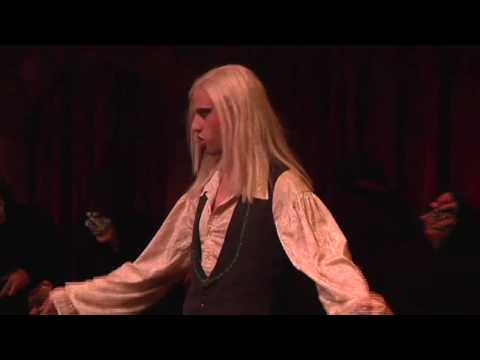
Review: a sequel that weaponizes déjà vu
How do you write a follow-up to a viral musical where the audience already knows the punchlines? "A Very Potter Sequel" answers by making memory part of the plot engine. The story literally rewinds time, but the score treats rewind as a character flaw: everyone is trapped in what they remember, what they wish they could redo, and what they would rather not admit they miss. The lyrics do two jobs at once. They speed-run exposition with jokes that land like confetti, then pivot into sincere, Broadway-coded yearning without apologizing for the whiplash.
Musically, the show sits in pop musical theatre with quick genre postcards: villain patter with a marching bite, disco flirtation as threat, Disney-sweet ballad writing for Harry’s soft center, and big ensemble anthems that feel like a school pep rally that got hijacked by fan culture. The characters speak in lyric the way internet fandom speaks in comments: hyper-specific, relentlessly referential, and weirdly tender when nobody is looking. That’s the secret sauce. The parody isn’t just aimed at Harry Potter, it’s aimed at the way we narrate our own identities through the stories we love.
Listener tip (experience): If you’re coming in cold, watch the first 10 minutes before you hit play on the album. The score moves fast and assumes you can keep up. Once you know the time-turner premise and the Umbridge problem, the recurring jokes start reading like motifs instead of noise.
How it was made
The origin story is very 2010: University of Michigan artists, a Basement Arts DNA, and a distribution plan that effectively said, “put it online and let the internet do the marketing.” Local coverage before the run noted just how instantly the first show’s YouTube life changed the group’s scale, and how ticket demand for the sequel became its own mini-drama. That pressure matters, because you can hear the writing trying to be bigger without losing the scrappy directness that made the first one travel.
Darren Criss wrote the music and lyrics for this installment, and the writing process has a useful tell: several songs began life elsewhere. “Guys Like Potter” was adapted from a prior song about a friend named Peter, “Stutter” existed before the show, and “Days of Summer” had been kicking around as an internal StarKid joke after it was written for a separate web project. That repurposing is not a weakness. It’s a compositional fingerprint. The score constantly reframes older material into a new context, which matches a plot about changing the past and discovering it still leaves fingerprints on you.
Trust check: You’ll sometimes see the claim that there was “no recording.” The more accurate version is: there wasn’t a traditional studio cast album release in the Broadway sense, but there is an official release of a partial soundtrack and related compilation releases through StarKid’s channels.
Key tracks & scenes
"Not Over Yet" (Lucius Malfoy & Death Eaters)
- The Scene:
- A dark-wizard strategy huddle. Lucius turns defeat into choreography: bodies close, schemes closer. The room feels like it’s lit by ego and bad ideas.
- Lyrical Meaning:
- It’s a mission statement disguised as a party. The lyric’s punchy repetition sells the thesis: the past is editable, and villains consider that a customer service feature.
"Harry Freakin' Potter" (Ron, Rita Skeeter, Harry, ensemble)
- The Scene:
- King’s Cross, Platform 9 3/4 energy, with Rita circling like a tabloid drone. The song plays like a hype video being filmed in real time.
- Lyrical Meaning:
- A list song about fame that keeps tripping over grief. The lyric sells Harry as myth, then lets him admit the myth cost him something. That tension powers the sequel’s emotional credibility.
"To Have a Home" (Harry Potter)
- The Scene:
- Arrival at Hogwarts, a moment of breath after transit chaos. Harry is still, finally, while the world around him insists on being ridiculous.
- Lyrical Meaning:
- This is the show’s cleanest sincerity. The lyric treats “home” as a physical place and a psychological permission slip. It’s also a tonal dare: the show expects you to laugh, then asks you to care.
"Gettin' Along" (Dumbledore & Umbridge)
- The Scene:
- A flirtation duet staged like a bad idea you can’t interrupt fast enough. The vibe is bright, the danger is smiling, and the dance break is the warning label.
- Lyrical Meaning:
- The lyric uses charm as camouflage. Umbridge’s menace is wrapped in compliment rhythms, and Dumbledore’s odd warmth becomes a plot vulnerability.
"Guys Like Potter" (Lucius Malfoy & Snape)
- The Scene:
- Two bitter adults bonding over romantic grievance. The staging often plays the contrast: big feelings in deeply petty packaging.
- Lyrical Meaning:
- It’s the score’s sharpest example of comedic profanity doing serious work. The lyric is about resentment, but also about self-mythologizing: both men rewrite history so they can stay the hero of their own misery.
"Stutter" (Umbridge)
- The Scene:
- Umbridge takes the stage like it’s a nightclub and a courtroom at once. The air feels synthetic, like bubblegum over a trap door.
- Lyrical Meaning:
- A villain number built on interruption. The lyric’s stop-start texture becomes control as a musical gesture: she decides when language moves forward.
"Days of Summer" (Harry, Ron, Hermione, Draco, ensemble)
- The Scene:
- Ensemble reflection that plays like a yearbook montage with teeth. The mood is warm until you notice the plot is tightening around them.
- Lyrical Meaning:
- Nostalgia, but with a timer. The lyric insists the good days were real, while quietly admitting they were temporary. That bittersweet engine is why the finale lands.
"Goin' Back to Hogwarts" (Company)
- The Scene:
- The big return anthem, staged as communal release. It feels like a curtain call and a vow, sometimes in the same breath.
- Lyrical Meaning:
- The lyric is the show’s handshake with the audience: you came back, we came back, the story survives because you keep rewatching it.
Live updates (2025–2026)
Information current as of February 2026. "A Very Potter Sequel" itself is not operating as a touring property in the conventional musical-theatre pipeline. Its life is primarily digital: the official segmented videos remain available via StarKid’s YouTube presence, and the official soundtrack release remains available through StarKid’s music outlets. StarKid’s own show hub continues to list the title and route listeners toward its music ecosystem.
What has changed lately is the broader StarKid live footprint. The company has continued expanding its live and international ambitions, including high-profile UK appearances and West End-facing plans for other titles. That matters for Potter fans because it signals where StarKid’s resources are going: new work, new venues, and concert-format nostalgia rather than remounting the Very Potter trilogy as full productions.
Practical update for listeners: If you want “fresh” Potter-adjacent StarKid vocals without hunting archival audio quality, look for later concert arrangements and sheet music offerings tied to reunion programming. They can function as a clean listening path back into the material.
Notes & trivia
- Several songs were repurposed from earlier Criss writing: “Guys Like Potter” traces back to a prior song about a friend named Peter, while “Stutter” and “Days of Summer” had earlier lives before being fitted to AVPS.
- The official Bandcamp release positions itself as a partial soundtrack and uses a pay-what-you-want model, with a request to donate to keep downloads accessible.
- In early coverage of the live run, ticket demand dramatically outstripped capacity, turning the distribution process into part of the show’s mythos.
- “To Have a Home” later lived beyond AVPS in concert contexts, which is usually a sign that a number reads cleanly outside plot.
- Apocalyptour-era set lists folded “Not Over Yet” into villain-medley contexts, effectively branding it as a signature bad-guy hook for the company.
- Myth check: when people say “there’s no album,” they often mean “no polished studio cast recording.” The official releases exist, just in StarKid’s indie release model.
Reception
Reception splits along the most predictable line: fans who want tighter plotting versus fans who primarily want the hangout energy of the troupe. Critics and bloggers who responded positively tend to describe the show’s affection for the source material as a core virtue, and they often single out the score as the sequel’s strongest upgrade. The skeptical view is also fair: time travel gives you permission to revisit greatest hits, and revisiting can drift into recap.
“If you’ve never had the pleasure of watching the raucously funny spoof show ‘A Very Potter Musical’…”
“So to say the show ‘blew up’ is a bit of an understatement.”
“The troupe will present a selection of songs from their catalogue.”
My take: the lyrics are smarter than the plot mechanics. The show’s best writing uses parody as a compression tool. It can sketch a relationship, mock it, and mourn it in under 16 bars. That’s a rare skill, even in bigger-budget rooms.
Quick facts
- Title: A Very Potter Sequel
- Year: 2010 (live run); 2010 (video release online); 2010 (official soundtrack release)
- Type: Parody musical; online-distributed performance video
- Book: Matt Lang, Nick Lang, Brian Holden
- Music & Lyrics: Darren Criss
- Company: StarKid Productions
- Setting drivers: Time-turner reset to first-year Hogwarts; Umbridge as central antagonist
- Selected notable musical placements: “Not Over Yet” appears in StarKid concert medley contexts; “To Have a Home” appears as a standalone concert pick
- Release context: Indie digital-first distribution via YouTube and StarKid-controlled storefronts
- Label/album status: Official release exists as a partial soundtrack (indie release model)
- Availability notes: Official soundtrack via StarKid’s music outlets; official video available via StarKid’s YouTube presence
Frequently asked questions
- Is there an official cast recording?
- There isn’t a traditional studio cast album release in the Broadway sense, but there is an official soundtrack release presented as a partial soundtrack through StarKid’s release channels.
- Who wrote the lyrics for "A Very Potter Sequel"?
- Darren Criss wrote the music and lyrics for this installment.
- Do I need to watch "A Very Potter Musical" first?
- You will catch more jokes and plot shortcuts if you do. The sequel assumes familiarity and uses callbacks as a structural tool, not just an occasional wink.
- Why does the show use time travel?
- Because it lets the writers revisit first-year Hogwarts iconography while testing the characters against “do-over” temptation. It’s also a clean excuse for the score’s obsession with memory.
- What’s the best entry song if I only sample one?
- “To Have a Home” if you want the emotional center, or “Not Over Yet” if you want the show’s comic villain machinery in one dose.
Key contributors
| Name | Role | Contribution |
|---|---|---|
| Darren Criss | Composer / Lyricist / Performer | Wrote music and lyrics; originated Harry Potter in the 2010 production. |
| Matt Lang | Writer / Director | Co-wrote the book; directed the original production. |
| Nick Lang | Writer | Co-wrote the book; part of the founding creative team. |
| Brian Holden | Writer / Performer | Co-wrote the book; performed (notably as Lupin in AVPS). |
| StarKid Productions | Production company | Produced the live run and managed the digital distribution ecosystem. |
| University of Michigan (Walgreen Drama Center) | Original venue context | Hosted the 2010 live performances that seeded the video’s online afterlife. |
Sources: Team StarKid (official site), StarKid Bandcamp, YouTube (official playlist/segments), Entertainment Weekly, AnnArbor.com archives, WhatsOnStage, Wikipedia, BroadwayWorld.