
Spring Awakening Lyrics: Song List
- Act 1
- Mamma Who Bore Me
- Mamma Who Bore Me (Reprise)
- All That's Known
- The Bitch of Living
- My Junk
- Touch Me
- The Word of Your Body
- The Dark I Know Well
- And Then There Were None
- The Mirror-Blue Night
- I Believe
- Act 2
- The Guilty Ones
- Don't Do Sadness / Blue Wind
- Left Behind
- Totally F*ucked
- The Word of Your Body (Reprise)
- Whispering
- Those You've Known
- The Song of Purple Summer
- There Once Was a Pirate
About the "Spring Awakening" Stage Show
The music for the show wrote D. Sheik. Lyrics & libretto made S. Sater. At the beginning of February 2005, try-outs were hosted by NY's Lincoln Center. Production was directed by M. Mayer. In the musical were involved: F. Wood, B. Walker, J. Gallagher Jr. & L. Michele. The premiere of the show took place in the Linda Gross Theatre, where previews began in May 2006. Regulars took place from mid-June to August 2006 directed by M. Mayer & choreographed by B. T. Jones. The show had this cast: J. Groff, L. Michele, J. Gallagher, Jr., L. Pritchard, F. Wood & M. McCann. Broadway show began in November 2006 in Eugene O'Neill Theatre. Production was on Broadway from December 2006 to January 2009 the 28 preliminaries & 859 regular performances. The composition of the histrionics has not undergone major changes in cast along the way.
From August 2008 to February 2010 was held a national tour with the participation of K. Riabko, C. Altomare & B. Bashoff. Previews in West End began in the Lyric Hammersmith Theatre in Jan. 2009, and the play started in February. Then the show moved to the Novello Theatre, where the production was hosted from mid-February until the end of May 2009. M. Mayer & B. T. Jones made this version of performance. The theatrical had such cast: A. Barnard, C. Wakefield, I. Rheon, R. Cordery & S. Thomas. From October 2010 to May 2011 was the second North American tour. The re-born Broadway version was shown at the Brooks Atkinson Theatre from September 2015 to January 2016 with more than 129 performances. Director was M. Arden, choreographer – S. Liff. In the musical participated: D. N. Durant, S. M. Frank & A. P. McKenzie.
Release date of the musical: 2006
"Spring Awakening" – The Musical Guide & Song Meanings
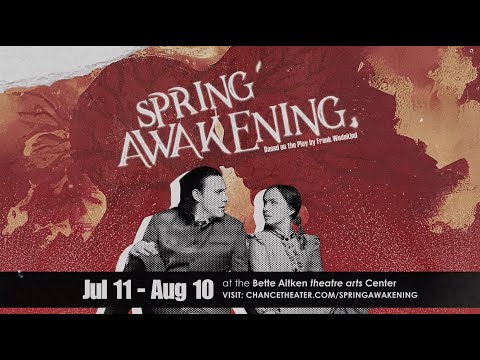
Review
“Spring Awakening” sells a dangerous idea with a sweet sound: that the real villain is silence. The plot is Wedekind’s pressure cooker, but the score is contemporary rock-pop, and that mismatch is the point. These kids live in a world of stiff collars and stiff answers. Then a microphone appears, a riff kicks in, and you hear the private panic the adults have trained them to swallow.
Steven Sater’s lyric language does two jobs at once. It pushes story forward in plain events (school, sex, pregnancy, punishment), and it keeps slipping into image and sensation, because the characters do not have the vocabulary they need. When they sing, they do not “confess” so much as collide with their own bodies. Duncan Sheik’s music meets that collision with a plush, melancholy pulse. The melodies feel like diaries with a drum kit. That makes the show perversely catchy, which is the only honest way to dramatize adolescence: dread arrives with a beat you can dance to.
If you want the clearest proof of the writing’s craft, compare the 2006 Broadway version’s direct, youth-in-a-room punch with the 2015 Deaf West revival’s doubled languages (voice plus sign). The revival makes the “not being heard” theme literal, and it changes the way the lyrics land: less confessional diary, more urgent transmission.
Listener tip: play the album in Act order once, then replay only the songs that start in “public” spaces (school, church, funerals). You will notice how often the lyrics are about saying the unsayable while standing in the most surveilled places imaginable.
How it was made
The show is credited to three distinct minds: Sheik as composer, Sater as book and lyric writer, and director Michael Mayer as the staging brain that made the time-jump aesthetics legible on Broadway. The deeper origin story is stranger and more personal. A Backstage profile describes Sheik and Sater as an almost anti-team team: Sater delivers lyrics first, Sheik sets them, and the collaboration works precisely because they are not sitting in a room sanding edges off each other. It even traces their first meeting to a Buddhist gathering, which feels fitting: a musical about desire and shame built by artists with a shared practice of attention.
That “lyric first” process matters. It helps explain why the songs often feel like thought spirals that Sheik turns into clean structures. It also helps explain why the show’s voice is so singular: Sater did not come up through traditional musical-theatre lyric apprenticeship, and he was willing to let the language stay jagged when a clean rhyme would have softened the truth.
The Broadway transfer opened at the Eugene O’Neill Theatre on December 10, 2006, following previews that began November 16, 2006, and it ran through January 18, 2009. The original Broadway cast recording was announced for release on Decca on December 5, 2006, with a 20-track list that maps almost exactly onto the show’s emotional escalations.
Key tracks & scenes
"Mama Who Bore Me" (Wendla)
- The Scene:
- Wendla faces a mirror in a provincial town. It is quiet, controlled, almost polite. The tension is inside her body, and the room refuses to help her name it.
- Lyrical Meaning:
- This is the show’s thesis in miniature: adults have outsourced education to euphemism, leaving kids to self-diagnose in the dark. The lyric’s repeated questions are not naïve. They are accusatory.
"All That's Known" (Melchior)
- The Scene:
- A boys’ school classroom. Latin recitations, humiliation-as-pedagogy, and Melchior refusing to be trained into obedience.
- Lyrical Meaning:
- Melchior’s language is the show’s engine: rational, restless, and convinced knowledge can liberate. The lyric does not sound like teenage rebellion for sale. It sounds like a mind trying to out-run a system designed to blunt it.
"The Word of Your Body" (Wendla and Melchior)
- The Scene:
- They find each other in the woods, under an oak tree. The world opens up a few feet away from supervision, and desire becomes articulate for the first time.
- Lyrical Meaning:
- The title is the key. “Word” implies language, “body” implies sensation. The song is about translation, and the lyric keeps toggling between the two.
"The Dark I Know Well" (Martha and Ilse)
- The Scene:
- The girls walk home, discover Martha is being beaten, and realize there is no safe adult to tell. The song turns domestic violence into a public secret.
- Lyrical Meaning:
- The lyric refuses to frame pain as metaphor. It frames pain as infrastructure. The “dark” is not mood. It is a lived room, and the writing insists you see it without looking away.
"Don't Do Sadness / Blue Wind" (Moritz and Ilse)
- The Scene:
- Moritz stands alone by a river, at the end of his rope. Ilse finds him, tries to pull him back toward memory and connection, and fails.
- Lyrical Meaning:
- Moritz’s lines are about emotional illiteracy turned lethal. Ilse’s lines are about survival by art and escape. Put together, the song becomes a duet between two ways of coping when adults abandon you.
"Left Behind" (Melchior)
- The Scene:
- Moritz’s funeral. Grief becomes accusation. Melchior points the blame upward, toward the people who demanded obedience and called it love.
- Lyrical Meaning:
- The lyric is a protest written in the grammar