
Snoopy Lyrics: Song List
- Act 1
- The World According to Snoopy
- Snoopy's Song
- Woodstock's Theme
- Hurry up Face
- Edgar Allen Poe
- Mother's Day
- I Know Now
- The Vigil
- Clouds
- Where Did That Little Dog Go?
- Dime a Dozen
- Daisy Hill
- When Do the Good Things Start?
- Act 2
- Great Writer
- Poor Sweet Baby
- Don't Be Anything Less Than Everything You Can Be
- Big Bow-Wow
- Just One Person
About the "Snoopy" Stage Show
Theatrical’s script has been prepared by A. Whitelaw, M. Grace & W. Lockhart. The songs for the show were written by composer L. Grossman and poet H. Hackady. The first exhibition of the show was held in the San Francisco’s Little Fox Theatre. The show lasted from December 1975 to July 1976. Production has been realized by director A. Whitelaw. In the play were involved: J. Gleason, P. Myers, R. Kallan, D. Potter & C. Cahn. Off-Broadway production was held in the Lamb's Theatre from December 1982 to May 1983 with 152 appearances. Production belongs to the director A. Whitelaw & choreographer M. Breaux. The show had this cast: C. Cahn, K. Cole, S. Fenning, D. Garrison. The British premiere of the musical took place in summer 1983. Show was revealed in August in Watermill Theatre. Then the theatrical moved to Newbury in London. The histrionics was in the Duchess Theatre from September 1983 to November 1984 with 479 plays. The director of the show was A. Whitelaw again. The cast involved: R. Locke, M. Hadfield, Z. Bright, N. Croydon, S. Blake & A. Best.
Updated London production took place in February 2003 at Jermyn Street Theatre. It was shown only 14 exhibitions. Spectacular has created the director J. Pitcher. The show included the cast: N. Gordon-Taylor, S. Lark, S. Carlile & G. Maclean. In April 2004, in the NYC’s Pied Piper Children's Theatre was a show of the concert. Production has been under the direction of B. Rimalower and concluded such actors: C. Borle, S. Foster, H. Foster, J. Cody, A. Harada & D. May. In July 2004, Players Theatre New started hosting of another London’s version of the show. The director was A. Whitelaw and the cast included: R. Armstrong, S. Lark, C. L. Connolly & S. Piper. The London production in 1983 has been nominated for Laurence Olivier.
Release date of the musical: 1975
"Snoopy!!! The Musical" – The Musical Guide & Song Meanings
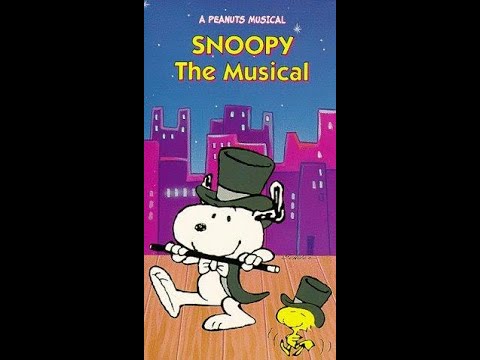
Review
“Snoopy!!! The Musical” is what happens when you turn a comic strip’s emotional one-liners into a full evening and refuse to pretend it is a conventional book musical. It is a string of vignettes. Some land like little fireworks. Some fade fast. The central question is not “What’s the plot?” It is “Can a show built on snapshots still feel like a journey?” On its best nights, yes, because the lyrics keep returning to the same soft target: how kids practice adulthood in miniature, then act surprised when it hurts.
Hal Hackady’s lyric voice is brisk and plainspoken, with a fondness for aphorisms that sound like playground wisdom until you hear the anxiety underneath. That is the show’s most consistent engine. A Charlie Brown line about loneliness can share air with a Snoopy fantasy about glory, and the contrast reads as psychological realism: everybody copes differently. The score by Larry Grossman stays tuneful and clean, with pop-friendly hooks that let each vignette announce itself quickly and exit before it overstays. It is not subtle music. It is efficient music, which is a compliment in a show that must reset itself every few minutes.
There is also a structural honesty here that later “jukebox” logic would envy. “Snoopy!!!” does not pretend the songs are organic outbursts from a single storyline. It treats each number as a tiny cartoon panel that sings. When directors embrace that, the lyrics play like captions that gained a heartbeat. When directors fight it, the evening can feel relentlessly wholesome, or worse, busy without momentum.
Listener tip: if you want the show’s emotional arc without reading a synopsis, listen in this order: “The World According to Snoopy,” “Where Did That Little Dog Go?,” “Daisy Hill,” “The Great Writer,” “The Big Bow-Wow,” and “Just One Person.” Those six songs are the spine, even in different versions.
How It Was Made
The 1975 “Snoopy!!!” began in San Francisco as a sequel-minded companion to “You’re a Good Man, Charlie Brown,” shifting the spotlight toward Snoopy and leaning into revue structure. It later moved through revisions: the 1982 Off-Broadway run, the 1983 West End version that added material, and eventually a 2017 revision retitled “The World According to Snoopy,” developed at Texas State University, that includes a new “Husband Material” with lyrics by Andrew Lippa. Three versions, three slightly different attitudes toward what “enough story” looks like.
This is where the lyric analysis gets interesting. The original is closer to sketch comedy with heart. The London version formalizes the flow with more connective tissue, including underscored transitions, which helps the audience feel less like it is flipping channels. The 2017 revision makes a modern licensing play: keep the recognizable core, adjust the book, and add one fresh song that signals, gently, “this is a living property, not a museum piece.”
One practical detail matters for anyone studying how the songs function onstage: Concord’s published London running order includes a dense web of short orchestral links, the kind that directors and musical directors use to keep the vignette format from feeling choppy. If your memory of “Snoopy!!!” is “cute songs, then another cute song,” those links are part of why some productions feel smoother than others.
Key Tracks & Scenes
"The World According to Snoopy" (Company)
- The Scene:
- Lights up on the whole gang discovering Snoopy atop his doghouse, already in charge of the emotional weather. The staging usually plays like a curtain-raiser in a toy theatre, bright, quick, welcoming.
- Lyrical Meaning:
- The lyric frames the entire show as perspective comedy. Everybody lives in the same neighborhood, but nobody experiences it the same way, which is the Peanuts thesis in a sentence.
"Edgar Allan Poe" (Patty, Lucy, Sally, Linus, Charlie Brown)
- The Scene:
- School. A group panic number where the kids try to bluff their way through literature. Blocking tends to tighten into little clusters, like students whispering answers they do not have.
- Lyrical Meaning:
- The joke is ignorance, but the point is status. The lyric reveals who performs confidence, who actually has it, and who gets punished for trying.
"Where Did That Little Dog Go?" (Charlie Brown)
- The Scene:
- Charlie Brown, briefly alone in a show that rarely allows stillness. The lighting narrows, the stage quiets, and the “kid” voice slips toward something older.
- Lyrical Meaning:
- A surprisingly tender lyric about attachment and uncertainty, with the dog as both pet and emotional anchor. It is the show reminding you that whimsy has consequences.
"Dime a Dozen" (Lucy, Snoopy, Patty, Sally)
- The Scene:
- A miniature con game. Lucy and the girls attempt to sell Snoopy cheaply, and the staging often leans into bustling, transactional comedy, like a lemonade-stand hustle turned cruel.
- Lyrical Meaning:
- The lyric is a joke about value that becomes a quiet gut-punch. Childhood can be mercenary. The song makes that plain without turning mean.
"Daisy Hill" (Snoopy)
- The Scene:
- Snoopy resets. Often staged as a private reverie at the doghouse, with softer light and a slower tempo, the show’s closest thing to an interior monologue.
- Lyrical Meaning:
- One of the score’s most effective emotional pivots: the fantasy character admits regret. The lyric treats “starting over” as a sincere desire, not a punchline.
"The Great Writer" (Snoopy)
- The Scene:
- Snoopy at the typewriter, beginning “It was a dark and stormy night,” while the world around him keeps interrupting. In the London running order, orchestral links help the scene flip locations quickly.
- Lyrical Meaning:
- The lyric is a love letter to ambition that is slightly delusional and completely relatable. Snoopy’s ego reads less like arrogance and more like a survival mechanism.
"Don't Be Anything Less Than Everything You Can Be" (Charlie Brown, Linus, Sally, Patty)
- The Scene:
- Sally notices leaves falling and tries to turn the moment into meaning. The number is often staged as a reflective group scene, with movement that feels more like thought than dance.
- Lyrical Meaning:
- This is Hackady’s most direct “motto” writing, and it can be charming or cloying depending on the production. In the right hands, the lyric lands as aspiration spoken by kids who do not yet know how hard it is.
"The Big Bow-Wow" (Snoopy)
- The Scene:
- A letter arrives. Snoopy has been named Head Beagle. The staging shifts into celebration, often with nightclub energy, as if Snoopy’s imagination rented a spotlight for the evening.
- Lyrical Meaning:
- Triumph is presented as a costume you can put on. The lyric makes success sound giddy, then quietly hints that it is also a pose.
"Just One Person" (Snoopy and Company)
- The Scene:
- Stargazing and perspective. The group re-forms, the stage picture opens up, and the show asks the audience for one clean emotion before the bows.
- Lyrical Meaning:
- A finale about belief, written with enough simplicity to feel like a children’s message and enough sincerity to disarm adults. It works because it is not clever, it is earnest.
Live Updates
Current through 2 February 2026. “Snoopy!!!” is not operating as a commercial tour brand. It is operating as a licensing staple with multiple authorized versions. Concord Theatricals licenses the original, the West End expansion, and the 2017 revision retitled “The World According to Snoopy,” which was adapted at Texas State University and adds a new “Husband Material” with lyrics by Andrew Lippa.
A concrete recent example: Bridgetown Conservatory of Musical Theatre mounted “The World According to Snoopy!!!” with performances in Portland (December 4 to 7, 2025) and Salem (December 11 to 14, 2025), listing full casts and creative teams and advertising a two-hour running time with one intermission. That kind of production profile is the show’s current ecosystem: schools, conservatories, and regional companies that can cast strong singer-actors and play the vignettes cleanly.
Meanwhile, the broader Peanuts musical conversation got a jolt in 2025. Apple TV+ released “Snoopy Presents: A Summer Musical” on August 15, 2025, promoted as the first Peanuts musical special in decades. It is not “Snoopy!!! The Musical,” but it adds fresh attention to the idea of the gang singing, which tends to lift interest in stage titles, too.
Notes & Trivia
- The show premiered in San Francisco on December 9, 1975 at the Little Fox Theatre and ran there into July 1976.
- The 1982 Off-Broadway run opened December 20, 1982 at the Lamb’s Theatre and played 152 performances.
- The West End production opened at the Duchess Theatre on September 20, 1983 and ran 479 performances, a much longer life than many expected for a vignette musical.
- There are multiple authorized versions; the West End expansion adds songs and, in Concord’s published running order, a notable amount of short orchestral underscore between scenes.
- The 2017 revision retitled “The World According to Snoopy” includes a new “Husband Material” with lyrics by Andrew Lippa, and revised book credits are listed in recent production materials.
- The original cast recording exists. DRG Records issued “Snoopy!!! The New Musical Entertainment” (San Francisco cast) in 1976 as DRG-6013, later reissued on CD.
- “Just One Person” functions as the finale in the stage show and was also used as the closing number in the 1988 animated TV special adaptation.
Reception
Critics have tended to agree on the diagnosis even when they disagree on the verdict: the form is the issue. The vignette approach can read as charmingly faithful to Schulz’s panel-by-panel rhythm, or as dramatically thin. When it fails, it can feel “punishingly bright,” especially for adults expecting the strip’s sharper melancholy. When it works, it moves quickly, hits a joke, then slips in a small truth before the audience has time to resist.
The London reception record is a miniature history of that split. The 2004 revival criticism in major UK press praised the show’s energetic bounciness while complaining about how quickly the sweetness can become grating. Other reviewers argued the very lightness is the point, a summer entertainment designed to be taken in the spirit of a comic strip, not a psychological epic.
“So bouncy… so winsome that you can hardly bring yourself to dislike it.”
“An air of punishing brightness prevails.”
“This is no dog of a show.”
Quick Facts
- Title: Snoopy!!! The Musical
- Year: 1975 (San Francisco premiere)
- Type: Musical comedy; vignette structure
- Based on: “Peanuts” by Charles M. Schulz
- Music: Larry Grossman
- Lyrics: Hal Hackady
- Book credits (original): Warren Lockhart, Arthur Whitelaw, Michael Grace (with Charles M. Schulz Creative Associates credited in later production history)
- Authorized versions: Original; West End (expanded); 2017 revision retitled “The World According to Snoopy” (adds “Husband Material” with lyrics by Andrew Lippa)
- Selected notable placements: School anxiety (“Edgar Allan Poe”); Charlie Brown’s quiet center (“Where Did That Little Dog Go?”); Snoopy at the typewriter (“The Great Writer”); promotion fantasy (“The Big Bow-Wow”); stargazing finale (“Just One Person”)
- Album status: Original recording exists; DRG Records issued “Snoopy!!! The New Musical Entertainment” (San Francisco cast) as DRG-6013 (1976), with later CD reissue
- Licensing: Concord Theatricals (multiple versions)
Frequently Asked Questions
- Is “Snoopy!!!” a sequel to “You’re a Good Man, Charlie Brown”?
- Yes. It uses the same Peanuts world but shifts focus toward Snoopy and relies more on vignette storytelling than a single through-plot.
- Which version should a theatre license?
- If you want the leanest panel-by-panel feel, choose the original. If you want more connective flow, the West End expansion adds material and underscored links. If you want the most modern licensed framing, “The World According to Snoopy” (2017 revision) is the updated option.
- Is there a cast recording?
- Yes. DRG released “Snoopy!!! The New Musical Entertainment” (San Francisco cast) in 1976 (DRG-6013), later reissued on CD, and other recordings exist tied to later productions.
- What are the “big” songs for auditions or callbacks?
- Common go-to choices include “The Great Writer” (comic ambition), “Daisy Hill” (reflective Snoopy), “Poor Sweet Baby” (Patty’s crush), and the finale “Just One Person” for ensemble blend.
- Does the show work for kids?
- Often, yes, especially for schools. The roles are clear, the scenes are short, and the humor is accessible. But the emotional texture can play older than the costumes suggest, which is part of the charm.
- What is “The World According to Snoopy”?
- It is a 2017 revised version of the musical, adapted at Texas State University and licensed by Concord, with a new “Husband Material” featuring lyrics by Andrew Lippa.
Key Contributors
| Name | Role | Contribution |
|---|---|---|
| Larry Grossman | Composer | Wrote the score’s clean hooks and brisk scene-to-scene energy. |
| Hal Hackady | Lyricist | Built a lyric voice that plays like comic-strip captions with emotional bite. |
| Charles M. Schulz | Source creator | Created “Peanuts,” the character world and tone the musical adapts. |
| Arthur Whitelaw | Book contributor / Director (original) | Helped shape the stage form and the production’s original staging identity. |
| Warren Lockhart | Book contributor | Co-wrote the book framework for the vignette structure. |
| Michael L. Grace | Book contributor | Co-wrote the book framework and later production history credits. |
| Andrew Lippa | Additional lyricist (2017 revision) | Wrote lyrics for the added “Husband Material” in “The World According to Snoopy.” |
| Concord Theatricals | Licensing | Licenses the original, West End, and 2017 revised versions, and publishes running-order materials for productions. |
Sources: Concord Theatricals, The Guardian, The Telegraph, WhatsOnStage, Wikipedia, StageAgent, Bridgetown Conservatory of Musical Theatre, Associated Press, Cartoon Research, Discogs, IMDb.