
Sister Act The Musical Lyrics: Song List
- Act 1
- Prologue
- Take Me to Heaven
- Fabulous, Baby!
- Here Within These Walls
- How I Got the Calling
- When I Find My Baby
- Do The Sacred Mass
- I Could Be That Guy
- Raise Your Voice
- Take Me to Heaven (Reprise)
- Act 2
- Sunday Morning Fever
- Lady in the Long Black Dress
- Bless Our Show
- Here Within These Walls (Reprise)
- The Life I Never Led
- Fabulous, Baby! (Reprise)
- Sister Act
- The Life I Never Led (Reprise)
- Sister Act (Reprise)
- Spread The Love Around
About the "Sister Act The Musical" Stage Show
Release date of the musical: 2009
"Sister Act" - The Musical Guide & Song Meanings
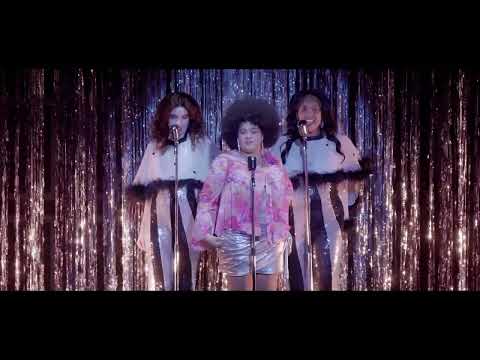
Review
Why does “Sister Act” work best when it stops pretending it is about religion? Because the lyrics are really about performance: who gets heard, who gets credited, and who learns to stop apologizing for taking up space. Set in late 1970s Philadelphia, the show turns the convent into a sound booth. Deloris arrives with nightclub instincts, the nuns arrive with silence as habit, and the musical’s central argument is that harmony is a social skill, not a miracle.
Glenn Slater’s lyric strategy is blunt by design. Deloris sings in slogans and self-branding, because that is what a would-be star does when the world keeps shrinking her. The convent numbers pull in the opposite direction: communal language, repeated phrases, lines that land like shared breath. When the show is at its sharpest, it lets those vocabularies collide in the same scene: showbiz self-invention rubbing up against institutional restraint.
Menken writes in a deliberately period-tilted palette: disco sheen, Motown pulses, and a gospel lift that arrives when the story needs emotional torque, not when the plot “earns” it. That tension is the fun. The score keeps asking whether spectacle can be sincere. The best moments answer: yes, but only if you admit you are staging your feelings.
Viewer tip: if you are seeing a large-scale production, favor seats that give you depth on the church space. Many stagings use stained-glass effects and sweeping choral pictures; you want the full width of the “choir as choreography,” not a cropped slice.
How It Was Made
The stage version is built from a pragmatic choice and a crafty one. Pragmatic: the film’s beloved pop soundtrack was not simply re-used; instead, Alan Menken and Glenn Slater wrote an original score that could legally and dramatically belong to the stage piece. Crafty: they moved the action into the disco era, which gives the music a ready-made vocabulary for aspiration, vanity, and communal release. A convent choir discovering groove is inherently legible, even before the jokes arrive.
Menken has described disco as the right tonal fit for the adaptation, because it can be both celebratory and slightly artificial, which mirrors the story’s disguise mechanics. Slater, in interviews around the Broadway opening, has spoken about shaping Deloris’ character arc so the role can pivot from bravado to earned leadership without losing the humor. The writing challenge is not “make it funny.” It is “make the transformation audible.”
One production-facing reason the show keeps coming back: it scales. You can mount it as a full touring machine with big design and a pumped-up choir, or as a tighter regional build where the comedy and vocal blend do most of the selling. The material is engineered to survive both.
Key Tracks & Scenes
"Take Me to Heaven" (Deloris)
- The Scene:
- Act 1 begins in a dive-club atmosphere: late-afternoon into night, smoky haze, a drab shift when Curtis enters. It is Christmas-season energy with a slightly grimy glow, Deloris auditioning for a life she is not being offered yet.
- Lyrical Meaning:
- This is Deloris’ public face: flirtation, confidence, and a faith-like belief that stardom is imminent. The lyric is devotional, but the god is attention.
"Fabulous, Baby!" (Deloris)
- The Scene:
- Still club-adjacent, still performance-driven, and often staged like a pep-talk with backup singers as mirrors. Many productions punch the end with a hard blackout, as if the show itself is cutting her off mid-fantasy.
- Lyrical Meaning:
- Deloris names herself into existence. The lyric is self-mythology used as armor: if she says it enough, it becomes true.
"Here Within These Walls" (Mother Superior)
- The Scene:
- A gothic, midnight-mass mood: high top light, incense haze, stained-glass suggestion. The space reads as ritual and control, a visual reset after the club’s messier charisma.
- Lyrical Meaning:
- The lyric argues for order as safety. It is not just rules; it is a philosophy of containment. That makes Deloris the perfect disruption.
"Raise Your Voice" (Deloris and the Nuns)
- The Scene:
- Early morning in the music room, platforms arranged like risers, with a “huge build and finish” baked into the staging. It often ends in a blackout that reads like a mic-drop for people who have never held a mic.
- Lyrical Meaning:
- This is the show’s central metaphor stated plainly: voice equals agency. The lyric is less about singing technique than permission.
"I Could Be That Guy" (Eddie)
- The Scene:
- Outside a bar in a bad part of town, smooth disco energy under street lighting. In at least one documented staging breakdown, Eddie is stripped out of his cop suit to reveal a disco costume, a physical punchline about identity as wardrobe.
- Lyrical Meaning:
- Eddie’s lyric is longing wrapped in a self-improvement pitch. He wants to be seen as cool, but the subtext is simpler: he wants Deloris to look at him once and not look away.
"Sunday Morning Fever" (Company)
- The Scene:
- Late morning inside the church, designed as a big musical number with full-stage spectacle. Many stagings treat it like an anthem for the new “brand” of the church: louder, brighter, and suddenly profitable.
- Lyrical Meaning:
- The lyric is joy with a business plan. It celebrates community, while quietly admitting that success brings attention, and attention brings danger.
"Lady in the Long Black Dress" (Curtis’ Men)
- The Scene:
- Often staged as a comic-crooner interlude that leans into audience participation energy, even when the subject matter is menace. In a documented breakdown, the lighting shifts toward early evening and opens out to full-stage imagery for the number.
- Lyrical Meaning:
- The lyric is threat disguised as charm. The joke is that it is catchy. The point is that the danger is cheerful.
"Spread the Love Around" (Company)
- The Scene:
- The finale is usually staged as a full-company release valve: a public-facing celebration where the choir’s new sound is no longer a private rebellion, but a civic event.
- Lyrical Meaning:
- The lyric lands the show’s argument: transformation is contagious. The convent changes Deloris too, but the lyric insists that the real win is shared confidence.
Live Updates
In 2024, the West End revival played the Dominion Theatre for a limited season, with Beverley Knight in the lead through early June and Alexandra Burke taking over into late summer. That revival functioned as a reminder that the property sells best when the central casting is a true vocal personality, not just a capable comedian.
For 2025 to 2026, the most concrete “current” footprint is touring. The official UK tour site has promoted a new production with Landi Oshinowo as Deloris and Wendi Peters as Mother Superior, alongside a full creative team listing. Ticketing platforms in the UK have also listed 2026 performance dates for the touring production, which is the most practical indicator that the show remains an active booking, not just a nostalgia title.
Outside the UK, “Sister Act” lives in two parallel lanes: professional runs that rotate through major venues, and a busy licensing life that keeps the show present in regional theatres and training programs. If you are searching locally, start with the licensing-rights ecosystem and then cross-check venue calendars, because the title is frequently announced as an “event” rather than a long sit-down.
Notes & Trivia
- The West End production opened at the London Palladium in June 2009, and the Original London Cast Recording is widely listed as a 2009 release.
- The Original London Cast Recording on Apple Music lists 20 tracks with a total runtime of about 1 hour 12 minutes, with a 27 June 2009 date stamp.
- MTI’s published song list includes multiple “Take Me to Heaven” variants (nightclub, choir, and a newscast version), a useful clue for how the show treats one hook as a narrative motif.
- MTI’s character breakdown for Deloris lists a vocal range topping out around F-sharp 5, which tells you what the role demands: a belt that can live in the stratosphere.
- A scene-by-scene lighting breakdown used in educational production planning explicitly calls out haze, stained-glass looks, and a “huge build and finish” for “Raise Your Voice,” confirming how design often reinforces the “finding your voice” metaphor literally.
- The 2022 London staging drew sharply divided critical reactions about the lyrics, proving the show’s tone is still a live argument, not a settled opinion.
- Even negative reviews often concede the show’s crowd-pleasing mechanics: the choir transformation is engineered to peak in waves, like a pop setlist.
Reception
Critically, “Sister Act” has always been a litmus test: do you value craft and momentum over subtlety. In 2009, some reviewers framed it as commercial franchising with a loud amplifier, while others praised its entertainment value and lyric bite. More recently, the title has seen revivals and tours treated as star vehicles and feel-good nights out, with critics still debating whether the writing is sharp or merely busy.
“Everything in this noisily aggressive musical is coarsely overstated.”
“Despite a slow start and clunky storytelling, it’s shamelessly and irresistibly entertaining.”
“The composers ... should have taken a vow of silence.”
Quick Facts
- Title: Sister Act (A Divine Musical Comedy)
- Year focus: 2009 (West End opening; Original London Cast Recording)
- Type: Stage musical based on the 1992 film
- Music: Alan Menken
- Lyrics: Glenn Slater
- Book: Cheri Steinkellner and Bill Steinkellner
- Additional book material: Douglas Carter Beane
- Selected notable placements: nightclub opener (“Take Me to Heaven”); choral breakthrough (“Raise Your Voice”); act two congregation surge (“Sunday Morning Fever”); finale (“Spread the Love Around”)
- Release context: Original London Cast Recording released in 2009; commonly credited to Stage Entertainment for rights and First Night Records for release packaging
- Label/album status: widely available on major streaming services as “Original London Cast Recording”
- Licensing ecosystem: MTI materials published for the show, including song list and role breakdowns
- Recent headline activity: 2024 West End limited revival; 2024 onward UK and Ireland touring production with publicly listed cast and creatives
Frequently Asked Questions
- Is the stage musical using the film’s pop soundtrack?
- No. The stage version uses an original score by Alan Menken with lyrics by Glenn Slater, shaped to evoke Motown, soul, and disco influences rather than directly importing the film’s needle-drops.
- What is the best “first listen” run of songs if I want the plot fast?
- Start with “Take Me to Heaven,” “Fabulous, Baby!,” “Here Within These Walls,” and “Raise Your Voice.” That sequence covers Deloris’ worldview, the convent’s worldview, and the moment those worlds collide.
- Why are there multiple versions of “Take Me to Heaven”?
- The show uses it as a motif: it begins as nightclub swagger and reappears in choral forms as the convent finds a new identity, making one hook do narrative work across settings.
- Is “Sister Act” touring in 2025 to 2026?
- Yes in the sense that touring productions continue to be promoted and ticketed. The official UK tour site has advertised a current touring cast, and UK ticketing platforms have listed 2026 dates for the touring production.
- Is Deloris a difficult sing?
- Yes. MTI’s role breakdown indicates a high, belt-forward range for Deloris, and the part also requires comic timing and stamina, because she is rarely offstage for long.
- Is there a big staging “must” like the rain in Singin’ in the Rain?
- The signature is choral spectacle: stained-glass looks, full-company church pictures, and a choir that becomes a dance engine. Many productions build their biggest visual peaks around “Raise Your Voice” and “Sunday Morning Fever.”
Key Contributors
| Name | Role | Contribution |
|---|---|---|
| Alan Menken | Composer | Wrote the original stage score with disco, soul, and gospel inflections that support the show’s transformation arc. |
| Glenn Slater | Lyricist | Built character voice through pop-forward self-mythology for Deloris and communal language for the convent. |
| Cheri Steinkellner | Book writer | Co-shaped the stage narrative structure and comedic pacing. |
| Bill Steinkellner | Book writer | Co-shaped the stage narrative structure and comedic pacing. |
| Douglas Carter Beane | Additional book material | Contributed additional material that helped define the stage adaptation’s tone. |
| Jamie Wilson | Producer (UK tour) | Producer credit for the current UK and Ireland touring production. |
| Bill Buckhurst | Director (UK tour) | Helms the touring staging that leans into pace, comedy, and choir spectacle. |
| Alistair David | Choreographer (UK tour) | Builds the “choir as movement” language central to the touring production. |
| Morgan Large | Set and costume designer (UK tour) | Design vocabulary that supports stained-glass atmospheres and rapid location shifts. |
| Tim Mitchell | Lighting designer (UK tour) | Creates the cathedral glow and concert-like peaks that frame the choir numbers. |
| Landi Oshinowo | Performer | Listed by the official tour as Deloris Van Cartier in the touring production. |
| Wendi Peters | Performer | Listed by the official tour as Mother Superior in the touring production. |
Sources: Official UK Tour site, Playbill, Music Theatre International (MTI), Apple Music, Variety, The Guardian, WhatsOnStage, Scene-by-scene lighting breakdown (production planning PDF).