
Singin' In The Rain Lyrics: Song List
- Act 1
- Fit as a Fiddle
- Beautiful Girl
- I've Got a Feelin' You're Foolin'
- Make 'Em Laugh
- You Are My Lucky Star
- Moses Supposes
- Good Morning
- Singin' in the Rain
- Act 2
- Wedding of the Painted Doll
- Rag Doll
- Temptation
-
Takin' Miss Mary to the Ball

- Love is Where You Find It
- Would You?
- Broadway Rhythm
- Blue Prelude
- Other Songs
- All I Do Is Dream of You
- You Were Meant for Me
- What's Wrong with Me?
- Singin' in the Rain Finale
- The Royal Rascal / To the Street
- You Stepped Out of a Dream
- Lina Revealed
About the "Singin' In The Rain" Stage Show
The script for this histrionics has been written by B. Comden & A. Green, music belongs to N. H. Brown, lyrics – to A. Freed. The core of considered creation is the eponymous film of 1952, called by many experts as Hollywood’s autobiography. It tells about the last days of silent movie strata & in particular, focuses on the star D. Lockwood, his sidekick C. Brown, beginning actress K. Selden & eternal partner of the protagonist L. Lamont, whose voice was not suitable for sound films at all. Production is made in the classic two-act style.
West End’s premiere took place in June 1983 in London Palladium Theatre. It stayed afloat for more than two years & was closed in September 1985. Director of staging was T. Steele, choreographer – P. Gennaro. The cast included T. Steele, R. Castle, D. Carson & S. Payne. After such a successful path in Europe, it was decided to move the show to Broadway. The first performance was demonstrated to the audience in July 1985 in the Gershwin Theatre. The directorship & choreography were given to T. Tharp. Stars were: D. Correia, M. D'Arcy & F. Grant. Prior to the closing in May 1986, viewers saw 367 performances with 38 preliminaries.
West End & Broadway musicals were opted for three nominations of Laurence Olivier & Tony, but didn’t win any. Many critics have noted that show was good, but it was doomed to be in the shadow of the original motion picture, which is considered the best project of its genre ever.
Release date of the musical: 1952
"Singin' in the Rain" – The Musical Guide & Song Meanings
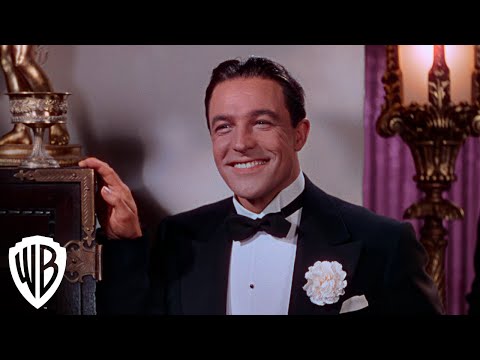
Review
“Singin’ in the Rain” is a musical about sound that understands silence better than most dramas. Its thesis is simple and slightly mean: Hollywood sells an image until technology forces the truth into the room. The lyrics do the heavy lifting because the plot is essentially an industrial problem dressed as romance. Microphones are the villains. Reputation is the collateral.
Here is the trick that keeps the songs from feeling like museum pieces: Arthur Freed and Nacio Herb Brown wrote many of these numbers years earlier, but the film repurposes them as character psychology. “Good Morning” is not just perky. It is exhaustion converting into denial, then into teamwork. “Make ’Em Laugh” is not just a gag factory. It is Cosmo’s career manifesto, and also a quiet warning that comedy is labor you can break your body doing. And the title song, famously buoyant, is essentially Don Lockwood choosing to feel something honest in a business built on pretending.
Musically the style is Hollywood standard writing at its cleanest: tight AABA structures, clear internal rhymes, and melodies built to carry through dance. What makes the lyric writing feel modern is how often it comments on performance. Characters speak like people who live in press quotes. Even the love songs are staged as productions, and the lyrics keep reminding you that sincerity in this world is always done under lights.
How it was made
The film began as a producer’s pragmatic fantasy: build a new story around the Freed and Brown song catalog, then let the studio’s musical machine do what it does best. Betty Comden and Adolph Green’s screenplay adds the bite, turning the transition to talkies into a satire of technology, class, and vocal “fitness.” One new song, “Moses Supposes,” is explicitly a writers’ flex: verbal tongue-twisters weaponized as choreography.
The creation stories that matter are the ones that reveal craft, not lore. “Make ’Em Laugh” exists because Gene Kelly wanted Donald O’Connor to have a solo showcase, and the team built it from physical-comedy business that O’Connor already had in his body. The number’s signature feeling is not spontaneity. It is experienced technique dressed as chaos.
Viewer tip: if you are watching at home, the film’s soundstage sequences are where the lyric writing is at its most surgical. The jokes are about process, but the lyric placement is doing narrative triage: it keeps the plot moving while the characters learn to survive a new medium.
Key tracks & scenes: 8 lyrical turning points
"All I Do Is Dream of You" (Kathy & Chorus)
- The Scene:
- A party performance staged like a bright product demo. High-key lighting, fast cuts, bodies arranged in clean lines as Kathy is introduced as both talent and target.
- Lyrical Meaning:
- The lyric is giddy on purpose because it is a mask. It sells romance as a commodity, which is exactly what Hollywood will try to do to Kathy minutes later.
"Make ’Em Laugh" (Cosmo)
- The Scene:
- A rehearsal-room pressure valve. The space is plain, the physical comedy is violent, and the camera treats the body as the punchline delivery system.
- Lyrical Meaning:
- Cosmo argues that laughter is a survival strategy, then proves it is a job with occupational hazards. The lyric’s cheer is an instruction manual for denial.
"Moses Supposes" (Don & Cosmo)
- The Scene:
- A diction lesson becomes a duel. Stark rehearsal lighting, tap rhythms snapping like consonants, and a teacher who loses authority one syllable at a time.
- Lyrical Meaning:
- The lyric turns pronunciation into class warfare. It is also the story’s thesis in miniature: the sound era rewards control, and mocks anyone pretending control is effortless.
"You Were Meant for Me" (Don & Kathy)
- The Scene:
- An empty soundstage transforms into a romantic set while Don literally cues the lighting. The love story is built in real time, like a pitch meeting with feelings.
- Lyrical Meaning:
- The lyric is sweet, but the subtext is scarier: Don knows how to manufacture atmosphere. The song asks whether that skill can still produce something genuine.
"Good Morning" (Don, Kathy, Cosmo)
- The Scene:
- Late-night problem solving in Don’s home becomes a full-scale dance through furniture, hallways, and stairs. Warm interior lighting and a tempo that refuses sleep.
- Lyrical Meaning:
- The lyric functions as a reset button. They are frightened, so they sing optimism until optimism becomes a plan. It is teamwork as self-hypnosis.
"Singin’ in the Rain" (Don)
- The Scene:
- A city street, a lamppost, a soaked suit, and a grin that dares the weather to do worse. Night lighting makes the rain read like glittering punctuation.
- Lyrical Meaning:
- The lyric is defiantly simple because Don is finally not performing for an audience. He is performing for himself. The rain becomes proof that joy can survive discomfort.
"Broadway Melody" (Ballet Sequence)
- The Scene:
- A fantasy inside a pitch inside a film. Glamorous lighting, stylized sets, and a mood shift into pure show-business desire, with the camera acting like a seducer.
- Lyrical Meaning:
- This sequence is the film admitting its own temptation: the dream is gorgeous, and also a distraction. The lyrics sell ambition as romance, then let the choreography reveal the cost.
"Would You?" / "You Are My Lucky Star" (Kathy, Lina, Don)
- The Scene:
- The dubbing conceit comes to a head, with performance split from voice. Studio lighting turns clinical, and the characters learn what power sounds like.
- Lyrical Meaning:
- The lyric becomes identity theft. The film’s biggest laugh is also its sharpest point: the industry will swap voices the way it swaps contracts.
Live updates: 2025–2026 stage life and licensing
For a 1952 film, “current” means two things: stage revivals and rights infrastructure. The stage musical version is actively licensed through MTI, which is why it keeps popping up in regional, school, and holiday-slot productions that can justify a rain effect as a headline feature.
The most visible 2025–2026 activity is in the UK. The Royal Exchange Theatre in Manchester mounted Raz Shaw’s in-the-round production from late November 2025 through January 2026, with reviews highlighting the choreography and the crowd-pleasing inevitability of the rain sequence. If you want ticket-trend evidence that the title still sells, “sold out” is a blunt metric.
Viewer tip for live: if you have never seen the stage version, the rain number reads best from seats that give you depth on the street set. You want to see the puddles and the lamppost, not just hear the taps.
Notes & trivia
- The original 1952 soundtrack album was released by MGM Records in multiple formats, and it hit No. 2 on Billboard’s pop album charts in its era.
- The title song is used three times in the film: credits, Don’s street number, and a later lip-sync context.
- The film was conceived as a vehicle for the Freed and Brown song catalog, with “Moses Supposes” created as new material for the screenplay.
- “Make ’Em Laugh” was built to give Donald O’Connor a solo showcase, using physical gags shaped in rehearsal.
- The stage musical version explicitly preserves the “onstage rainstorm” as a signature effect, which is why it remains a production flex.
- Britannica notes that the film capitalizes on the transition-to-sound dilemma and highlights the extended fantasy dance material as part of its legend.
- Myth check: stories about “milk in the rain” persist, but credible accounts credit lighting and cinematography, not dairy.
Reception: then, now, and why it keeps winning
The film’s reputation has only consolidated. In the moment it was a major MGM musical. Over decades it became the reference text for Hollywood’s self-mythology, partly because the lyric writing is clean enough to survive parody and homage. It also helps that the film’s central joke, silent stars learning to speak, keeps reappearing in every new technology shift. New medium, same panic.
“Capitalized on the dilemmas of the transition to sound.”
“A dynamic and joyful reimagining.”
“A compendium of gags and ‘shtick’.”
Quick facts
- Title: Singin’ in the Rain
- Year: 1952
- Type: Film musical comedy with backstage satire
- Directors: Gene Kelly, Stanley Donen
- Screenplay: Betty Comden, Adolph Green
- Songs: Nacio Herb Brown (music), Arthur Freed (lyrics), with specific exceptions noted in production histories
- Label (original soundtrack): MGM Records
- Soundtrack chart note: Billboard pop albums peak at No. 2 (period charts)
- Selected notable placements: “Good Morning” (late-night planning trio); “Make ’Em Laugh” (Cosmo solo); “Moses Supposes” (diction showdown); “Singin’ in the Rain” (street number); “Broadway Melody” (fantasy sequence)
- Stage licensing: Available via MTI, including the onstage rainstorm sequence
- Recent stage highlight: Royal Exchange Theatre, Manchester production ran late 2025 into January 2026
Frequently asked questions
- Is this a stage musical, a film, or both?
- Both. The 1952 film is the primary classic. A separate stage musical adaptation exists and is widely licensed.
- Who wrote the lyrics and music?
- Most songs use lyrics by Arthur Freed and music by Nacio Herb Brown, repurposed from earlier work, with additional exceptions documented in production histories.
- Why do the songs feel older than the story?
- Because many of them are older. The film was built around an existing song catalog, then shaped into a narrative about Hollywood learning to speak.
- What is the single best “lyrics meet plot” number?
- “Good Morning.” It turns panic into choreography, and it converts a story problem into a shared strategy.
- Does the stage version really use rain?
- Yes, many productions do. The onstage rainstorm is treated as a signature effect and is part of the title’s ongoing appeal.
- Is there a modern revival I can see in 2025–2026?
- In the UK, the Royal Exchange Theatre in Manchester staged a major production running from late 2025 into January 2026. Elsewhere, availability is typically regional and licensing-driven.
Key contributors
| Name | Role | Contribution |
|---|---|---|
| Gene Kelly | Director, star | Choreographic storytelling and performance style that makes lyric simplicity feel earned. |
| Stanley Donen | Director | Comic timing and camera-musical integration that keeps dance and lyric beats aligned. |
| Betty Comden | Screenwriter | Hollywood satire and dialogue mechanics that set up songs as story tools. |
| Adolph Green | Screenwriter | Structural clarity and inside-baseball wit about the business of “talking pictures.” |
| Arthur Freed | Lyricist, producer | Song catalog that becomes character language, plus the producer’s overall concept. |
| Nacio Herb Brown | Composer | Melodic architecture built for dance, then recontextualized for satire and romance. |
| MGM Records | Label | Original soundtrack release and period-era formats. |
| Music Theatre International | Licensing | Stage musical availability that keeps the title active in live performance ecosystems. |
Sources: American Film Institute (AFI) Catalog; Britannica; Turner Classic Movies; Royal Exchange Theatre; Whatsonstage; The Guardian; Musical Theatre Review; MTI; Wikipedia (soundtrack release history).