
Passion Lyrics: Song List
- Happiness
- First Letter
- Second Letter
- Third Letter
- Fourth Letter
- I Read
- Transition
- Garden Sequence
- Transition 2
- Trio
- Transition 3
- I Wish I Could Forget You
- Soldiers' Gossip 1
- Flashback
- Sunrise Letter
- Is This What You Call Love?
- Soldiers' Gossip 2
- Transition 4
- Forty Days
- Loving You
- Transition 5
- Soldiers' Gossip 3
- Christmas Carol
- Farewell Letter
-
Just Another Love Story

- No One Has Ever Loved Me
- Finale
About the "Passion" Stage Show
Music and lyrics were written by S. Sondheim. Writer – J. Lapine. Try-outs began in Plymouth Theatre in March 1994. The musical was on Broadway from May 1994 to January 1995 held with 52 preliminaries and 280 regular performances. Director was J. Lapine. The histrionics involved: J. Shea, D. Murphy, M. Mazzie, G. Edelman & T. Aldredge. British premiere was in Plymouth Theatre Royal, where the show was held in February 1996. From February to March 1996, the musical was shown in the Manchester Palace Theatre. Production took place also in Nottingham Theatre Royal in March 1996. The London’s West End premiere took place in the Queen's Theatre – the musical was there from March to September 1996 with 232 regular performances. Director was J. Sams. The play included: M. Ball, H. Hobson, M. Friedman & D. Firth. From July to August 2002, the musical was in the Kennedy Center, under the direction of E. Schaeffer. The show had cast: J. Kuhn, M. Cerveris & R. Luker.
In 2004, the show was held in the Netherlands. New London production was carried out in the Donmar Warehouse – tryouts began in September 2010. The theatrical was held from September to November 2010 under the direction of J. Lloyd. In the show, there was such cast: E. Roger, S. Strallen & D. Thaxton. German premiere was held in January 2011 in Dresden State Operetta. It ended in 2012. Director – H. Hauer. The show had such cast: M. Günzel, M. Switzer & V. Roussi. Off-Broadway production was held in the Theater of the Classic Stage Company from February to April 2013, directed by J. Doyle. The cast involved: A. Justman, J. Kuhn, R. Silverman, T. Nelis, S. Bogardus & W. Reynolds.
Release date of the musical: 1994
"Passion" – The Musical Guide & Song Meanings
Information current as of 31 January 2026.
Review
Most musicals want you to root for love. “Passion” wants you to look at it. Closely. Uncomfortably. This is Stephen Sondheim at his least amused and most surgical, writing a score that behaves like one long, tightening sentence. If you are waiting for a big “song moment” to let you breathe, the show politely refuses.
The lyrical engine is repetition with consequences. Ideas return, but slightly warped: the same phrases reappear under different emotional weather, as if language itself is being pressured into confession. The story begins with a glossy affair in Milan and ends with a man trying to explain, to himself, what happened to his will. The text keeps tugging him away from rational narration and toward something messier.
Musically, “Passion” is through-sung and pulse-driven, more arioso than “number.” There is no overture, and the opening is immediate, physical, and private. That choice matters: the audience is not eased in. We are dropped into desire before we get a thesis statement. The score then keeps folding military rhythms, letter-writing motifs, and sickroom intimacy into the same sound world, until “romance” and “illness” stop feeling like opposite categories.
The show’s trickiest achievement is also its risk: it dramatizes obsession without turning it into a cartoon. Fosca is not written to win a popularity contest. She is written to crack the room. When it works, the lyrics do not persuade you that this is “healthy.” They persuade you that it is real.
How it was made
“Passion” began with a movie. Sondheim saw Ettore Scola’s 1981 film “Passione d’Amore” and recognized a theatrical problem worth picking at: how the force of someone’s feelings can alter your self-concept, even when you do not want it to. He brought in James Lapine, partly because Lapine had a feel for period worlds and was, by Sondheim’s own account, drawn to strangeness.
Early on, they flirted with a two-one-act evening, pairing “Fosca” material with another adaptation idea Lapine had been considering. That plan collapsed, which, in hindsight, sounds like the only sane outcome. “Passion” does not share air well. The piece is built as a single fever curve, and it wants the whole night.
One crucial technical choice is structural, not melodic: the show is composed as an almost unbroken chain of scenes, letters, and transitions. That’s why lyric analysis here is less about isolated couplets and more about pressure. A line can land softly once, then return later as a bruise.
Key tracks & scenes
This score is famously continuous. The “scene placements” below are anchored to the original cast album sequence (which mirrors the onstage flow) and to production notes and criticism that describe staging beats like the bed opening and the letter-driven structure.
"Happiness" (Giorgio & Clara)
- The Scene:
- Milan. A bedroom. They are tangled together in postcoital glow, the world outside kept at bay. The show begins without ceremony, as if we walked in late.
- Lyrical Meaning:
- The lyric sells certainty. It treats pleasure as proof. That is the setup “Passion” will later dismantle, not by mocking desire, but by asking what desire ignores.
"I Read" (Giorgio)
- The Scene:
- Transferred to a remote garrison, Giorgio reads Clara’s letters. The room is spare. The warmth of Milan is replaced by paper, distance, and routine.
- Lyrical Meaning:
- Letters are a motif and a weapon. The lyric turns reading into a physical act, the way longing becomes something you carry in your body, not your mind.
"Garden Sequence" (Fosca, Giorgio, Ensemble)
- The Scene:
- Outdoors, but not free. A controlled walk, watched by soldiers and rules. Fosca’s attention is relentless, and Giorgio’s politeness starts to look like panic.
- Lyrical Meaning:
- The lyric makes “care” feel like containment. It is where Fosca’s need becomes narrative gravity, pulling Giorgio’s story away from the affair he thought was the plot.
"I Wish I Could Forget You" (Giorgio)
- The Scene:
- Giorgio tries to will himself back into his old life. The lighting tightens. The air changes. Desire becomes less romantic and more like an intrusive thought.
- Lyrical Meaning:
- One of Sondheim’s sharpest tricks: the lyric frames forgetting as effort. The very attempt to erase someone is evidence that they are already inside you.
"Loving You" (Fosca)
- The Scene:
- Fosca articulates her devotion with terrifying calm. She is physically fragile, yet rhetorically unstoppable. The room is forced to listen.
- Lyrical Meaning:
- The lyric refuses bargaining. It describes love as absolute, indifferent to decorum. If you feel cornered, that’s the point. Giorgio does too.
"Is This What You Call Love?" (Giorgio & Clara)
- The Scene:
- Clara’s world pushes back. The affair that once felt elegant starts to feel like a contract with penalties. Anger arrives with precision.
- Lyrical Meaning:
- The lyric exposes a core theme: love as story versus love as responsibility. Giorgio’s earlier certainty now sounds like a younger man’s vocabulary.
"Farewell Letter" (Clara)
- The Scene:
- A letter that ends something without fully ending it. Clara’s constraints are social and legal, not emotional. The words do what the body cannot.
- Lyrical Meaning:
- It is the score’s cleanest example of restraint. The lyric is controlled, which makes it brutal. Clara does not collapse. She calculates.
"No One Has Ever Loved Me" (Giorgio & Fosca)
- The Scene:
- Night. A sickroom. The atmosphere is hushed and dangerous, like a match held too close. Giorgio steps into a choice he cannot later explain with logic.
- Lyrical Meaning:
- The lyric is a thesis statement delivered too late to be comforting. Love is defined as “without reason,” “without mercy.” The words are not sweet. They are clarifying.
Live updates
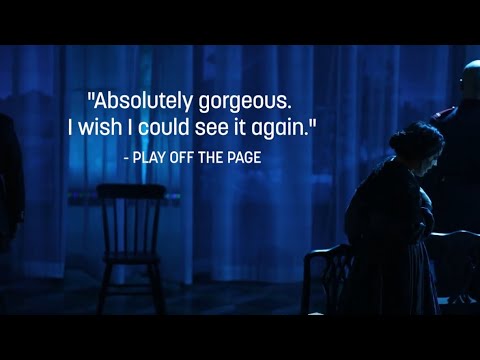
“Passion” is not a long-running brand. It is a title that resurfaces when a company wants an audience to lean forward, not clap on cue. There is no standing Broadway production as of January 2026, but the show has been actively programmed in the last two seasons, mostly in intimate houses that can support its chamber intensity.
In summer 2025, Theater Latté Da in Minneapolis mounted “Passion” with an official trailer and a full production run. In late 2025, Chromolume Theatre in West Hollywood announced and staged the piece as part of its season of musicals. Around the same period, New World School of the Arts publicized “Passion” within its 2025–2026 season schedule, a reminder that the work is also thriving in conservatory ecosystems where singing-actor craft is the point, not spectacle.
If you are tracking “ticket trends,” the pattern is consistent: “Passion” performs best as an event. Limited runs, smaller venues, high concentration of Sondheim devotees, and a lot of word-of-mouth that begins with: “I didn’t know how I felt until afterward.”
Licensing note for producers: “Passion” is represented for amateur and professional rights through Music Theatre International in many territories. Always confirm rights availability by region before announcing dates.
Notes & trivia
- “Passion” is typically performed as a one-act, through-sung musical with minimal separation between scenes and songs.
- The original cast album sequence highlights how letter-writing and transitions function as structural joints, not filler: multiple “Letter,” “Transition,” and “Soldiers’ Gossip” tracks are part of the narrative machinery.
- Critical analysis has long noted the score’s avoidance of easy applause points and its reliance on recurring motifs that change meaning as relationships shift.
- Contemporary production pages frequently describe the show as chamber-scale, even when the story stakes are emotionally gigantic.
- The original Broadway opening was in May 1994, and the production won major Tony Awards including Best Musical, Best Book, and Best Original Score.
- On the original recording, the opening track “Happiness” is explicitly framed as a bedroom scene, which matches multiple critical descriptions of the stage opening.
- Sondheim described the central love as “merciless,” a useful warning label if you expect the romance to behave.
Reception
“Passion” has always been divisive in the way only a confident work can be. Some critics greeted it as a mature pivot, a love story without jokes to soften it. Others admired the craft while questioning whether the central obsession should be watched, let alone sung. Time has not resolved that argument. It has simply made the argument more interesting.
“Passion is a great, great show.”
“On stage the musical begins with a handsome young soldier and his beautiful mistress in bed together.”
“Even among Sondheim devotees, Passion has always been divisive.”
The most useful modern lens is not “Do I like Fosca?” It is “What is the show doing to Giorgio’s language?” Watch how the lyrics move him from certainty to surrender, then ask whether surrender is the same thing as truth. The show does not answer. It just keeps the lights on while you squirm.
Quick facts
- Title: Passion
- Broadway year: 1994
- Type: One-act, through-sung chamber musical
- Music & lyrics: Stephen Sondheim
- Book: James Lapine
- Source material: Ettore Scola’s film “Passione d’Amore” (1981), based on the novel “Fosca” by Iginio Ugo Tarchetti
- Signature structural devices: letters as plot propulsion; recurring motifs that mutate; minimal “number” segmentation
- Original Broadway cast album: commonly cataloged under Angel Records / Broadway Angel; around 56 minutes; track list includes “Happiness,” “I Read,” “Garden Sequence,” “I Wish I Could Forget You,” “Loving You,” “Farewell Letter,” and “No One Has Ever Loved Me”
- Notable later recording: a 2013 New York cast recording connected to the Classic Stage Company staging
- Recent stage activity: notable regional runs and conservatory productions in 2025–2026 season programming
Frequently asked questions
- Is “Passion” a one-act musical?
- Most productions present it as one act, and the writing supports that: scenes and songs flow with very little separation.
- Is there a cast album?
- Yes. The original Broadway cast recording captures the show’s full structure, including letters and transitions, and there is also a well-known 2013 New York cast recording tied to a Classic Stage Company production.
- What is the show “about” in one sentence?
- It’s about how being loved with extreme force can change you, even when you resist the change.
- Is this a typical “romantic” Sondheim score?
- No. It is deliberately low on wit and high on emotional pressure, built from motifs that tighten rather than release.
- Do I need to know the story going in?
- Not really. If you want a cleaner first listen, start with “Happiness,” “I Read,” and “No One Has Ever Loved Me” to hear the arc from certainty to rupture.
- Is the show currently running on Broadway?
- No. As of January 2026, it is appearing primarily in regional and special-run productions.
Key contributors
| Name | Role | Contribution |
|---|---|---|
| Stephen Sondheim | Composer & lyricist | Wrote a through-sung score built from repeating motifs; framed love as force, not virtue. |
| James Lapine | Book writer & original director | Shaped the show’s continuous scene flow and its emotional point of view. |
| Ettore Scola | Source-film director | Directed “Passione d’Amore,” the film that sparked the musical’s concept. |
| Iginio Ugo Tarchetti | Source novelist | Wrote “Fosca,” the 19th-century novel underlying the film and musical. |
| Donna Murphy | Original Broadway performer (Fosca) | Originated Fosca and helped define the role’s vocal and dramatic grammar. |
| Jere Shea | Original Broadway performer (Giorgio) | Originated Giorgio as a character whose language and desire evolve in public. |
| Marin Mazzie | Original Broadway performer (Clara) | Originated Clara, the “light” counterpart whose restraint sharpens the triangle. |
Sources: The Atlantic; Vogue; Variety; Time Out New York; Signature Theatre (Behind the Scenes); MusicBrainz; Free Library of Philadelphia catalog; MTI Shows; Playbill; Theater Latté Da.