
March Of The Falsettos Lyrics: Song List
- Four Jews In A Room Bitching
- A Tight-Knit Family
- Love Is Blind
- The Thrill Of First Love
- Marvin At The Psychiatrist
- My Father's A Homo
- Everyone Tells Jason To See A Psychiatrist
-
This Had Better Come To A Stop

-
Please Come To My House / Jason's Therapy
- A Marriage Proposal/A Tight-Knit Family (Reprise)
- Trina's Song
-
March of the Falsettos
- The Chess Game
- Making A Home
- The Games I Play
- Marvin Hits Trina
- I Never Wanted To Love You
- Father To Son
- I'm Breaking Down
- Please Come To My House / Jason's Therapy
- Falsettoland / About Time
About the "March Of The Falsettos" Stage Show
The show is based on the book by W. Finn, which has been written especially for adaptation on a stage. The musical was shown in 1981 for the first time. The performance lasted 4 months. The premiere in other theater took place the same year. It also lasted 4 months. James Lapine was the director. Actors were the following: M. Rupert, A. Fraser & J. Kushner. The British premiere took place in 1987. R. Haines has created it. B. James, M. Smith, P. Navin, S. Greene and D. Walker were amongst actors. Show had great success in the audience and lasted the whole year.
In 1992, the musical received Tony. Earlier, in 1981, it was awarded with Outer Critics Circle as the best play.
Release date of the musical: 1981
"March of the Falsettos" – The Musical Guide & Song Meanings
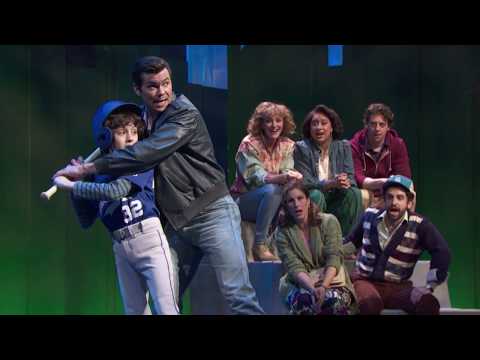
Review: the lyrics as control panel
“March of the Falsettos” opens with a complaint and keeps insisting that complaint is a form of love. William Finn’s lyrics are anxious, fast, and oddly tender. They sound like someone thinking out loud in real time, then realizing other people can hear him. The show’s core joke is also its core wound: Marvin believes he can reorganize everyone’s feelings into a workable “family arrangement.” Finn makes that delusion musical by writing in bursts, refrains, and arguments that come back with slightly different meaning each time.
The early numbers feel like a nervous system. “Four Jews in a Room Bitching” is not just scene-setting. It is a mission statement about masculinity, Jewishness, and the weird comfort of kvetching together. Then the lyrics get sharper. Marvin’s language turns managerial, Whizzer’s turns defensive, Trina’s turns furious, and Jason’s turns terrified of what he might inherit. The piece is sung-through, which matters: nobody gets to hide behind dialogue. If they want something, they have to sing it, and Finn rarely lets them sing cleanly.
Viewer tip: if you’re seeing it as Act One of “Falsettos,” listen to “Marvin at the Psychiatrist,” “This Had Better Come to a Stop,” and “The Chess Game” beforehand. Those three show how Finn writes conflict: not as one big fight, but as a series of tiny control grabs that add up.
How it was made
“March of the Falsettos” premiered Off-Broadway at Playwrights Horizons in 1981 and became the middle chapter of Finn’s Marvin trilogy, between “In Trousers” and “Falsettoland.” It later merged with “Falsettoland” to form the two-act “Falsettos,” but “March” has its own hard-won identity: comic, jump-cut, and bracingly personal.
Finn’s origin stories are unusually specific, and the specificity explains the writing. In a Playbill interview, he recalls the opening idea arriving as a phrase first, then the melody, and the title line “Who is man enough to march to ‘March of the Falsettos’?” popping into his head while walking through Central Park. That is very Finn: a private thought becoming a public hook. The collaboration with James Lapine also shaped the score’s feel. Lapine describes rehearsal and staging as puzzle-work, and Finn admits he kept writing numbers he thought were “impossible to stage,” only to watch Lapine solve them.
One technical detail that keeps showing up in memories of early productions is Lapine’s grid-based staging. It is not decoration. It matches the musical’s mind. People are moved around like pieces, because Marvin is trying to move them around like pieces. The form and the story agree, which is why the show still plays as modern.
Key tracks & scenes
"Four Jews in a Room Bitching" (Marvin, Whizzer, Mendel, Jason)
- The Scene:
- A psychiatrist’s office becomes a pressure cooker. The men circle Marvin like satellites that keep changing orbit. Lighting is bright and clinical, the kind that makes humor feel like a coping skill.
- Lyrical Meaning:
- This is character exposition as group therapy. The lyric treats complaint as culture, and culture as a bond. It also introduces Finn’s favorite move: comedy that lands because the fear underneath is real.
"A Tight-Knit Family" (Marvin) / "Love Is Blind" (Company)
- The Scene:
- Marvin pitches his plan for an “extended family” while everyone else tries to survive the pitch. The staging often splits the space between Trina’s house and Marvin’s apartment, with characters stepping across invisible borders.
- Lyrical Meaning:
- Marvin sings like a man writing policy. The lyrics are insistence disguised as optimism. “Love Is Blind” answers him with a chorus that sounds supportive until you notice the dread inside the rhyme.
"The Thrill of First Love" (Marvin, Whizzer)
- The Scene:
- Marvin and Whizzer flirt and spar, often staged in kinetic patterns that feel like a dance and a boxing match sharing the same room.
- Lyrical Meaning:
- Finn writes attraction as a dare. The lyric is high on chemistry and low on understanding, which is the point. They love each other best when they are fighting about what love should look like.
"Marvin at the Psychiatrist (A 3-Part Mini-Opera)" (Mendel, Marvin, Jason, Whizzer)
- The Scene:
- The session fractures into sections: Marvin’s feelings, then Marvin’s feelings about Trina, then Jason’s fear. Directors often sharpen this with quick light shifts, like a mind changing channels.
- Lyrical Meaning:
- This is Finn’s musical syntax at full speed. The lyric shows how Marvin narrates himself into innocence, while the structure quietly proves he cannot control the story.
"My Father's a Homo" (Jason) / "Everyone Tells Jason to See a Psychiatrist" (Company)
- The Scene:
- Jason is ten and terrified. Adults talk around him, over him, and about him. The stage picture often places him downstage and alone while the grown-ups cluster in consultation.
- Lyrical Meaning:
- The lyric is a child trying to build a rulebook for identity. Finn refuses to make it cute. Jason’s fear is logical given the world he lives in, and the song’s humor keeps catching on the edges of shame.
"This Had Better Come to a Stop" (Company)
- The Scene:
- Everyone tries to force “peace” by demanding everyone else behave. The lighting tends to widen, making the room feel too public for the feelings inside it.
- Lyrical Meaning:
- It is a family meeting as musical number. Each character uses the lyric to plead for stability while slipping in a private agenda. Finn makes the refrain feel like a threat and a prayer at once.
"Trina's Song" / "March of the Falsettos" (Trina; Marvin, Whizzer, Mendel, Jason)
- The Scene:
- Trina tries to reframe her life, then the men burst in with their falsetto hymn to masculinity. Many productions stage this as a collision between Trina’s grounded reality and the men’s theatrical self-mythology.
- Lyrical Meaning:
- Trina’s lyric is fatigue turning into decision. The title number is Finn’s satire and sympathy in the same breath: men performing “manhood,” then admitting they do not know what it is.
"The Chess Game" (Marvin, Whizzer)
- The Scene:
- A chess lesson becomes a breakup. The board is the joke, but the power struggle is the story. Staging often emphasizes the distance between them even when they share the same table.
- Lyrical Meaning:
- Finn uses the game as metaphor without getting precious about it. Marvin wants to win at love the way he wins at chess. Whizzer refuses to be coached into losing.
"Father to Son" (Marvin, Jason)
- The Scene:
- After the chaos, Marvin focuses on Jason. The light usually tightens, the staging simplifies, and the score finally lets a feeling sit still.
- Lyrical Meaning:
- This is the show’s emotional correction. Marvin cannot repair everything, but he can tell the truth to his kid. Finn’s lyric stops negotiating and simply promises presence.
Live updates (2025/2026)
Information current as of January 29, 2026. “March of the Falsettos” is most often encountered now through “Falsettos,” the two-act fusion that licensing houses actively promote, but Concord still licenses “March” as its own one-act. That matters for programming: schools and smaller companies keep returning to Act One’s comic severity when they want Finn’s language without Act Two’s AIDS-era plot weight.
In the 2025 season, “Falsettos” remained a reliable regional pick. The Keegan Theatre in Washington, D.C. ran the show from May 10 through June 15, 2025, framed in press as both a Pride-season title and a tribute that landed soon after Finn’s April 7, 2025 death. In Montreal, the Segal Centre for Performing Arts scheduled “Falsettos” for March 7 to 15, 2026, explicitly describing the work as growing out of the earlier one-acts, including “March of the Falsettos.”
The trend to watch in 2026 is scale. Companies are leaning into the chamber feel: minimal furniture, visible transitions, and staging that lets Finn’s jump cuts read as emotional whiplash instead of clutter. It suits the writing. These characters do not need bigger sets. They need less room to hide.
Notes & trivia
- “March of the Falsettos” premiered at Playwrights Horizons on May 20, 1981 and later transferred to the Westside Theatre in October 1981.
- “Four Jews in a Room Bitching” was once floated as a possible title for the show, and Finn has described writing its melody by repeating it until he could get it onto paper.
- Finn recalled the phrase “Who is man enough to march to ‘March of the Falsettos’?” arriving on a walk through Central Park, then becoming the title number.
- James Lapine has described the original process as puzzle-like staging, including working at night after actors left, alongside musical director Michael Starobin.
- Lapine’s graphic-design background reportedly informed an early grid concept for staging, a tidy visual match for Marvin’s obsession with organization.
- The original cast recording is associated with DRG Records, and widely circulated digital editions carry a 1991 DRG copyright.
Reception
Critics clocked early that Finn’s gift was not polish. It was voltage. The show is “small” only if you confuse scale with impact. The lyrics are a comedy of manners, except the manners are collapsing in real time. That instability is the appeal, and also the risk: if a production plays the jokes too broadly, the ache disappears; if it plays the ache too heavily, the Finn snap goes flat.
“One feels the unmistakable, revivifying charge of pure talent.”
“It’s a total jump cut, and you have to just go with it.”
“Exhilarating!”
Quick facts
- Title: March of the Falsettos
- Year: 1981
- Type: One-act, sung-through chamber musical
- Book / Music / Lyrics: William Finn
- Original production: Playwrights Horizons (Off-Broadway)
- Original director: James Lapine
- Original cast (key roles): Michael Rupert (Marvin), Alison Fraser (Trina), James Kushner (Jason), Stephen Bogardus (Whizzer), Chip Zien (Mendel)
- Setting: New York City, 1979; Trina’s house, Marvin’s house, suggested locations
- Selected notable placements: “Four Jews in a Room Bitching” in Mendel’s office; “This Had Better Come to a Stop” as the whole family system tries to legislate peace; “The Chess Game” as a breakup disguised as a lesson; “Father to Son” as Marvin’s late pivot toward honesty
- Recording: Original cast recording associated with DRG Records; commonly available digital edition lists ? 1991 DRG
- Related works: The Marvin trilogy (“In Trousers,” “March of the Falsettos,” “Falsettoland”); later combined into “Falsettos”
- Licensing: Concord Theatricals (one-act title still available)
Frequently asked questions
- Is “March of the Falsettos” the same thing as “Falsettos”?
- Not exactly. “March of the Falsettos” is the 1981 one-act that became Act One of the later two-act “Falsettos,” paired with “Falsettoland.”
- Why do the men sing in falsetto in the title number?
- Because Finn makes masculinity a performance. The adults lift into falsetto to match Jason’s unbroken voice, turning “manhood” into something practiced, not innate.
- What is the show really about, underneath the comedy?
- Control. Marvin tries to manage love, identity, and parenting through rules and rituals. The lyrics keep proving people do not stay in the boxes you build for them.
- Where does “Four Jews in a Room Bitching” take place?
- In Mendel’s psychiatrist office, staged as a group spin around Marvin’s anxiety, with Jason’s presence making adult panic sound even louder.
- Is the one-act still performed on its own?
- Yes. While “Falsettos” is more common, Concord still licenses “March of the Falsettos” as a standalone one-act, which suits smaller companies and programs.
Key contributors
| Name | Role | Contribution |
|---|---|---|
| William Finn | Book / Music / Lyrics | Wrote the Marvin trilogy’s most electric comic chapter, with lyrics that treat anxiety as rhythm. |
| James Lapine | Director | Built staging solutions for Finn’s rapid-fire jump cuts, shaping the show’s signature motion and clarity. |
| André Bishop | Artistic leadership (Playwrights Horizons) | Urged the Finn-Lapine collaboration into existence, according to later interviews. |
| Michael Starobin | Musical direction (early productions) / later preservation | Associated with the show’s musical architecture and frequently cited in accounts of the original process. |
| Michael Rupert | Original Marvin | Anchored Marvin as both comic engine and emotional problem. |
| Alison Fraser | Original Trina | Made Trina’s fury and exhaustion musically precise, keeping the show honest. |
| Stephen Bogardus | Original Whizzer | Defined Whizzer’s mix of charm and resistance, crucial to the “control vs. freedom” dynamic. |
| Chip Zien | Original Mendel | Played the psychiatrist as both caretaker and opportunist, a comic pivot with real stakes. |
| Concord Theatricals | Licensing | Licenses “March of the Falsettos” and promotes the combined “Falsettos” materials for current productions. |
Sources: Concord Theatricals, Playbill, The New York Times, Wikipedia, Spectra (theater database), Apple Music, Segal Centre for Performing Arts, Keegan Theatre.