
Man Bites Dog Lyrics
Man Bites Dog
[REPORTER:]I've got a headline
Oh, what a headline
Off the beaten track
A dog bit a man and the man bit the dog right back
[EDITOR:]
You can print what Roosevelt said
On the front page for a great big spread
[REPORTER:]
But I've got a headline
Oh, what a headline
Off the beaten track
A dog bit a man and the man bit the dog right back
[EDITOR:]
Hold the wire, it's hard to hear
There is someone screaming in my ear
What the hell's the matter with you and why the big enthuse?
[REPORTER:]
A man was bitten by a dog
[EDITOR:]
I know but that's not news
[REPORTER:]
But the man bit the dog right back
[EDITOR:]
What's that you say?
Got no time for gags today
[REPORTER:]
But this is no gag, it's on the square
I just this minute came back from there
[EDITOR:]
You just this minute came back from where?
[REPORTER:]
From a swell Park Avenue shack
Where a dog bit a man and the man bit the dog right back
[EDITOR:]
Never mind that Roosevelt speech
I've a headline now that is a peach
It's a most important story that'll set the town agog
Kill the Roosevelt spread, print this instead:
Man bites dog!
[NEWSIES:]
Extra! Extra! Extra! Extra! Man bites dog!
Extra! Man bites dog! Extra! Man bites dog!
Man bites dog! Man bites dog! Man bites dog!
[ENSEMBLE:]
At last! At last!
A man bit a dog at last
And it seems to Heywood Brown
That the world is out of tune
That if things don't happen soon
We'll all be biting dogs next June
At last! At last!
A man bit a dog at last
And Mister Hearst has a chance
To kick the French in the pants
He says that the man who bit the dog was a native of France
And Winchell's all agog
He interviewed the dog
And he says that the pretty Pom
Is soon to become a mom
It's a dog you hate to be with
The kind you see with the rich
Not a great big manly he-dog
A little she-dog
A bitch!
Which gives us a headline off the beaten track:
A bitch bit a man and the man bit the bitch right back!
Song Overview
Review and Highlights
Quick summary
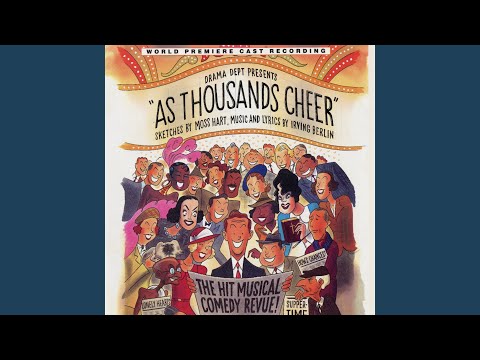
- Work: As Thousands Cheer (1933), a newspaper-driven Broadway revue with sketches by Moss Hart and songs by Irving Berlin.
- Function: Prologue opener - a bustling newsroom warm-up that teaches the show’s headline logic.
- Style: Comic patter with tight ensemble cues, built for timing, articulation, and a quick laugh-per-bar pace.
- Recorded legacy: A well-known modern document is the 1998 New York revival cast recording released by Varese Sarabande.
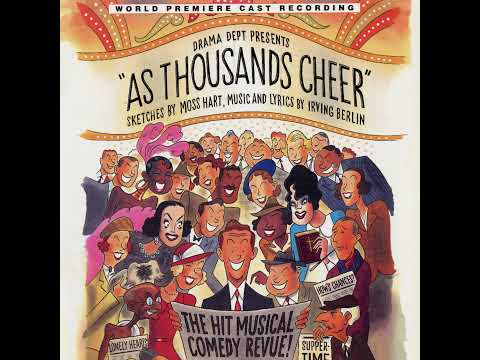
As Thousands Cheer (1933) - stage revue - non-diegetic. The song opens the evening in a newsroom frame: a headline turns into a full-company burst, setting the rule that this show will sing the front page, not escape it. Its job is simple and sharp - teach the audience the gimmick, then get out of the way fast.
The number plays like an editor’s bark turned into melody: clipped phrases, punchy repeats, and the kind of rhythmic “hustle” you can practically hear in the consonants. MusicWeb International notes how the opener leans on that old newsroom lesson about what counts as news, then flips it into a string of specific comic details. The craft is that it sounds casual while staying locked to precise ensemble timing - one late entrance and the joke lands on the wrong foot.
- Key takeaways:
- It is a thesis statement: this revue treats headlines as triggers for satire and character snapshots.
- The humor comes from editorial urgency - the beat is the deadline.
- Short length is the point: it works as a spark, not a centerpiece.
Creation History
As Thousands Cheer opened at the Music Box Theatre in New York on September 30, 1933, built around newspaper headlines linking sketches by Moss Hart with Berlin’s songs. The show’s structure demanded an opener that felt like “today” before the first sketch even started, and this prologue does that by staging the newsroom itself. Decades later, the 1998 off-Broadway revival (often cited as a key modern reference recording) captured the number on its cast album, produced by Bruce Kimmel for release through Varese Sarabande, giving the piece a clean archival foothold beyond sheet music and production paperwork.
Song Meaning and Annotations
Plot
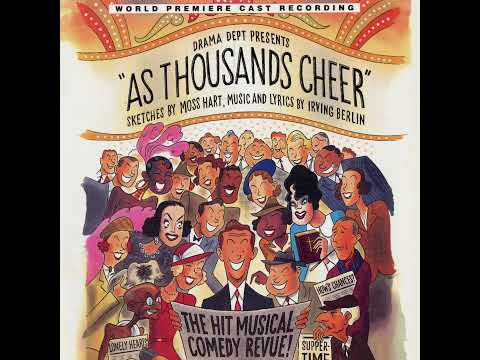
A newsroom kicks into motion: editors and reporters chase a headline with the urgency of a breaking story. The phrase “man bites dog” is the hook - the topsy-turvy event that earns ink - and the song riffs on the press instinct to sort chaos into a sellable line, fast. The scene is less about the “story” than the machinery of telling it.
Song Meaning
This opener is a playful lesson in media logic: ordinary events are invisible, but the reversed, the freakish, the “wait, what?” detail becomes the headline. Inside the revue, that idea becomes the engine for everything that follows - famous people, public scandals, cultural moments, all filtered through what makes a reader stop and stare. The mood is bright and breathless, but it has a knowing edge: the song laughs with the newsroom while quietly admitting how easily attention gets steered.
Annotations
"It opens with the traditional 'Man Bites Dog is news' admonition to cub reporters."
MusicWeb International (review of the cast recording)
That line matters because it frames the number as a rulebook, not just a gag. The opener is basically a newsroom proverb set to music, which is why it lands in seconds: the audience recognizes the idea even if they have never sat at a city desk.
"Man bites dog. Alternate title: Man bites dog opening."
Library of Congress finding aid for the Irving Berlin Collection
The “opening” label is not trivia - it confirms the song’s structural role. It is designed as an entry point: punchy, explanatory, and built to cue the revue’s headline-to-scene pipeline.
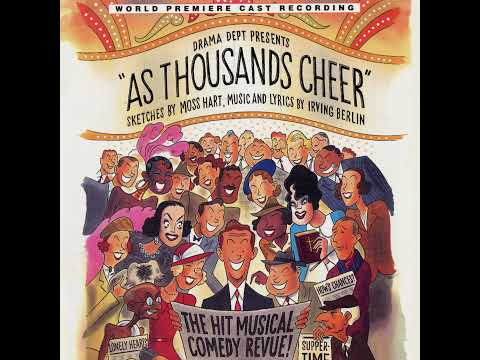
Listen to the way the writing fuses show-tune snap with newsroom cadence: short motifs, quick call-and-response, and a forward-leaning rhythm that suggests phones ringing and copy flying. Berlin’s trick is to make “work talk” singable without sanding off its bite. There is also a sly cultural touchpoint here: “man bites dog” is a journalism shorthand that outlived the 1930s, and this song helps explain why - it captures the appetite for novelty as a public habit, not just a reporter’s habit.
Instrumentation and groove
In performance, the number is typically staged as ensemble patter over brisk theatre orchestration. The bounce is more important than harmonic complexity: it is built to keep bodies moving and mouths landing together. If you are studying Lyrics for scanning and stresses, this is a useful example of how conversational phrasing can be choreographed into meter without feeling stiff.
Technical Information (Quick Facts)
- Song: Man Bites Dog
- Artist: As Thousands Cheer ensemble (notably documented on the 1998 New York revival cast recording)
- Featured: Reporter, Editor, chorus and company (stage roles vary by production)
- Composer: Irving Berlin
- Producer: Bruce Kimmel (1998 recording production credit)
- Release Date: September 30, 1933 (show opening date); January 1, 1998 (digital listing date for the revival track, varies by platform metadata)
- Genre: Musical theatre, show tune, comic patter
- Instruments: Theatre orchestra (arrangements vary), ensemble vocals
- Label: Varese Sarabande (cast recording release)
- Mood: Brisk, witty, newsroom-urgent
- Length: About 2:04 (1998 cast recording track listing)
- Track #: 1 (on the 1998 revival cast album)
- Language: English
- Album (if any): As Thousands Cheer: The Hit Musical Comedy Revue! (1998 New York Revival Cast)
- Music style: Headline-driven ensemble opener
- Poetic meter: Mixed conversational stresses with patter-style regularity (best described as accentual, performance-led)
Frequently Asked Questions
- What is the song's job inside the show?
- It is the prologue: a fast newsroom burst that teaches the audience the revue's organizing trick - each scene grows out of a headline.
- Who wrote it?
- Irving Berlin wrote the music and lyrics, with the surrounding revue sketches credited to Moss Hart.
- Why does the phrase "man bites dog" matter?
- It is a journalism shorthand for an event that is strange enough to count as news. The number uses it as a comic doorway into the show's headline satire.
- Is it a character song?
- Not in the classic solo sense. It is more a workplace ensemble piece where the "character" is the newsroom itself.
- What kind of singing does it require?
- Clear diction and tight rhythmic teamwork. The laughs depend on consonants landing together and the pace staying controlled.
- Is there a definitive recording?
- The best-known full-score reference for modern listeners is the 1998 New York revival cast album issued on Varese Sarabande, produced by Bruce Kimmel.
- Did it chart or win major music awards?
- Not in the way pop singles do. Its reputation is theatrical: it lives through productions, recordings, and its place in Berlin's stage catalogue.
- How does it connect to the rest of the revue?
- It sets the tone: witty, topical, quick on its feet. After the opener, the show can pivot to romance, parody, and darker material because the frame has already been established.
- Is it connected to "Heat Wave" or "Easter Parade" musically?
- It is connected more by format than melody. Those songs can stand alone as standards; this one is designed to function as a scene-starter.
- Where can I read more about its archival materials?
- The Library of Congress finding aid for the Irving Berlin Collection lists lead sheets and lyric material for the opener.
Additional Info
The title is doing double duty. It is the classic reporter's lesson about novelty, but it is also a wink at the revue's method: take what the public is staring at, then re-stage it with a sharper punchline. According to Concord Theatricals' published number list and role breakdown, the opener is explicitly assigned to a newsroom setup (reporter, editor, chorus), which tells you how the piece is meant to move onstage: not “stand and sing,” but “sing while working.”
There is also an archival paper trail that backs up its status as an opening: the Library of Congress finding aid lists it with an alternate title that includes the word "opening," alongside other As Thousands Cheer materials. If you are tracking Berlin's stage practice, that kind of catalog note is a small but solid clue about how the song was treated in production files.
Key Contributors
| Entity | Type | Relationship (S - V - O) |
|---|---|---|
| Irving Berlin | Person | Berlin wrote music and lyrics for the song. |
| Moss Hart | Person | Hart wrote sketches that frame the revue. |
| As Thousands Cheer | Work | The revue contains the song as its prologue number. |
| Music Box Theatre | Venue | The theatre hosted the Broadway premiere in 1933. |
| Bruce Kimmel | Person | Kimmel produced the 1998 revival cast recording. |
| Varese Sarabande | Organization | The label released the cast recording (catalog VSD-5999). |
| Concord Theatricals | Organization | The licensor publishes a role breakdown for the number. |
Sources
Sources: Wikipedia entry for As Thousands Cheer, Concord Theatricals show page, MusicWeb International review (cast recording), Library of Congress Irving Berlin Collection finding aid, Apple Music track metadata for the 1998 off-Broadway cast recording, Discogs release page for VSD-5999.