
Backstage Babble Lyrics
Backstage Babble
First nighters:Ba ba Ba Ba ba Bum Bum ba
Wasnt she Wonderful Da Da Dum de dum Wasnt she Hot Just Great
Didnt She wi The TONY Yah She Was Great Great Great
eve Harington:
A Diba Ba Do A Deba ba Do
Critics Will certainly Say
all:
WOOOOOOOOOW!
Song Overview
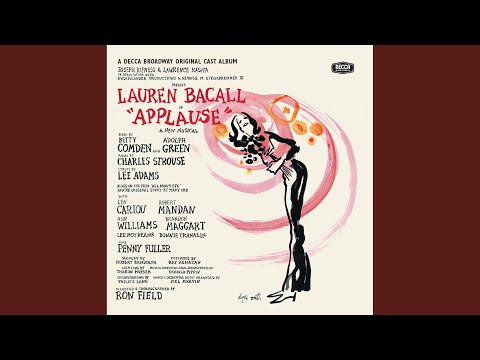
Review and Highlights
Quick summary
- What it is: A brisk opening-room chorus from the 1970 Broadway musical Applause, written to sound like a corridor full of insiders talking at once.
- Who is singing: The show crowd - credited as The First Nighters - the fans, friends, hangers-on, and pros who flood a dressing room after curtain.
- Where it lands in the story: Early Act 1, as the dressing room fills and the air turns into a human newswire.
- How it plays: Short, rhythmic, and punchy - more like staged chatter with musical spine than a traditional verse-chorus showcase.
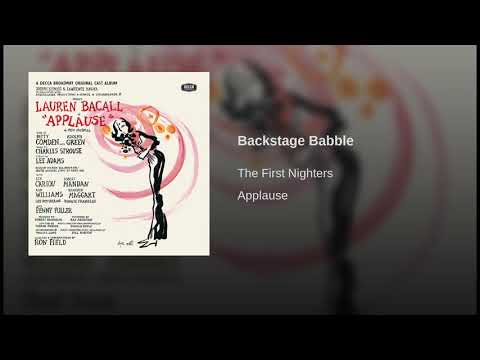
Applause (1970) - stage musical - diegetic. A post-show dressing-room crush where admiration, gossip, and status-checking overlap, setting the social weather before the plot tightens around Margo and Eve. The number matters because it turns the theater into a character - noisy, hungry, and always listening.
The hook is not a melody you hum in the street - it is the sensation of being trapped in a glamorous stampede. Strouse and Adams write it like a fast-moving camera: names, compliments, little stings, tiny alliances. The rhythm does the heavy lifting, pushing the ensemble forward in clipped phrases that feel like elbows on a narrow hallway. You can hear how the show wants you to think about fame: not as a halo, but as a crowd with opinions, and a thousand small transactions. According to Playbill, the original production framed this world with star casting and sharp theatrical craft, and this opener fits that agenda - it sells the backstage ecosystem in under two minutes.
- Key takeaway: The number is world-building disguised as chatter.
- Key takeaway: The ensemble sings like a single machine - a social engine that never stops running.
- Key takeaway: It primes the audience to distrust sweetness, because the room is already counting winners and losers.
Creation History
Applause was built from the DNA of All About Eve, with Betty Comden and Adolph Green shaping the book and Strouse and Adams supplying songs that could sound glamorous while still cutting a little. The Broadway run opened at the Palace Theatre in 1970, and the cast album was recorded in early April 1970, with the original LP initially issued by ABC Records (later reissued by Decca Broadway). The recording history is not trivia here: this track is essentially a sonic photograph of a specific Broadway moment - when cast albums still tried to bottle the bustle, not just the ballads.
Song Meaning and Annotations
Plot
The scene drops you into a dressing room right after a performance. People crowd in with congratulations, gossip, and the little rituals that make theater feel like a private city. In that press of voices, the show introduces the kind of attention Margo attracts - and the kind of attention Eve studies. The number is less about one character singing a point of view and more about the room revealing its instincts.
Song Meaning
The title says it: this is backstage talk turned into rhythm. Under the compliments, you can feel the status ladder being climbed in real time. The song sells the idea that theater fame is communal and predatory at once - a warm hug with a hand checking your pocket. It is also a curtain-raiser with a purpose: the babble is the habitat where Eve can blend in, gather intel, and start becoming indispensable. The mood swings between sparkle and bite, and that tension is the show in miniature.
Annotations
-
"The crowd noise is the point - the music behaves like overlapping conversations."
The writing treats speech as percussion. Instead of long lines, you get quick bursts, giving the ensemble a driving rhythm that mimics real chatter while staying tightly staged.
-
"It is a social map: who belongs, who performs belonging, and who is watching."
This is why the number lands early. It sketches the theater food chain before the plot starts making demands, so later betrayals feel like extensions of the room.
-
"The glamour reads as a mask - behind it, everyone is measuring everyone."
The emotional arc is subtle but real: excitement at being near a star, then the creeping sense that admiration can turn transactional in a second.
Rhythm and arrangement
The number leans on a tight pulse and quick entries, making the ensemble sound like a switchboard. The style fusion is classic musical theater with a hint of spoken-sung patter energy. The point is momentum: you are not invited to relax, because backstage never relaxes.
Symbols and touchpoints
Backstage itself becomes the symbol - the place where public applause turns into private bargaining. Historically, the show arrives at the end of one Broadway era and the start of another: star vehicles still ruled, but the culture was getting sharper about how stardom is manufactured. This opener wears that attitude lightly, like good theater gossip: casual, specific, and a little dangerous.
Technical Information (Quick Facts)
- Song: Backstage Babble
- Artist: The First Nighters (Applause Original Broadway Cast Recording)
- Featured: Ensemble
- Composer: Charles Strouse
- Producer: Thomas Z. Shepard (cast album producer credit commonly associated with the recording)
- Release Date: April 1970
- Genre: Musical theater, show tune
- Instruments: Orchestra, ensemble vocals
- Label: ABC Records (original LP), Decca Broadway (reissue)
- Mood: Bright, busy, sly
- Length: 1:27
- Track #: 2
- Language: English
- Album (if any): Applause (Original Broadway Cast Album)
- Music style: Patter-leaning ensemble opener
- Poetic meter: Mixed conversational stress (patter style)
Frequently Asked Questions
- Who performs the song on the cast album?
- The track is credited to The First Nighters, the ensemble crowd that represents the post-show visitors and backstage regulars.
- Where does the song appear in the musical?
- It appears in Act 1 as the dressing-room scene swells with visitors right after a performance.
- What is the song doing dramatically?
- It introduces the backstage ecosystem - praise, gossip, and ambition in the same breath - so later power shifts feel earned.
- Is it diegetic in the world of the show?
- Yes. The sound is staged as the room itself: people speaking and reacting inside the scene, not a private solo reflection.
- Why is it so short?
- Because it behaves like a scene transition with a musical motor: it sets the temperature, drops key information, and moves you forward fast.
- What musical technique stands out most?
- Patter-style pacing. Quick phrases and tight entrances make the ensemble feel like overlapping conversations with a shared beat.
- How does it connect to All About Eve?
- Like the film, the story watches ambition up close. This number shows the crowd that rewards and feeds ambition before the plot names it.
- Is there a notable modern reference to the title?
- The theater podcast and live show called Backstage Babble explicitly takes its name from this opener, treating it as a shorthand for Broadway insider talk.
- Who wrote the song?
- Music is by Charles Strouse and lyrics are by Lee Adams, the longtime writing team behind the score.
- Was the cast album later reissued?
- Yes. The original cast album was issued as an ABC Records LP and later reissued under Decca Broadway branding in remastered form.
Awards and Chart Positions
The parent show Applause won the Tony Award for Best Musical, and Lauren Bacall won a Tony for her leading performance, cementing the production as a major 1970 Broadway success. On the recording side, the score received a Grammy in the cast-album category in the early 1970s, with Strouse and Adams credited for the work.
| Year | Honor | Work | Result |
|---|---|---|---|
| 1970 | Tony Awards | Applause | Best Musical (won) |
| 1971 | Grammy Awards (cast-album score category) | Applause | Won (credited to Charles Strouse and Lee Adams) |
| 1970 | Cash Box Album Chart | Applause (Original Cast) - ABC OCS 11 | Listed at No. 119 (Aug 8, 1970 issue) |
Additional Info
A funny footnote: the title escaped the theater and became a brand name for modern Broadway talk. Theater press has explicitly noted that the interview series called Backstage Babble takes its name from this number, which is a neat example of a song doing cultural work far beyond its runtime. And for collectors, discographies and liner notes document how the cast album exists in different pressings and later remasters, a reminder that even a quick opener can have a long shelf life.
Key Contributors
| Entity | Type | Relationship (S-V-O) |
|---|---|---|
| Charles Strouse | Person | Charles Strouse composed the music for "Backstage Babble". |
| Lee Adams | Person | Lee Adams wrote the lyrics for "Backstage Babble". |
| Betty Comden | Person | Betty Comden co-wrote the book for Applause. |
| Adolph Green | Person | Adolph Green co-wrote the book for Applause. |
| Ron Field | Person | Ron Field directed and choreographed the original Broadway production of Applause. |
| Lauren Bacall | Person | Lauren Bacall starred as Margo Channing in Applause. |
| ABC Records | Organization | ABC Records issued the original cast album as ABC OCS-11. |
| Decca Broadway | Organization | Decca Broadway reissued the cast recording in remastered form. |
| Palace Theatre | Venue | The Palace Theatre hosted the original Broadway run of Applause. |
| All About Eve | Work | All About Eve is the source work that Applause adapts. |
Sources
Sources: IBDB production page, IBDB song list, Overtur cast recording notes, Stanford library catalog note on ABC OCS-11 release, Cash Box magazine issue (Aug 8, 1970), Record World review (Apr 25, 1970), Grammy cast-album score category list, Theater Pizzazz feature on Backstage Babble name origin, YouTube track upload metadata