
See What It Gets You Lyrics
See What It Gets You
FAY:Take one step
And see what it gets you.
See what it gets you.
See what it gets you!
One step up
And see how it gets you
Down.
Give yourself,
If somebody lets you-
See what it gets you.
See what it gets you!
Give yourself,
And somebody lets you
Down.
Here's how to crawl,
Now, run, lady!
Here's how to walk.
Now fly!
Here's how to feel-Have fun, lady.
And a fond goodbye!
Reach out your hand
And see what it gets you.
See what it gets you.
See what it gets you!
Trouble is, whatever it gets,
You find
That once you see, you can't stay blind.
What do I do now.
Now that my eyes are wide?
But when the world goes mad,
Then they've got to be shown.
And when the hero quits,
Then you're left on your own.
And when you want things done,
You have to do them yourself alone!
And if I'm not ready
And lightheaded,
I can't stand here dumb.
So, ready or not, here-I hope-I come!
Anyone can whistle, that's what they say-
Easy.
Anyone can whistle any old day-
Easy.
It's all so simple: relax, let go, let fly.
And someone tell me, why can't I?
Whistle at the dragon: down it'll fall.
-Easy.
Whistle at a hero, trumpets and all
-Easy.
Just once I'll do it,
Just once before I die.
Lead me to the battle,
What does it take?
Over the top!
Joan at the stake!
Anyone can whistle-
(She tries unsuccessfully)
Well, no one can say
I didn't try!
Song Overview
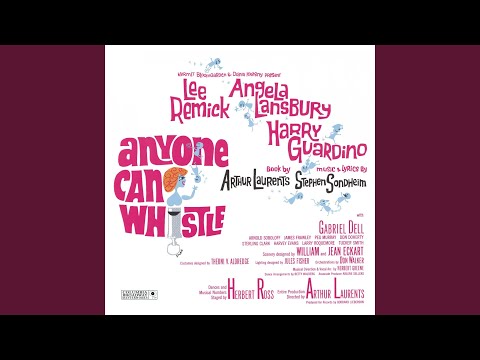
Review and Highlights
Quick summary
- Work: Fay Apple solo from Anyone Can Whistle (Broadway, 1964).
- Where it lands: Act III, when Fay decides she will not lean on Hapgood, or anyone, to fight the town’s fraud.
- Why it stings: It is not a big breakup aria, it is a moral recoil with teeth.
- On record: Included on the 1964 cast album selections, timed at 2:31 in the standard listings.
- Performance clue: The song plays well in recital because it is a complete dramatic pivot in under three minutes.
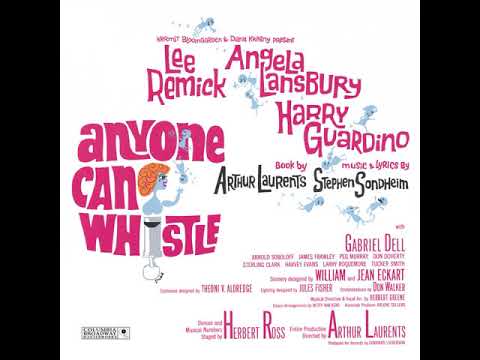
Anyone Can Whistle (1964) - stage musical - non-diegetic with direct consequences. The show is already deep into Act III chaos: Cora is scrambling to meet her Cookie quota, the town is hunting bodies, and Hapgood is refusing to play savior. Fay’s response is this song, which turns disappointment into a decision. It is staged as a stop in the chase, not a comfortable spotlight moment, and that staging matters: the number is the last time Fay gets to choose her own speed.
Creation History
Stephen Sondheim wrote music and lyrics for Anyone Can Whistle with a book by Arthur Laurents. The Broadway production opened April 4, 1964 and closed after nine performances, but the cast recording arrived quickly and kept the score alive. Discographies for the show list "See What It Gets You" among the cast-album selections, and later recordings (including the Carnegie Hall concert and the first complete studio recording) confirm its Act III placement. As stated in the Sondheim Society discography notes, the cast album preserves this number at 2:31, which is about the length of a tough conversation you can barely stand to finish.
Song Meaning and Annotations
Plot
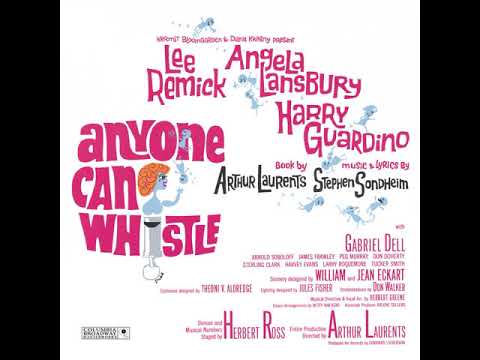
Cora and her council discover the fraud is exposed, receive a warning telegram from the governor, and decide to fill the Cookie quota by arresting people at random. Hapgood refuses to help Fay stop the system because he has given up crusading. Fay, already stretched thin by the miracle fiasco, snaps into clarity: if the so-called hero quits, she will act alone. That is the lead-in to this song, and it sets up the pursuit sequence that follows.
Song Meaning
The title phrase is a sour little receipt. Fay is not singing, "Look what you did." She is singing, "Look what your refusal causes." She wanted partnership, or at least support, and she gets an empty hand. Yet the song is not only blame. It is also Fay seeing her own pattern: waiting for permission from a man with status, then realizing that waiting is a luxury the town cannot afford. The number captures the moment when idealism gets stripped of romance and still survives.
Annotations
Although she knows she still isn't out of her shell, Fay angrily swears to go it alone.
This summary is the clean dramatic thesis. Fay is not claiming she is fearless. She is claiming she is responsible.
"See What It Gets You" - Fay
That bare credit line matters because it isolates the song as Fay’s private decision spoken aloud. In a score full of crowds and committees, this is one person cutting through noise.
Driving rhythm and emotional arc
The song moves like a brisk argument that refuses to turn lyrical for too long. It begins in accusation, pivots into self-address, then lands on resolve. A good performance keeps the turns sharp, so the listener hears the shift from pain to purpose without needing extra volume.
Key phrases and symbols
The lyric treats "hero" as a job title, not a love interest. When the job is abandoned, Fay does not mourn. She reallocates the work to herself. That is the show’s satire, turned suddenly sincere.
Technical Information (Quick Facts)
- Song: See What It Gets You
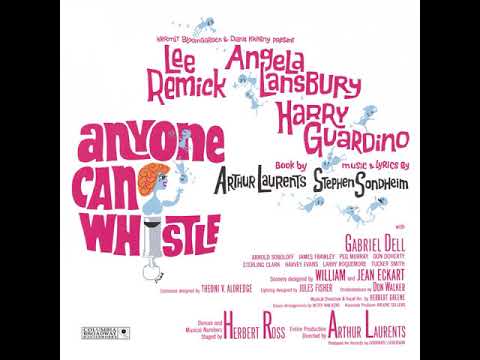
- Artist: Lee Remick (Original Broadway Cast recording context)
- Featured: Fay Apple
- Composer: Stephen Sondheim
- Producer: Goddard Lieberson (cast album)
- Release Date: April 17, 1964 (first LP release date for the original cast recording)
- Genre: Musical theatre
- Instruments: Voice with orchestra
- Label: Columbia Masterworks; Masterworks Broadway (reissues)
- Mood: Bitter; clear-eyed; resolute
- Length: 02:31 (standard cast-album listing)
- Track #: Cast-album selections list it as track 10 on common remastered lineups
- Language: English
- Album (if any): Anyone Can Whistle - Original Broadway Cast Recording
- Music style: Character solo built as a rapid pivot from grievance to action
- Poetic meter: Mixed conversational scansion shaped for quick dramatic turns
Frequently Asked Questions
- Who sings the song in the Broadway production?
- Song lists for the Broadway production credit it to Fay.
- Where does it happen in the story?
- In Act III, after Hapgood refuses to help stop Cora and the arrests, Fay vows to go it alone.
- Is it a breakup song?
- Not exactly. It is closer to a political breakup: Fay cuts ties with the idea that someone else will lead.
- Why is it such a popular audition pick?
- It has a clear objective, a sharp turn, and no wasted air. You can act it like a scene without needing props.
- How long is the cast-album track?
- Standard discographies list it at 2:31 on the original cast recording selections.
- Is there a Carnegie Hall concert version?
- Yes. The 1995 Carnegie Hall concert recording includes the number, and it appears as a separate track in published track lists.
- What does the title phrase mean onstage?
- It is a verdict on inaction. Fay is measuring what "playing it safe" costs the people being rounded up.
- What should a performer focus on?
- Keep the phrasing conversational and the turn decisive. The song is stronger when the resolve arrives like a switch flipping.
- What comes right after it in many documented sequences?
- Often a reprise of the title song or the pursuit music around the Cookie chase, depending on the recording or edition.
Additional Info
The number sits in a classic Sondheim pressure point: the moment when a character stops asking for rescue and starts naming consequences. Wikipedia’s synopsis ties the song to Hapgood’s refusal to help and Fay’s angry vow, which makes the lyric read less like heartbreak and more like civic outrage. The Sondheim Society discography is useful here because it shows the cast album kept the track even while the original LP had to be selective, suggesting the producers understood it was a key dramatic hinge.
In the Carnegie Hall concert track lists, the title sometimes appears with a brief transition tag before it. That is a small but telling detail: the score is not just songs, it is connective tissue. This number is one of the places where that tissue is felt, because the scene is moving even while Fay stands still and sings.
Key Contributors
| Entity | Type | Relationship |
|---|---|---|
| Stephen Sondheim | Person | Wrote music and lyrics; shaped the solo as a rapid moral pivot. |
| Arthur Laurents | Person | Book writer; set the Act III crisis that triggers Fay's decision. |
| Lee Remick | Person | Originated Fay; credited vocalist on the 1964 cast recording track. |
| Harry Guardino | Person | Originated Hapgood; his refusal to crusade is the dramatic trigger for the solo. |
| Goddard Lieberson | Person | Cast-album producer; preserved the score through the original recording. |
| Columbia Masterworks | Organization | Original cast recording label. |
| Masterworks Broadway | Organization | Distributor of the official audio upload and later catalog editions. |
| Stephen Sondheim Society | Organization | Maintains discography entries documenting track timings and selections. |
| Carnegie Hall | Venue | Hosted the 1995 concert whose track list includes the number (with transition tags in some editions). |
Sources
Sources: Masterworks Broadway (official YouTube audio upload), Stephen Sondheim Society discography page, Wikipedia show synopsis and musical numbers list, Discogs Carnegie Hall concert track list, Sondheim Guide discography notes