
A Parade in Town Lyrics
A Parade in Town
CORA:Hi!... Hey!... Wait!... Voters!...
I see flags, I hear bells,
There's a parade in town.
I see crowds, I hear yells,
There's a parade in town!
I hear drums in the air,
I see clowns in the square,
I see marchers marching,
Tossing hats at the sky.
Did you hear? Did you see?
Is a parade in town?
Well, they're out of step, the flutes are squeaky,
The banners are frayed.
Any parade in town without me
Must be a second-class parade!
So!... Ha!...
BOTH GROUPS:
Hapgood has no answers or suggestions,
Only a lot of questions.
We like questions!
What's the use of answers or suggestions?
As long as we're told where to go,
There isn't a thing we need to know!
CORA:
I see flags, I hear bells,
There's a parade in town.
I see crowds, I hear yells,
There's a parade in town!
I hear drums in the air,
I see clowns in the square,
I see marchers marching,
Tossing hats at the sky.
Did you hear? Did you see?
Was a parade in town?
Were there drums without me?
Was a parade in town?
'Cause I'm dressed at last,
at my best, and my banners are high.
Tell me, while I was getting ready,
Did a parade go by?
Song Overview
Review and Highlights
Quick summary
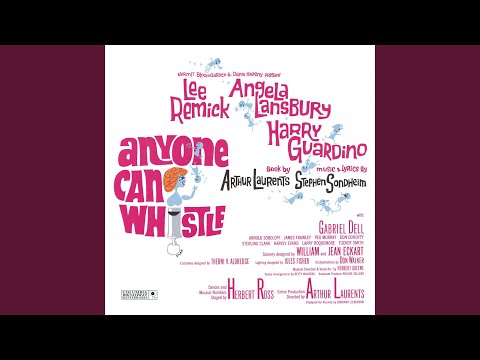
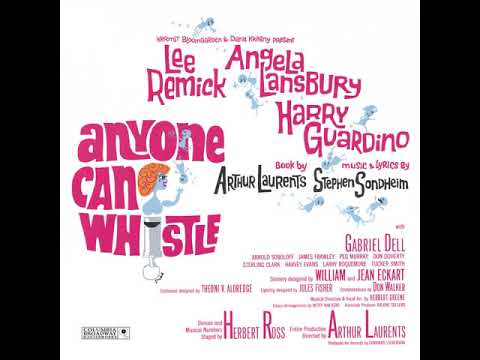
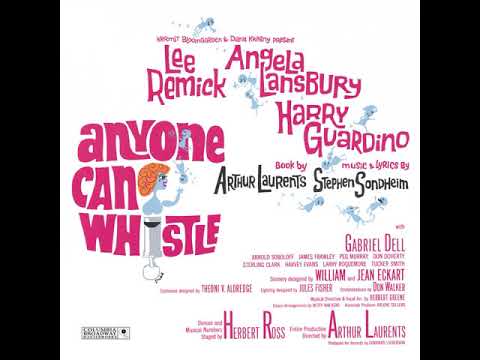
- Work: Cora Hoover Hooper solo from Anyone Can Whistle (Broadway, 1964).
- Who sings it: Cora, with ensemble color in many recorded presentations.
- Where it appears: Act II, after Fay has sung the title ballad and just before Hapgood's big warning number.
- What it does: Turns municipal showmanship into a patter-aria of self-mythmaking.
- Sound on paper: Marked Moderato around quarter note equals 120 in a widely sold piano-vocal-guitar edition.
Anyone Can Whistle (1964) - stage musical - non-diegetic, with diegetic consequences. Cora is not leading an actual parade. She is willing one into existence, rhetorically, because pageantry is her native language. The best performances treat the song as a political costume change: she starts as the mayor making announcements and ends as a woman bargaining with the universe for applause. You can hear why the part fit Angela Lansbury so well: the line is sharp, the turns are fast, and the charm is never allowed to relax into comfort.
Creation History
The original Broadway production opened April 4, 1964 at the Majestic Theatre and closed after a famously brief run, but the cast recording was released that same month and kept the score circulating. The recording date and release date are tracked in standard discographies, and the album has stayed available through later reissues. For this particular number, Masterworks Broadway has treated it as a highlight track in its catalog, and the published sheet-music edition situates it as a compact, playable scene with a clear tempo marking and an original published key.
Song Meaning and Annotations
Plot
Act II has already shown the town reorganized under Hapgood's influence and Fay pushing toward truth. In that pressure cooker, Cora needs a new public story. The number lands as her attempt to reassert control, to be the town's master of ceremonies again, even as the larger con begins to wobble.
Song Meaning
Cora imagines spectacle as proof of legitimacy. A parade is not just entertainment, it is a verdict: the crowd agrees to look where she points. The lyric is full of civic imagery and forward motion, but the subtext is anxiety. She is trying to out-sing doubt. And in a show that keeps asking who is sane, the song suggests a darker answer: sometimes the most organized person in the room is the one most committed to pretending.
Annotations
A Parade In Town - Cora Hoover Hooper
That simple credit line, from the Broadway song list, is a reminder of how focused the number is. This is Cora alone, building an entire civic fantasy out of her own voice.
Tempo: Moderato. Metronome: quarter note = 120. Original published key: Eb major.
Those are not just print details. They hint at the performance style: brisk enough to feel like a speech with musical lift, steady enough to keep the character's varnish intact even as the cracks show.
Rhythm as persuasion
The beat is the campaign. In this score, crowds are often whipped into agreement by patterns and chants. Here, Cora does it solo, like a one-woman marching band. The rhythm keeps the promises sounding practical.
Emotional arc
It begins as vision-casting, then drifts into personal stakes, then snaps back into show-biz authority. The arc is not resolution. It is self-hypnosis, performed confidently enough that the town might join in.
Technical Information (Quick Facts)
- Song: A Parade in Town
- Artist: Angela Lansbury (Original Broadway Cast recording context)
- Featured: Cora Hoover Hooper
- Composer: Stephen Sondheim
- Producer: Goddard Lieberson (cast album)
- Release Date: April 17, 1964 (original cast album)
- Genre: Musical theatre
- Instruments: Voice with orchestra; commonly published for piano-vocal-guitar
- Label: Columbia Masterworks; Masterworks Broadway (catalog and reissues)
- Mood: Bright; insistent; slightly brittle
- Length: About 03:07 (major-platform track listing)
- Track #: Act II placement between the title ballad and Hapgood's warning number (show order)
- Language: English
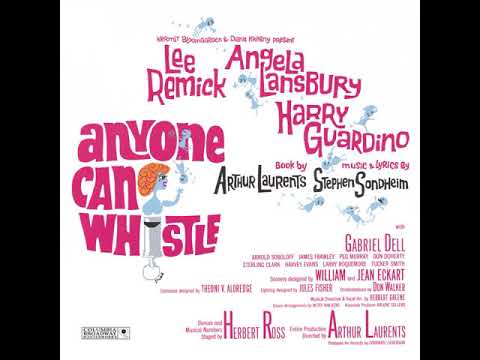
- Album (if any): Anyone Can Whistle - 1964 Original Broadway Cast Recording
- Music style: Character uptempo with speech-like phrasing and civic imagery
- Poetic meter: Mixed conversational scansion designed for quick turns and rhetorical emphasis
Frequently Asked Questions
- Who sings the number in the Broadway song list?
- IBDB lists it as a Cora Hoover Hooper solo.
- Where does it fall in the show?
- It is in Act II, after the title song and before "Everybody Says Don't" in the standard Broadway song order.
- Is it a comedy number or a character revelation?
- Both. The civic imagery plays as showy salesmanship, but the insistence reads as fear of losing the crowd.
- What tempo is suggested by a common published edition?
- A widely sold piano-vocal-guitar arrangement marks it Moderato at quarter note equals 120.
- What is the original published key in that edition?
- Eb major, with multiple transpositions offered in the same product listing.
- Is there an official audio upload used by the labels?
- Yes. Masterworks Broadway has distributed a track upload credited to Angela Lansbury and the ensemble from the 1964 cast recording.
- Does it have a pop chart history?
- It is typically tracked as a cast-album track rather than a pop single, so standard chart narratives do not attach to it.
- Why do performers like it as an audition piece?
- It lets you play status, speed, and rhetorical bite, with clear opportunities for acting through rhythm and text.
Awards and Chart Positions
The track is not usually treated as a chart single. For awards context, the original Broadway production received a Tony Award nomination for choreography (Herbert Ross), as documented in the production record.
Additional Info
This is one of Sondheim's early demonstrations that a character song can be a political document. Cora talks like a brochure, thinks like a gambler, and sings like someone who has learned that confidence is a form of currency. I have heard performers lean into the comedy and get easy laughs, but the number gets sharper when the laughs are edged. The parade she describes is an image of consent, and she needs consent badly.
According to the Masterworks Broadway catalog note for the cast album, the recording's survival has as much to do with producer foresight as with the show's short run. That matters for this song because it is a performance piece: without the album, the role's particular mixture of brass and panic would be harder to reconstruct from memory alone.
Key Contributors
| Entity | Type | Relationship |
|---|---|---|
| Stephen Sondheim | Person | Wrote music and lyrics; shaped the song as civic rhetoric with character bite. |
| Arthur Laurents | Person | Book writer and director of the original production; framed Cora's public persona in the story. |
| Angela Lansbury | Person | Originated Cora on Broadway; credited performer on the cast recording track. |
| Goddard Lieberson | Person | Cast-album producer; his decision to record preserved the role's signature numbers. |
| Don Walker | Person | Orchestrator for the original production, as listed in the Broadway production record. |
| Herbert Greene | Person | Musical director and vocal arranger for the original production, as listed in the Broadway production record. |
| Herbert Ross | Person | Choreographer; Tony-nominated for the production. |
| Columbia Masterworks | Organization | Original cast recording label line. |
| Masterworks Broadway | Organization | Catalog owner and distributor of the cast recording and official audio uploads. |
| Majestic Theatre | Venue | Broadway venue for the 1964 opening of the musical. |
How to Sing A Parade in Town
A reliable published arrangement provides usable anchors: Moderato at quarter note equals 120, with the original published key listed as Eb major (and transpositions available). Treat those as a starting map for pacing and breath, then adjust to your room and your Cora.
- Tempo: Keep the pulse steady. If it drifts slower, the song turns into a speech. If it rushes, the character reads as frantic before the text earns it.
- Diction: This is rhetoric. Aim for crisp consonants on civic images and softer edges on the private turns, so the audience hears the mask and the person behind it.
- Breathing: Plan breaths by thought, not by barline. Many phrases want the illusion of one long persuasive sentence.
- Flow and rhythm: Let the quick lists land cleanly, then allow a tiny lift before the next idea. Cora is selling pictures, one after another.
- Accents: Punch the verbs. When she imagines action, the song wakes up. When she imagines admiration, the tone can harden slightly.
- Style: Keep it theatrical, but avoid mugging. The joke is that she believes her own billboard language.
- Mic and space: In cabaret, tighten the dynamic range and lean into the text. On a bigger stage, keep the same intimacy while letting the consonants carry.
- Pitfalls: Do not smooth away the brittle edges. The number is more interesting when the cheer has a hinge of worry.
Sources
Sources: YouTube (Masterworks Broadway audio upload), Internet Broadway Database production record and song list, Masterworks Broadway cast-album page, AllMusic album entry, Musicnotes sheet music listing