
Everybody Says Don't Lyrics
Everybody Says Don't
HAPGOOD:Everybody says don't,
Everybody says don't,
Everybody says don't-
It isn't right,
Don't-it isn't nice!
Everybody says don't,
Everybody says don't,
Everybody says don't walk on the grass,
Don't disturb the peace,
Don't skate on the ice.
Well, I
Say
Do,
I say,
Walk on the grass, it was meant to feel!
I
Say
Sail!
Tilt at the windmill,
And if you fail, you fail.
Everybody says don't,
Everybody says don't,
Everybody says don't get out of line.
When they say that, then
Lady that's a sign:
Nine times out of ten,
Lady, you are doing just fine!
Make just a ripple.
Come on be brave.
This time a ripple,
Next time a wave
Sometimes you have to start small,
Climbing the tiniest wall,
Maybe you're going to fall-
But it is better than not starting at all!
Everybody says no,
Everybody says stop.
Everybody says mustn't rock the boat,
Mustn't touch a thing!
Everybody says don't,
Everybody says wait,
Everybody says can't fight city hall,
Can't upset the cart,
Can't laugh at the king!
Well, I
Say
Try!
I
Say
Laugh at the kings or they'll make you cry.
Lose
Your
Poise!
Fall if you have to,
But lady, make a noise!
Everybody says don't,
Everybody says can't,
Everybody says wait around for miracles,
That's the way the world is made!
I insist on
Miracles, if you do them,
Miracles - nothing to them!
I say don't,
Don't be afraid!
Song Overview
Review and Highlights
Quick summary
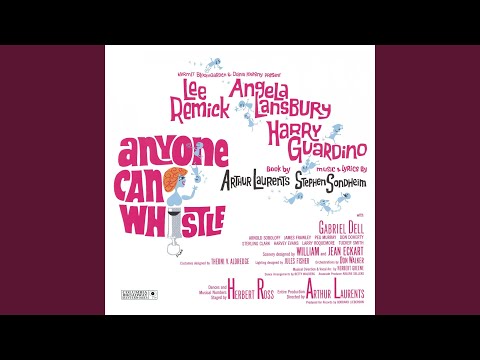
- Work: J. Bowden Hapgood showcase from Anyone Can Whistle (Broadway, 1964).
- Who leads it: Hapgood, with the town swirling around the idea.
- Where it sits: Late Act II in the drama flow, when Fay pushes back against Hapgood and the word "don't" becomes a trigger.
- What it is: A dare in song form - a man arguing with caution itself.
- Performance flavor: Brisk, speech-forward, built to land like a provocation rather than a pep talk.
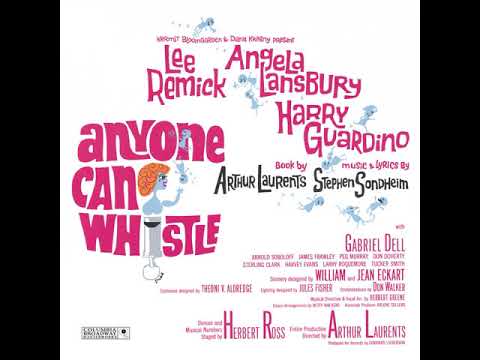
Anyone Can Whistle (1964) - stage musical - non-diegetic, with stage action baked in. Masterworks Broadway summarizes the moment as Hapgood bristling at Fay's "don't," then tearing up the Cookie Jar records himself. That detail matters because it turns the number into behavior, not commentary. The song is not a lecture about courage. It is a man seizing control through impulse, and the show daring us to decide whether impulse is bravery or escape.
Creation History
The musical opened April 4, 1964, and the cast album was released fast enough to become the score's main public life raft. Masterworks Broadway still foregrounds that album in its catalog history and pins the first LP release to April 17, 1964. The number has since lived well beyond the show, turning up in concert programs and Sondheim revues, partly because it is short, playable, and dramatically legible: one voice pushing against a wall of advice.
Song Meaning and Annotations
Plot
Act II has already reorganized the town around Hapgood's methods, and Fay is trying to stop the con by bringing truth into the daylight. When she resists Hapgood's attempt to make the problem disappear by destroying the records, the argument lands on a single word. The show uses that word as a springboard into Hapgood's signature thesis: the world runs on warnings, and he refuses to live by them. In the broader synopsis, this is also where the Cookies begin to appear and move, turning the scene into something like a musical eruption.
Song Meaning
The surface meaning is easy: ignore the naysayers. The real meaning is pricklier. Hapgood is a psychiatrist who has decided crusading is futile, yet he cannot stop himself from arguing for risk. So the song plays like a contradiction he is singing to himself. It is a self-justification, and it is also a genuine spark - the moment when the show stops treating him as a cool operator and lets him be reckless.
Annotations
Everybody Says Don't - J. Bowden Hapgood
IBDB's simple credit line frames the whole dramatic contract: this is Hapgood's philosophy set to rhythm, not a community hymn.
Tempo: Allegro moderato. Metronome: q = 108. Voice, range: G3-E5. Original published key: C major.
Those details, from a widely used sheet-music listing, describe how the song wins. It is not a slow meditation. It moves like someone thinking out loud at speed, and the range keeps the focus on text and attack rather than sustained high notes.
Driving rhythm and style
The writing favors forward motion and quick emphasis. The tune behaves like a bright argument, and the accompaniment reinforces that "keep going" feeling. That is why the refrain sticks: it is engineered to sound like a practical rule you could repeat while walking.
Emotional arc
It begins as irritation, opens into a grin, then tightens again. A good performance lets you hear that Hapgood is both amused and cornered. He is defending his worldview because he is not sure it will survive contact with Fay's ethics.
Technical Information (Quick Facts)
- Song: Everybody Says Don't
- Artist: Harry Guardino (Original Broadway Cast recording context)
- Featured: J. Bowden Hapgood
- Composer: Stephen Sondheim
- Producer: Goddard Lieberson
- Release Date: April 17, 1964 (cast album first LP release)
- Genre: Musical theatre
- Instruments: Vocal with orchestra; commonly published for piano-vocal
- Label: Columbia Masterworks; Masterworks Broadway (catalog and reissues)
- Mood: Defiant; witty; slightly combative
- Length: About 02:20 (common remastered-edition listings)
- Track #: Listed as its own track on expanded/remastered editions
- Language: English
- Album (if any): Anyone Can Whistle - Original Broadway Cast Recording
- Music style: Character patter-leaning number with a brisk refrain and argument-like phrasing
- Poetic meter: Mixed conversational scansion designed for quick turns
Frequently Asked Questions
- Who sings the number in the Broadway song list?
- IBDB credits it to J. Bowden Hapgood.
- What triggers the song in the Act II scene description?
- Masterworks Broadway describes Hapgood bristling at Fay using the word "don't," then escalating by tearing up the records.
- Is it treated as a pop single?
- No. It is primarily tracked as a cast-album and theatre repertoire piece.
- Why does it work so well outside the show?
- It is a complete dramatic argument in a few minutes, with a refrain that reads like a motto.
- What tempo is listed in a common piano-vocal edition?
- Musicnotes lists it as Allegro moderato with a metronome of q = 108 for that arrangement.
- What vocal range is listed for that edition?
- Musicnotes lists a voice range of G3 to E5.
- What is the original published key in that listing?
- C major, with transpositions available.
- Is it part of a larger dance moment?
- In synopsis descriptions, the scene can expand into movement as the Cookies appear, making the number a launch point for stage action.
- Why does the refrain land like a challenge?
- Because the lyric frames caution as peer pressure, and Hapgood chooses to treat refusal as fuel.
Awards and Chart Positions
The number is not typically tracked through pop chart systems. For awards context tied to the original Broadway production, IBDB lists a 1964 Tony Award nomination for Best Choreography for Herbert Ross.
Additional Info
There is a sly theatrical joke in how this song behaves. It sounds like a self-help slogan, yet it belongs to a character who has stopped believing that change is possible. That tension is the dramatic electricity. The number is a pep talk delivered by a skeptic, and that is why it keeps showing up in Sondheim concert anthologies and revues - you can play it as triumph, or you can play it as a man talking himself into motion.
According to Masterworks Broadway's Carnegie Hall concert notes, the word "don't" is the spark for Hapgood's reaction in the sequence that leads into this song. The catalog voice is practical, but the implication is theatrical: a single syllable can flip the room, and Sondheim knows exactly how to score that flip.
Key Contributors
| Entity | Type | Relationship |
|---|---|---|
| Stephen Sondheim | Person | Wrote music and lyrics; built the song as a compact argument with a sticky refrain. |
| Arthur Laurents | Person | Book writer and director; framed the Act II confrontation that triggers the number. |
| Harry Guardino | Person | Originated Hapgood; recorded vocalist on the 1964 cast album track. |
| Goddard Lieberson | Person | Cast-album producer; preserved the score quickly after the Broadway opening. |
| Herbert Ross | Person | Choreographer; Tony-nominated for the production, relevant to the song's dance-linked staging. |
| Masterworks Broadway | Organization | Distributes official audio uploads and publishes concert scene summaries connected to the song. |
| Internet Broadway Database | Organization | Lists the song under Act II and credits it to Hapgood, and documents the production's award nomination. |
| Musicnotes | Organization | Publishes a widely used edition listing tempo, range, and key. |
| Majestic Theatre | Venue | Broadway venue for the 1964 opening of Anyone Can Whistle. |
How to Sing Everybody Says Don't
A commonly used piano-vocal edition lists Allegro moderato with q = 108, a vocal range of G3 to E5, and an original published key of C major. That bundle of facts suggests a performance approach: energetic, text-led, and cleanly articulated rather than shouted.
- Tempo: Start near q = 108 and resist the urge to rush the patter. The groove should feel inevitable, like a person walking faster because they have decided to stop hesitating.
- Diction: Put the consonants on the front edge, especially on repeated "don't" phrases, but keep them unforced. The number lands when it sounds like thought, not scolding.
- Breath: Map breaths to argument turns. Short breaths can heighten the sense of pressing forward, but do not break the refrain into fragments.
- Flow and rhythm: Treat the verse as setup and the refrain as the punch. Keep the rhythmic profile consistent so the listener feels the rule being repeated into belief.
- Accents: Emphasize the verbs and the words that name social pressure. The song is not abstract courage; it is courage against a chorus of advice.
- Style: Aim for bright, slightly sardonic confidence. Hapgood is not a naive optimist; he is a man choosing motion because stillness would be worse.
- Mic and space: In a small room, favor conversational attack and let dynamics do the work. Onstage, keep the same speech-like clarity with supported tone.
- Pitfalls: Avoid turning it into a motivational poster. The edge is part of the character, and the character is the point.
Sources
Sources: Internet Broadway Database production record, Masterworks Broadway cast-album page, Masterworks Broadway Carnegie Hall concert page, Musicnotes sheet music listing, MusicBrainz track listing, YouTube (Provided to YouTube by Masterworks Broadway)