Who Do You Love, I Hope Lyrics — Annie Get Your Gun
Who Do You Love, I Hope Lyrics
I've had it for days
You've got the answer, dear
I'll put the question
In one little phrase
Say what I want to hear
Who do you love I hope
Who would you kiss I hope
Who is it going to be
I hope, I hope, I hope it's me
Who do you want I hope
Who do you need I hope
Who is it going to be
I hope, I hope, I hope it's me
Is it the baker who gave you a cake
I saw that look in his eye
Is it the butcher who brought you a steak
Say that it is and I'll die
Who do you love I hope
Who would you kiss I hope
Who is it going to be
I hope, I hope, I hope it's me
Is it the blondie who acted so shy
I heard the things that she said
Is it the redhead who gave you the eye
Say that it is and your dead
Who do you love I hope
Who would you kiss I hope
Who is it going to be
I hope, I hope, I hope it's me
Song Overview
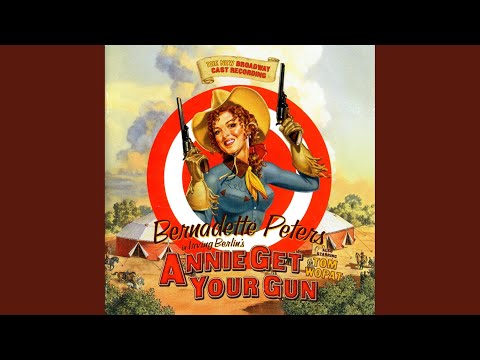
"Who Do You Love, I Hope" is Irving Berlin writing a small comic quarrel as a public dance. In a show packed with swagger and marquee tunes, this one lives in the sidelines: Winnie Tate and Tommy Keeler poke at each other, try on jealousy, then turn it into a duet that can glide past awkwardness. The title is clunky on purpose, like someone blurting a thought before smoothing it into a smile.
Review and Highlights
Quick summary
- Work: Annie Get Your Gun (opened on Broadway May 16, 1946) - stage musical
- Where it appears: Act II in the original Broadway song list
- Usual singers: Winnie Tate and Tommy Keeler (sometimes with company support in later editions)
- Stage job: a comic palate cleanser that also keeps the show from being only Annie and Frank
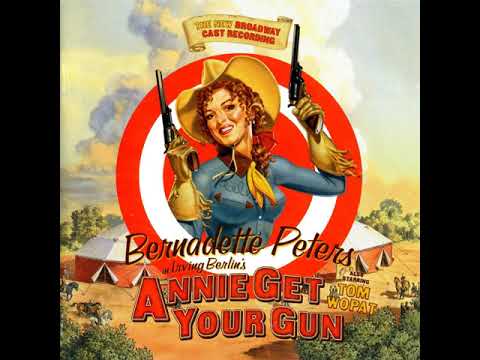
Annie Get Your Gun (1946) - stage musical - not diegetic. It is not a Wild West show attraction for paying customers inside the plot. It is character business: two performers talking through trust, with music giving them a shared rhythm when words get prickly.
Berlin sets the scene with a conversational bounce, then lets the lyric do what good comic writing always does: accuse without fully committing to the accusation. The charm is that neither Winnie nor Tommy wants an answer badly enough to break the romance, so the number becomes a gentle sparring match. According to Masterworks Broadway, the song has long had a reputation as minor Berlin, but even minor Berlin can do a useful job in a tight evening: it gives the score a second couple and a different temperature.
Key takeaways
- Character lens: Winnie and Tommy test loyalty with jokes because sincerity feels risky.
- Music engine: moderate, lifted pacing that encourages crisp text and quick responses.
- Story function: it widens the show’s social world, so Annie and Frank are not carrying every shade of romance.
Creation History
As stated in IBDB, the original Broadway production assigns the duet to Winnie Tate and Tommy Keeler. In revision history, it became a frequent casualty: the 1966 Lincoln Center revival removed the Tommy-Winnie subplot and cut this song. Then the 1999 Broadway revival restored the supporting couple and brought the number back, crediting it to Tommy, Winnie, and company in its listing.
Song Meaning and Annotations
Plot
Act II in this musical is full of pressures: tours, money problems, pride, and the slow unraveling of Annie and Frank. Winnie and Tommy offer a different strand. Their duet arrives as a brief detour from headline stakes, suggesting that romance in this world can be playful and survivable, not only bruising.
Song Meaning
The surface meaning is simple: "tell me who you love." The deeper meaning is that Winnie wants reassurance without begging, and Tommy wants to look innocent without looking weak. The song treats jealousy as choreography. Each line nudges the other person to step closer, even while pretending to step away.
Annotations
The original Broadway song list assigns the duet to Winnie Tate and Tommy Keeler, while later revivals sometimes expand it to include company support.Production listing detail, rewritten
This matters for staging. As a two-hander, it can feel like a private argument that happens to have music. With company, it becomes a social scene where flirting is observed, teased, and gently policed.
The 1966 revival removed the supporting-couple subplot and cut this title, replacing that space with "An Old-Fashioned Wedding."Revision history detail, rewritten
Swap the songs and you change the show’s balance. The duet is lightweight suspicion. The replacement is a full-scale comic feature for Annie and Frank. That tells you what the revival wanted: less side-world, more star engine.
Style and rhythm
This is Berlin in medium gear: text-forward, built for timing, friendly to performers who act on the beat. The rhythm should feel like it has a little lift, not a heavy stomp. The fun is in how quickly the couple can pivot from accusation to affection.
Technical Information (Quick Facts)
- Song: Who Do You Love, I Hope
- Artist: cast and recordings vary
- Featured: Winnie Tate; Tommy Keeler (often with company in later editions)
- Composer: Irving Berlin
- Producer: varies by recording/label
- Release Date: written for the 1946 stage premiere
- Genre: musical theater; duet comedy
- Instruments: voice and orchestra (or piano in audition settings)
- Label: varies (example: Decca for a 1946 commercial recording; later cast albums vary)
- Mood: teasing, suspicious, affectionate
- Length: about 3 minutes 12 seconds on a commonly circulated 1999 cast track listing (varies by edition)
- Language: English
- Album (if any): Annie Get Your Gun (Original Broadway cast recording releases); Annie Get Your Gun (1999 Broadway cast album)
- Music style: conversational duet with quick turnarounds
- Poetic meter: accentual, speech-shaped (comic stresses over strict classical meter)
Frequently Asked Questions
- Who sings it in the original Broadway version?
- Winnie Tate and Tommy Keeler.
- Where does it appear in the show?
- It is listed in Act II of the original Broadway song list.
- Was it cut in the 1966 revival?
- Yes. The Lincoln Center revival eliminated the Tommy-Winnie subplot and removed their songs, including this one.
- Was it restored in the 1999 Broadway revival?
- Yes. Listings for the 1999 revival include it, credited to Tommy, Winnie, and company.
- Is it a show-within-the-show performance?
- No. It plays as character interaction rather than an in-story attraction.
- What is the basic dramatic action?
- A playful interrogation that is really a request for reassurance.
- Why does the title sound awkward?
- Because the lyric is written like spoken thought: a question, then a softening tag that tries to keep the question from sounding too needy.
- Is it useful as an audition cut?
- Yes. Published excerpt editions frame it as a short, dialogue-like section for baritone range work and clear storytelling.
- What is the biggest performance risk?
- Overplaying the jealousy. If the couple looks truly threatened, the number turns sour. It should stay light enough to dance.
Additional Info
The recording trail is a little odd, and oddly revealing. A Smithsonian entry documents a 1946 Decca album set that pairs the title with "There's No Business Like Show Business." Ovrtur adds a useful footnote: on Broadway the song belonged to Kenny Bowers and Betty Ann Nyman, but the recording was performed by Robert Lenn and Kathleen Carnes, a reminder that early cast albums could be representative rather than strictly literal.
Criticism has not always been kind. Masterworks Broadway calls it one of Berlin's weaker titles in the score, and that view helps explain why it became expendable in 1966. Yet the 1999 production put it back, and some listeners (especially performers) appreciate the very thing critics complain about: it is unglamorous, spoken, and playable. It is a duet you can act without waiting for a high note to save you.
Key Contributors
| Entity | Type | Relation (S-V-O) |
|---|---|---|
| Irving Berlin | Person | Berlin wrote the music and lyrics for the duet. |
| Winnie Tate | Person | Winnie questions Tommy and frames jealousy as flirtation. |
| Tommy Keeler | Person | Tommy parries the questions and tries to keep romance intact. |
| IBDB | Organization | IBDB lists who sings the duet in the original Broadway production record. |
| Decca Records | Organization | Decca issued a 1946 recording that includes the song. |
| Smithsonian | Organization | The Smithsonian catalogs a Decca set containing the title. |
How to Sing Who Do You Love, I Hope
Treat it like spoken comedy with pitch. A commonly used sheet-music excerpt lists the published key as G major, a vocal range of D4 to E5, and a marking of Moderato, with a lift at about q = 74. That is basically an acting tempo: slow enough for clarity, quick enough that the teasing does not curdle.
- Tempo: keep the "lift" honest. If it drags, it turns into sulking. If it rushes, the text becomes mush.
- Diction: land question words cleanly. The number is built from questions, and each one is a tiny jab.
- Breath: take small refills before punch lines. The joke needs air at the end of the phrase, not a gasp in the middle.
- Duet timing: rehearse handoffs like dialogue. Leave just enough space for the other person to react.
- Dynamic shape: start conversational, bloom slightly on the most personal lines, then retreat back to playfulness.
- Character color: play the smile under the accusation. The scene works when the audience senses the couple wants to stay together.
- Pitfalls: avoid real anger. The song is a flirtation that borrows the costume of jealousy.
Sources
Sources: IBDB original production record, IBDB 1999 Broadway revival record, Wikipedia (Annie Get Your Gun musical revision history), Musicnotes excerpt listing, Smithsonian object catalog, Ovrtur recording notes, Masterworks Broadway essay
Music video
Annie Get Your Gun Lyrics: Song List
- Act 1
- Overture
- Colonel Buffalo Bill
- I'm a Bad, Bad Man
- Doin' What Comes Natur'lly
- Girl That I Marry
- You Can't Get a Man With a Gun
- There's No Business Like Show Business
- They Say It's Wonderful
- Moonshine Lullaby
- I'll Share It All With You
- There's No Business Like Show Business (Reprise)
- My Defenses Are Down
- I'm an Indian, Too
- Act 2
- I Got Lost in His Arms
- Who Do You Love, I Hope
- I Got the Sun in the Morning
- Old Fashioned Wedding
- Anything You Can Do
- Finale