Girl That I Marry Lyrics — Annie Get Your Gun
Girl That I Marry Lyrics
The girl that I marry will have to be
As soft and as pink as a nursery
The girl I call my own
Will wear satin and laces and smell of cologne
Her nails will be polished
And in her hair she'll wear a gardenia
And I'll be there
Instead of flittin', I'll be sittin'
Next to her I'm cheerful like a kitten
A doll I can carry,
The girl that I marry must be.
Instead of flittin', I'll be sittin'
Next to her I'm cheerful like a kitten
A doll I can carry,
The girl that I marry must be
Song Overview

"The Girl That I Marry" is one of Irving Berlin's neatest pieces of stage diplomacy. Frank Butler, confronted with Annie's open-hearted question, answers by drawing a picture of an imaginary bride - satin, cologne, polish. He sounds confident, but the song reads like self-protection: he is describing a standard because standards are safer than feelings, and lists are safer than choices.
Review and Highlights
Quick summary
- Work: Annie Get Your Gun (opened on Broadway May 16, 1946) - stage musical
- Where it appears: Act I, after Annie meets Frank and asks if he likes her
- Usual singers: Frank Butler and Annie Oakley in the original song list
- Stage job: sets the central mismatch: Annie's directness versus Frank's curated fantasy
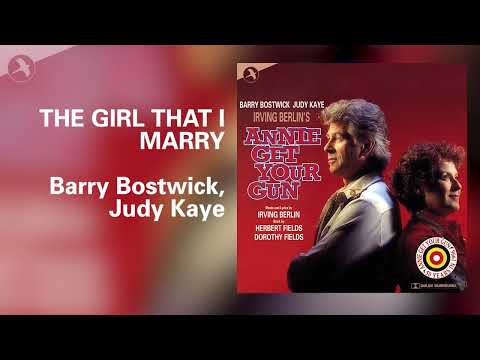
Annie Get Your Gun (1946) - stage musical - diegetic-adjacent. It is not a formal performance for the Wild West audience, but it plays like Frank is performing his identity anyway - answering a personal question with a public persona.
Berlin gives Frank a melody that moves with speech, then lets the lyric do the twist. The tune sits comfortably enough that Frank can sound effortless while he makes a quiet blunder: he describes a woman who is the opposite of the one standing right there. The brilliance is not in cruelty; it is in cluelessness. Frank thinks he is stating taste. Annie hears a verdict.
Key takeaways
- Character lens: Frank treats romance like a set of specifications, which hints at how control-minded he is.
- Comic sting: the details are vivid, so the rejection feels specific even when Frank means it casually.
- Plot fuel: it plants Annie's insecurity early, so later bravado has something to push against.
Creation History
Berlin wrote the number for the 1946 score, and it quickly escaped the theater into pop recordings the same year. A Masterworks Broadway essay notes that Frank Sinatra's release reached a notable chart peak, which tells you how easily Berlin's stage writing could convert into radio-friendly sentiment without losing its Broadway spine.
Song Meaning and Annotations

Plot
In Act I, Annie meets Frank and falls for him fast. When she asks whether he likes her, Frank responds by describing the kind of woman he imagines marrying. The moment does not halt the story; it sharpens it. Annie now has a target she thinks she must become, and Frank has revealed how little he understands what he is feeling.
Song Meaning
The meaning sits in the gap between intention and impact. Frank is not trying to wound Annie, but the song shows how casually he carries a class-coded fantasy. Satin and cologne are not just fabrics and scents. They are admission tickets to a world Frank trusts. Annie comes from another world, and the song makes that difference audible.
Annotations
Frank's description is a wish list that tells Annie she is not the woman he is describing.Critical reading, rewritten
The line lands because Berlin does not soften the imagery. Frank paints the picture in confident detail. Annie is left holding the negative space, and the audience can feel the room tilt.
Act I places the number right after Annie's first meeting with Frank, turning infatuation into a problem with a deadline.Placement note, rewritten
That placement is savvy theater. You let the audience enjoy the spark, then you introduce the obstacle while the spark is still warm. Suddenly, the romance is not a glide path; it is a contest with costume changes.
Style and rhythm
The style is lyric-driven musical theater ballad writing with a clean pop contour. The rhythm is unhurried and conversational, which makes the lyric feel like plain truth - and that is why it hurts. Berlin knows the oldest stage trick: if you want the audience to lean in, do not shout.
Touchpoints
The number also sits inside mid-century American taste-making, where "refined" is treated as a moral category. Annie's arc pushes back against that, and this song supplies the pressure that makes the push dramatic.
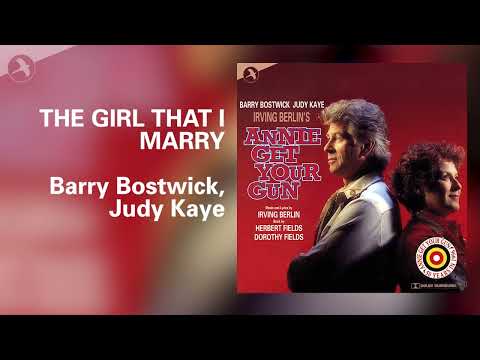
Technical Information (Quick Facts)
- Song: The Girl That I Marry
- Artist: stage and cast recordings vary (Frank Butler and Annie Oakley in the original show list)
- Featured: Frank Butler; often presented with Annie in stage context
- Composer: Irving Berlin
- Producer: varies by recording/label
- Release Date: written for the 1946 stage premiere; pop recordings issued in 1946
- Genre: musical theater; standard ballad
- Instruments: voice and orchestra
- Label: varies (example: Columbia for a major 1946 single release)
- Mood: romantic on the surface, guarded underneath
- Length: about 3 minutes 9 seconds on a 1946 cast-album remaster listing; about 1 minute 20 seconds on a 1950 film soundtrack listing
- Track #: typically early Act I on cast albums
- Language: English
- Album (if any): original Broadway cast recording; 1950 film soundtrack; major revival cast albums
- Music style: lyric-forward ballad with conversational phrasing
- Poetic meter: accentual, speech-shaped (ballad phrasing over strict classical meter)
Frequently Asked Questions
- Who sings the number in the original show list?
- Listings for the 1946 stage version place it with Frank Butler and Annie Oakley.
- What triggers the song in the story?
- Annie asks Frank if he likes her, and he answers by describing the kind of woman he imagines marrying.
- Is Frank trying to insult Annie?
- Not directly. The tension is that he describes a fantasy without noticing how pointed it sounds to someone standing beside him.
- Why is the lyric so specific?
- Specificity gives the audience a clear image and gives Annie a clear wound. Vague rejection would not drive Act I the same way.
- How does the number support the central romance?
- It supplies the first real obstacle: Annie feels she must change, while Frank remains attached to an image rather than a person.
- Did the song become popular outside the theater?
- Yes. 1946 recordings by artists including Frank Sinatra charted, helping the song circulate as a standard.
- Is there a film version?
- Yes. The 1950 film includes the number and soundtrack listings credit it to the Frank Butler character.
- What is a useful listening cue for actors?
- Listen for where the melody stays conversational. That is where Frank sounds most certain, and where the scene is most dangerous for Annie.
Awards and Chart Positions
The number had a lively pop afterlife in 1946. A major single release by Frank Sinatra paired it with "They Say It's Wonderful" and reached a Billboard peak position of 11, while the flip side climbed higher. For the theater side, the 1946 original Broadway cast recording is documented as a strong-selling album on early Billboard album charts.
| Item | Metric | Result |
|---|---|---|
| Frank Sinatra - "The Girl That I Marry" (1946 single) | Billboard peak position | 11 |
| Frank Sinatra - "They Say It's Wonderful" (flip side, 1946 single) | Billboard peak position | 2 |
Additional Info
In the original Broadway ecosystem, the song is often associated with Ray Middleton, who sang it on stage and on the cast recording track listings. In the 1950 MGM film, Howard Keel takes over the number, and soundtrack track lists keep it clearly tied to Frank Butler's point of view. That continuity is the point: the song is less about a specific performer than it is about a man who mistakes taste for truth.
The cover trail is also telling. SecondHandSongs logs it as a work first performed by Ray Middleton and first recorded and released by Sinatra, with additional 1946 hit versions credited to other popular vocalists of the era. That split between stage origin and pop dissemination is classic Berlin: Broadway gives the scene, radio gives the standard.
Key Contributors
| Entity | Type | Relation (S-V-O) |
|---|---|---|
| Irving Berlin | Person | Berlin wrote the music and lyrics for the number. |
| Frank Butler | Person | Butler describes his ideal spouse as a defense against intimacy. |
| Annie Oakley | Person | Oakley hears the description as a rejection that shapes her Act I choices. |
| Ray Middleton | Person | Middleton introduced the song in the Broadway context and appears in cast recording credits. |
| Frank Sinatra | Person | Sinatra recorded a 1946 single that charted. |
| Howard Keel | Person | Keel performed the number in the 1950 film and soundtrack listings. |
| Columbia Records | Organization | Columbia issued the 1946 Sinatra single release. |
How to Sing The Girl That I Marry
This is a ballad that can sink into syrup if you let it. A widely used vocal arrangement listing identifies the original published key as Ab major with a printed vocal range of Ab3 to C5. Treat that as a map, not a cage: the acting depends on keeping the line conversational, as if Frank is thinking out loud and only later realizes he has been too specific.
- Tempo and intention: choose a tempo that supports text clarity. If you stretch every phrase, Frank sounds like he is reciting an advertisement.
- Diction: keep consonants clean on the descriptive nouns. The detail is the dramatic weapon.
- Breath: plan long phrases so you do not clip endings. The lyric needs finish, because the finish is what Annie hears.
- Legato without gloss: connect the line, but do not iron it flat. Small speech-like bends keep it human.
- Dynamic shape: build gently through the list, then ease off when the thought turns intimate. The audience should sense Frank is revealing more than he intends.
- Style: avoid big operatic vowels. This is Broadway realism dressed as romance.
- Pitfalls: do not play Frank as smug. The best versions sound sincere, which makes the sting sharper.
Sources
Sources: Wikipedia - Annie Get Your Gun (musical), Wikipedia - The Girl That I Marry, Masterworks Broadway - Annie Get Your Gun essay by Peter Filichia, Sinatra Discography (single entry), Music VF chart listing, SecondHandSongs work page, Apple Music - Annie Get Your Gun (Original 1950 Soundtrack) track list, Apple Music - 1946 cast recording track list
Music video
Annie Get Your Gun Lyrics: Song List
- Act 1
- Overture
- Colonel Buffalo Bill
- I'm a Bad, Bad Man
- Doin' What Comes Natur'lly
- Girl That I Marry
- You Can't Get a Man With a Gun
- There's No Business Like Show Business
- They Say It's Wonderful
- Moonshine Lullaby
- I'll Share It All With You
- There's No Business Like Show Business (Reprise)
- My Defenses Are Down
- I'm an Indian, Too
- Act 2
- I Got Lost in His Arms
- Who Do You Love, I Hope
- I Got the Sun in the Morning
- Old Fashioned Wedding
- Anything You Can Do
- Finale